Hradec Králové's Manufacturing Automation Bet Is Creating the Shortage It Was Meant to Solve

Hradec Králové's manufacturers poured CZK 4.2 billion into automation and robotics through 2024, a record for the region. The investment was a direct response to a workforce that has been shrinking since the early 2000s, the trailing consequence of birth rate collapse in the 1990s. The logic was straightforward: replace the workers you cannot find with machines. That logic has now collided with a reality the region's hiring leaders are only beginning to absorb.
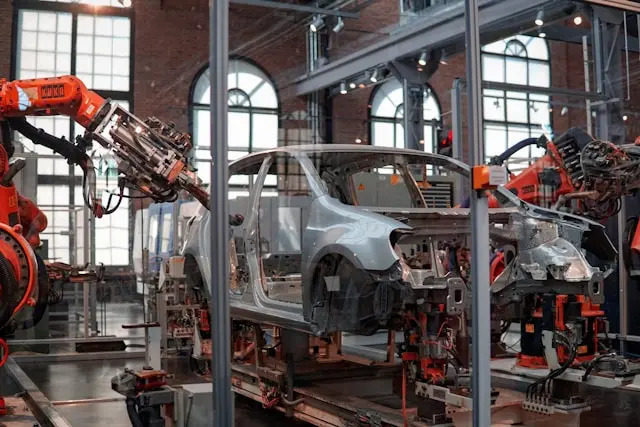
The new robotic assembly lines, multi-axis CNC centres, and smart manufacturing systems require a different kind of worker. Not the semi-skilled operator they replaced, but a PLC programmer, a mechatronics maintenance specialist, a five-axis CNC programming engineer. These roles now sit open for 90 days or more across the region, with vacancy rates exceeding 15%. The automation that was supposed to free Hradec Králové's industrial employers from their dependence on scarce human capital has instead replaced one scarcity with another, harder to solve.
What follows is an analysis of the structural shift underway in Hradec Králové's precision engineering and advanced manufacturing sector, who it is affecting, and what organisations leading in this market need to do to keep their leadership teams and technical workforce ahead of it. The data covers the region's industrial base, its competitive position against Prague, Brno, Liberec, and Germany, the compensation dynamics that are reshaping hiring, and the specific roles where traditional recruitment methods have already failed.
The Region's Industrial Base Is Larger and More Multinational Than It Appears
Hradec Králové's manufacturing identity is often mischaracterised as a network of small Czech metalworking shops. The reality is more complex and more consequential for talent strategy. Three multinational anchor employers dominate the region: Foxconn CZ with approximately 3,500 employees (down from a peak above 5,000 as automation reduced headcount), Schneider Electric with roughly 1,200 staff at its Dolní Předměřice facility, and Magna Exteriors with around 800 workers in Nový Bydžov. These firms set the compensation floor, define the skills baseline, and absorb the strongest graduates from every vocational cohort.
Beneath these anchors sits a dense SME ecosystem. Approximately 120 active firms operate under NACE codes C25 to C28, covering fabricated metal products, machinery, and electrical equipment. Sixty per cent of them report annual revenues between CZK 50 and 500 million. Firms like KOVOKON (CNC machining for aerospace and energy, around 180 employees) and TTS Martin (precision machine tool spindles, approximately 450 employees as part of the Italian TTS Group) represent the upper tier of this mid-market. They are capable, technically sophisticated, and directly exposed to the talent pressures that the multinationals create.
The Foxconn Transition and What It Signals
Foxconn's strategic pivot is the single most consequential shift in the region's talent equation. The company is moving away from high-volume consumer electronics assembly toward lower-volume, high-mix production of industrial IoT components and medical device sub-assemblies. This transition is expected to add 200 to 300 specialised technician roles by mid-2026. These are not assembly line positions. They are roles requiring precision measurement capability, familiarity with quality management systems, and often PLC programming skills.
The implication is direct. Foxconn will compete for the same automation technicians and CNC programmers that every other employer in the region is already struggling to find. When a 3,500-person employer enters a talent pool that was already oversubscribed, the pool does not expand. The price rises.
Schneider Electric's Green Energy Expansion
Schneider Electric's investment trajectory compounds the same dynamic from a different direction. The company's €45 million facility expansion in 2023 to 2024 introduced smart manufacturing lines for low-voltage circuit breakers and switchgear. Its next phase targets smart grid components for Central European markets, which will drive demand for electromechanical technicians with PLC programming capabilities. The green energy transition is not an abstract policy goal in Hradec Králové. It is a hiring requirement that arrives on the shop floor as a vacancy for a Siemens TIA Portal specialist that no one can fill.
The Automation Paradox: Record Investment, Worsening Shortages
This is the central tension in Hradec Králové's manufacturing market in 2026, and it is the one that most hiring leaders have not fully reckoned with.
Capital expenditure in regional manufacturing rose 14.2% year on year through 2024, according to the Czech National Bank's regional economic analysis. The Hradec Králové Industrial Zone reported 92% occupancy, with new entrants focusing on robotic assembly and multi-axis CNC machining centres. The investment thesis was rational. With a working-age population that declined 2.1% in 2024 alone and projections showing an 8% drop by 2030, automation was the only viable path to maintaining output.
But the investment did not reduce dependency on scarce human capital. It substituted one dependency for another.
The four roles with vacancy rates exceeding 15% and time-to-fill metrics above 90 days are all automation-adjacent: five-axis CNC programming engineers, industrial automation technicians (PLC and SCADA), mechatronics maintenance specialists, and quality engineers certified to automotive IATF 16949 standards. These are not the roles that automation was supposed to eliminate. They are the roles automation created.
This is the article's core analytical claim, and it contradicts the assumption that capital substitution linearly reduces dependency on scarce labour. What Hradec Králové's manufacturers have done is spend CZK 4.2 billion replacing workers they could not find with machines that require workers they also cannot find, except the replacement workers need to be more skilled, command higher salaries, and exist in even smaller numbers.
The Demographic Wall Behind the Shortage
The skills mismatch would be manageable if the talent pipeline were expanding. It is not. It is contracting.
The cohort of 15 to 19 year olds entering vocational training streams will decline 12% between 2025 and 2027, according to projections from the Czech Ministry of Education. This is not a forecast subject to policy intervention. It is a demographic fact. The children who would enter apprenticeships in 2027 were born in 2008 to 2012, and there are fewer of them.
Enrolment Collapse in Technical Schools
The numbers at the institution level make this concrete. The Secondary Technical School of Mechanical Engineering in Hradec Králové, the region's primary supplier of CNC operators and toolmakers, saw enrolment decline 18% between 2020 and 2024. The Secondary Technical School of Electrical Engineering and Information Technology graduates approximately 120 students annually, a figure that has not grown despite a doubling in employer demand over the same period.
Liberec Technical University, 60 kilometres north, produces a stronger graduate pipeline in engineering disciplines. But this creates a suction effect rather than a supply boost. Liberec's own automotive suppliers (Magna, Autoliv) and its glass industry automation sector absorb these graduates locally. The flow of technical talent toward Hradec Králové from neighbouring regions is minimal.
The "Missing Generation" Problem
The region's manufacturing workforce has an average age of 44.2, compared to the national manufacturing average of 41.8. Among precision toolmakers, 45% are over 50. These workers carry institutional knowledge that cannot be codified into a training programme. When they retire over the next five to eight years, the knowledge leaves with them.
This is not a problem that wage increases alone can solve. You cannot recruit experience that has not yet been created. A 28-year-old CNC programmer with three years of post-apprenticeship experience is not equivalent to a 52-year-old toolmaker with decades of accumulated problem-solving intuition, even if both hold the same formal qualifications.
Compensation: The Regional Premium That Still Cannot Compete
Hradec Králové's manufacturers are paying more than they ever have for technical and leadership talent. The increases are material. They are also insufficient.
Senior CNC programmers for five-axis milling centres command CZK 65,000 to 75,000 per month. Firms offer this and still fail to fill the role within 120 days. Automation managers sit at CZK 85,000 to 115,000 monthly, with the top quartile pushing CZK 130,000. Plant managers at large facilities earn CZK 120,000 to 160,000 in base salary, with total annual compensation reaching CZK 1.8 to 2.4 million.
At the executive level, VP Operations and General Manager roles carry total compensation of CZK 3.0 to 4.5 million annually (€120,000 to €180,000). This includes a 15 to 20% premium above equivalent roles in Brno or Ostrava, explicitly because attracting senior talent to a smaller city requires it.
The Prague and Germany Gap
These numbers look competitive until you compare them with the markets that are actually pulling candidates away.
Prague offers automation engineers CZK 95,000 to 120,000 monthly, a 35 to 50% premium over Hradec Králové's CZK 70,000 to 85,000 range. The capital also offers career trajectory into corporate headquarters functions, international exposure, and amenities that matter to mid-career professionals building families. This is not just a salary gap. It is a career proposition gap. Prague draws engineers aged 30 to 40, exactly the cohort Hradec Králové needs most.
Germany is the more existential threat. Saxon and Bavarian manufacturers offer three to four times the salary multiple for senior toolmakers and automation engineers. According to cross-border commuter data from the Bundesagentur für Arbeit, approximately 15% of the Hradec Králové region's top technical talent exits to German manufacturing annually. These are not junior workers. They are the most experienced, most capable professionals in the region, and they leave because the economics make it irrational to stay.
The compensation gap between Hradec Králové and its nearest competitors is not closing. It is widening fastest at the seniority levels where the most critical roles sit. A market benchmarking exercise for this region reveals that the cost of matching Prague on salary alone, without addressing career trajectory or lifestyle factors, would require SMEs to increase technical compensation budgets by 30 to 40%. Most cannot absorb that increase without eroding the margins that justify the automation investment in the first place.
Where Traditional Hiring Methods Have Already Failed
The passive candidate ratio in Hradec Králové's precision engineering sector tells a story that job advertisements cannot overcome.
Among senior CNC programmers, the segment unemployment rate sits below 1.2%. Average tenure is 7.4 years. These professionals do not respond to job postings. They are sourced exclusively through direct approaches or headhunter networks. The ratio is roughly one active candidate for every four to five passive professionals who would require direct outreach.
Among automation engineers with PLC and robot integration experience, 78% report being "not actively looking but open to offers." Only 8% are actively applying to postings. This means that a firm relying on job boards and inbound applications is reaching fewer than one in ten qualified candidates in this market.
The Poaching Cycle
The result is a pattern that the Michael Page Industrial Manufacturing Salary Benchmark described as "systematic cannibalization of the local talent pool." Automation engineers with Siemens TIA Portal or Rockwell Automation experience are routinely poached between competing employers at salary premiums of 25 to 35% above standard offers. Schneider Electric, Foxconn, and regional system integrators compete in a closed loop where no new talent enters the system. Each hire from a competitor creates a vacancy elsewhere in the same market.
This dynamic makes every executive search in this sector fundamentally different from a search in a market with active candidate flow. The traditional playbook of posting a role, screening inbound applications, and building a shortlist reaches at most 8 to 10% of the viable candidate population. The other 90% must be identified, mapped, and approached directly. Firms that have not adapted their method to this reality are experiencing the same search failures repeatedly.
The Satellite Toolroom Adaptation
Some employers have responded with creative structural changes. A documented pattern among automotive suppliers involves creating satellite toolrooms in smaller towns like Jaroměř and Nový Bydžov, specifically to access toolmakers unwilling to commute to Hradec Králové city. These arrangements include four-day work weeks and company-provided housing allowances of CZK 5,000 to 8,000 monthly. According to KPMG's Manufacturing Labour Market Survey, these concessions are described as "unusual for the Czech manufacturing context" but increasingly standard in practice.
This adaptation reveals something important. The talent is not absent from the broader region. It is absent from the channels and locations where employers traditionally look. The hidden 80% of qualified professionals in this market are employed, satisfied enough not to apply elsewhere, and reachable only through methods that most hiring processes do not use.
Structural Risks That Compound the Talent Problem
The talent shortage does not exist in isolation. It intersects with three systemic risks that make every hiring decision in Hradec Králové's manufacturing sector more consequential.
Supply Chain Dependence on German Automotive
Seventy per cent of the region's precision engineering output feeds German supply chains. This is an enormous concentration risk. BMW and VW production cuts in late 2024 directly impacted order books at multiple Hradec Králové region Tier 2 suppliers, according to the Automotive Industry Association's Supplier Pulse Survey. When German OEMs slow, the region's manufacturers face a painful choice: maintain their skilled workforce through a downturn at significant cost, or release workers they will never rehire when orders return.
The firms that released skilled workers in previous downturns learned the cost. A bad hiring decision is expensive, but losing a senior toolmaker or automation engineer during a cyclical trough and then spending six months and a 35% salary premium to replace them when demand recovers is worse.
Capital Access for SMEs
Automation investments of €500,000 to €2 million per facility strain SME balance sheets. Czech banks maintain conservative lending, with average loan-to-value ratios of 60% for manufacturing SMEs. EU modernisation funds through the National Recovery Plan face absorption delays. Only 62% of allocated funds had been disbursed by the third quarter of 2024.
This creates a two-speed market. Multinationals like Schneider Electric and Foxconn invest at scale and attract the best talent. SMEs invest what they can afford, install less advanced automation, and compete for the same workers with weaker compensation packages and less sophisticated equipment. The gap between the anchor employers and the mid-market widens with every investment cycle.
CSRD Compliance Burden
The EU Corporate Sustainability Reporting Directive now affects mid-sized Hradec Králové manufacturers with 250 or more employees. Compliance requires new reporting roles and audit processes, with costs estimated at CZK 2 to 4 million annually per firm. This is a regulatory overhead that adds nothing to productive capacity but competes for the same management bandwidth that hiring and automation already demand.
For manufacturers already struggling to fill technical leadership positions, the addition of compliance requirements creates a resource allocation conflict. A Head of Engineering who spends 15% of their time on sustainability reporting is a Head of Engineering who is 15% less available for the technical work the business hired them to do.
What Hiring Leaders in This Market Need to Do Differently
The conventional approach to manufacturing recruitment in Central Europe assumes that compensation is the primary lever, that job boards reach a meaningful share of candidates, and that a patient employer will eventually fill the role. In Hradec Králové's precision engineering market in 2026, all three assumptions are wrong.
Compensation matters, but it is not the binding constraint. The binding constraint is visibility. The candidates who can programme a five-axis CNC centre, maintain a robotic welding cell, or lead an Industry 4.0 integration are not reading job advertisements. They are employed, typically with tenure exceeding seven years, and they will not move for money alone. They move for a role that offers something their current employer cannot: a career step they cannot find elsewhere, a technology stack more advanced than what they work with today, or a leadership pathway that their current organisation's size does not permit.
Reaching these candidates requires talent mapping that identifies them by name, understands their current employer's constraints, and constructs an approach that addresses what they actually value. It requires the kind of direct headhunting methodology that treats the search as an intelligence operation rather than a marketing exercise.
KiTalent works with manufacturers across Central Europe facing exactly these conditions. Using AI-enhanced talent identification combined with direct approach methodology, KiTalent delivers interview-ready candidates within 7 to 10 days, even in markets where 80% of qualified professionals are not actively looking. The pay-per-interview model means organisations pay nothing until they meet a candidate who matches their requirements. Across 1,450 completed executive placements, KiTalent maintains a 96% one-year retention rate, a figure that reflects the quality of match rather than the speed of placement.
For manufacturers in Hradec Králové competing for CNC programming engineers, automation specialists, and operations leaders in a market where the demographic pipeline is contracting and every competitor is fishing in the same depleted pool, speak with our executive search team about how we approach this specific talent market.
Frequently Asked Questions
What is the average time to fill a CNC programmer role in Hradec Králové?
Senior CNC programming roles for five-axis machining centres in the Hradec Králové region remain open for four to six months on average, with vacancy rates exceeding 15%. The segment unemployment rate sits below 1.2%, and average tenure for qualified programmers is 7.4 years. Firms offering CZK 65,000 to 75,000 monthly still fail to secure candidates through conventional channels, often resorting to external CNC programming service bureaus from Prague at a 40% cost premium. The passive-to-active candidate ratio of approximately 4:1 means that direct search methods are the only reliable way to build a shortlist.
Why are manufacturing salaries in Hradec Králové lower than Prague?
Prague offers a 35 to 50% salary premium for equivalent engineering roles because it hosts corporate headquarters, international firms, and broader career progression opportunities. An automation engineer earning CZK 70,000 to 85,000 in Hradec Králové could command CZK 95,000 to 120,000 in Prague. German border regions compound this gap, offering three to four times Czech salary levels for senior toolmakers. Hradec Králové does offer lower living costs and shorter commutes, but for mid-career engineers aged 30 to 40 seeking international exposure, these advantages rarely outweigh Prague's career proposition.
How does automation investment affect manufacturing hiring in East Bohemia?
Automation investment in the Hradec Králové region reached CZK 4.2 billion in 2024, but rather than reducing labour shortages it has shifted the type of worker required. Demand has moved from semi-skilled operators to PLC programmers, mechatronics maintenance specialists, and Industry 4.0 integration engineers. These roles require higher qualifications, command higher salaries, and are scarcer than the positions they replaced. The net effect is that manufacturers face different shortages rather than fewer shortages, and the new gaps are harder to fill because the vocational pipeline has not yet adapted.
What executive compensation do manufacturing leaders earn in Hradec Králové?
Plant Managers at large facilities (500+ employees) earn CZK 120,000 to 160,000 monthly in base salary, with total annual compensation reaching CZK 1.8 to 2.4 million. VP Operations and General Manager roles with multisite responsibility command CZK 3.0 to 4.5 million annually. A 15 to 20% premium above Brno or Ostrava is standard because attracting senior talent to a smaller city requires it. For a detailed assessment of competitive positioning, executive compensation benchmarking specific to Central European manufacturing can clarify where an offer sits relative to the market.
How can manufacturers in Hradec Králové attract passive engineering candidates?
With 78% of qualified automation engineers in the region reporting they are "not actively looking but open to offers," traditional job advertising reaches fewer than one in ten viable candidates. Successful hiring requires direct identification and approach of named individuals through talent mapping and headhunting methods that treat the search as an intelligence exercise. KiTalent uses AI-powered candidate identification to reach passive professionals within 7 to 10 days, operating on a pay-per-interview model that ensures clients only invest when they meet candidates who match their specifications.
What are the biggest risks facing Hradec Králové's manufacturing sector in 2026?
Three risks converge: a 12% decline in vocational-age cohorts between 2025 and 2027, which cannot be reversed by policy; a 70% dependency on German automotive supply chains, which creates cyclical vulnerability when OEMs like BMW and VW cut production; and energy costs that remain 40% above 2020 levels, compressing margins for energy-intensive precision machining. The combination means manufacturers face rising labour costs, shrinking candidate pools, and volatile demand simultaneously, making every senior hire a higher-stakes decision than it was even two years ago.