Iloilo's Port Is Modernising Faster Than Its Workforce: The Talent Bottleneck Behind Panay's Logistics Boom

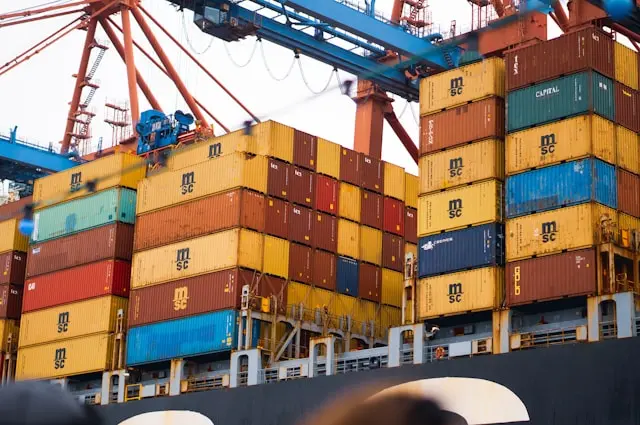
The Port of Iloilo handled 4.8 million metric tons of domestic cargo in 2024, a 14% increase on the prior year. The Philippine Ports Authority is now spending PHP 1.2 billion on berth expansion and new gantry cranes, with partial commissioning expected by Q3 2026. On paper, this is a port preparing for a decade of growth driven by rising aquaculture exports, tightening regional supply chains, and the steady formalisation of Panay Island's position as a maritime gateway for the Western Visayas.
The problem is not the infrastructure. It is the people required to operate it. Iloilo's maritime and cold-chain sector faces acute shortages in certified refrigeration engineers, maritime operations managers with cold-chain expertise, and supply chain directors capable of integrating port logistics with agricultural export compliance. One cold-chain operations manager role at a major Iloilo seafood exporter went unfilled for eleven months. Reefer technician postings in Western Visayas take an average of 94 days to fill, nearly three times the rate for general warehouse staff. The universities serving the region produce fewer than 120 relevant technical graduates per year against an industry that needs 300 new skilled hires annually.
What follows is an analysis of the forces reshaping Iloilo's logistics and industrial sector, the specific talent gaps that threaten to stall its growth, and what organisations hiring in this market need to understand before their next search.
A Port Expanding Into a Workforce That Does Not Exist
The PPA's "Port of the Future" plan for Iloilo is designed to lift container handling capacity by 25%. Three new gantry cranes, a berth extension, and improved customs processing infrastructure will, once commissioned, allow the port to handle larger volumes without the transhipment delays that currently add three to five days to export supply chains. Cargo bound for international markets often routes through Cebu or Batangas because Iloilo's main berth maintains a depth of just 10.5 metres, too shallow for Panamax-class vessels. The expansion addresses the physical constraints. It does not address the operational ones.
The University of the Philippines Visayas and Western Visayas State University together produce fewer than 120 technical graduates per year in marine transportation and related disciplines. Industry demand across Iloilo's maritime and logistics market requires roughly 300 new skilled hires annually. That deficit has compounded year on year. The port may soon have the berths, the cranes, and the container yard capacity for materially higher throughput. What it will not have, at current training and recruitment rates, is the port captains, terminal operators, and cold-chain managers to run the expanded facility at capacity.
This is the central tension in Iloilo's logistics sector in 2026. Capital investment has moved ahead of human capital development. The port's physical modernisation is a decade ahead of the workforce pipeline that supports it.
The Cold-Chain Crunch: Where Infrastructure Meets Talent Scarcity
Facilities Running at Capacity With No Relief in Sight
Iloilo City's 12 accredited cold storage facilities offer approximately 8,500 pallet positions. As of 2024, utilisation stood at 89%. Projections suggest that figure will reach 95% by mid-2026, driven by continued growth in frozen seafood and processed meat exports to Japan and South Korea. Western Visayas aquaculture products accounted for PHP 12.4 billion in annual export value as of 2023, and the Department of Agriculture forecasts 6 to 8% annual growth in agri-food exports through the coming years.
The proposed Iloilo Cold Chain and Logistics Hub, a PHP 450 million joint venture between the city government and a private consortium led by Panay Cold Storage Corporation, is the most visible attempt to close this capacity gap. Groundbreaking was scheduled for late 2025. If it proceeds on time, it will take at least 18 to 24 months before new pallet positions come online. In the interim, the existing facilities are running hot.
Legacy Equipment and the Engineers Who Know How to Fix It
Many of those existing facilities still operate ammonia-based cooling systems that predate current Food Safety Act standards. Retrofitting these systems requires licensed refrigeration engineers with specific ammonia plant expertise. National unemployment among this specialisation is estimated below 2%. The typical candidate has spent a decade or more with a single employer and is recruited through the Philippine Society of Mechanical Engineers network, not through job postings.
The distinction matters. The candidates who appear on job boards in this category often lack the port-side or cold-storage safety certifications that Iloilo's exporters require. The qualified professionals are employed, settled, and not looking. Reaching them requires a fundamentally different approach from the one that works for logistics coordinators or warehouse supervisors, where active candidate markets and higher turnover make conventional recruitment viable. For ammonia refrigeration engineers, the 80% of qualified professionals who never appear on a job board is closer to 90%.
The tightening of FDA and BFAR cold-chain traceability requirements adds urgency. Legacy warehouses need automated temperature monitoring systems, with compliance costs running PHP 3 to 5 million per facility. The capital expenditure is substantial but manageable. Finding the engineers to install, calibrate, and maintain those systems is the harder problem.
Three Shortages Converging on the Same Market
The talent scarcity in Iloilo's maritime logistics sector is not a single problem. It is three distinct shortages colliding in a market too small to absorb any one of them.
Certified Refrigeration Engineers
As noted, unemployment in this specialisation is near zero nationally. The profile Iloilo's employers need, licensed by the Professional Regulation Commission with ammonia plant expertise specific to industrial cold storage, is not interchangeable with commercial HVAC technicians. The talent pool is small, geographically dispersed, and almost entirely passive. Reefer technician job postings in Western Visayas increased by 67% between 2023 and 2024, according to JobStreet Philippines, with average time-to-fill reaching 94 days versus 34 days for general warehouse roles.
Maritime Operations Managers With Cold-Chain Knowledge
This is a hybrid profile. Employers need managers who understand both port terminal operations (vessel scheduling, cargo handling, customs bonded warehousing) and the cold-chain compliance requirements of temperature-sensitive exports. Terminal Operating System proficiency in platforms like Tideworks or Navis is assumed. HACCP certification and familiarity with Japanese JAS standards or EU Sanitary and Phytosanitary measures are required on top.
According to a February 2025 report in the Philippine Daily Inquirer's business section, SF Marine Products spent eleven months trying to fill a cold-chain operations manager role requiring HACCP certification and five-plus years of ammonia refrigeration plant management. The position was ultimately filled by recruiting a senior engineer from a Cebu-based competitor at a reported 35% salary premium above the candidate's previous compensation.
Supply Chain Directors With ASEAN Experience
At the executive level, the scarcity is even more pronounced. Supply chain directors with ASEAN cold-chain experience are in demand from multinationals like Nestlé and Unilever, from regional 3PLs, and from the agri-food exporters that anchor Iloilo's maritime cluster. According to Korn Ferry's logistics practice, search firms report six-month lead times for this profile in secondary Philippine cities. These candidates do not respond to advertisements. The ratio of active to passive candidates among marine superintendents and port captains in the domestic trade sits at approximately 1:9, according to MARINA's statistical report on domestic seafarers.
The convergence matters because Iloilo cannot solve any one of these shortages independently. A modern cold-chain facility requires all three tiers: the engineers to run the systems, the managers to coordinate the logistics, and the directors to integrate the operation with international export compliance. A gap at any level constrains the entire chain.
Compensation Realities: The Iloilo Discount and Its Exceptions
Iloilo City's logistics compensation typically trades at a 15 to 20% discount to equivalent roles in Metro Manila. For logistics coordinators, customs brokers, and warehouse supervisors, this discount holds. For the specialised roles driving the current shortage, it does not.
A cold-chain operations manager in Iloilo commands PHP 75,000 to 110,000 per month, roughly USD 1,350 to 1,980. A maritime operations manager in the inter-island trade earns PHP 85,000 to 120,000. At the executive level, a VP for Logistics and Supply Chain at a regional agri-food exporter earns PHP 180,000 to 280,000 per month, while a COO of a domestic shipping line's regional hub commands PHP 250,000 to 400,000. These figures, drawn from the 2024 salary surveys published by Robert Walters, Michael Page, and Hays Philippines, are broadly comparable to Cebu rates and, in the case of premium cold-chain safety roles, at or above Manila equivalents.
The paradox is instructive. Iloilo is a lower-cost market paying near-parity or premium rates for its scarcest talent, while the broader market still discounts by 15 to 20%. This bifurcation means that negotiating compensation for executive hires in Iloilo requires understanding which tier a role falls into. A standard warehousing hire follows the regional discount. A cold-chain operations manager follows a completely different logic, one where the salary must match Cebu or Manila to have any chance of moving a passive candidate.
Gothong Southern Shipping Lines illustrated this dynamic in late 2024. According to Maritime Executive Philippines, the company restructured its organisational chart to split Iloilo and Bacolod operations under separate managers rather than a single regional director. The decision was driven by the scarcity of candidates willing to relocate to Iloilo at competitive rates. To secure a candidate from Cebu Port Authority, the firm offered housing allowances equivalent to 40% of base salary, an arrangement unusual for mid-managerial domestic shipping roles.
When employers begin restructuring their org charts around what the market will supply rather than what the business needs, the talent shortage has moved beyond an inconvenience. It is shaping strategy.
The Gravity Well: Why Iloilo Loses Its Mid-Career Talent
Iloilo's talent flow follows a predictable pattern. Junior technicians and coordinators stay. Mid-level managers with five to ten years of experience migrate to Cebu for career acceleration. Senior executives are often relocated from Manila or Cebu to Iloilo rather than developed locally.
Cebu draws maritime operations talent with compensation premiums of 20 to 25% above Iloilo rates and a deeper ecosystem of international shipping lines. Maersk and MSC both maintain operations there, offering career paths into global roles that Iloilo's domestic-focused carriers cannot match. Cebu Port Authority's own modernisation programme and the city's status as the Philippines' second-busiest cargo hub create what industry observers describe as a gravity well for PRC-licensed marine engineers and deck officers.
Batangas Port competes for cold-chain logistics executives, particularly those serving the Metro Manila consumer market. Compensation runs 30 to 40% higher than Iloilo, though housing costs are 85% higher. Bacolod competes for mid-level agri-logistics talent in sugar and poultry, offering comparable cost of living but lower absolute salaries, resulting in net talent movement toward Iloilo for higher-value cold-chain roles.
The net effect is a market that imports its senior leaders and exports its mid-career pipeline. This creates a structural dependency on executive search methods that can reach passive candidates in Cebu and Manila and present Iloilo opportunities in terms compelling enough to reverse the flow. The candidates Iloilo needs most are settled in larger cities with more diverse career options. A job posting on a Philippine job board does not reach them. A direct, well-constructed approach might.
This is the dynamic that conventional recruitment methods consistently fail to address. The best candidates for Iloilo's critical roles are not unemployed, not looking, and not in Iloilo. They must be identified, approached, and persuaded. The timeline for such searches is measured in months, not weeks, unless the search methodology is designed from the outset to compress it.
Structural Headwinds: Regulation, Climate, and Fragmentation
The talent shortage does not exist in isolation. It compounds against a set of systemic constraints that make operating in Iloilo's logistics sector harder than the growth headlines suggest.
Regulatory Tightening
MARINA's new Domestic Shipping Safety Standards, effective January 2026, require fleet modernisation for vessels over 20 years old. Estimated compliance costs of PHP 50 to 80 million per vessel will likely reduce the number of small tramp operators serving Iloilo by 15 to 20%, consolidating traffic toward integrated carriers like 2GO. For employers, this means fewer shipping options, higher freight rates on agricultural inputs (forecast to rise 8 to 12%), and a smaller pool of shipping companies from which to recruit experienced maritime managers. The Philippine Domestic Shipping Association's economic impact statement warns that consolidation will concentrate maritime management talent among fewer employers, intensifying competition for experienced operators.
Food safety compliance adds a parallel burden. The FDA and BFAR are tightening cold-chain traceability requirements for exporters. The capital cost of automated temperature monitoring is quantifiable. The operational cost of running those systems without qualified refrigeration engineers is not.
Climate and Infrastructure Fragility
Panay Island's position in the typhoon belt disrupts maritime schedules an average of 15 to 20 days per year. The lack of all-weather anchorage near Iloilo forces vessel diversions during Signal No. 2 conditions, directly threatening cold-chain integrity for time-sensitive seafood exports. Cold-chain facilities report 8 to 12 hours of scheduled and unscheduled power outages monthly, requiring diesel generator backup that adds PHP 8 to 12 per pallet-position to operating costs.
The fragmented land transportation network compounds the problem. The absence of a centralised trucking exchange or digital freight matching platform in Panay results in empty backhauls on an estimated 35% of trips, inflating last-mile costs for agri-food distribution. Addressing this requires logistics technology professionals, another category in short supply.
The Margin Squeeze
Private cold-storage operators report net margins of just 3 to 5% despite double-digit export growth. High energy costs and legacy equipment erode profitability to the point where private capital is hesitant to expand capacity without regulatory relief on power costs or infrastructure subsidies. This creates a vicious cycle. Low margins discourage investment in new cold-chain facilities. Insufficient facilities constrain export growth. Constrained growth limits the career opportunities that would attract and retain talent. The macroeconomic narrative of Iloilo as a rising agri-logistics hub sits uneasily alongside the microeconomic reality facing the firms that actually operate there.
What This Means for Organisations Hiring in Iloilo's Maritime Sector
The original analytical claim of this article is this: Iloilo's port modernisation programme has created a timeline mismatch that no amount of infrastructure spending can resolve on its own. Physical port capacity will expand by 25% by late 2026. The qualified workforce to operate that capacity is not expanding at all. The universities produce a third of the graduates the industry needs. The mid-career pipeline drains toward Cebu. Senior leaders must be recruited from outside the market. Capital investment has outrun human capital by roughly a decade, and the gap is widening as regulatory requirements simultaneously raise the competency threshold for every role in the cold-chain and maritime operations chain.
For hiring leaders in this market, several implications follow.
First, any critical hire in Iloilo's maritime and cold-chain sector is a passive candidate search. The employment rate among certified refrigeration engineers, marine superintendents, and supply chain directors with ASEAN cold-chain experience is near 100%. Active candidate pools contain professionals who lack the certifications or the specific port-side experience that the roles demand. Talent mapping across Cebu, Manila, and Batangas is not optional. It is the baseline.
Second, compensation for scarce roles in Iloilo does not follow the regional discount that applies to general logistics positions. Employers who benchmark cold-chain operations managers or port terminal managers against standard Iloilo salary bands will lose every competitive offer. These roles price at Cebu or Manila parity, and in some cases above it. Understanding market-specific compensation benchmarks before launching a search saves months of failed approaches.
Third, the cost of a failed or delayed search in this market is not merely the unfilled role. It is the downstream constraint on export capacity, regulatory compliance, and operational continuity. When cold-chain utilisation is at 89% and climbing, every month without a qualified operations manager is a month closer to a compliance failure or a lost export contract. The hidden cost of a prolonged executive vacancy is amplified in a market where the entire value chain depends on a handful of specialists.
KiTalent delivers interview-ready executive candidates within 7 to 10 days through AI-enhanced direct headhunting that reaches the passive professionals conventional methods miss. With a 96% one-year retention rate across 1,450 completed executive placements, the methodology is built for exactly the kind of market Iloilo presents: small candidate pools, high-stakes roles, and zero tolerance for a slow process. For organisations competing for cold-chain leadership, maritime operations management, or supply chain directors in the Western Visayas, where the qualified candidates are employed, settled, and not visible on any job board, start a conversation with our executive search team about how we approach this market.
Frequently Asked Questions
What are the hardest maritime logistics roles to fill in Iloilo City?
The three most difficult categories are certified refrigeration engineers with ammonia plant expertise, maritime operations managers combining port terminal experience with cold-chain compliance knowledge, and supply chain directors with ASEAN cold-chain and international export experience. Reefer technician roles in Western Visayas averaged 94 days to fill in 2024, nearly three times the rate for general warehouse positions. At the executive level, search firms report six-month lead times for supply chain directors in secondary Philippine cities like Iloilo.
Why is Iloilo's cold-chain talent shortage worsening?
Three factors are converging. Cold storage utilisation is approaching 95%, increasing demand for qualified operators. Regulatory tightening by the FDA and BFAR requires compliance-certified engineers that the market lacks. And the university pipeline produces fewer than 120 relevant graduates per year against an industry need of approximately 300. Meanwhile, mid-career professionals migrate to Cebu for better career progression, draining the pipeline further.
How does compensation for logistics roles in Iloilo compare to Cebu and Manila?
General logistics roles in Iloilo trade at a 15 to 20% discount to Metro Manila equivalents. However, premium cold-chain and maritime safety roles command parity or premiums due to scarcity. A cold-chain operations manager in Iloilo earns PHP 75,000 to 110,000 monthly. A VP for Logistics at a regional agri-food exporter earns PHP 180,000 to 280,000. Batangas offers 30 to 40% higher compensation for comparable roles, but housing costs are 85% higher than Iloilo.
What is the PPA's port expansion plan for Iloilo?
The Philippine Ports Authority's "Port of the Future" modernisation plan includes a PHP 1.2 billion berth expansion and three new gantry cranes, with partial commissioning expected in Q3 2026. This is projected to increase container handling capacity by 25%. However, the workforce pipeline has not expanded correspondingly, creating a risk that the port modernises physically while bottlenecking operationally due to human capital constraints.
How can organisations find passive maritime and cold-chain candidates in the Philippines?
The employment rate among certified refrigeration engineers, marine superintendents, and port captains in the domestic trade is near 100%. Active job seekers in these categories often lack required certifications. Effective hiring requires proactive talent identification across Cebu, Manila, and Batangas, direct approaches to employed professionals, and compensation packages benchmarked against competitor markets rather than regional averages. KiTalent's AI-enhanced direct search methodology is designed for exactly this challenge, delivering qualified candidates within 7 to 10 days.
What regulatory changes are affecting Iloilo's maritime logistics sector in 2026?
MARINA's new Domestic Shipping Safety Standards, effective January 2026, require fleet modernisation for vessels over 20 years old, with estimated costs of PHP 50 to 80 million per vessel. This is expected to reduce small tramp operators by 15 to 20% while consolidating traffic toward larger carriers. Simultaneously, the FDA and BFAR are tightening cold-chain traceability requirements, mandating automated temperature monitoring systems in cold storage facilities at a cost of PHP 3 to 5 million per facility.