Klagenfurt's Commerce Sector Is Splitting in Two: What the Logistics Surge Means for Hiring Leaders

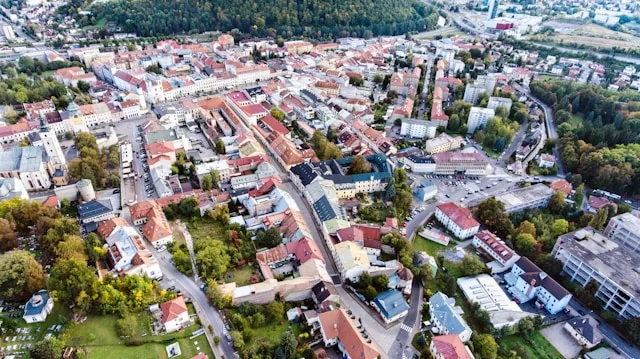
Klagenfurt am Wörthersee has spent decades functioning as Carinthia's retail gravity centre. City Arkaden draws 4.2 million visitors annually. Slovenian cross-border shoppers contribute an estimated €280 to €320 million to the region's turnover. Automotive dealerships along Völkermarkter Straße employ hundreds. From the outside, this looks like a stable, mature commercial market where hiring should be straightforward.
It is not. Beneath the surface stability, two labour markets are forming inside a single sector. Traditional retail is flat, adding zero to one per cent headcount annually. Logistics and fulfilment operations, driven by the Koralmbahn high-speed rail corridor that became operational in late 2025, are projected to add 400 to 600 full-time roles in warehouse and transport coordination alone. The skills required for the growing half of this market barely overlap with the skills available from the shrinking half. Hiring leaders who treat Klagenfurt's commerce sector as a single talent pool are misreading the market.
What follows is a structured analysis of the forces reshaping Klagenfurt's retail and logistics sector, the employers and infrastructure investments driving that change, and what senior leaders need to understand before they make their next hiring decision in this region.
The Koralmbahn Effect: Infrastructure That Rewrites the Talent Map
The single most consequential development for Klagenfurt's commerce sector is not a new shopping centre or a retailer expansion. It is a railway. The Koralmbahn high-speed line, which became operational in December 2025, reduced the transit time between Klagenfurt and Graz to 45 minutes. That number reshapes everything.
For logistics, the implications are direct. Klagenfurt is now positioned as a multimodal consolidation point for Adriatic port traffic from Trieste and Koper. Rail-adjacent warehouse development in the Friesach/Klagenfurt corridor had already reached 45,000 square metres of new Class-A space under construction by late 2024, according to CBRE Austria's Logistics MarketView. Demand for intermodal logistics managers and customs clearance specialists is projected to rise by approximately 15 per cent year-on-year through 2026.
A Labour Market That Moves in Two Directions
For the talent market, though, the Koralmbahn cuts both ways. It makes Klagenfurt more attractive as a logistics hub. It simultaneously makes Graz more accessible as a place to work while living in Carinthia. A supply chain director who previously had to choose between Klagenfurt's smaller market and Graz's superior career trajectory can now commute. The rail link does not just connect two cities. It integrates two labour markets.
This integration is asymmetric. Graz offers 18 to 25 per cent compensation premiums for supply chain directors, superior international schooling, and dual-career infrastructure, according to Mercer Austria's Total Remuneration Survey. Klagenfurt offers lower living costs and lifestyle proximity to Wörthersee. For junior and mid-level staff, Klagenfurt's proposition may hold. For senior logistics executives, the Koralmbahn has made the Graz premium accessible without relocation.
What This Means for Search Strategy
Any organisation hiring a senior logistics or supply chain leader in Klagenfurt now competes directly with Graz employers. The competitive set has widened overnight, and the compensation benchmarks that worked in 2024 may no longer hold. Hiring leaders who have not recalibrated their offer structures against the Graz market are already behind.
Retail Stability Is Real, but Its Foundation Is Fragile
Klagenfurt's physical retail sector does not look distressed. City Arkaden, managed by ECE Projektmanagement, comprises approximately 22,000 square metres across 130 retail units. Footfall recovered to 4.2 million annual visitors by the third quarter of 2024, approaching pre-pandemic levels. The ÖBB station redevelopment at Klagenfurt Hauptbahnhof is integrating 15,000 square metres of convenience retail with intermodal logistics facilities, adding a second retail gravity point.
But these headline figures mask a structural vulnerability. Slovenian cross-border shoppers account for 15 to 20 per cent of retail turnover in greater Klagenfurt, concentrated in fuel, automotive services, and grocery. That dependency is fragile. Bank Austria's Regional Economic Radar projected an 8 to 12 per cent reduction in cross-border flows by 2026 as Ljubljana and Maribor expand their own mall infrastructure. Euro-zone price convergence is gradually eroding the differentials that drive Slovenian shoppers across the border.
At the same time, e-commerce penetration in Carinthia reached 18.4 per cent of total retail in 2024, up from 14.2 per cent in 2021, according to Handelsverband Österreich's E-Commerce Report. City Arkaden increasingly functions as a showroom for purchases completed on Amazon.de. This compresses margins for non-anchor tenants without reducing the staffing requirements of physical operations.
The hiring implication is specific. Traditional retail is not collapsing, but it is not growing. The roles being created sit at the intersection of physical and digital commerce: omnichannel retail managers who can integrate POS systems with e-commerce fulfilment, professionals fluent in SAP Commerce Cloud or Salesforce integrations. These roles did not exist in Klagenfurt's retail sector five years ago. The people qualified to fill them are scarce, and they are not responding to job advertisements.
The Three Shortage Categories That Define This Market
Three role categories exhibit severe scarcity in Klagenfurt's commerce sector, and each shortage has a different structural cause. Understanding the distinction matters because a single recruitment approach will not address all three.
Commercial Vehicle Drivers
CE-category licensed drivers remain in acute deficit across all of Austria, but the problem is sharper in Carinthia. Federal Red-White-Red Card immigration thresholds are misaligned with sector needs. Third-country recruitment is blocked by German language B1 requirements and non-recognition of non-EU logistics certifications. The pipeline is thin at both ends: too few domestic trainees entering the profession, and regulatory barriers preventing international supply from reaching the market.
Warehouse Operations Managers
Warehouse specialist roles in the Klagenfurt-West industrial zone remain vacant for an average of 147 days, according to AMS Kärnten's vacancy duration analysis. The Austrian retail average is 62 days. The specific gap is in professionals with WMS implementation experience. These are not entry-level warehouse staff. They are specialists who understand how to deploy and optimise warehouse management systems in fulfilment environments that did not exist in Klagenfurt until the logistics expansion began. The demand was created by infrastructure investment. The supply was not.
Omnichannel Retail Managers
This is the role category where the passive candidate ratio is most extreme. Supply chain directors and omnichannel transformation leads operate in an estimated 80:20 passive-to-active ratio, according to Hays Österreich's Logistics and Supply Chain Hiring Insights. These professionals typically hold five or more years' tenure with current employers and do not respond to posted vacancies. Active candidates in this category often signal distressed employment situations rather than quality availability. Reaching the right people requires direct search methodologies that go well beyond conventional advertising.
For organisations facing the challenge of reaching candidates who are not visible on any job board, the distinction between an active and passive recruitment strategy is not theoretical. It is the difference between a search that succeeds and one that stalls for five months.
Compensation: Where the Gaps Are and Why They Matter
Executive compensation in Klagenfurt's commerce sector tracks 8 to 12 per cent below Vienna and 3 to 5 per cent below Graz for equivalent functional leadership roles. At the senior specialist and manager level, retail operations roles command €58,000 to €72,000 base salary; supply chain and logistics managers sit at €52,000 to €68,000; automotive retail management, particularly in after-sales and dealership leadership for premium brands, ranges from €55,000 to €75,000 including performance components. These figures derive from StepStone, Hays, and KPMG salary data adjusted for Carinthia's regional factor.
At the executive and VP level, total cash compensation rises to €115,000 to €145,000 for retail operations leaders, €105,000 to €135,000 for supply chain executives, and €120,000 to €160,000 for luxury automotive brand management.
The more interesting dynamic sits in the exceptions. Slovenian-speaking logistics executives command a scarcity premium of 10 to 15 per cent above these benchmarks. This premium exists because bilingual capability in German and Slovenian is essential for cross-border customer management and customs coordination, and the pool of professionals who combine language competence with senior logistics experience is extremely narrow.
Regional automotive dealership groups have responded to scarcity with aggressive lateral hiring. After-sales managers now command signing bonuses of €8,000 to €12,000, or guaranteed first-year bonuses equivalent to 15 to 20 per cent of base salary, to move from competitors. This is poaching at scale, and it is inflating costs across the sector without expanding the talent pool. The money is redistributing existing professionals rather than attracting new ones. For any hiring leader considering a compensation benchmarking exercise in this market, the headline averages understate what it actually costs to move a qualified candidate.
The risk of losing a preferred candidate to a counteroffer from their current employer is elevated in a market this tight. When an after-sales manager receives an €8,000 signing bonus offer, their current employer can often match or exceed it because the cost of replacement is higher still.
The Skills Pipeline Mismatch: Infrastructure Leads, Education Follows
Here is the analytical claim that the data supports but that no single data point states directly: Klagenfurt's infrastructure investment has outpaced its educational system by at least three years. The Koralmbahn has created demand for intermodal freight specialists and rail-cargo technicians. The 45,000 square metres of new warehouse space requires operations managers with WMS expertise. The cross-border logistics corridor needs bilingual customs professionals. But Carinthia's vocational education system continues to channel 70 per cent of commercial-track students into tourism and traditional retail apprenticeships.
The capital moved. The curriculum did not.
This is not a shortage that compensation alone can solve. An employer cannot pay a premium for a rail-cargo technician who does not exist in the regional labour market. The apprenticeship pipeline is training the workforce for the segment of commerce that is flat or declining, while the segment that is growing has no feeder system at all. AMS Kärnten's qualification forecast for 2024 to 2026 projects 400 to 600 new FTEs in warehouse and transport coordination, but the vocational institutions producing graduates in these fields have not scaled to match.
The implication for hiring leaders is stark. For the next two to three years, every senior logistics and fulfilment hire in Klagenfurt will come from one of three sources: relocation from Graz or Vienna, lateral moves from competitors within Carinthia, or cross-border recruitment from Slovenia. None of these sources is easy. Relocation requires overcoming the compensation differential. Lateral moves require outbidding incumbents who are themselves scrambling to retain. Cross-border recruitment requires navigating the tax and certification barriers that make Ljubljana an attractive alternative.
Organisations that wait for the pipeline to catch up will wait too long. Those that invest in proactive talent pipeline development now will have a material advantage when the full Koralmbahn logistics expansion reaches operational scale.
The Cross-Border Calculus: Slovenia as Competitor, Not Just Customer
Most discussions of Klagenfurt's cross-border dynamic focus on Slovenian shoppers as a source of retail revenue. That framing is incomplete. Slovenia is also a competitor for the bilingual professionals that Klagenfurt's commerce sector needs most.
Ljubljana offers a 16 per cent flat personal income tax rate against Austria's progressive scale that reaches 55 per cent. Cost of living is lower, though absolute salary totals remain smaller. For a bilingual logistics coordinator who can work in either market, the net-of-tax calculation is not straightforward, and it does not always favour the Austrian side. According to EY's Attractiveness Survey for the Alps-Adriatic Region, Klagenfurt employers lose approximately 15 per cent of qualified Slovenian-speaking candidates to Ljubljana-based third-party logistics providers.
This competition intensifies at exactly the seniority level where Klagenfurt's need is greatest. A warehouse operative may prefer the Austrian gross salary. A customs clearance specialist or cross-border e-commerce manager with ten years' experience runs a different calculation. The professionals who have the most options are the ones hardest to attract, and the options available to them now span two countries with a border crossing that takes 30 minutes.
For any organisation that needs to fill a senior commercial or logistics role requiring Slovenian language competency, the search cannot be confined to the Austrian market. It requires international executive search capability that maps the talent pool across both sides of the border and builds a proposition that addresses the specific factors driving candidate decisions: tax efficiency, career trajectory, and the quality of the role itself, not merely the salary attached to it.
Understanding what makes an executive candidate choose one opportunity over another is essential in a cross-border market where the financial variables are this finely balanced.
What Hiring Leaders in This Market Need to Do Differently
The conventional approach to hiring in Klagenfurt's commerce sector has relied on job advertisements, regional recruitment agencies, and the assumption that a competitive salary will attract sufficient applicants. That approach still works for retail sales associates and last-mile delivery drivers. It does not work for the roles that determine whether a logistics expansion succeeds or an omnichannel transformation delivers results.
The 80:20 passive-to-active ratio for supply chain directors and omnichannel leads means that job postings reach, at most, 20 per cent of the viable candidate pool. The remaining 80 per cent are employed, performing well, and not monitoring job boards. Reaching them requires a direct approach using talent mapping and executive identification before a vacancy becomes urgent.
The 147-day average vacancy duration for warehouse specialists in Klagenfurt-West is not merely a staffing inconvenience. It is a commercial risk. A fulfilment centre that cannot staff its operations management layer cannot optimise its WMS deployment. That delays throughput improvements, increases per-unit handling costs, and undermines the business case for the logistics investment itself. The cost of a prolonged vacancy at this level is not the recruitment fee. It is the operational performance gap that compounds every week the role sits empty. Organisations that have experienced the true cost of a failed or delayed senior hire understand this calculation intimately.
Speed matters in this market. Not speed for its own sake, but because the best candidates in a talent pool this small receive multiple approaches. A search that takes three months to produce a shortlist will find that half the candidates it identifies have already accepted other offers. KiTalent's model, delivering interview-ready executive candidates within 7 to 10 days, exists precisely for markets where the window between identification and engagement is this narrow.
For organisations navigating the specific combination of logistics expansion, cross-border competition, and omnichannel transformation that defines Klagenfurt's commerce sector in 2026, where the candidates who matter most are passive, bilingual, and choosing between two countries, start a conversation with our executive search team about how we approach this market. With a 96 per cent one-year retention rate across 1,450 placements and a pay-per-interview model that eliminates upfront retainer risk, KiTalent is built for exactly the kind of search where conventional methods run out of road.
Frequently Asked Questions
What is the average salary for a supply chain director in Klagenfurt?
Total cash compensation for supply chain and logistics executives in Klagenfurt ranges from €105,000 to €135,000 at the VP and director level, according to Hays and Mercer salary data adjusted for Carinthia's regional factor. This sits 3 to 5 per cent below equivalent roles in Graz and 8 to 12 per cent below Vienna. However, Slovenian-speaking logistics executives command a scarcity premium of 10 to 15 per cent above standard benchmarks due to the extremely narrow pool of professionals combining bilingual capability with senior logistics experience. For a current compensation benchmarking analysis specific to this market, specialist guidance is advisable.
How has the Koralmbahn affected hiring in Klagenfurt?
The Koralmbahn high-speed rail line, operational since December 2025, has repositioned Klagenfurt as a multimodal logistics consolidation point for Adriatic port traffic. Demand for intermodal logistics managers and customs clearance specialists is rising approximately 15 per cent year-on-year. Simultaneously, the 45-minute connection to Graz has integrated the two cities' labour markets, meaning Klagenfurt employers now compete directly with Graz's higher compensation levels and larger corporate headquarters for senior talent.
Why are warehouse specialist roles so hard to fill in Klagenfurt?
Warehouse specialist roles in Klagenfurt's industrial zones remain vacant for an average of 147 days, nearly two and a half times the Austrian retail sector average of 62 days. The gap is driven by a skills pipeline mismatch: Carinthia's vocational education system channels 70 per cent of commercial-track students into tourism and traditional retail rather than logistics and fulfilment operations. Employers seeking WMS implementation expertise must recruit from Graz, Vienna, or cross-border from Slovenia because the regional training system has not yet adapted to the logistics expansion.
What roles are hardest to hire for in Klagenfurt's retail and logistics sector?
Three categories exhibit the most severe scarcity. CE-category commercial vehicle drivers face regulatory barriers to international recruitment. Warehouse operations managers with WMS experience are scarce because the demand was created by recent infrastructure investment without a corresponding training pipeline. Omnichannel retail managers who can integrate POS systems with e-commerce fulfilment operate in an 80:20 passive-to-active candidate ratio, making them virtually unreachable through conventional job advertising.
How does cross-border competition with Slovenia affect executive hiring in Klagenfurt?
Slovenia competes directly for bilingual German-Slovenian professionals. Ljubljana offers a 16 per cent flat income tax rate against Austria's progressive scale reaching 55 per cent, plus lower living costs. Klagenfurt employers lose approximately 15 per cent of qualified Slovenian-speaking candidates to Ljubljana-based logistics providers. At senior levels, where bilingual customs and cross-border e-commerce expertise is most valuable, the competition is most intense. Effective executive search in this market must map talent across both sides of the border.
How can KiTalent help with executive hiring in Klagenfurt's commerce sector?
KiTalent uses AI-enhanced direct headhunting to identify and engage passive senior candidates who do not appear on job boards. In a market where 80 per cent of supply chain directors and omnichannel leaders are not actively seeking roles, this methodology reaches candidates that conventional recruitment misses entirely. KiTalent delivers interview-ready candidates within 7 to 10 days, operates on a pay-per-interview model with no upfront retainer, and maintains a 96 per cent one-year retention rate across more than 1,450 executive placements globally.