Klagenfurt's Lakeside ICT Cluster Produces Graduates It Cannot Keep and Needs Specialists It Cannot Find
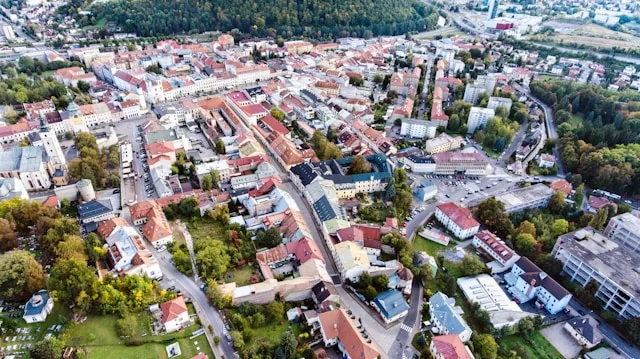
Klagenfurt's Lakeside Science & Technology Park hosts roughly 70 technology companies and research institutions across 45,000 square metres, employing approximately 1,500 people in a concentration of video streaming infrastructure, applied AI, and enterprise software. The park's occupancy stands at 94%. Demand for space and talent is not the problem. Supply is.
The Carinthian ICT sector grew 4.2% in headcount through 2024, a respectable figure anywhere except Austria. Vienna grew 6.8% in the same period. The gap is not a reflection of ambition. It is a reflection of what happens when an ecosystem's most critical roles take 127 days to fill, 42% of its university graduates leave for Vienna within two years, and its anchor tenant's own senior engineers depart at rates above the regional average. The cluster is caught between two forces pulling in opposite directions: rising commercial demand from German automotive and manufacturing clients, and a talent pool that leaks faster than it fills.
What follows is a ground-level analysis of the forces shaping Klagenfurt's ICT talent market in 2026, where the real bottlenecks sit, and what hiring leaders operating in or recruiting from this cluster need to understand before they commit to a search.
A Cluster That Has Outgrown Its Original Design
Lakeside Science & Technology Park was established in 2001 as an incubation environment. Twenty-five years later, the characterisation no longer fits. The ecosystem is dominated by scale-ups and established SMEs rather than pre-seed ventures. Bitmovin, the park's most prominent tenant, has progressed through Series D funding and maintains its headquarters and primary R&D centre at Lakeside with approximately 180 local employees. Phactum employs around 85 people building enterprise SaaS for regulatory compliance. Tracer runs a gamification platform with 45 staff. KAPSCH BusinessCom operates a 60-person branch focused on ICT infrastructure and cybersecurity.
These are not nascent startups waiting for their first customer. They are commercial operations with international client bases, recurring revenue, and senior leadership structures that require experienced hires. The transition from incubation to commercialisation has changed what the cluster needs from the Klagenfurt talent market. It no longer needs enthusiastic generalists. It needs senior AI engineers with production deployment experience, VP-level engineering leaders who can run distributed teams, and commercial executives who understand B2B SaaS sales cycles in German-speaking markets.
The park's 94% physical occupancy rate signals a secondary constraint. New entrants face spatial limitations without additional development phases. The cluster is full. The talent pipeline is not.
The Institutional Architecture Behind the Numbers
Alpen-Adria-Universität Klagenfurt's Faculty of Technical Sciences produces roughly 210 computer science and informatics graduates annually. Lakeside Labs, a non-profit research cooperative, maintains about 25 researchers working on autonomous systems and edge AI, with active partnerships linking AAU and the Austrian Institute of Technology. The Software Competence Center Hagenberg runs a Klagenfurt branch with 15 research associates focused on data science.
On paper, the institutional infrastructure looks adequate for a cluster of this size. In practice, two problems undermine its effectiveness. First, joint university-industry labs are fewer here than in comparable Austrian clusters like Graz or Linz. The translational mechanism that converts research into employable specialisation is thinner than it appears. Second, the ICT Cluster Carinthia coordination, managed by WKO, remains structurally looser than neighbouring Villach's Silicon Alps electronics cluster. The governance layer that might accelerate talent circulation between institutions and employers is underdeveloped relative to the commercial maturity of the tenants it serves.
The Graduate Pipeline Paradox: 210 Graduates, 35% Fit
This is the analytical claim that sits at the centre of Klagenfurt's ICT talent challenge, and it is not one the headline data reveals on its own.
Alpen-Adria-Universität's computer science programme is growing. The completion of AAU's Digital Transformation campus expansion in late 2025 is expected to push annual graduate output above 200. At the aggregate level, the market appears well supplied. A cluster of 1,500 employees gaining 210 fresh graduates each year should not face acute shortages.
It does. Because only 30 to 35% of those graduates possess the specific applied skills that Lakeside's dominant verticals require.
The cluster's competitive advantage sits in narrow technical specialisms. Low-latency C++ optimisation for video encoding. MLOps for edge device deployment. Embedded systems integration for automotive supply chain clients. These are not skills that emerge from a general computer science curriculum. They are skills built through applied project work in the exact domains where Lakeside companies operate. The gap is curricular alignment, not graduate volume.
This creates a market where the visible supply of talent dramatically overstates the usable supply. A hiring leader posting a Senior Machine Learning Engineer role in Klagenfurt will see applications. The problem is not silence. It is that the applicants who respond are predominantly junior or transitioning from adjacent fields, while the experienced practitioners with production-grade deployment skills are employed and not looking. Hays Austria's 2024 analysis estimated the passive candidate ratio for senior AI and ML engineers in this market at 85 to 90%.
The constraint is not how many people Klagenfurt educates. It is how many it educates in the right things, and how many of those it keeps.
Retention: The Three-Tier Drain
Lakeside employers compete in a three-tier talent market where they occupy the lowest-compensation tier in every category.
Graz: The Weekly Commute Competitor
Graz sits 90 minutes north and offers approximately 12 to 15% higher salaries for senior developers. Its ecosystem is denser, anchored by Tech City Graz and the Cybersecurity Campus. The commute is feasible for weekly hybrid arrangements, which means Graz employers do not need to convince a Klagenfurt-based engineer to relocate. They need to convince them to take the train on Tuesday and Wednesday. This is a far easier proposition, and it draws mid-level technical talent away from Lakeside with minimal friction.
Vienna: The Executive Gravity Well
Vienna sits 3.5 to 4 hours away by train and dominates for executive, specialised AI research, and senior commercial talent. Salaries run 20 to 25% above Klagenfurt equivalents. More critically, Vienna offers what Klagenfurt structurally cannot: a density of leadership-level roles in larger enterprises, and the career trajectory that comes with them. The AAU Graduate Tracking Survey found that 42% of computer science graduates migrate to Vienna within two years of graduation.
That figure deserves emphasis. Nearly half of the university's output leaves. The Digital Transformation campus expansion may push graduate numbers above 200, but if the retention rate holds at 34% remaining in Carinthia after five years, the net local gain is modest. Roughly 70 graduates per annual cohort stay. From a pool of 210, the cluster's effective yield is one third.
Munich: The Exit Door for Senior Talent
Munich operates as the premium exit option. It sits 3.5 hours by car, and compensation premiums of 40 to 60% over Klagenfurt are standard. The border proximity enables creative arrangements. According to LinkedIn Talent Insights migration data from 2024, Bitmovin's Munich office, which is now larger than the Klagenfurt operation post-restructuring, absorbed several senior Klagenfurt engineers through 2023 and 2024.
This pattern exposes a tension that should concern every Lakeside employer. Bitmovin's presence as the cluster's most visible anchor validates Klagenfurt's technical credibility. Its international offices simultaneously function as exit vectors for the senior talent the cluster most needs to retain. LinkedIn tenure analysis from 2024 shows Bitmovin's Klagenfurt retention rate for senior engineers with three or more years of tenure dropped to 61%. The Carinthian ICT average is 68%. The anchor tenant leaks faster than the market around it.
Lakeside employers counter with cost-of-living arbitrage: Carinthian housing costs are 35% below Vienna, and the alpine lifestyle positioning is real. But the KWF Talent Retention Survey identified two factors where lifestyle cannot compensate. Career trajectory density is thin. And spousal employment opportunities in a small city constrain dual-income households in ways that Graz, Vienna, and Munich do not.
Compensation: The Discount That Compounds at Seniority
The compensation data tells a story of compounding disadvantage as seniority rises. At junior levels, the gap between Klagenfurt and competing markets is manageable. At senior and executive levels, it becomes the primary barrier to recruitment.
A Senior Software Architect or Principal Engineer in Carinthia earns €75,000 to €95,000 in base salary. Top performers at scale-ups in the Bitmovin tier may reach €110,000 with performance bonuses. The equivalent role in Vienna commands €90,000 to €120,000. In Munich, €105,000 to €145,000.
At VP of Engineering or CTO level within the SME and scale-up context, Klagenfurt packages range from €120,000 to €160,000. Equity participation varies. At venture-backed Lakeside firms, total compensation including stock options may reach €180,000 to €200,000. But liquidity events remain rare, and experienced candidates discount illiquid equity heavily when comparing offers against guaranteed cash compensation in Vienna or Munich.
On the commercial side, a Senior Sales Manager in B2B SaaS earns €70,000 to €90,000 base plus €20,000 to €40,000 variable. VP Sales or Chief Revenue Officer roles range from €110,000 to €150,000 base with variable components that rarely push total compensation above €200,000 unless the firm is scaling internationally.
These salary benchmarks for technology roles reveal the structural challenge. The 15 to 20% discount to Vienna is tolerable for a junior engineer trading urban cost for alpine quality of life. The 30 to 40% discount to Munich at the exact seniority level where Lakeside's most critical searches sit is not tolerable. It is the reason those searches take 127 days instead of 89.
Vacancy Duration and the Documented Search Failures
The average time-to-fill for Senior Software Architect and Machine Learning Engineer roles in Carinthia reached 127 days in 2024, compared to 89 days nationally, according to Hays Austria's Skills Gap Analysis. That 38-day premium is not a minor inconvenience. For a scale-up trying to deliver on a client commitment or ship a product release, it is the difference between meeting a quarterly milestone and missing it.
The documented search patterns illustrate why.
According to LinkedIn job listing archive data and Bitmovin's own engineering blog, Bitmovin publicly advertised a Senior Machine Learning Engineer position for video analytics between March and November 2024. Eight months. The role was reportedly restructured and eventually filled through an internal transfer from the company's London office. This is not a failure of interest. It is a failure of local market supply for a specific specialism.
Phactum's experience on the commercial side tells a parallel story. According to recruitment consultancy sources cited in the Startup Steiermark newsletter, Phactum executed a targeted hire of a Senior Account Executive from a Graz-based fintech in the second quarter of 2024, offering a compensation premium estimated at 18 to 22% above market. That role had been vacant for approximately five months before the company resorted to cross-regional poaching at premium rates.
A third pattern, described in the Carinthian ICT Business Association's member survey, involves an unnamed Lakeside Park tenant that established a remote-first policy with monthly Klagenfurt presence specifically to recruit from Munich's hardware talent pool, offering Vienna-level compensation. The company serving automotive supply chain clients could not fill the role locally at any price. It had to redesign the role's location requirements to access a market 3.5 hours away.
These are not anomalies. They are the predictable outcome of a market where 85 to 90% of the candidates you need are passive, where the active applicant pool skews junior, and where every competing geography within commuting or remote-work distance pays materially more.
The Structural Risks That Make This Harder in 2026
Several forces operating outside the cluster's control are compressing the talent market further.
Demographic Decline and Immigration Bottlenecks
Carinthia's working-age population is projected to decline 8% by 2030, according to Statistics Austria's regional population projections. This is not a distant concern. The decline is already underway. Every year the available labour pool shrinks, the competition for each qualified engineer intensifies regardless of what individual employers do.
Immigration could partially offset this, particularly given Carinthia's geographic proximity to Western Balkan and Ukrainian talent pools. The Red-White-Red Card for skilled workers should be the mechanism. In practice, processing delays average four to six months for third-country nationals. For a scale-up trying to fill a senior role within a quarter, a four-month visa timeline means the candidate has either accepted an offer in Germany, where the Blue Card processes faster, or withdrawn entirely.
Venture Capital and the Scale-Up Flight Risk
Carinthia captured less than 3% of Austria's total venture capital volume through 2023 and 2024, according to AVCO's Austrian Venture Capital Report. The practical consequence is severe. In the past five years, only two Lakeside companies have achieved Series B or later funding rounds. Every Series A round required a lead investor from Vienna, Zurich, or Munich.
This capital dependency creates a specific talent risk. Successful scale-ups face pressure to relocate headquarters or senior functions to Vienna post-Series A to stay close to their investors and access growth capital. The executive search challenge in this environment is not just finding talent for current roles. It is finding talent willing to join a company that may move its centre of gravity 300 kilometres northeast within two years.
Platform Concentration Risk
The cluster's technical concentration in video encoding and automotive-adjacent software creates exposure to platform shifts. Codec standardisation changes or automotive OEM insourcing decisions could rapidly depress demand for the exact specialisms that define Lakeside's competitive position. A hiring leader building a team for this market needs to weigh whether the specialism they are recruiting for will remain viable on a five-year horizon, not just a twelve-month one.
What Hiring Leaders Operating in This Market Need to Do Differently
The conventional approach to filling senior technology roles, posting on job boards, screening inbound applications, and progressing a longlist to interviews, reaches approximately 10 to 15% of viable candidates in Klagenfurt's ICT market. The remaining 85 to 90% of senior AI engineers, VP-level leaders, and experienced SaaS commercial executives are passive. They are employed. They are not browsing Stepstone or LinkedIn Jobs. They will not see your posting.
The firms that hire successfully in this market do three things that the firms running six-month searches do not.
First, they map the total addressable talent pool before they open the search. In a market this small, the number of qualified candidates for a Senior Machine Learning Engineer role with production deployment experience is not hundreds. It is dozens. Knowing who they are, where they work, and what would move them is not a luxury. It is the prerequisite. This is exactly the function that structured talent mapping provides: a complete picture of who exists, not just who has applied.
Second, they build the compensation case around the candidate's real alternative, not the local median. A senior engineer in Klagenfurt earning €90,000 is not comparing your offer to the Carinthian average. They are comparing it to what Graz, Vienna, or Munich would pay for the same skill set with the same seniority. If your offer does not address the 25 to 40% premium they could access by moving, you need to answer why. The lifestyle proposition matters. The cost-of-living arbitrage matters. But these only work when the candidate understands the full picture, and when the offer is structured to acknowledge what they are choosing to forgo.
Third, they run fast. In a market with 127-day average fills and a 34% five-year graduate retention rate, every week of delay narrows the candidate pool. The best candidates in this market receive approaches regularly. A search that takes two months to produce a shortlist will find that half its targets have already progressed with someone else.
KiTalent's approach to this market reflects these realities. Through AI-enhanced direct headhunting, we identify and engage the passive candidates who make up 85 to 90% of the senior talent pool in markets like Klagenfurt's Lakeside cluster. Our model delivers interview-ready executive candidates within 7 to 10 days, with a pay-per-interview structure that removes the upfront retainer risk. In a market where the cost of a slow search is measured in missed product milestones and lost engineers to Munich, speed is not a feature. It is the requirement.
For organisations building or expanding technical and leadership teams within Klagenfurt's ICT cluster, where the candidates are passive, the compensation benchmarks are shifting, and the demographic window is closing, start a conversation with our technology executive search team about how we approach searches in small, specialised markets where conventional methods consistently fall short.
Frequently Asked Questions
Why is it so difficult to hire senior software engineers in Klagenfurt?
Klagenfurt's Lakeside cluster requires narrow technical specialisms, including low-latency C++ optimisation, MLOps for edge devices, and video encoding infrastructure, that only 30 to 35% of local computer science graduates possess. Senior practitioners with production experience are almost entirely passive candidates, with estimated passive ratios of 85 to 90% for AI and ML roles. Competing markets in Graz, Vienna, and Munich offer 15 to 60% higher compensation, drawing experienced talent away. The average time-to-fill for senior technical roles in Carinthia reached 127 days in 2024, 38 days longer than the national average.
What do senior ICT roles pay in Klagenfurt compared to Vienna and Munich?
A Senior Software Architect in Klagenfurt earns €75,000 to €95,000 base, compared to €90,000 to €120,000 in Vienna and €105,000 to €145,000 in Munich. VP of Engineering or CTO roles in the Lakeside scale-up context range from €120,000 to €160,000, with total packages reaching €200,000 at venture-backed firms including equity. The discount compounds at seniority: the gap between Klagenfurt and Munich is widest at exactly the leadership level where the most critical searches sit.
How many technology graduates does Klagenfurt produce and how many stay?
Alpen-Adria-Universität Klagenfurt's Faculty of Technical Sciences produces approximately 210 computer science and informatics graduates annually. However, only 34% of AAU computer science graduates remain in Carinthia after five years, with 42% migrating to Vienna within two years of graduation. The effective annual yield for the local market is roughly 70 graduates per cohort, insufficient to meet the cluster's growing demand for specialised roles.
What is the best approach to executive search in Klagenfurt's technology sector?
Job boards and inbound applications reach only the 10 to 15% of candidates who are actively looking. For senior roles in Klagenfurt's ICT cluster, the effective approach is direct headhunting of passive candidates combined with structured talent mapping. KiTalent uses AI-enhanced search to identify and engage the specific professionals who match narrow technical requirements, delivering interview-ready shortlists within 7 to 10 days. The pay-per-interview model means clients invest only when they meet qualified candidates.
What structural risks affect Klagenfurt's ICT talent market going forward?
Three converging risks shape the 2026 outlook. Carinthia's working-age population is projected to decline 8% by 2030, reducing the base labour pool regardless of sector growth. Venture capital scarcity, with Carinthia capturing less than 3% of Austria's VC volume, creates scale-up flight risk as companies relocate functions to Vienna post-funding. Red-White-Red Card processing delays of four to six months for skilled workers hinder recruitment from nearby talent pools in the Western Balkans and Ukraine.
Is Klagenfurt's Lakeside Park still growing or has it peaked?
The park's physical occupancy of 94% signals near-capacity for existing infrastructure. Demand remains strong: AI-native SMEs serving German automotive and manufacturing clients project 12 to 15% headcount growth through 2026. Traditional digital media and app development studios face stagnation. The trajectory is bifurcated rather than uniformly positive, with growth concentrated in the exact specialisms where talent is scarcest.