Palermo's Ship Repair Yard Runs at 90% Capacity. The Missing 10% Is a Workforce Problem No Job Board Can Solve
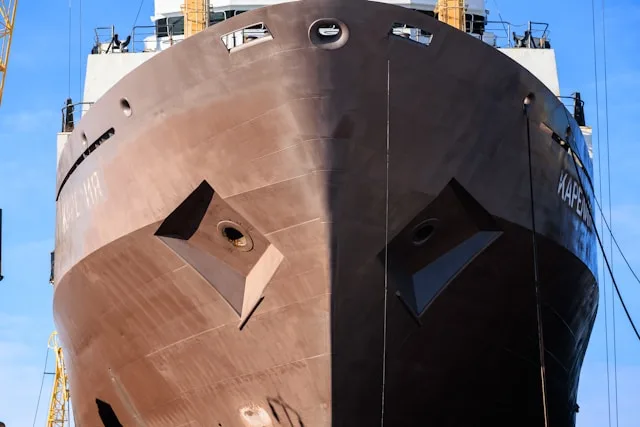
Fincantieri's Palermo shipyard processed roughly 50 vessel calls in 2024. Its two dry docks and three repair berths operated at 85 to 90 per cent of physical capacity. The constraint was not infrastructure. It was people. Certified marine welders, LNG pipefitters, and automation engineers are absent from the local labour market in numbers that matter, and the gap is widening as the vessels arriving for service grow more technically complex with every regulatory cycle.
The paradox at the centre of this market is difficult to ignore. Palermo's metropolitan unemployment rate stood at 18.2 per cent in late 2024. Nearly one in five working-age adults in the city had no job. Yet the shipyard and its subcontractor network could fill only 60 to 65 per cent of demand for the certified specialists they needed most. The surplus labour and the scarce labour exist in the same city, separated by a certification wall that neither side can cross quickly. This is not a hiring problem in the conventional sense. It is a structural mismatch between what the local economy produces and what the maritime sector requires.
What follows is a ground-level analysis of the forces shaping Palermo's ship repair talent market in 2026: where the shortages sit, why they persist despite mass unemployment, what the green transition is doing to the skills profile, and what organisations hiring in this sector need to understand before they launch a search that conventional methods cannot complete.
A Repair Yard, Not a Shipbuilder: Why the Distinction Matters for Talent
Fincantieri's Palermo facility operates exclusively as a repair and conversion centre. It sits within Fincantieri's Services division, entirely separate from the newbuild operations in Monfalcone, Marghera, or Trieste. This distinction shapes every aspect of the talent market.
Newbuild yards hire for long production runs. A hull fabrication programme might span 18 months, allowing structured onboarding, apprenticeship rotations, and gradual upskilling. Repair yards operate on compressed timelines. A cruise vessel arriving for a class survey and scrubber retrofit may occupy a dry dock for 7 to 14 days. The project management cadence is radically different. The margin for error on welding quality or systems integration is identical to a newbuild, but the time available to achieve it is a fraction.
This means the yard cannot absorb trainees at the pace a newbuild facility can. It needs professionals who arrive certified, experienced, and capable of working to classification society standards from day one. The training pipeline that feeds Northern Italian yards, where a junior welder can develop over two or three vessel cycles, does not function at the same tempo in Palermo's repair environment.
The implication for hiring leaders is direct. A search for a senior welding coordinator or a cruise refit project manager in this market is not a search for someone who can learn on the job. It is a search for someone who has already done the job, probably at another repair yard, and is currently employed.
The Four Roles the Market Cannot Fill
The Palermo marine repair market exhibits deep shortages in four specific categories, each driven by a different combination of certification requirements, technology transitions, and demographic pressure.
Certified Marine Welders: A 40 Per Cent Supply Deficit
Demand for welders holding EN ISO 9606-1/2 certification for marine-grade alloys, specifically 5083 aluminium and 316L stainless steel, exceeds local supply by approximately 40 per cent. These are not general-purpose welders. The cruise ship repair sector requires these specific certifications for fuel tank modifications and structural alterations that classification societies will inspect before the vessel returns to service.
According to data from the Excelsior Information System, the regional forecasting tool operated by Unioncamere and ANPAL, the supply shortfall for these certified trades in Sicily has remained above 35 per cent since 2023. Employers in the Palermo port area typically maintain open postings for welding quality control inspectors for 90 to 120 days. The national average for comparable technical roles is 45 days. According to FIM-CISL's October 2024 report on the Palermo yard, the facility operated through the third quarter of 2024 with only 70 per cent of required welding inspection staff filled. The gap was covered by overtime shifts and temporary transfers from Fincantieri's Genoa operations.
Marine Pipefitters and LNG Systems Specialists
The transition to alternative fuels has created a role category that barely existed five years ago. Specialists in high-pressure hydraulic systems and LNG fuel piping installation are critically scarce across the Mediterranean, and Palermo is no exception. Cryogenic system experience, essential for LNG and increasingly for methanol-ready conversions, is held by a vanishingly small number of professionals in Southern Italy.
A search pattern documented by regional engineering recruiters, as reported by Shipping Italy in November 2024, illustrates the problem. A marine engineer with LNG fuel system experience was sought for a 2024 ferry conversion project. After 150 days of active recruitment through University of Palermo channels and national job boards, the position was filled by internal transfer from Fincantieri's Trieste facility. The local market simply did not contain the candidate.
Automation and Electrical Engineers
Engineers capable of programming and troubleshooting integrated ship automation systems, power management systems, and the shore connection interfaces required by the yard's new cold ironing infrastructure represent a third shortage. The €12 million investment Fincantieri completed in 2024 to upgrade the dry dock's electrical systems for shore power connections has increased demand for precisely the profile that is hardest to find locally.
Cruise Refit Project Managers
Senior professionals who can coordinate multi-disciplinary teams across classification society surveys, interior outfitting, and mechanical works within a 7 to 14 day dry-dock window are the fourth critical gap. The passive candidate ratio for this role in the Sicilian market is estimated at 80 to 85 per cent. The active candidate pool consists almost entirely of individuals relocating for family reasons or exiting failed projects. Average tenure in role exceeds five years, meaning turnover is low and availability is correspondingly rare.
The compounding effect across these four categories is what constrains the yard's output ceiling. Each unfilled specialist role limits the complexity and speed of work the facility can accept, which in turn limits revenue per vessel call.
The Paradox: Mass Unemployment and Acute Shortage in the Same City
The most striking feature of Palermo's ship repair talent market is that it sits inside an economy with 18.2 per cent unemployment. Italy's national average at the same point was 6.8 per cent. The city has surplus labour. It does not have surplus qualified labour.
This is not a demographic shortage. It is an educational and certification shortage. The local workforce lacks the specific credentials the maritime sector demands: EN ISO welding standards, STCW safety training, classification society familiarisation, and the hands-on experience with marine-grade materials that only comes from time in a working yard. The vocational training infrastructure exists but cannot produce graduates at the rate the market absorbs them.
The ITS Academy "Fondazione Mondo Digitale" specialising in naval mechatronics graduated a 2024 cohort of 45 students in welding and marine systems. The University of Palermo's Department of Engineering produces marine engineers and naval architects, but graduate retention in Sicily runs at approximately 35 per cent. The remaining 65 per cent emigrate to Northern Italy, where salaries are 15 to 25 per cent higher and career trajectories within Fincantieri's newbuild division offer superior advancement.
Here is the original synthesis this data points toward. The investment Fincantieri has made in Palermo's green infrastructure, and the regulatory demand driving increasingly complex vessel retrofits, have not reduced the workforce requirement. They have replaced one kind of worker with another that the local education system was never designed to produce. Capital investment moved faster than human capital development could follow. The yard's physical capability has been upgraded for a 2027 regulatory environment. Its accessible workforce remains calibrated to a 2018 skill profile. That mismatch is the core problem, and it cannot be solved by posting vacancies.
The organisations competing in this market, whether Fincantieri itself or the 15 to 20 SMEs in the subcontractor ecosystem, face a reality where conventional recruitment approaches consistently fail to reach the candidates who actually hold these qualifications.
The Green Transition: Opportunity and Acceleration of the Gap
The regulatory environment driving Palermo's ship repair demand is intensifying on a fixed timeline. The EU Emissions Trading System for maritime, phased in from 2024 through 2026, and the FuelEU Maritime regulation effective from 2025, are accelerating demand for vessel retrofitting across the Mediterranean. Cruise lines operating mid-generation vessels built between 2005 and 2015 face a peak window for scrubber installations and ballast water treatment system retrofits through 2027. These vessels require dry-docking in Mediterranean-compliant ports. Palermo's geographic position on primary cruise routing makes it a natural candidate for this work.
Major Italian ferry operators including Grimaldi Group and GNV have committed to LNG and methanol-ready conversions. Palermo's proximity to the Western Mediterranean's primary ferry routes gives it a geographic advantage over yards further north or east. The demand pipeline, by the assessment of Assonave and the Federazione del Mare, is cautiously expansionary through 2026 and into 2027.
The Compensation Divergence That Fuels the Drain
Yet the compensation data tells a different story from the investment data. Technical role premiums in Palermo are growing at 3 to 4 per cent annually. In Northern Italian yards, the same roles are seeing 6 to 8 per cent annual growth. Executive packages at Fincantieri Palermo include performance bonuses of 20 to 30 per cent of base salary, tied to vessel delivery milestones and safety metrics. But base salaries for senior specialists in Palermo sit at €55,000 to €72,000 for marine engineering roles and €42,000 to €58,000 for production and welding coordination. The equivalent roles in Genoa or Trieste command 15 to 25 per cent more.
The cost of living differential partially offsets this gap. Housing costs in Genoa run approximately 40 per cent higher than Palermo. But for a marine automation engineer weighing a move north, the net purchasing power calculation still favours the higher-paying market when career trajectory is factored in. Northern facilities offer access to R&D positions and newbuild programmes that simply do not exist in Palermo's repair-only operation.
This compensation divergence is not closing. It is widening fastest at exactly the seniority level where the most critical roles sit. The result is a market where Palermo's yard invests in increasingly sophisticated physical infrastructure while the workforce capable of operating it migrates toward markets that pay more and offer broader career paths. For hiring leaders, this means that understanding what roles actually pay in this market is essential before structuring an offer that has any chance of landing.
Competition for Talent Beyond Italy's Borders
Palermo's ship repair talent market does not compete only with Northern Italy. Two Mediterranean neighbours exert meaningful pull on the same professional population.
Malta, specifically the Valletta and Grand Harbour yards operated by Palumbo Shipyards and Carmelo Caruana, offers a 15 per cent flat tax rate for specialised foreign workers. This creates effective compensation premiums of 20 to 30 per cent over equivalent Palermo packages for Italian-speaking project managers and surveyors. The English-speaking regulatory environment and UK-derived maritime certification standards add a further attraction for engineers seeking international career mobility.
Greece's Piraeus and Perama yards offer lower base salaries but rapid career progression in a fragmented ownership market. The concentration of cruise line technical offices in Piraeus creates demand for cruise repair project managers that directly competes with Palermo for the same talent.
The practical effect is that any executive search conducted in this market must account for cross-border mobility patterns. A senior marine engineer in Palermo considering a move is not choosing between Palermo and Genoa. They are choosing between Palermo, Genoa, Trieste, Valletta, and Piraeus. The search firm or internal recruiter that treats this as a local market is searching in approximately 30 per cent of the actual candidate universe.
According to a 2024 Cedefop Skills Panorama analysis of the maritime sector, workforce mobility across EU shipbuilding has increased materially since 2021. Italian marine engineers, particularly those under 40, show the highest propensity for cross-border movement in the Southern European maritime workforce. The risk of losing a targeted candidate to a counteroffer from a competing geography is elevated in this market precisely because the alternatives are real and accessible.
The Subcontractor Squeeze: When the Anchor Employer Poaches from Its Own Supply Chain
The poaching dynamic between Fincantieri and its subcontractor network deserves specific attention because it reveals a systemic fragility in Palermo's marine repair ecosystem.
According to UILM union reports from September 2024 and coverage in the Giornale di Sicilia, Tecnomar Palermo, a specialised marine electrical contractor, lost three senior automation technicians to Fincantieri's Palermo yard in the second and third quarters of 2024. The salary premiums required to secure the transfers were 25 to 30 per cent above the technicians' existing packages. This triggered clauses in collective agreements restricting inter-firm recruitment during active projects.
The pattern is not unique to one subcontractor. The Palermo port area hosts approximately 15 to 20 SMEs providing technical stores, marine electrical services, insulation, HVAC, and classification liaison work. C.M.M. S.p.A., the largest subcontractor with roughly 180 staff, specialises in naval insulation and accommodation outfitting. These firms operate on margins that cannot absorb 25 to 30 per cent salary premiums for retention.
When the anchor employer in a small market recruits from its own supply chain, it creates a cascade. The subcontractor loses capability. The subcontractor's ability to deliver its portion of a vessel project degrades. The anchor employer then faces bottlenecks in the very functions it outsourced. The total market capacity shrinks even as each individual organisation attempts to grow.
This dynamic means that the true cost of a hiring failure in this market extends well beyond the unfilled role itself. A senior automation technician leaving a subcontractor for the primary yard does not increase the market's total capacity by a single hour. It merely redistributes an already insufficient resource. For hiring executives at Fincantieri, at C.M.M., at Tecnomar, and across the broader ecosystem, the implication is that recruitment within the local market has reached a zero-sum equilibrium. New capacity must come from outside.
What a Search Strategy for This Market Actually Requires
A hiring leader approaching this market with a standard recruitment process, posting a vacancy on national job boards, screening inbound applications, building a shortlist from active candidates, will reach perhaps 15 to 25 per cent of the qualified talent pool. The passive candidate ratios in this sector are unambiguous. For senior cruise refit project managers, 80 to 85 per cent of qualified professionals are not looking. For marine propulsion and automation engineers, 75 per cent are passive. For certified welding inspectors, 70 per cent.
The 150-day failed search for an LNG systems engineer, ultimately resolved by internal transfer rather than local recruitment, is not an outlier. It is the predictable outcome of a conventional approach applied to a market where conventional approaches do not work.
Three factors make this market particularly resistant to standard methods.
First, the certifications required are non-negotiable. A welder without EN ISO 9606-1/2 certification for marine-grade alloys cannot perform the work. There is no "close enough" candidate. This eliminates the possibility of hiring for potential and training on the job, at least for the repair yard's compressed project timelines.
Second, the geographic scope of the real candidate market spans at least five cities across three countries. A search confined to Sicily, or even to Italy, is structurally incomplete. Talent mapping across the full competitive geography is not an enhancement to the search. It is a prerequisite.
Third, the professionals who hold these qualifications and certifications are employed, productive, and not experiencing the kind of dissatisfaction that drives active job seeking. Moving them requires a proposition that addresses career progression, project complexity, and lifestyle considerations, not merely compensation. The fact that Palermo offers lower housing costs than Genoa is relevant but insufficient. The proposition must include something the candidate cannot access in their current role.
For organisations that need to fill specialist and leadership roles in the industrial and manufacturing sector across Southern Europe, the method matters as much as the market intelligence. KiTalent's approach to this kind of search begins with AI-enhanced identification of passive candidates across the full geographic scope, followed by direct engagement with professionals who are not visible on any job platform. The model delivers interview-ready candidates within 7 to 10 days, with a pay-per-interview structure that eliminates the retainer risk that deters many hiring organisations from engaging specialist search for technical roles.
The 96 per cent one-year retention rate for placed candidates reflects the depth of the matching process. In a market where a misaligned hire costs not just salary but project timeline and classification society compliance, retention is not a secondary metric. It is the primary one.
For hiring leaders competing for marine engineering, automation, and project management talent in Palermo's ship repair market, where the candidates you need are employed, certified, and distributed across the Mediterranean, start a conversation with our executive search team about how we approach this specific market.
Frequently Asked Questions
What types of roles are hardest to fill in Palermo's ship repair sector?
Four categories present the deepest shortages. Certified marine welders qualified in TIG/MAG processes for stainless steel and aluminium alloys face a 40 per cent supply deficit. Marine pipefitters with LNG and cryogenic system experience are critically scarce across Southern Italy. Automation and electrical engineers capable of working with integrated ship automation and shore power systems are in high demand following the yard's infrastructure upgrade. Senior project managers for cruise refits, where 80 to 85 per cent of qualified candidates are passive, complete the picture. These roles require specific maritime certifications that the local training pipeline cannot produce at sufficient volume.
Why does Palermo have a skills shortage despite high unemployment?
Palermo's 18.2 per cent unemployment rate masks a deep mismatch between available labour and maritime sector requirements. The shipyard needs workers holding EN ISO welding certifications, STCW safety credentials, and hands-on experience with marine-grade materials. The local workforce largely lacks these qualifications, and vocational training output covers only 60 per cent of projected demand. The shortage is not demographic. It is educational and institutional, rooted in training systems that were not designed for the technical complexity the green transition now demands.
What do senior ship repair roles pay in Palermo compared to Northern Italy?
Senior specialist and manager roles in Palermo's marine engineering sector pay €55,000 to €72,000, with production and welding coordination at €42,000 to €58,000. Executive-level positions, including Technical Director and Operations Director roles, range from €85,000 to €130,000 with performance bonuses of 20 to 30 per cent. These figures sit 15 to 25 per cent below equivalent roles in Genoa, Trieste, or Monfalcone. Palermo's lower cost of living partially offsets the gap, but career trajectory advantages in Northern newbuild yards continue to pull senior talent northward.
How does the green transition affect hiring in Palermo's shipyard?
EU regulations including the Emissions Trading System for maritime and FuelEU Maritime are driving a peak in scrubber installations, ballast water system retrofits, and alternative fuel conversions through 2027. Fincantieri's €12 million shore power upgrade has positioned the Palermo yard for this work. However, the technical profiles required, including electrical engineers for cold ironing systems and pipefitters for cryogenic fuel infrastructure, represent skills the local labour market was never designed to supply at scale. The investment has outpaced human capital development.
How can KiTalent help with ship repair and marine engineering recruitment in Italy?
KiTalent uses AI-enhanced direct headhunting to identify and engage passive candidates across the full Mediterranean talent geography, including Italy, Malta, and Greece. In a market where 75 to 85 per cent of qualified professionals are not actively seeking new roles, conventional job advertising reaches a fraction of the viable candidate pool. KiTalent delivers interview-ready candidates within 7 to 10 days under a pay-per-interview model, with a 96 per cent one-year retention rate that reflects the depth of technical and cultural matching required in specialist maritime roles.
What makes executive search different from standard recruitment for maritime roles?
Standard recruitment relies on active candidates responding to posted vacancies. In Palermo's ship repair market, the active candidate pool consists primarily of entry-level and administrative profiles. The senior welding inspectors, LNG engineers, and refit project managers that employers need are employed, certified, and not browsing job boards. Executive search built around direct identification and approach is the only method that reaches these professionals. The difference is not incremental. It determines whether a search produces qualified candidates or runs for 150 days and ends in an internal transfer from another facility.