Palermo's Port Is Investing Millions in Green Infrastructure. The Professionals to Run It Do Not Exist in Sufficient Numbers
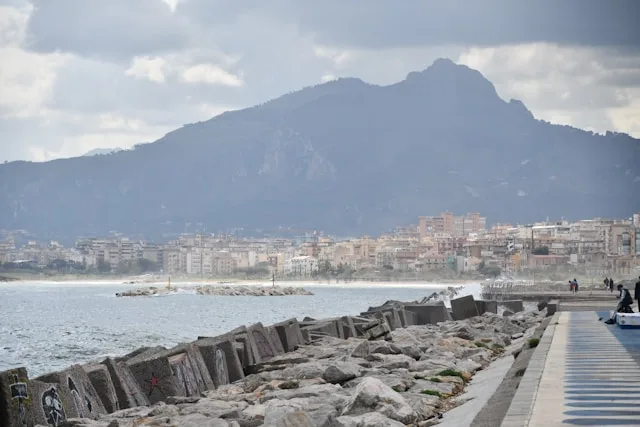
Palermo's port authority has committed €47 million to infrastructure upgrades through 2026. Shore power installations for cruise vessels, quay strengthening for next-generation ro-ro ships, and a new eastern berth for the cruise terminal are all advancing. The investment programme reads like a port preparing for its next chapter: greener, larger, more digitally integrated. There is one problem. The professionals required to operate, maintain, and certify these systems are not available in the numbers the market needs.
The gap is not theoretical. Since the EU Emissions Trading System expanded to cover maritime transport in January 2024, and with FuelEU Maritime regulations now in effect as of 2025, demand for professionals capable of carbon accounting, alternative fuel transition planning, and MRV compliance has risen 140% year-on-year across Italian ports. Palermo feels this shortage more acutely than Genoa or Livorno because it pays 15 to 20% less for equivalent roles. Capital investment has moved faster than human capital can follow, and the port's ability to absorb its own infrastructure spending now depends on solving a hiring problem that job boards cannot reach.
What follows is an analysis of the forces reshaping Palermo's port and logistics sector, where the real talent gaps sit, what drives them, and what organisations operating in this market need to understand before they make their next senior hire.
Western [Sicily](/sicily-italy-executive-search)'s Multipurpose Port in 2026: Scale, Structure, and the Limits of Growth
Palermo functions as western Sicily's primary multipurpose port, managed by the Autorità di Sistema Portuale del Mare di Sicilia Occidentale. It is not the largest passenger port on the island. That distinction belongs to Messina, which handled approximately 22.8 million passengers in 2023 through high-frequency strait-crossing shuttles. Palermo's 5.8 million passengers reflect a fundamentally different traffic profile: long-haul ro-ro ferry connections to mainland Italy and Tunisia, plus a cruise segment that reached 546,000 passengers in 2023 after 23% year-on-year growth.
The port's diversified cargo profile is its distinguishing feature. It handled 6.2 million tonnes of freight in 2023, with container traffic reaching 312,000 TEU in 2024. This is not a transshipment hub. Malta Freeport handles 1.2 million TEU. Gioia Tauro handles 3.2 million. Both offer deeper drafts and superior rail connectivity. Palermo's container business is specialised: breakbulk and project cargo serving the Sicilian domestic market. The port's competitive position rests on its ro-ro ferry connections, which constitute 65% of total revenue, and a cruise segment growing fast enough to attract €18 million in Pontile Nord renovation investment.
Cruise ship calls rose from 340 in 2024 to a projected 380 to 400 in 2025. The AdSP MSO projects 650,000 cruise passengers by 2026, contingent on completion of the eastern berth. These are material numbers for a mid-sized Mediterranean port. They are also numbers that depend entirely on Palermo's ability to staff the operations, compliance functions, and terminal management roles that make a port capable of handling that volume safely and profitably.
The ferry sector tells a different story. Grimaldi Lines, GNV, and Tirrenia collectively operate 85% of ro-ro capacity. Margins in this segment run between 3% and 5% EBIT. EU ETS compliance costs, estimated at €8 to €12 per passenger for ferry routes, are compressing those margins further. The port is simultaneously growing in one segment and being squeezed in another. The talent implications of each are distinct, and this article addresses both.
The Regulatory Shock That Rewrote Every Job Description
Two regulatory shifts have reshaped the skills required to operate a Mediterranean port. Neither was gradual.
EU ETS and FuelEU Maritime: Compliance at Scale
The EU Emissions Trading System expanded to cover maritime transport in January 2024. FuelEU Maritime followed in 2025. Together, they require every port operator, ferry line, and cruise terminal to build compliance infrastructure that most did not possess eighteen months ago. For Palermo's ferry operators, the annual compliance burden is estimated at €4.8 million. For cruise calls, the cost runs €15 to €20 per passenger.
According to a joint study led by Fincantieri on green competencies in the maritime sector, demand for professionals capable of managing the THETIS-MRV reporting platform, conducting carbon accounting, and planning alternative fuel transitions rose 140% year-on-year across Italian ports by late 2024. These are not roles that existed in most port organisational charts three years ago. They are now mandatory.
The challenge is compounded by shore power infrastructure. The AdSP MSO's investment plan includes cold ironing installations for cruise vessels. Operating these systems requires engineers who understand both the electrical infrastructure and the regulatory framework governing its certification. The professionals who hold both qualifications are already employed. According to the Fincantieri study, securing a move from one of these candidates requires poaching premiums of 20 to 25% above market rate.
NIS2: Cybersecurity for Critical Maritime Infrastructure
As of October 2024, port authorities qualify as essential entities under the NIS2 cybersecurity directive. This requires mandatory incident reporting, supply chain security audits, and operational technology protections for port community systems. Implementation costs for Palermo's systems are estimated at €3.2 million. The shortage of cybersecurity professionals familiar with OT and ICS systems in maritime environments is acute, and Palermo competes for these specialists against every other EU port authority under the same deadline.
The combined effect of these regulations is not incremental. It is a wholesale rewriting of the competency requirements for port management. Every terminal director, every operations manager, every compliance officer now needs skills that were optional two years ago and are non-negotiable today. The infrastructure investment is funded. The question is whether the people who must operate within this new regulatory architecture can be found and retained in a market that pays less than its competitors.
Four Shortages Shaping Palermo's Hiring Challenge
The talent gaps in Palermo's port ecosystem are not generic. They are specific, measurable, and in several cases structurally resistant to conventional recruitment.
Maritime Pilots: A Regulated Bottleneck
Italy caps maritime pilot licences by port. Palermo's Corpo Piloti holds 14 licensed pilots against a requirement of 18 to 20 for optimal round-the-clock operations. The average age of the current cohort is 54. Replacement cycles are glacial: one to two new licences are issued every three years through national examinations. This is a 100% passive candidate market. Every licensed pilot in Palermo holds a permanent state position. New entrants come only through structured apprenticeship programmes tied to biennial national exams. No recruitment method, however sophisticated, can accelerate a regulatory bottleneck. But understanding the timeline allows port operators to plan workforce transitions years in advance rather than months, and talent mapping exercises become essential for tracking the pipeline of candidates approaching licence eligibility.
Port Civil and Maritime Engineers
Demand for engineers specialising in maritime concrete structures, breakwater maintenance, and port mechanisation exceeds supply by an estimated 35% across the Sicilian region, according to the Ordine degli Ingegneri di Palermo's 2024 labour market survey. The scarcity is sharpest among professionals experienced with EU-funded infrastructure tenders, particularly PNRR funding absorption. Approximately 80% of senior port civil engineers are passive candidates. Average tenure exceeds eight years. The intersection of maritime structural engineering knowledge and port-specific regulatory expertise, including UNI 10830 standards for maritime works, creates a candidate pool so narrow that executive search rather than job advertising is the only viable method.
The University of Palermo's Department of Engineering graduates approximately 85 maritime engineering and transport management students annually. This pipeline feeds the entire western Sicily market. It is not sufficient.
Maritime Sustainability and Compliance Officers
This is the fastest-growing shortage and the one most directly tied to the regulatory shifts described above. The 140% year-on-year demand increase documented by the Fincantieri study meets a labour market where qualified candidates are already embedded in shipping lines or consultancy firms such as RINA and Bureau Veritas. Palermo's cost-of-living-adjusted salaries compound the problem. A Senior Sustainability and ETS Compliance Manager earns €52,000 to €68,000 in Palermo. The same role in Genoa or Livorno commands 20 to 30% more. At VP level, Head of Regulatory Affairs and Decarbonization roles range from €85,000 to €115,000, with premiums of 10 to 15% for candidates who bring proven EU funding acquisition experience.
The arithmetic does not favour Palermo. Professionals with the right qualifications can earn more in northern Italy, work in English in Malta with a 15% flat tax rate, or join a larger-scale operation in Barcelona where Royal Caribbean and MSC Cruises maintain regional offices. Each of these alternatives reduces Palermo's effective candidate pool further.
Cruise Terminal Operations Managers
The interface between cruise lines and port operations demands bilingual Italian and English managers experienced with ISPS Code security protocols and passenger experience optimisation. The role exists at the intersection of hospitality and maritime safety. Seasonal volatility makes retention difficult. The ratio of permanent to seasonal port workers stands at 1:2.8, with 85% of cruise traffic concentrated between May and October. Cruise Terminal Operations Directors with proven track records managing more than 500,000 annual passenger movements in Mediterranean ports are 75% passive. Active vacancy rates in this category remain below 2% despite rising demand.
When hiring leaders in this market cannot reach passive candidates through conventional channels, the search stalls. And when it stalls, the cost is not merely an unfilled role. It is operational risk during peak season, when the consequences of understaffing are most visible to cruise line partners who decide next year's port calls.
The Compensation Gap That Conventional Recruitment Cannot Close
Palermo's port compensation operates at a systemic discount to northern Italian ports. This discount ranges from 15% to 20% for most roles. For some, it is wider.
A Terminal Director in Palermo earns €95,000 to €130,000 base, with total compensation reaching €150,000 to €180,000 including performance bonuses. The same role in Genoa pays 20 to 30% more and offers proximity to the headquarters of MSC in Geneva and Grimaldi in Naples. A senior port engineer with ten or more years of experience earns €58,000 to €72,000 in Palermo. A Cruise Terminal Director employed by Global Ports Holding or a cruise line ground operation earns €80,000 to €110,000.
These are not figures that compete with Malta's net-of-tax advantage for highly qualified persons, or with Barcelona's combination of comparable salary and international career visibility. The talent flow is documented as predominantly unidirectional: from Palermo northward for mid-career professionals in the 35 to 45 age bracket, according to Uniontrasporti's 2024 professional mobility study.
The market produces a specific pattern. According to reporting in Il Sole 24 Ore, an engineering consultancy reportedly secured a senior maritime structural engineer from a competitor in Catania in late 2024 by offering a 22% salary premium above market rate. This pattern is described as typical across the sector. Meanwhile, aggregate data from LinkedIn Talent Insights indicates that a terminal operations and sustainability integration role at a major ro-ro operator was advertised for 147 days across Q4 2024 and Q1 2025 before being filled internally through a transfer from Genoa.
These durations and premiums are not anomalies. They are the standard cost of hiring in a market where compensation alone cannot attract the candidates who have better-paying options elsewhere. The proposition must include something compensation does not capture: the nature of the role itself, the autonomy it offers, and the career trajectory it enables. When organisations in Palermo understand this, they hire differently. When they do not, they lose the same searches repeatedly.
The Original Synthesis: Capital Investment as a Talent Accelerant Working in Reverse
Here is the dynamic that the data reveals but does not state directly. Palermo's €47 million infrastructure investment programme was designed to modernise the port and position it for growth. Shore power installations, quay strengthening, cruise terminal expansion, and digital systems are all elements of a port that wants to compete at a higher level. But each of these investments creates new roles that require skills the local market does not possess in sufficient quantity.
The cold ironing installations require engineers who understand electrical infrastructure and EU certification frameworks simultaneously. The digital port community systems require cybersecurity professionals versed in OT and ICS environments under NIS2. The expanded cruise terminal requires operations directors who can manage 650,000 passengers annually while meeting ISPS security protocols and delivering the passenger experience metrics that cruise lines use to allocate future calls.
Every euro spent on physical infrastructure widens the gap between what the port can build and what it can staff.
This is not a failure of planning. It is a structural mismatch between the speed of capital deployment and the speed of human capital development. Physical infrastructure can be built to a timeline. Professional expertise cannot be manufactured on the same schedule. The University of Palermo produces 85 maritime graduates per year. The regulatory environment just created demand for compliance, sustainability, and cybersecurity professionals that did not exist in the port's organisational charts three years ago. The pipeline was never designed for this rate of change.
The organisations that recognise this mismatch early gain an advantage. They invest in proactive talent pipelines before the roles are formally open. They engage search partners who can reach the 60 to 80% of qualified candidates who are passive. They structure compensation packages that account for Palermo's cost-of-living discount while offering non-monetary elements, such as autonomy, scope, and influence over a port in transformation, that northern ports cannot match. The organisations that wait until a vacancy is open and then post it on a job board are competing with one hand tied.
Structural Risks That Shape Every Hiring Decision
Hiring leaders in Palermo's port sector are not operating in a stable market. Three structural risks alter the calculus of every senior appointment.
Seasonal Volatility and Workforce Precarity
The cruise economy's 85% concentration in summer months creates a workforce model where permanent staff are outnumbered nearly three to one by seasonal workers. For operational and administrative roles, this model functions. For specialised technical and compliance roles, it does not. You cannot hire a sustainability officer on a seasonal contract. You cannot retain a port security manager through the winter if the workload halves and the contract reflects it. The seasonality compresses the effective window for return on investment in senior hires and makes retention as important as recruitment.
Hinterland Bottlenecks
Rail freight connections to Palermo's port rely on single-track, non-electrified lines for the final kilometres. The Palermo to Catania to Messina high-speed rail freight corridor is projected for completion in 2028. Until then, intermodal logistics capacity is constrained. This limits the port's ability to grow its cargo business regardless of how much quayside capacity is added. For hiring leaders, the implication is direct: logistics and supply chain roles in Palermo carry a complexity premium because the infrastructure demands workaround expertise that more modern ports do not require.
Political and Social Licence Risk
Local opposition to cruise expansion is intensifying. A 2024 municipal referendum initiative sought to limit cruise ship dimensions, echoing Venice's restrictions. The municipality is considering daily passenger caps. If these measures advance, the 650,000 passenger projection for 2026 becomes uncertain. Senior hires in cruise operations must be evaluated not only for their ability to scale operations up, but for their ability to manage a constrained operating environment if political headwinds materialise.
Each of these risks makes the wrong hire more expensive and the right hire more valuable. The cost of a bad executive appointment in a market this constrained is not merely financial. It is operational, reputational, and in some cases regulatory.
What This Market Requires from a Search Partner
Palermo's port talent market has characteristics that make conventional recruitment structurally inadequate. The candidate pools for the most critical roles are 60 to 100% passive. The compensation framework sits below northern Italian and international competitors. The regulatory environment has created demand for skills that did not appear on organisational charts until 2024. And the seasonal volatility makes retention as challenging as attraction.
In this environment, the search method matters as much as the search itself. A process that begins with a job advertisement reaches, at best, the 20 to 40% of candidates who are actively looking. In maritime piloting, that figure is zero. In senior port engineering, it is 20%. In cruise terminal operations leadership, it is 25%. The candidates who can fill the roles described in this article are employed, performing, and not browsing job boards.
KiTalent's approach to executive search in maritime and industrial sectors is built for exactly this kind of market. AI-enhanced talent mapping identifies candidates across Mediterranean port ecosystems, including the northern Italian, Maltese, and Spanish markets that compete directly with Palermo for the same professionals. The pay-per-interview model means organisations are not committing retainer fees before seeing qualified candidates. Interview-ready shortlists are delivered within 7 to 10 days. Placed candidates carry a 96% one-year retention rate, a metric that matters acutely in a market where the cost of re-running a failed search exceeds six months of lost productivity.
For organisations hiring into Palermo's port ecosystem, where the regulatory clock is running on EU ETS and NIS2 compliance, where cruise growth projections depend on having the operations leaders in place before peak season, and where the candidates you need are working for your competitors in Genoa, Malta, or Barcelona, start a conversation with our executive search team about how we approach this market differently.
Frequently Asked Questions
What are the most in-demand executive roles in Palermo's port sector in 2026?
The four most acute shortages are maritime pilots (structurally constrained by national licensing caps), senior port civil engineers with EU-funded tender experience, maritime sustainability and ETS compliance officers, and cruise terminal operations directors with Mediterranean experience. Demand for sustainability and compliance professionals has risen 140% year-on-year since the EU ETS expanded to maritime in 2024. These roles require a combination of regulatory expertise and operational knowledge that is scarce across all Italian ports, not only Palermo.
How do Palermo port salaries compare with other Italian and Mediterranean ports?
Palermo's port sector compensation operates at a 15 to 20% discount compared to northern Italian ports such as Genoa and Livorno for equivalent roles. A Terminal Director in Palermo earns €95,000 to €130,000 base, while the same role in Genoa commands 20 to 30% more. Malta offers lower nominal salaries but net-of-tax advantages through its 15% flat tax for highly qualified persons. Barcelona and Valencia offer comparable salaries with greater international career visibility through cruise line regional headquarters. Market benchmarking data confirms these differentials are widening for specialist regulatory roles.
Why is it so difficult to hire maritime sustainability professionals in Sicily?
The difficulty stems from three converging factors. First, the EU ETS and FuelEU Maritime regulations created demand for skills that barely existed in port organisations before 2024. Second, qualified candidates are already embedded in shipping lines or classification societies such as RINA and Bureau Veritas, making them passive. Third, Palermo's compensation sits below northern Italian competitors, meaning poaching premiums of 20 to 25% are typically required to secure a move. Standard job advertising methods reach fewer than 40% of viable candidates in this category.
What impact does the EU ETS have on Palermo's ferry and cruise operations?
EU ETS compliance costs are estimated at €8 to €12 per passenger for Palermo's ferry routes and €15 to €20 per cruise call. For ferry operators running on 3 to 5% EBIT margins, these costs are material. Annual compliance costs for Palermo-based ferry operators are estimated at €4.8 million collectively. The risk is traffic diversion to North African ports or Spanish competitors where compliance infrastructure is more advanced. Every operator now needs compliance officers who understand carbon accounting within the maritime regulatory framework, and these professionals are in extremely short supply.
How can organisations compete for port talent against higher-paying northern Italian markets?
Compensation alone will not close the gap. Organisations hiring in Palermo must build propositions that include the scope and autonomy that comes with a port undergoing transformation, the influence over €47 million in active infrastructure investment, and career development that positions candidates for international leadership roles. KiTalent's approach combines AI-powered identification of passive candidates across Mediterranean markets with structured assessment of what motivates each individual to move, delivering interview-ready candidates within 7 to 10 days.
What is the outlook for cruise growth at the Port of Palermo?
Cruise passenger numbers reached 546,000 in 2023 with projections targeting 650,000 by 2026, contingent on completion of the new eastern berth. Cruise ship calls are expected to reach 380 to 400 in 2025, up from 340 in 2024. However, two risks temper this outlook: the Pontile Nord renovation faces construction delays due to archaeological supervision requirements, and local political opposition to cruise expansion is intensifying with discussions about daily passenger caps. The operational challenge is not attracting cruise lines but having the leadership and compliance infrastructure in place to handle the growth safely.