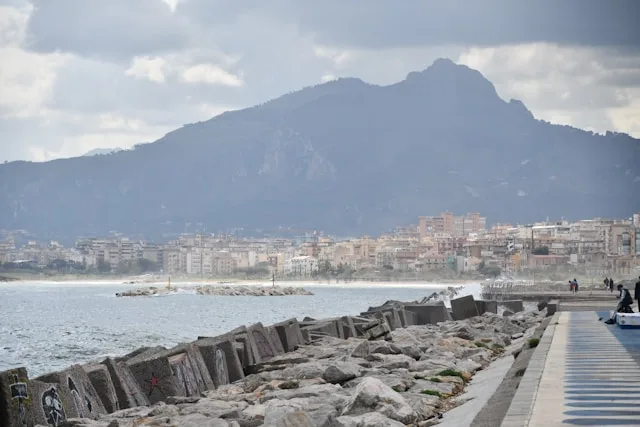
Palermo's Luxury Hospitality Investment Has Outpaced the Talent to Run It
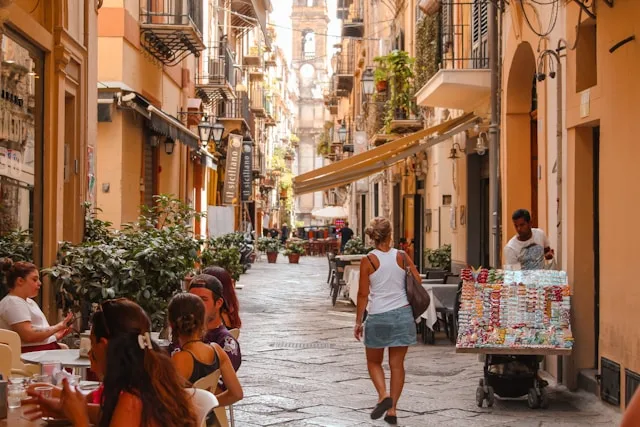
Palermo has absorbed €340 million in luxury hospitality investment since 2020. The Arab-Norman UNESCO serial site, inscribed in 2015, reshaped the city's tourism identity, and international capital followed. Rocco Forte Hotels is expanding Villa Igiea. Palazzo Butera is converting into a boutique property. By mid-2026, 890 new luxury keys will enter a market that could not adequately staff the properties it already had.
The problem is not demand. Falcone Borsellino Airport handled 7.4 million passengers in 2024, exceeding 2019 levels by four percentage points. International visitors now represent 42% of arrivals, drawn by a cultural proposition that competitors across the Mediterranean cannot replicate. The problem is that the people required to deliver a five-star experience in these properties do not exist in sufficient numbers. The Sicilian Hoteliers Association projects a need for 2,400 additional skilled hospitality workers by end of 2026. The local training pipeline produces 1,100 annually, and 60% of those graduates leave Sicily for Milan or Rome before their first contract ends.
What follows is a ground-level analysis of Palermo's hospitality sector: where capital and human capital have diverged, which roles are proving impossible to fill through conventional methods, what the compensation dynamics actually look like, and what organisations opening or expanding properties in this market need to understand before they commit to a hiring timeline they cannot meet.
The Investment Wave That Created the Gap
The €340 million in private hospitality investment that has flowed into Palermo since 2020 is concentrated almost entirely in the five-star segment. This is not a coincidence. The UNESCO Arab-Norman designation, which covers the Norman Palace, Palermo Cathedral, and several churches across the city, gave international investors a cultural anchor that justified premium positioning. According to Sicindustria, the Sicilian industrial confederation, the investment has been directed toward heritage conversions and luxury expansions rather than mid-market supply.
The Villa Igiea expansion under Rocco Forte Hotels will add 72 keys. The Palazzo Butera boutique conversion will add 45. These are properties that require not just staffing but highly specialised staffing: general managers with UNESCO heritage compliance experience, executive chefs capable of interpreting Sicilian culinary tradition at a fine-dining standard, revenue managers who can optimise pricing against a short-term rental market of 4,200 active Airbnb listings in the historic centre alone.
A Training Pipeline That Cannot Keep Pace
The local vocational system, anchored by the Istituto Einaudi and IPSAR hospitality schools, produces approximately 340 qualified graduates per year. This figure includes all levels, from front-of-house trainees to management candidates. Of those 340, roughly 60% emigrate to northern Italy within two years of graduation. The effective annual supply of trained hospitality professionals who remain in Palermo is therefore closer to 136.
Against a projected need for 2,400 additional skilled workers by end of 2026, the arithmetic is unambiguous. Palermo would need to retain every graduate it produces for the next 18 years to close the gap through domestic training alone. The gap is not closing. It is widening with every new property announcement.
Why the Shortage Compounds Rather Than Corrects
In most labour markets, a talent shortage triggers a price correction. Wages rise. Workers from adjacent markets move in. Supply adjusts. In Palermo, three forces prevent this self-correction. First, the cost of living in the historic centre has risen 28% since 2020, driven by short-term rental conversion, which erodes the lifestyle arbitrage that once compensated for lower salaries. Second, the 67% reliance on seasonal contracts means that even workers willing to relocate face employment insecurity that Milan or Rome do not impose. Third, the brain drain to northern Italy is not a pipeline leak. It is the pipeline's primary output. AlmaLaurea data shows Milan absorbing 40% of Palermo's hospitality management graduates through salary premiums of 35% to 50% for comparable roles.
This is the original analytical tension this article addresses: the investment in Palermo's hospitality sector has not simply failed to attract enough workers. It has created conditions that accelerate their departure. Every new luxury property raises the city's profile, which raises graduate ambitions, which sends more of them to Milan. Capital has moved faster than the human capital system can respond, and the response mechanism itself is working in the wrong direction.
The Roles That Stall: Where Searches Break Down
Not every hospitality role in Palermo is difficult to fill. Entry-level food and beverage service, housekeeping, and front desk positions attract high application volumes. Provincial unemployment stands at 18.4%, and these roles require limited specialisation. The crisis is concentrated in three categories where the candidate pool is small, passive, and geographically dispersed.
General Managers With Heritage Expertise
According to Federalberghi Sicilia's 2024 competency survey, 34% of managerial positions in Palermo's four- and five-star properties remained vacant for more than 90 days in 2024. In Milan, the equivalent figure is 12%. The gap is not merely one of compensation. It reflects a skills requirement that is genuinely rare. A general manager at a Palermo luxury property needs UNESCO buffer zone compliance knowledge, cruise passenger flow management capability, and trilingual fluency in Italian, English, and either French or German. This combination narrows the pool dramatically.
The Palazzo Butera pre-opening search for a general manager with UNESCO project experience illustrates the pattern. The role has been advertised continuously since September 2024. As of early 2025, no appointment had been made, and the search had stalled twice. In executive placement data, 85% of five-star GM placements occur through direct headhunting or executive search rather than job advertising. The active application rate for these roles sits below 5%.
Executive Chefs in the Fine Dining Segment
According to industry reporting in Il Sole 24 Ore, the Villa Igiea maintained an open search for an Executive Chef specialising in Sicilian-Mediterranean fusion for 11 months between February 2023 and January 2024. The property eventually recruited internally from Verdura Resort, Rocco Forte's Sciacca property, offering a 25% salary premium and a relocation package to move a chef fewer than 150 kilometres.
This is not an isolated incident. It is the standard pattern. The executive chef market in Palermo is 70% passive. Average tenure runs 4.2 years. Recruitment happens through culinary network referrals and brigade poaching rather than job boards. A property that lacks the networks to reach these candidates directly will wait. The cost of that extended vacancy in a luxury hotel is not merely operational. It delays menu development, press launches, and the critical first reviews that determine a property's market position for years.
Revenue Managers Who Understand the Local Competitive Dynamic
The revenue management challenge in Palermo is unlike any other Italian city. A revenue manager here must optimise against a dual market: 12,500 traditional hotel rooms competing with 4,200 active short-term rental listings, many of which operate with zero labour cost and aggressive dynamic pricing. OTA algorithm optimisation, short-term rental competitive analysis, and advanced business intelligence tools are table-stakes skills. Yet these are the skills most easily exported to Milan or Dubai, where they command materially higher compensation.
According to reporting in Hospitality Inside Italia, the NH Palermo operated without a dedicated Revenue Manager for seven months in 2024, relying on regional cluster support from Milan. The hotel eventually recruited the Revenue Manager from Hotel Plaza Opera in Catania with a €15,000 sign-on bonus. This is the kind of lateral poaching that characterises a market where the candidate pool is finite and every hire creates a vacancy elsewhere.
Compensation: The Numbers Palermo Must Offer and Why They May Not Be Enough
The compensation structure for executive hospitality roles in Palermo sits materially below northern Italian and international benchmarks, but the gap is more nuanced than headline figures suggest.
A General Manager at a five-star Palermo property earns €85,000 to €120,000 base salary, with a 20% to 30% bonus and a housing allowance. The equivalent role in Milan commands €120,000 to €160,000. The differential looks manageable until you factor in progression: Milan offers faster pathways to multi-property regional director roles, which accelerates long-term earning potential in a way that a single Palermo property cannot match.
Executive Chefs in Palermo's luxury segment earn €55,000 to €75,000 gross, with some properties offering revenue sharing. Dubai and the Maldives target Italian Executive Chefs with tax-free packages of €80,000 to €120,000 net, plus housing. The gross-to-net comparison is devastating: a Palermo chef earning €75,000 gross takes home roughly €48,000 after Italian taxation. The same professional in Dubai takes home €100,000 or more with accommodation included.
Revenue Managers at senior level earn €38,000 to €48,000 in Palermo. Directors of Revenue Management overseeing multiple properties earn €65,000 to €80,000. These figures are competitive within the southern Italian context but fall 25% to 35% below what the same professionals command in Rome.
The traditional counter-argument was lifestyle. Palermo's cost of living, its climate, its cultural richness, and its pace of life were supposed to offset the salary gap. This argument is weakening. Historic centre residential costs are up 28% since 2020. The lifestyle premium is real, but it is no longer free. For organisations relying on it as a recruitment tool, the negotiation requires more specificity than it once did: which neighbourhood, what housing support, what career development investment compensates for the earning differential over a five-year tenure.
The Seasonal Contract Problem No One Has Solved
Sixty-seven percent of hospitality employment in the Province of Palermo operates on seasonal contracts. Fifty-four percent of annual tourism revenue concentrates between June and September. These two figures define the structural constraint that no individual employer can resolve alone.
The seasonal model works for entry-level roles. It does not work for executive and senior specialist positions. You cannot hire a General Manager on a nine-month contract. You cannot develop a revenue management strategy with a professional who leaves every October. Yet the business economics of many Palermo hotels, operating at 68% average annual occupancy with a peak of 92% in August, make year-round executive compensation a disproportionate fixed cost relative to off-season revenue.
Recent legislation has attempted to address this. Legge 138/2024, effective from the 2025 financial year, extends the maximum duration of seasonal contracts from nine to twelve months. This is a modest improvement. But it also increases social security contributions by 2.5%, raising the total cost of employment at precisely the moment when properties need to hire aggressively. The legislation gave employers more time with their seasonal workers while making each month of that time more expensive.
For hiring executives weighing a Palermo appointment, the seasonal dynamic creates a specific risk that retention-focused search processes must address at the offer stage, not after arrival. A candidate who relocates to Palermo for a year-round executive role needs contractual certainty, career development investment, and a clear proposition about what the off-season months look like operationally. Properties that fail to articulate this lose candidates to cities where the question does not arise.
Regulatory Pressure Is Reshaping the Competitive Field
Two regulatory interventions are altering the market conditions under which Palermo's hospitality sector operates in 2026, and both have direct talent implications.
The Cruise Passenger Cap
The Port System Authority of Western Sicily has imposed a cap of 180,000 annual cruise passengers disembarking simultaneously in the historic port zone, effective January 2026. This follows 540,000 cruise passenger throughput in 2023, a figure that had risen 23% year-on-year, driven partly by Eastern Mediterranean itinerary shifts due to regional instability. The cap does not reduce total cruise traffic. It redistributes it across the day and across the port zone, requiring more sophisticated ground operations management.
For employers, this means the 450-plus seasonal ground staff jointly employed by MSC Cruises and Costa Cruises through Palermo Cruise Terminal must now operate under tighter scheduling constraints. It also means that hotel properties near the Quattro Canti entry point, which have benefited from walk-in cruise traffic, face a demand redistribution that requires revenue management recalibration. The cap is a service quality measure that carries a workforce planning consequence.
Short-Term Rental Restrictions
The Comune di Palermo implemented zoning restrictions in January 2025 limiting new Airbnb licenses in the historic centre to 180 days per year of operation unless the unit is a primary residence. This follows similar measures in Florence and Rome. The restriction is designed to slow residential hollowing: the historic centre lost approximately 4,800 residents between 2015 and 2024 while Airbnb listings grew 34% between 2022 and early 2025.
For the hotel sector, this restriction is ambiguously positive. It may slow the growth of the 4,200-listing competitor base. But it also risks reducing the city's total accommodation capacity during peak season, concentrating even more pressure on traditional hotels to staff up for demand they previously shared with informal operators. Properties that cannot hire fast enough will lose revenue they would previously have conceded to short-term rentals anyway. The restriction reshapes who captures the demand. It does not reduce the demand itself, and understanding how to map and reach talent in these conditions becomes a competitive advantage rather than a convenience.
What This Means for Hiring Leaders in Palermo's Hospitality Market
The convergence of these forces creates a market where the organisations most likely to succeed are those that treat executive hiring as a strategic capability rather than an administrative function.
The passive candidate ratios tell the story most clearly. Eighty-five percent of five-star General Manager placements happen through direct search. Seventy percent of Executive Chef moves happen through network-based poaching rather than applications. At senior Revenue Manager level, 75% of viable candidates are passive. This is a market where the candidates who matter most are not visible on any job board or recruitment platform.
The geographic reality compounds the challenge. The best candidates for a Palermo luxury property are currently employed in Milan, Rome, Dubai, or at competitor properties elsewhere in Sicily. They are not looking. They are not applying. They will not respond to a job advertisement. Reaching them requires a methodology that identifies, approaches, and presents candidates who are not in the market, and does so with enough speed that the search does not drift into a seven- or eleven-month vacancy like the examples this market has already produced.
KiTalent works with luxury hospitality and high-end service organisations across the Mediterranean to fill exactly these roles. With interview-ready candidates delivered within 7 to 10 days and a pay-per-interview model that eliminates upfront retainer risk, the approach is designed for markets where speed and reach determine whether a property opens with its leadership team intact or begins its first season with critical gaps. A 96% one-year retention rate reflects a search methodology built around candidate-role fit, not volume.
For organisations preparing to open, expand, or reposition luxury hospitality properties in Palermo, where the candidates you need are employed by your competitors and will not move without a proposition they cannot find elsewhere, start a conversation with our hospitality and luxury executive search team about how we approach this market differently.
Frequently Asked Questions
Why is it so difficult to hire senior hospitality executives in Palermo?
Palermo combines three factors that make senior hiring unusually hard. First, the local training pipeline produces fewer than 140 graduates per year who remain in Sicily after qualification. Second, compensation sits 35% to 50% below Milan for comparable General Manager roles, and the lifestyle offset that historically compensated for this gap has eroded as historic centre living costs rose 28% since 2020. Third, 85% of five-star GM placements occur through direct headhunting rather than job applications. Organisations relying on advertising alone access fewer than 5% of the viable candidate pool. Direct executive search is not optional in this market. It is the primary hiring channel.
What does a General Manager earn at a five-star hotel in Palermo?
A General Manager at a five-star Palermo property earns €85,000 to €120,000 base salary, typically with a 20% to 30% performance bonus and a housing allowance. This compares to €120,000 to €160,000 for equivalent roles in Milan. The gap widens further when progression is considered: Milan offers faster pathways to multi-property regional director positions. Properties seeking to recruit from northern Italy or international markets must offer competitive total packages, including relocation support and contractual stability, to overcome the differential.
How does Palermo's short-term rental growth affect hotel hiring?
Palermo's historic centre contained 4,200 active Airbnb listings as of early 2025, up 34% from 2022. This growth affects hotel hiring in two ways. It drives residential costs up for hospitality workers who need to live near their workplace. And it creates a competitive pricing environment that requires revenue managers with specific short-term rental analytics skills. The January 2025 zoning restrictions limiting new licenses to 180 operational days may slow listing growth but will not reverse it, meaning hotels must continue hiring specialists who understand this dual-market dynamic.
What is the biggest risk of a slow executive search in Palermo's hospitality market?
The biggest risk is competitive pre-emption. In a market with finite senior talent, every month an executive role remains open increases the probability that the best candidates accept offers elsewhere. The Villa Igiea Executive Chef search ran 11 months. The Palazzo Butera GM search stalled twice in six months. In luxury hospitality, delayed leadership appointments cascade into delayed menu development, postponed press launches, and weaker opening-season reviews. KiTalent's model delivers interview-ready candidates within 7 to 10 days, compressing the timeline that creates this exposure.
How does seasonality affect executive recruitment in Palermo?
Sixty-seven percent of hospitality employment in Palermo province operates on seasonal contracts, and 54% of tourism revenue concentrates in four months. This creates a specific problem for executive hiring: senior professionals will not relocate for roles that lack year-round contractual certainty. Properties must structure offers that address the off-season explicitly, whether through guaranteed annual contracts, professional development programmes, or clear articulation of the operational role during quieter months. Failure to do this loses candidates to cities where seasonality is less extreme.
What roles are hardest to fill in Palermo's luxury hotel market?
Three categories consistently prove hardest. General Managers with UNESCO heritage compliance experience and trilingual capability face the smallest candidate pool. Executive Chefs specialising in Sicilian fine-dining tradition operate in a 70% passive market where recruitment depends on culinary networks rather than job platforms. Revenue Managers with OTA optimisation and short-term rental competitive analysis skills are the most exportable professionals, meaning they face the strongest pull from higher-paying markets. All three require proactive identification of passive candidates rather than reliance on inbound applications.