Košice's Steel Sector Is Investing Billions in Its Future and Losing the Workforce to Deliver It
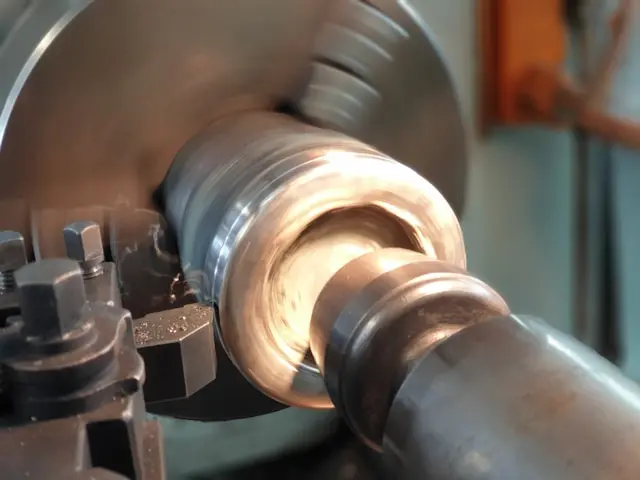
Central Europe's largest integrated steelworks sits in eastern Slovakia, employs 11,000 people directly, generates €3.2 billion in annual revenue, and exports three quarters of its output to EU automotive and appliance manufacturers. By every measure of industrial scale, U.S. Steel Košice anchors one of the most consequential metallurgical clusters on the continent.
That cluster is now caught in a contradiction. The decarbonization investments required to keep Košice's steel competitive in a post-CBAM European market will demand a fundamentally different workforce: automation technicians, hydrogen process engineers, EU ETS compliance specialists, digital transformation leaders. The workforce that currently operates the blast furnaces is aging out. A third of production staff are over 55. Secondary technical school enrolment in metallurgy has fallen 18% since 2019. The graduates who do emerge are leaving for Bratislava or Germany at rates that make replacement arithmetic impossible.
What follows is an analysis of how Košice's metallurgical sector arrived at this inflection point, what it means for the employers trying to hire within it, and why the capital flowing into green steel technology is moving faster than the human capital required to operate it. The tension between investment ambition and workforce reality is the defining challenge for every hiring leader in this market.
A €3.2 Billion Cluster Running on a Shrinking Workforce
The Košice metallurgical cluster is not a single employer. It is an ecosystem. U.S. Steel Košice operates the integrated flat steel facility. Around it, more than 200 registered metalworking SMEs form a downstream network of foundries, rolling operations, and automotive component suppliers. Kromberg & Schubert employs 2,800 people in automotive cable systems. Zlieváreň Steel & Cast serves the heavy machinery sector. The Technical University of Košice produces 350 metallurgical and materials engineering graduates annually from its Faculty of Metallurgy and Faculty of Mechanical Engineering.
The cluster's productivity is real. Its vulnerability is equally real. Hot metal production fell 12% in 2024 compared to 2021 baselines as USSK managed inventory against weak EU steel demand. Local foundries and subcontractors report capacity utilisation of 65 to 70%, constrained not by order books but by working capital limitations and skilled labour availability. According to the Slovak Ministry of Labour's regional analysis, vacancy rates for machine and plant operators in the Košice region sit 23% above the Slovak national average, with average time-to-fill exceeding 90 days for specialised metallurgical positions.
This is not a market where unemployment is low and everyone is working. The Košice region reports 6.8% unemployment, well above the national average of 5.2%. The problem is not a lack of people. It is a lack of people with the certifications, digital competencies, and heavy industry experience that a modernising steel operation requires. The unemployed cohort and the vacancy roster describe two populations that barely overlap.
For organisations navigating executive hiring in industrial manufacturing, Košice presents one of Central Europe's most complex paradoxes: a market with visible labour surplus and acute specialist scarcity existing simultaneously.
The Retirement Wave That No Pipeline Can Replace
32% of the Workforce Approaching Exit
The most urgent constraint on Košice's steel cluster is not regulatory. It is demographic. According to the Slovak Statistical Office, 32% of the current metallurgical workforce is over 55 years old. Peak retirement volume will hit between 2025 and 2028. USSK has publicly disclosed plans to recruit 240 technical specialists annually to replace retirements, targeting automation technicians and process control engineers specifically.
That replacement rate assumes a functioning pipeline. The pipeline is contracting. Secondary technical school enrolment in metallurgy fell 18% between 2019 and 2024. Of the 350 graduates TUKE produces annually in metallurgical and materials engineering, only 60% remain in the region. The rest leave for Bratislava's automotive sector, where Jaguar Land Rover and Volkswagen recruit aggressively, or for Germany, where salary multiples of 3.5 to 4 times Košice levels make the calculation straightforward for anyone willing to relocate.
A Pipeline Shrinking at Both Ends
The net effect is a pipeline shrinking at both ends. Fewer students enter. Fewer graduates stay. The cluster needs 400 to 500 new technical roles filled annually just to maintain current capacity. It is not producing enough candidates to cover even half that figure from local sources.
This creates a compounding problem. Every year the gap is not closed, the average age of the remaining workforce rises, institutional knowledge concentrates in fewer people, and the cost of eventually replacing that knowledge increases. A proactive talent pipeline strategy is not a luxury in this market. It is a survival mechanism.
The demographic pressure alone would be manageable if compensation were competitive enough to pull talent from neighbouring markets. It is not. And that is the second structural constraint.
The Wage Trap: Why Košice Cannot Compete for Its Own Graduates
The Košice metallurgical sector's wage growth averaged 3.2% annually through 2023 and 2024. Slovak national inflation averaged 5.1% over the same period. In real terms, metallurgical wages in Košice are declining. Meanwhile, Bratislava's technology sector delivered 8 to 10% annual wage growth, and Ostrava's steelworks offer 20 to 25% premiums for equivalent metallurgical roles.
The numbers at senior specialist level tell the story clearly. A senior metallurgical engineer with ten or more years of process optimisation experience earns €42,000 to €58,000 in Košice. The same profile earns €55,000 to €70,000 in Ostrava. An operations director with plant-level P&L responsibility commands €95,000 to €140,000 in Košice, with 20 to 30% variable compensation. The equivalent role in Germany's Ruhr region or Bremen steelworks pays €160,000 to €200,000 with relocation packages.
Germany's active recruitment of Slovak-speaking maintenance engineers and project managers is a documented and persistent drain. According to Germany's Federal Employment Agency, approximately 5% of the qualified cohort migrates annually. That figure sounds modest until you consider the denominator: it represents the most mobile, most qualified, most internationally competitive segment of the workforce. The 5% who leave are not randomly distributed across the skill spectrum. They are concentrated at the top.
Energy costs compound the wage constraint. Slovakia's industrial electricity prices average 22.5 euro cents per kilowatt hour, versus 16.8 cents in Poland and 18.2 cents in the Czech Republic. According to Eurostat's electricity price statistics, this 25 to 30% premium over Polish levels directly erodes the operating margins that might otherwise fund competitive compensation. Employers cannot pay more because the cost of producing steel in Slovakia is structurally higher than in neighbouring countries.
This is the trap. The sector needs premium talent for its green steel transition. The operational economics prevent it from offering premium compensation. The candidates who could fill the most critical roles have alternatives that pay materially better, in locations that offer either lower cost of living or superior lifestyle amenities. For any organisation trying to benchmark compensation against regional competitors, the Košice data reveals a market where the gap is widening precisely where it matters most.
The Green Steel Paradox: Capital Without Capability
Here is the original synthesis this data supports, and it is the analytical spine of this article: the €1.5 billion in cumulative decarbonization investment projected through 2030 has not reduced the demand for workers. It has replaced one category of worker with another category that does not yet exist in sufficient numbers. Capital moved faster than human capital could follow.
USSK's planned transition from blast furnace operations to electric arc furnace technology represents a fundamental change in the type of expertise required on the production floor. Blast furnace operation is a craft built over decades, passed through apprenticeship and hands-on experience. EAF operation, hydrogen-based direct reduction, and the automation systems that manage them require process control engineers, industrial data scientists, and specialists in technologies that most of the current workforce has never encountered.
The facility's €1.2 billion EAF transition has been deferred pending regulatory clarity on EU funding mechanisms. But the workforce reskilling challenge does not wait for the capital decision. The EU ETS Phase IV provisions are tightening free allocation to 90% of benchmark by 2026, increasing compliance costs by €15 to €20 per tonne of steel produced. The Carbon Border Adjustment Mechanism reaches full implementation in 2026, creating new administrative demands and strategic exposure. The Industrial Emissions Directive's new Best Available Techniques conclusions, effective since 2025, require €300 to €500 million in abatement technology investments at USSK alone.
Each of these regulatory milestones requires expertise that the current workforce was not trained to deliver. HSE managers with EU ETS expertise are in critical shortage. The Slovak Environmental Inspectorate's certification registry identifies only 12 certified professionals in the entire Košice region. EU ETS compliance specialists represent an extremely limited pool of fewer than 15 individuals regionally, with 90% or more classified as passive candidates requiring retention bonuses of 25 to 30% to prevent defection to consulting firms.
The green steel transition is not creating jobs in the conventional sense. It is creating roles that have no established talent supply chain. Organisations facing similar technology-driven workforce transformation in other sectors will recognise the pattern: the investment thesis assumes human capital availability that the market has not yet produced.
Where Searches Stall: The Passive Candidate Problem
Senior Engineers Who Will Never Apply
The three most critical role categories in Košice's metallurgical cluster share a defining characteristic: the candidates who could fill them are almost entirely passive.
Senior metallurgical engineers with 15 or more years of blast furnace or continuous casting experience represent the backbone of operational knowledge in this sector. An estimated 75 to 80% of qualified candidates are employed and not actively applying to postings. Plant maintenance managers average 11 years of tenure at their current employers. The active candidate pool represents less than 20% of viable talent. EU ETS compliance specialists, as noted, are a population small enough to count on two hands.
For hiring leaders accustomed to posting a vacancy and reviewing applications, this market offers a stark correction. A standard job advertisement in Košice for a senior metallurgical engineer will reach, at best, one in five people capable of doing the job. The other four will never see it. They are not looking. They are employed, often in roles where they carry institutional knowledge that makes them difficult to release and expensive to replace. Understanding why conventional recruitment misses the hidden 80% of qualified professionals is not a theoretical exercise in this market. It is the difference between filling a role in three months and filling it in nine.
The Cost of a Prolonged Search
Local foundries report typical time-to-fill for senior metallurgical engineers exceeding six to nine months, with 40% of vacancies requiring external recruitment from Czech or Polish markets. Process control engineers carry an 18% vacancy rate across the cluster. Industrial maintenance electricians see 25% of positions unfilled for more than 120 days.
Every month a critical role remains open in a facility operating at 65 to 70% capacity utilisation has a direct cost. It is not merely the recruitment spend. It is the production volume that cannot be recovered, the maintenance schedule that slips, the compliance deadline that approaches without the specialist needed to meet it. The financial exposure of a prolonged vacancy at senior level is well documented across industries. In heavy steel manufacturing, where a single process failure can halt a production line for days, the multiplier is larger than in most sectors.
The implication for search methodology is clear. A market where 75 to 80% of target candidates are passive, where the total addressable talent pool in some specialisms numbers in the low dozens, and where geographic competitors actively recruit from the same population cannot be served by job advertising. It requires direct identification and engagement of specific individuals who are not looking to move but might be willing to listen.
Ownership Uncertainty and the Strategic Talent Risk
The cluster's talent challenges exist against a backdrop of corporate ambiguity. U.S. Steel's failed 2024 merger with Nippon Steel, documented in SEC filings, has created strategic uncertainty about USSK's future ownership, investment trajectory, and potential restructuring.
This uncertainty functions as a talent accelerant in the wrong direction. Senior professionals making career decisions weigh stability. An operations director considering a move to USSK must evaluate not just the compensation package but the probability that the facility's strategic direction will remain intact over a five-year horizon. A chief metallurgist must assess whether the green steel investment programme will proceed on schedule or be deferred again. When candidates at this level are already passive and already well-compensated in their current roles, the risk calculus of accepting an offer becomes materially harder.
Automotive demand volatility adds a second layer of strategic risk. Sixty percent of regional steel output supplies EU automotive manufacturers. The EV transition is reducing traditional steel intensity per vehicle, according to the European Automobile Manufacturers Association. This structural shift in end-market demand does not eliminate the need for Košice steel. But it changes the product mix, the technical specifications, and the types of engineers required to meet them.
For executive candidates evaluating leadership roles in this market, the question is not whether Košice's steel cluster will survive. It almost certainly will, given its scale and strategic position in EU supply chains. The question is what form it will take in five years, and whether the leaders who join now will have the mandate and resources to execute the transformation.
What Hiring Leaders in This Market Must Do Differently
The conventional search playbook fails in Košice's metallurgical sector for reasons that are specific and measurable. The candidate pool is small. The passive ratio is extreme. Geographic competitors offer 20 to 100% compensation premiums depending on the destination. The regulatory and technological transformation underway is creating roles with no established supply pipeline. And ownership uncertainty adds a deterrent for risk-averse senior candidates.
Organisations hiring into this market need three things simultaneously. First, precise talent mapping that identifies every viable candidate in a radius that extends beyond Košice to Ostrava, Bratislava, and the broader CEE metallurgical corridor. In a market where the total population of EU ETS compliance specialists numbers 12, knowing where all 12 work is not a competitive advantage. It is a baseline requirement.
Second, a compensation proposition that acknowledges the market's structural constraints without pretending they do not exist. Košice will not match German salary levels. But a well-structured offer that combines competitive base compensation with meaningful variable elements, clear career progression tied to the green steel transition, and a genuine role in shaping the facility's future can move candidates who would not respond to a standard recruitment approach. Understanding what actually motivates a passive candidate to engage is essential in a market this constrained.
Third, speed. When a qualified process control engineer or maintenance manager becomes available in this market, the window to engage them is measured in weeks, not months. Firms that rely on sequential interview processes with long gaps between stages will consistently lose candidates to faster-moving competitors. KiTalent's model of delivering interview-ready executive candidates within 7 to 10 days exists precisely for markets like this one, where the cost of delay is not inconvenience but permanent talent loss.
For organisations competing for metallurgical leadership in Košice and across Central Europe's heavy industrial corridor, where the candidate population is finite and the margin for error in a search is close to zero, start a conversation with our executive search team about how we approach this market differently. With a 96% one-year retention rate across 1,450 executive placements and a pay-per-interview model that removes upfront retainer risk, KiTalent's approach is built for markets where conventional search methods have already been tried and found insufficient.
Frequently Asked Questions
What is the average salary for a senior metallurgical engineer in Košice?
A senior metallurgical engineer with ten or more years of process optimisation experience earns €42,000 to €58,000 gross annually in the Košice region as of the latest available market benchmarking data. This places Košice 20 to 25% below Ostrava in the Czech Republic, where equivalent roles command €55,000 to €70,000, and far below German steelworks, where operations-level roles pay €160,000 to €200,000. The compression is driven by energy costs and margin pressure across the Slovak steel sector, making non-financial elements of the offer increasingly important for candidate engagement.
Why is Košice struggling to fill metallurgical roles despite high regional unemployment?
The Košice region reports 6.8% unemployment against a national average of 5.2%, yet vacancy rates for skilled metallurgical positions sit 40% above national manufacturing averages. The explanation is a severe skills mismatch. The available unemployed cohort largely lacks the heavy industry certifications, digital competencies, and specific process experience that modernising steel facilities require. The shortage is not of people. It is of people with the right qualifications, which is a fundamentally different problem requiring targeted executive search rather than broader recruitment.
How does CBAM affect steel hiring in Slovakia?
The Carbon Border Adjustment Mechanism reaches full implementation in 2026, imposing carbon cost reporting requirements on imported steel equivalents. For Košice, which exports 75% of its output to EU markets, CBAM creates demand for compliance specialists, carbon accounting professionals, and HSE managers with EU ETS expertise. Only 12 certified EU ETS professionals currently operate in the Košice region, making this one of the most acute specialist shortages in Central European heavy industry. Organisations hiring for these roles must look beyond job advertising to direct candidate identification.
What is the biggest risk for steel sector employers in Košice in 2026?
The convergence of three forces: a demographic retirement wave removing 32% of production staff by 2028, a regulatory environment requiring billions in decarbonization investment, and compensation levels that cannot compete with neighbouring markets. The practical effect is that the workforce needed to execute the green steel transition is shrinking at exactly the moment demand for it is growing. Firms that delay building a proactive talent pipeline will face compounding shortages that become progressively harder and more expensive to resolve.
How can companies attract passive metallurgical talent in Central Europe?
An estimated 75 to 80% of senior metallurgical engineers in the Košice region are passive candidates, employed and not responding to job postings. Reaching them requires direct identification through AI-enhanced talent mapping, personalised engagement that addresses their specific career motivations, and a value proposition that extends beyond base salary to include the strategic significance of the role. KiTalent's methodology is designed specifically for markets with extreme passive candidate ratios, delivering interview-ready shortlists within 7 to 10 days by accessing the professionals that conventional search channels never reach.
What roles are hardest to fill in Košice's steel sector?
Three categories face the most acute shortages: process control engineers, with an 18% vacancy rate across the cluster; industrial maintenance electricians, with 25% of positions unfilled for over 120 days; and HSE managers with EU ETS compliance expertise, where the total regional pool numbers barely a dozen professionals. Each category requires a different search approach. Maintenance electricians may respond to improved compensation structures. EU ETS specialists require retention strategies and international executive search that extends beyond Slovakia's borders entirely.