Kota Kinabalu's Agro-Commodity Paradox: Exports Are Rising, but the Talent to Add Value Is Leaving

Sabah exported approximately 3.5 million tonnes of crude palm oil in 2024 and shipped RM2.8 billion in aquaculture products through Kota Kinabalu's port and cold chain corridors. MATRADE reported a 14% year-on-year increase in the state's agro-commodity export value through Sepanggar Bay. By every volume metric, the trade is growing.
Yet something contradictory is happening beneath the headline figures. While Kota Kinabalu consolidates its grip as the administrative and logistics command centre for Sabah's commodity flows, the processing investment that creates higher-value jobs is migrating east. MIDA's approved manufacturing investment for food processing and palm oil downstreaming in the Kota Kinabalu district declined by 8% compared to 2023. Lahad Datu and Sandakan saw 22% growth over the same period. The capital is going where the land is cheaper and the jetties are deeper. The talent, meanwhile, is going where the salaries are higher: Kuala Lumpur and Singapore.
What follows is a structured analysis of the forces reshaping Kota Kinabalu's agro-commodity sector, the employers driving that change, and what senior leaders need to understand before they make their next hiring or retention decision in this market. The picture is more complex than a simple talent shortage. It is a market splitting in two: high-volume logistics work that stays in KK and high-value specialist work that the city cannot hold onto.
A Trade Hub That Commands but Does Not Convert
Kota Kinabalu's role in Sabah's agro-commodity chain is specific and often misunderstood. The city does not refine the bulk of the state's crude palm oil. It does not house the largest shrimp farms. Its processing plants run at 68% capacity utilisation, constrained by raw material shortages rather than demand.
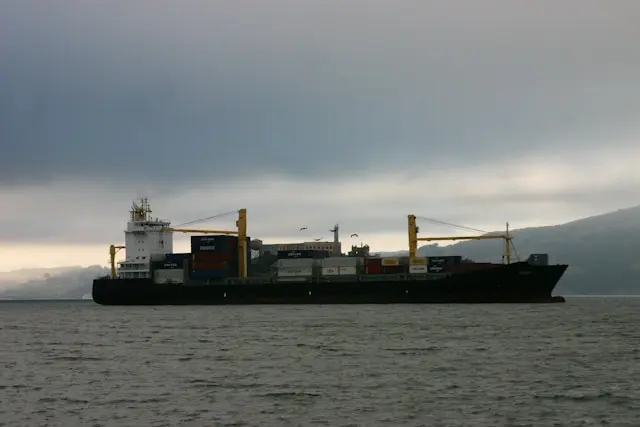
What KK does is coordinate. Sepanggar Bay Container Port handled approximately 1.2 million TEUs in 2024, with agro-commodities comprising 35% of non-containerised bulk exports. The city houses the trading offices for Wilmar International, PPB Oil Palms Berhad, and the state-owned Sawit Kinabalu. It manages export documentation, sustainability certification verification, and maritime logistics for a palm oil sector generating 30% of Malaysia's national output.
This distinction matters for anyone trying to hire in the market. The roles concentrated in KK are not production roles. They are trading, compliance, cold chain management, and logistics coordination roles. The talent pool is shaped accordingly: strong in general administration and commodity brokerage, thin in the technical specialisms that downstream processing demands.
The consequence is a ceiling. KK captures logistics value from the trade passing through it but struggles to retain the chemical engineering, food science, and advanced technology roles that come with refining and canning investment. Those jobs follow the capital to Lahad Datu's Palm Oil Industrial Cluster, where 30-year lease terms at RM0.50 per square foot undercut KK Industrial Park's RM2.80.
EUDR and the Compliance Talent Crunch
A Regulation That Rewrites Job Descriptions Overnight
The EU Deforestation Regulation, effective from December 2025 for large operators, is the single most disruptive force acting on KK's agro-commodity market in 2026. EUDR requires geolocation data for every supply chain plot. Compliance costs run between RM150 and RM200 per hectare for traceability system implementation. For a state where smallholders supply 30% of fresh fruit bunches, the administrative burden falls disproportionately on the companies least equipped to absorb it.
The talent implication is immediate and severe. KK-based trading houses need professionals who can manage supply chain traceability systems, GIS mapping, legality verification, and RSPO/MSPO audit processes. These professionals barely existed as a category five years ago. Now every major plantation group and trading house in the city is competing for them simultaneously.
120-Day Vacancy Cycles and the Consultant Premium
According to aggregated data from the Malaysian Palm Oil Association's talent survey and Hays Malaysia's 2025 salary guide, Sustainability Manager roles in this market carry average vacancy periods of 120 days. Postings requiring RSPO Lead Auditor certification and GIS mapping skills receive fewer than three qualified applications per vacancy. The typical outcome is that positions remain unfilled for four to six months, forcing companies to retain Kuala Lumpur-based consultants at a 40% fee premium over the cost of an equivalent permanent hire.
This is not a hiring problem. It is a knowledge problem. The EUDR has created demand for a skill set that the Malaysian education system does not yet produce in sufficient volume. You cannot recruit experience that does not yet exist in the numbers the market requires. The professionals who do hold these credentials carry unemployment rates below 2% nationally. They are overwhelmingly employed, typically at major plantation groups or international consulting firms like Control Union and SGS. They do not appear on job boards. Direct identification of these passive candidates is the only method that reaches them.
The compensation premium reflects the scarcity. ESG and sustainability compliance roles in KK now command 15-20% above general corporate management packages, with senior specialists earning RM18,000 to RM28,000 monthly. At VP level, base packages reach RM35,000 to RM55,000, often supplemented by stock options in listed plantation groups.
The Cold Chain Talent Deficit That Limits Seafood Growth
Kota Kinabalu's seafood sector shows stronger physical concentration than its palm oil operations. The KK Central Fish Market at Pasir Putih and processing zones in Inanam and Menggatal house 45 licensed cold-store facilities and 12 HACCP-certified processing plants. Three new Recirculating Aquaculture System facilities were commissioned in 2025 along the KK corridor to supply the China live fish market. Cold chain exports are projected to grow 8-10% through 2026, driven by China's reopened live fish imports and ASEAN e-commerce grocery expansion.
The growth trajectory is real. The talent to support it is not keeping pace.
Cold storage facilities in KK Industrial Park report 85% vacancy rates for Refrigeration Engineers with ammonia plant certification and HACCP audit experience. The combination of these two credentials in a single candidate is rare anywhere in Malaysia. In Borneo, it is almost non-existent.
The hiring pattern that results is instructive for anyone managing talent strategy in this sector. Aggregate recruitment data from Michael Page Malaysia's industrial sector report describes a representative pattern: a major cold chain operator in Menggatal offering a 25% salary premium over the RM14,400 market rate, plus housing allowance, to secure a Plant Engineer transfer from Johor Bahru after a six-month local search yielded no qualified candidates. The operator had to poach from a competitor 1,600 kilometres away because the local market simply could not produce the skill set required.
At RM12,000 to RM20,000 monthly for senior specialists and RM25,000 to RM40,000 for operations directors, cold chain compensation in KK is competitive within the Sabah context. It is not competitive against Johor Bahru's refining cluster, which offers 15-20% higher packages for equivalent roles with the added proximity to Singapore. This creates the dynamic that defines KK's technical hiring market: the city can attract talent only by overpaying relative to its own cost base, and even then it often loses to peninsula offers.
The Graduate Surplus That Solves Nothing
Here is the statistic that should stop every hiring leader in this market from assuming local recruitment will work: Sabah's graduate unemployment rate stood at 16.3% in 2024, among the highest in Malaysia. Agriculture-related graduates make up a material share of that cohort.
Simultaneously, the plantation and seafood processing sectors report 35-40% vacancy rates for technical roles requiring applied skills.
These two facts are not contradictory. They describe different populations within the same labour market. The graduates cannot fill the vacancies because the vacancies require refrigeration engineering, aquatic pathology, GIS mapping, and digital traceability system management. The graduates hold generic agricultural science degrees. The university output and the industry need exist in parallel but barely overlap.
This mismatch is the foundational constraint on KK's agro-commodity talent market. It means that the 80% of specialist candidates who could fill critical roles are not visible on any job board because they are already employed elsewhere. It also means that the 16.3% of unemployed graduates, visible and actively applying, lack the technical credentials the market actually demands.
The aquaculture sector illustrates this most starkly. Companies in the KK-Tuaran corridor report zero qualified local applicants for Senior Aquaculture Officer roles requiring PCR diagnostic skills and biosecurity protocol design. As reported by The Edge Malaysia, reliance on Thai and Indonesian expatriates in these roles has increased 300% since 2022. The sector is not failing to attract applicants. It is failing to find the right applicants within the same country, let alone the same state.
The Stepping Stone Problem: Why KK Trains Talent for Other Cities
The most corrosive dynamic in Kota Kinabalu's talent market is not the shortage itself. It is the direction of talent flow.
KK functions as a training ground. Professionals arrive, gain two to five years of ESG compliance or commodity trading experience, and then leave for Kuala Lumpur or Singapore. The data is consistent across multiple sources. KK employers lose approximately 20% of trained sustainability officers annually to KL relocations, according to Hays Malaysia's talent flow analysis. Senior commodity traders rarely stay in KK beyond three to five years before transferring to Singapore, where Wilmar, Olam, and Cargill offer 80-120% compensation premiums.
The salary gaps are systemic. Regional headquarters in the Klang Valley offer 35-50% premiums for equivalent sustainability and trading roles. Singapore's commodity trading houses offer compensation packages that KK cannot approach. Even Johor Bahru, competing for mechanical engineers and process optimisation specialists, offers 15-20% more for Plant Manager roles.
This is the original analytical claim that the data compels but that no single data point states directly: the investment in EUDR compliance training, cold chain certification, and aquaculture expertise that KK's employers are forced to make is generating returns primarily for Kuala Lumpur and Singapore employers who recruit the trained professionals away. KK is funding the talent pipeline for its own competitors. Every ringgit spent on developing a sustainability auditor in Borneo is, in effect, a subsidy to a Klang Valley plantation group that will hire that auditor in two years at a premium KK cannot match.
The retention problem compounds the cost of executive hiring failures in this market. Replacing a mid-career sustainability manager who departs for KL does not simply cost one recruitment fee. It costs 120 days of vacancy, a consultant engagement at 40% premium to bridge the gap, and then another recruitment cycle that faces the same scarcity the first one did.
For employers in this market, the implication is that recruitment strategy and retention strategy are not separate workstreams. They are the same problem viewed from different ends.
What the 2026 Market Demands: Roles, Skills, and Compensation Benchmarks
Commodity Trading and Risk Management
The CPO price range of RM3,500 to RM4,500 per tonne projected through 2026 by the Malaysian Palm Oil Council means continued margin compression for KK's trading houses. This environment favours traders with derivatives expertise, specifically FCPO and FKLI instruments, combined with forex hedging capability and EUDR documentation fluency. Senior traders command RM15,000 to RM22,000 monthly with performance bonuses averaging three to six months of base salary.
At executive level, the market values global account management capability across India and China, sustainability strategy integration, and cross-border logistics optimisation. VP and director packages reach RM28,000 to RM45,000 monthly, with total compensation of RM600,000 to RM900,000 annually. These figures are competitive within East Malaysia but fall well short of Singapore equivalents, which is precisely why the roles turn over.
Plantation Technical Management
Precision agriculture is transforming estate management across Sabah. IoT sensor deployment, oil palm breeding programmes, and mechanisation are changing what a Regional General Manager needs to know. Managing 10,000 or more hectares now requires digital literacy alongside agronomic expertise. Compensation at senior specialist level runs RM14,000 to RM22,000 monthly plus estate housing. Executive packages reach RM30,000 to RM48,000 with performance bonuses tied to yield and sustainability metrics.
The talent mapping challenge for these roles is distinct. The candidate who combines traditional plantation management experience with digital fluency is rare. Most candidates strong in one dimension lack the other. This bifurcation means that conventional executive search approaches built around a single job description often fail because the role itself sits at the intersection of two talent pools that barely overlap.
Structural Constraints That Will Not Resolve Themselves
Three forces act on KK's agro-commodity market that no single employer can overcome through recruitment alone.
First, immigration restrictions. The Sabah Temporary Pass system imposes four-to-six-month processing delays on foreign worker permits. The plantation and processing sectors rely on over 40,000 documented Indonesian workers statewide. Every month of permit delay is a month of understaffing on estates and processing lines that feed KK's export pipeline.
Second, climate exposure. El Niño-induced droughts in 2024 reduced fresh fruit bunch yields by 8-12% in eastern Sabah, directly affecting supply to KK traders. CPO price correlation with soybean oil and energy markets means that every RM100 per tonne drop in CPO price reduces state export value by approximately RM350 million annually. This commodity volatility makes long-term workforce planning difficult. Employers hesitate to commit to premium hiring packages when next quarter's margins are unpredictable.
Third, infrastructure transition. The Pan Borneo Highway construction, targeting completion through 2025-2026, temporarily disrupted FFB transport from interior estates to coastal mills, increasing logistics costs by 12-15% in 2024. The completed highway will eventually improve connectivity. In the interim, the disruption has accelerated the shift of processing investment toward coastal clusters with dedicated deep-water jetties.
These constraints interact. Climate risk compresses margins, which reduces appetite for the compensation premiums that talent retention requires, which accelerates the departure of trained professionals to KL and Singapore, which deepens the skills gap that limits KK's ability to capture higher-value processing activity. The cycle is self-reinforcing.
How to Hire in a Market Where the Best Candidates Are Already Somewhere Else
The data makes one point inescapably clear: conventional recruitment does not work for specialist roles in Kota Kinabalu's agro-commodity sector.
Across ESG compliance, cold chain engineering, and aquaculture pathology, the active-to-passive candidate ratio sits below 30:70. Experienced commodity derivatives traders show average tenure of 4.2 years with voluntary turnover of just 8% annually. Their compensation structures include deferred bonuses designed to lock them in. Active candidates in this segment, according to Michael Page Malaysia, disproportionately indicate performance issues or contract termination.
Refrigeration engineers with ammonia certification carry unemployment rates of 3.1% nationally. Job postings attract applicants who lack the critical certifications, meaning the active pool consists largely of candidates still upskilling rather than candidates ready to deploy.
ESG directors and lead auditors hold secure positions and are not looking. Unemployment in this specialism is below 2%.
The implication for hiring leaders is operational, not theoretical. A search strategy built around job advertising and inbound applications will reach the weakest segment of the candidate pool. The professionals this market most urgently needs are employed, performing, and not reading job boards. Reaching them requires direct identification and approach of passive candidates through methods that most in-house talent teams and generalist agencies are not structured to execute.
KiTalent's approach to this challenge is built precisely for markets with this profile. Through AI-enhanced talent mapping and direct headhunting methodology, KiTalent identifies interview-ready candidates within 7-10 days, reaching the 80% of qualified professionals who are not visible through conventional channels. With a 96% one-year retention rate across 1,450 completed executive placements, the model is designed for markets where the cost of a failed search is not just a recruitment fee but months of consultant premiums, lost processing capacity, and regulatory exposure.
For organisations hiring ESG compliance leaders, cold chain operations directors, or senior commodity trading talent in Sabah's agro-commodity sector, where 120-day vacancy cycles are the norm and the candidates you need are employed in Kuala Lumpur, Johor, or Singapore, speak with our executive search team about how we approach this market differently. KiTalent's pay-per-interview model means no upfront retainer: you pay only when you meet qualified candidates.
Frequently Asked Questions
What are the hardest agro-commodity roles to fill in Kota Kinabalu?
ESG Sustainability Managers with RSPO Lead Auditor certification and GIS mapping skills carry average vacancy periods of 120 days. Cold chain Refrigeration Engineers with ammonia plant certification and HACCP audit experience face 85% vacancy rates in KK Industrial Park. Senior Aquaculture Officers requiring PCR diagnostic skills report zero qualified local applicants. These roles share a common characteristic: the skill combination required is so specific that the active candidate pool is effectively empty. Filling them requires direct headhunting of passive professionals already employed elsewhere in Malaysia or the region.
How does EUDR affect hiring in Sabah's palm oil sector?
The EU Deforestation Regulation requires geolocation data for every supply chain plot, creating immediate demand for sustainability professionals who can manage traceability systems, legality verification, and carbon accounting. Compliance costs of RM150-200 per hectare disproportionately burden smallholder-dependent supply chains. The regulation has turned ESG compliance from a corporate reporting function into an operational necessity, driving 15-20% salary premiums for qualified sustainability professionals above general management compensation levels.
Why do specialist professionals leave Kota Kinabalu for Kuala Lumpur and Singapore?
The compensation differential is the primary driver. Kuala Lumpur offers 35-50% salary premiums for equivalent sustainability and trading roles. Singapore commodity houses offer 80-120% premiums for experienced palm oil traders. KK employers lose approximately 20% of trained sustainability officers annually to KL relocations. Career progression opportunities at multinational plantation group headquarters also pull mid-career professionals toward the peninsula after gaining initial experience in Borneo.
What salary does a senior commodity trader earn in Kota Kinabalu?
Senior palm oil traders in KK earn base salaries of RM15,000-22,000 monthly with performance bonuses of three to six months. At VP and director level, base compensation reaches RM28,000-45,000 monthly, with total packages of RM600,000-900,000 annually. These figures are competitive within East Malaysia but fall short of Singapore equivalents, which contributes to the retention challenges that define this market.
How can companies hire specialist talent in Sabah's agro-commodity sector?
Given that unemployment among ESG specialists sits below 2% and technical roles show active-to-passive ratios below 30:70, conventional job advertising reaches the weakest segment of the candidate pool. Effective hiring requires direct identification and approach of employed professionals, often across state or national boundaries. KiTalent delivers interview-ready executive candidates within 7-10 days through AI-enhanced talent mapping and direct headhunting, with a pay-per-interview model that eliminates upfront retainer risk for employers competing in talent-scarce markets.
What is the outlook for Kota Kinabalu's seafood export sector?
Cold chain exports are projected to grow 8-10% through 2026, supported by China's reopened live fish imports and ASEAN e-commerce grocery expansion. The Sabah Aquaculture Development Plan 2026-2030 targets 80,000 MT of shrimp production with KK designated as the aquaculture services hub. However, production will increasingly shift to satellite zones in Tuaran and Papar while KK retains high-value processing, packaging, and export coordination functions. Land and water constraints within KK proper limit on-site production expansion.