Kota Kinabalu's Maritime Paradox: 40% Graduate Unemployment and an 11-Month Wait for a Marine Engineer
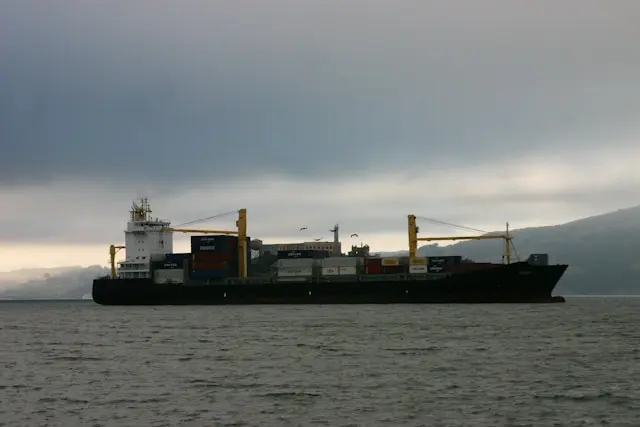
Sepanggar Bay is operating above its rated container capacity. Investment is flowing in. SKS Group has committed RM300 million to terminal automation and deep-water berth upgrades following its RM1.808 billion acquisition of Sabah Ports in late 2023. On paper, Kota Kinabalu's maritime sector looks like a market that should be attracting talent, not losing it.
The reality on the ground tells a different story. Ship repair yards report vacancies for senior marine engineers stretching past eleven months. Fabrication contractors serving PETRONAS projects restructure delivery timelines because they cannot staff construction manager roles. Certified welding inspectors are being poached with 35% salary premiums and RM25,000 signing bonuses. Yet at the same time, Universiti Malaysia Sabah and Politeknik Kota Kinabalu report that 35 to 40% of their marine technology and nautical science graduates cannot find work. The shortage and the surplus exist simultaneously, in the same city, in the same sector.
What follows is an analysis of why this paradox exists, what it means for employers trying to build and retain technical teams in Sabah's maritime cluster, and why the solutions most commonly proposed, including port expansion and salary inflation, do not address the actual problem. The constraint is not volume. It is the gap between what local institutions produce and what the sector's employers need at the five-to-ten-year experience threshold where the most critical roles sit.
The Market Structure Hiring Leaders Need to Understand
Kota Kinabalu's maritime economy is often described as an oil-and-gas supply base, but this characterisation requires correction. Sepanggar Port does serve as a logistics node for Sabah's offshore fields, handling project cargoes, offshore supply vessels, and fabrication modules for fields including Kebabangan, Gumusut-Kakap, and Malikai. However, the Federal Territory of Labuan, 120 nautical miles to the northeast, handles approximately 60 to 70% of logistical volume for those same fields, according to the Labuan IBFC Industry Report 2023. Labuan's duty-free status and 0 to 3% corporate tax regime make the economics difficult to argue with.
Sepanggar Bay's real strength is ship repair and marine fabrication. Kota Kinabalu Shipyard & Engineering (KKSE) is the anchor employer, with drydock capacity up to 30,000 DWT and approximately 800 to 1,000 direct staff. Smaller marine service providers cluster around it. Freight forwarders and shipping agencies, represented by the KK Freight Forwarders Association's 85-plus member companies, concentrate in the central business district rather than the industrial zone.
The Labuan Tax Problem
For employers trying to recruit experienced maritime professionals to Kota Kinabalu, Labuan represents a permanent gravitational pull. A Marine Engineer earning RM300,000 in Kota Kinabalu retains materially less net income than the same professional earning the same gross salary under Labuan's 3% tax jurisdiction, according to the Labuan Financial Services Authority and the Inland Revenue Board's tax expenditure data. This creates a structural 20 to 25% effective compensation advantage for identical roles, which Sabah employers must overcome by inflating gross salaries. That inflation is difficult to sustain when yard margins are already compressed by ringgit volatility and imported steel costs.
A Port Running Hot, an O&G Cluster Drifting Away
Sepanggar Container Terminal currently handles approximately 600,000 TEUs annually against a rated capacity of 500,000 TEUs. The Phase 2 expansion, targeting 1.25 million TEUs with 300 additional metres of quay length and 15 hectares of container yard, is projected for completion by late 2025 or into 2026. But industry analysts project that without corresponding rail or highway upgrades connecting to the Pan Borneo Highway, hinterland logistics bottlenecks will persist.
More consequentially for the talent market, major O&G operators are consolidating supply base activity in Labuan or investigating new facilities in Sipitang, on Sabah's southwest coast. The port expansion may primarily benefit containerised general cargo rather than the offshore energy logistics that drive demand for the most specialised roles. Employers building their talent pipeline around the assumption that Sepanggar Bay will become a larger offshore hub should examine this trajectory carefully before committing to headcount plans.
The Skills Mismatch That Explains Everything
This is the analytical core of the article, and the point that aggregate labour market statistics obscure entirely. Sabah's maritime sector does not have a general talent shortage. It has a surplus at the entry level and a severe deficit at the certified, experienced level. These two facts are not in tension. They are cause and effect.
Graduate unemployment among marine technology and nautical science diploma holders from UMS and Politeknik Kota Kinabalu runs at 35 to 40%, according to the Department of Statistics Malaysia's 2024 graduate data and UMS's own tracer study. These graduates lack the specific offshore certifications, including CSWIP welding inspection credentials, ASME fabrication standards qualification, and Dynamic Positioning maintenance certification, that Sepanggar Bay's industrial employers require. They also lack the five to ten years of project experience that separates a junior technician from a Construction Manager or a Principal Naval Architect.
The experienced practitioners who do hold these credentials are monopolised by a small cohort of employers. They change jobs through direct approaches and personal networks, not job boards. The market appears to have slack when measured by headcount. It does not have slack when measured by capability.
This is not a hiring problem. It is a pipeline architecture problem. The educational system produces volume. The industry requires specificity. No amount of salary inflation closes that gap, because the constraint is not willingness to accept a role. It is whether the candidate with the right certifications and the right project history exists in sufficient numbers within Sabah at all. Capital has moved faster than human capital could follow, and the port expansion will widen this gap before it narrows it, because the expanded terminal requires Terminal Operating System expertise and automation engineers that are even rarer in Sabah than marine welders.
Where the Vacancies Are Deepest
Three role categories define the talent crisis in Kota Kinabalu's maritime and offshore services sector. Each has distinct characteristics, compensation structures, and competitive dynamics.
Naval Architects and Senior Marine Engineers
The market for professionals holding Class 1 or 2 Certificates of Competency and naval architects experienced in offshore structure design is acutely constrained. According to recruitment monitoring by Monroe Consulting Group Malaysia and Hays Malaysia's 2024 salary data, Tier-1 shipyards in Sepanggar Bay typically experience vacancies for Principal Naval Architect or Chief Marine Engineer roles extending eight to twelve months.
A representative pattern from 2024, as documented by industry recruitment consultants, involved a major OSV operator maintaining an unfilled Marine Superintendent (Class 1) position for eleven months. The role was ultimately filled through intra-group secondment from Singapore operations, incurring additional expatriate housing and rotational travel costs estimated at 40% above the standard salary.
Senior specialists at this level command RM180,000 to RM280,000 in base salary, plus offshore allowances of RM800 to RM1,200 per day on installation duty. Executive-level roles, including Head of Engineering or Technical Director, reach RM420,000 to RM650,000 base, with total packages exceeding RM800,000 for O&G-focused positions. Approximately 75 to 80% of qualified Class 1 Marine Engineers in the Sabah talent pool are already employed and do not monitor job boards, with average tenure in current roles exceeding 5.5 years.
The competitive geography is punishing. Singapore offers SGD 180,000 to 280,000 for equivalent roles, representing a 35 to 50% premium after currency conversion. Johor's Pasir Gudang and Tanjung Langsat shipyards offer 15 to 20% premiums over Sabah rates. Labuan competes through tax efficiency rather than gross salary.
Offshore Construction and Fabrication Managers
Professionals capable of managing topside modifications and platform integration under API and ASME standards are the second critical gap. According to The Edge Markets reporting and MASHIDA's 2024 industry survey, fabrication contractors serving PETRONAS projects in Sabah frequently encounter project delays due to staffing gaps. A pattern observed through 2024 involved a fabrication yard restructuring its delivery timeline by six months after being unable to secure a Construction Manager with offshore module experience. The function was ultimately subcontracted to a KL-based firm at a 30% cost premium.
Compensation at senior specialist level runs RM240,000 to RM360,000 base, with project completion bonuses valued at three to six months' salary. At executive level, Project Directors and Operations VPs command RM540,000 to RM850,000 base, with international O&G contractors offering total packages exceeding RM1.2 million.
The primary competition comes from Kuala Lumpur, where corporate headquarters proximity and 25 to 30% salary premiums draw talent westward. International hubs including Doha and Houston compete for the most senior expatriate-grade professionals. Sabah-based talent frequently migrates to KL for career trajectory acceleration, as Kota Kinabalu offers limited vertical advancement beyond country manager roles. Active application rates for advertised vacancies in this category run below 8% of total hires, according to Monroe Consulting Group's maritime hiring data. These are roles filled almost exclusively through retained executive search.
Certified Marine Welders and QC Inspectors
The third gap sits at a different point in the organisational chart but is equally damaging to operational output. Specifically, the market lacks 6G certified welders, CSWIP 3.2 Senior Welding Inspectors, and NDT technicians qualified to offshore class standards. Local shipyards routinely exhaust their talent networks within 30 days of advertising senior welding inspector roles. According to The Borneo Post's August 2024 reporting and interview data from the Malaysian Welding Society's Sabah Chapter, one ship repair yard offered a 35% salary premium above market rate to recruit a Master Welder from a competitor in Johor, along with a RM25,000 signing bonus and guaranteed housing allowance.
Welding Supervisors and QA Managers command RM120,000 to RM180,000 base, with offshore-certified welders earning daily rates of RM400 to RM600 on project work. The Middle East represents a permanent drain on this talent pool. Saudi Arabia and the UAE actively recruit Malaysian marine welders with tax-free packages running 2.5 to 3 times local Sabah rates.
At the certified inspector level, candidates are passive, moving through union networks and direct yard-to-yard approaches rather than formal application channels. Entry-level welders are active job seekers. The distinction matters enormously for search methodology.
The Energy Transition Complicates an Already Constrained Market
Sabah's identified 4GW offshore wind capacity, outlined in the Malaysia Renewable Energy Roadmap 2022 to 2040, is attracting preliminary investment interest in heavy fabrication capabilities at Sepanggar Bay. No firm contracts have been awarded to local yards as of early 2025. But the anticipation itself is reshaping the talent conversation.
Offshore wind fabrication requires a different skills profile from O&G topside work. The structural steel volumes are larger. The welding specifications differ. The installation methodology requires heavy-lift capabilities that Sepanggar Bay currently lacks for loads exceeding 500 tonnes. Modules for these projects would need to be barged from Johor or Thailand unless local infrastructure is upgraded.
Simultaneously, anticipated amendments to the Cabotage Policy may grant exemptions for offshore wind installation vessels, according to the Ministry of Transport Malaysia's 2024 draft consultation. This would reduce utilisation rates for Malaysian-flagged offshore supply vessels. The ship repair yards that depend on those vessels for maintenance revenue could see demand decline by 10 to 15% in 2026.
The paradox deepens. The sector is being asked to pivot toward offshore wind fabrication, which demands capabilities it does not yet have, while the O&G maintenance work that sustains its current workforce may contract. Hiring leaders face a timing problem: invest in recruiting specialists for the energy transition before contracts materialise, or risk being unable to staff those contracts when they arrive. Mature fields like St Joseph and F23 are declining. Without sufficient new deepwater developments, OSV utilisation rates could fall 15 to 20% by 2026, according to Rystad Energy's Malaysia upstream outlook.
What Makes Sabah's Talent Pool Structurally Different
Several features of this market distinguish it from maritime talent pools in Peninsular Malaysia, Singapore, or the Middle East. Understanding these features is not optional for any organisation planning to recruit here.
First, the certification bottleneck is institutional, not individual. The Marine Department Malaysia faces backlogs in Certificate of Competency examinations and renewals, according to MASHIDA's policy submission to the Ministry of Transport. This delays crew deployment and yard productivity regardless of how many candidates are theoretically available. A candidate who is qualified in practice may not be certified on paper for months.
Second, the geographic isolation of Kota Kinabalu relative to Peninsular Malaysia creates a relocation calculus that most recruitment processes underestimate. Candidates from KL or Johor considering a move to Sabah face higher living costs relative to local salary norms, limited international schooling options, and reduced career mobility if the role does not work out. The proposition required to move a passive candidate across that divide is not just financial. It includes a credible narrative about the role's strategic importance and the candidate's trajectory within the organisation.
Third, the technological transformation underway at Sepanggar Port, specifically the automation and Terminal Operating System implementation driven by SKS Group's capital expenditure programme, requires digital logistics and AI technology talent that barely exists in Sabah. Port automation specialists, supply chain visibility platform engineers, and terminal systems architects are recruited from Peninsular Malaysia, Singapore, or internationally. This creates a secondary talent competition layered on top of the existing maritime skills shortage.
The net effect is a market where employers compete on four axes simultaneously: salary, tax efficiency, career trajectory, and lifestyle proposition. Winning on only one or two of these axes is insufficient. The organisations that fill their most critical roles are the ones that build a compelling case across all four, and that reach the right candidates before competitors do.
Why the Conventional Hiring Playbook Fails Here
In most talent markets, a strong job advertisement on the right platforms reaches a meaningful proportion of viable candidates. In Kota Kinabalu's maritime sector, it does not. The numbers are specific and well documented.
For senior marine engineers and naval architects, 75 to 80% of qualified professionals are passive. They are not monitoring job boards. They are not updating their profiles on recruitment platforms. They are mid-tenure in roles averaging 5.5 years, solving problems their current employers cannot afford to lose them from. For offshore construction managers, active applications account for less than 8% of eventual hires. For certified welding inspectors, movement happens through union networks and direct poaching, not formal channels.
A hiring organisation that posts a vacancy and waits for applications is reaching, at best, the bottom quartile of the available talent pool. The candidates it needs are invisible to that process entirely. This is not a minor efficiency loss. It is a systemic reason why executive recruiting efforts fail in specialised technical markets.
The search methodology that works in this environment is direct identification and confidential approach. It requires knowing which individuals hold the right certifications and project history, where they currently sit, what their contractual constraints look like, and what proposition would credibly cause them to consider a move. This is talent mapping at its most granular, applied to a market where the total addressable talent pool for a given role may number in the dozens rather than the hundreds.
For hiring leaders operating across Sabah's maritime sector, the cost of a slow or poorly targeted search is not just the vacancy duration. It is the project delay, the subcontracting premium, the expatriate secondment cost, and the signal it sends to competitors that the organisation cannot staff its commitments. The hidden cost of a wrong hire at this level compounds further when the replacement search takes another eight to twelve months in a market this constrained.
KiTalent's approach to this market begins with AI-powered identification of the passive candidates who represent the real talent pool, not the visible fraction of it. With interview-ready candidates delivered within 7 to 10 days and a pay-per-interview model that eliminates upfront retainer risk, the process is designed for markets where speed and precision both matter. A 96% one-year retention rate for placed candidates reflects what happens when the mapping is done properly before a single approach is made.
What Hiring Leaders Should Do Differently in This Market
The data in this analysis points to three practical shifts that organisations hiring in Kota Kinabalu's maritime sector should make immediately.
First, stop treating the Sabah talent pool as self-contained. The candidates you need may currently sit in Labuan, Johor, Singapore, or KL. The search must be configured for that geography from the outset, with a relocation proposition built before the first approach, not improvised after a preferred candidate raises the question. This is where international executive search methodology becomes essential rather than optional.
Second, build the compensation case around net income, not gross salary. In a market where Labuan's tax regime creates a 20 to 25% effective advantage for identical roles, a headline salary number is misleading. The total proposition, including housing, schooling, offshore premiums, project bonuses, and career trajectory, needs to be calculated and presented as a net comparison against the candidate's current situation. Organisations that do not build this comparator before making an offer consistently lose candidates to counteroffers from their current employers.
Third, accept that the skills mismatch between graduate output and employer requirements is not closing within the next hiring cycle. The professionals you need at the five-to-ten-year experience level do not yet exist in the numbers required. Every critical vacancy must be treated as a retained search requiring direct identification of named individuals, not a volume recruitment exercise hoping for inbound applications.
For organisations competing for naval architects, marine engineers, fabrication managers, and senior technical specialists across Sabah's maritime cluster, where 80% of the candidates you need are not visible on any job board and the cost of a delayed search is measured in project overruns and subcontracting premiums, speak with our executive search team about how we approach this market. KiTalent has completed over 1,450 executive placements globally, with an average client relationship exceeding eight years, built on the principle that the right candidate reached at the right time is worth more than a long list of the wrong ones.
Frequently Asked Questions
Why is it so difficult to hire senior marine engineers in Kota Kinabalu?
Approximately 75 to 80% of qualified Class 1 Marine Engineers in Sabah are passive candidates who do not actively monitor job boards. Average tenure exceeds 5.5 years. The qualified talent pool is small to begin with and further constrained by competition from Singapore, which offers 35 to 50% salary premiums, and Labuan, which offers structural tax advantages. Standard job advertising reaches less than a quarter of viable candidates. Filling these roles requires direct headhunting of identified individuals through confidential approaches rather than waiting for applications.
What do senior maritime roles pay in Sabah in 2026?
Compensation varies considerably by function. Senior Naval Architects and Marine Engineers with 8 to 12 years of experience command RM180,000 to RM280,000 base salary plus offshore allowances. Executive-level Technical Directors reach RM420,000 to RM650,000 base, with total packages exceeding RM800,000. Offshore Construction Managers earn RM240,000 to RM360,000 base, while Project Directors at international O&G contractors can exceed RM1.2 million in total remuneration. For detailed benchmarking, market compensation analysis specific to the Sabah maritime sector provides the most accurate comparators.
How does Labuan's tax regime affect hiring in Kota Kinabalu?
Labuan's 0 to 3% corporate tax and personal tax exemptions create a 20 to 25% effective compensation advantage for identical maritime roles. A professional earning RM300,000 in Kota Kinabalu retains materially less net income than the same professional earning the same gross in Labuan. Sabah employers must inflate gross salaries or build compelling non-financial propositions to compete, which strains margins already compressed by ringgit volatility and imported material costs.
What is the outlook for Kota Kinabalu's maritime sector in 2026?
The outlook is defined by two opposing forces. Sepanggar Container Terminal's Phase 2 expansion adds capacity, and preliminary offshore wind investment interest signals future growth. However, mature offshore fields are declining, cabotage policy amendments may reduce OSV demand by 10 to 15%, and O&G supply base activity is consolidating toward Labuan. The net effect is a sector in transition that requires a different skills profile than its current workforce delivers.
Is there really a talent shortage if graduate unemployment in marine disciplines is 35 to 40%?
The headline numbers are not contradictory. Entry-level graduates from UMS and Politeknik Kota Kinabalu lack the specific offshore certifications, including CSWIP, ASME, and DP Maintenance credentials, and the five to ten years of project experience that employers require. The market is oversupplied with general qualifications and critically undersupplied with certified specialists. This is a skills mismatch, not an absolute shortage, and it cannot be resolved by salary increases alone.
How does KiTalent approach executive hiring in Sabah's maritime sector?
KiTalent uses AI-powered talent mapping to identify and approach the passive, certified professionals who represent the real talent pool in constrained markets like Kota Kinabalu. With interview-ready candidates delivered within 7 to 10 days and a pay-per-interview pricing model, the process eliminates the extended vacancy periods that lead to project delays and subcontracting premiums. A 96% one-year retention rate reflects the depth of mapping conducted before any candidate is presented.