Udine's Furniture District Is Investing Millions in Automation. The Workers It Needs Do Not Exist Yet
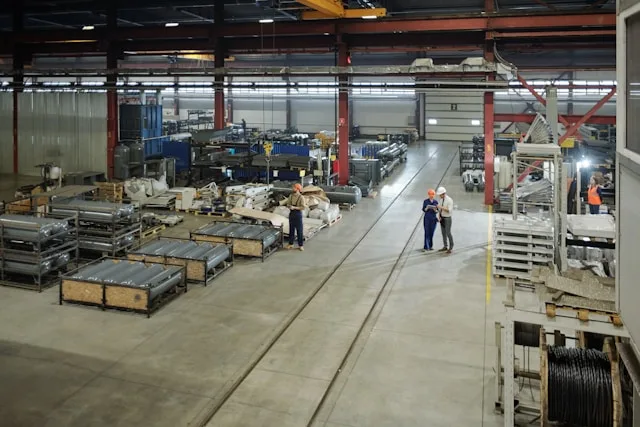
The Friuli chair and wood furniture district spent an estimated €45 million on Industry 4.0 technologies in 2024. CNC machining centres, automated finishing lines, and digital supply chain systems arrived in production halls across Manzano, San Giovanni al Natisone, and Basiliano. At the same time, the district's revenue contracted by 4 to 6 percent. Firms were simultaneously shrinking and investing. The contradiction is only apparent. What actually happened is a structural replacement of one kind of workforce with another, and the second kind barely exists in this province.
This is not a conventional hiring shortage where demand outpaces supply in a growing market. It is something more difficult to solve. The district's manufacturers are eliminating manual production roles while creating automation, compliance, and commercial positions that the local labour market cannot fill. The result is an unemployment rate of 4.9 percent alongside 340 open vacancies, with the hardest roles taking more than 120 days to fill. The people who are out of work and the jobs that are unfilled exist in the same province but belong to different economies.
What follows is an analysis of how this mismatch developed, what it means for the district's competitive position heading into 2026, and what organisations operating in or hiring for Udine's industrial manufacturing sector need to understand before they plan their next senior appointment. The gap between capital investment and human capital is the central problem. Every hiring decision in this district now sits inside that gap.
The District in 2026: Smaller Revenue, Higher Complexity
The Friuli chair district recorded an estimated turnover of €1.4 to €1.5 billion in 2024, down from the post-pandemic peak. Export intensity remains at approximately 78 percent of production, but unit volumes have fallen as North American and German distributors work through excess inventory accumulated during the 2021 to 2022 ordering surge. The 850 active enterprises in the district employ roughly 7,800 workers directly in manufacturing, with another 2,500 in the design, logistics, and commercial functions concentrated in Udine's urban centre.
The modest volume recovery forecast for 2026, projected at 2 to 3 percent turnover growth by Prometeia's wood furniture sector forecast, depends on conditions outside the district's control: US monetary policy easing and German construction sector stabilisation. Neither is guaranteed. What the district can control is its cost structure, its product mix, and the calibre of the people running both.
This is where the investment story becomes a talent story. The €45 million in automation spending was not discretionary. It was a response to two forces arriving simultaneously. First, the EU Deforestation Regulation imposes traceability obligations that require entirely new IT infrastructure and compliance expertise. Second, chronic labour scarcity in manual production roles made automation the only viable path to maintaining output with a shrinking workforce. Capital moved. Human capital did not follow.
The characterisation of this district as a collection of small artisanal workshops requires updating. Consolidation through the 2010s and early 2020s created mid-cap groups that operate with corporate-scale organisational complexity. Calligaris, with approximately 450 employees across manufacturing and commercial functions, reported 2024 revenues of €135 million. Jesse, now under the L Catterton portfolio, employs 280 workers and competes directly for the district's best technical and design talent. These are not cottage industries. They are manufacturers running multi-site operations, international supply chains, and hospitality contract pipelines that span the Middle East and Southeast Asia. The people they need to run these operations are executives, not craftspeople. And the executives are not here.
Where the Vacancies Are: Three Shortages That Compound Each Other
The Unioncamere FVG Excelsior system recorded 340 active vacancies in Udine province's wood furniture sector during Q4 2024. The vacancy rate of 4.3 percent was nearly double the provincial average of 2.4 percent. But the aggregate number conceals something more important: the distribution. The shortage is concentrated in three categories that interact with each other.
CNC Programming and Maintenance Technicians
Forty-five percent of surveyed firms reported "critical" difficulty sourcing operators capable of programming 5-axis CNC centres for curved wood components, according to Confindustria Udine's 2024 survey. The ITS Meccatronico del Friuli Venezia Giulia, the region's higher technical institute, graduated a cohort of 28 students in its furniture-specific mechatronics track in 2024. Ninety-six percent found employment within six months. The pipeline works. It is simply too narrow.
Twenty-eight graduates per year serving 850 enterprises means the training system produces roughly one qualified technician for every 30 firms that might need one. The arithmetic is unforgiving. When a mid-sized manufacturer loses a CNC programmer to a competitor, the replacement search does not begin from a pool of available candidates. It begins from a pool that is effectively empty.
Upholstery Artisans Facing Generational Extinction
The median age of practising upholsterers in the district is 54. Fewer than 15 apprentices were enrolled across all district firms in 2024, according to CNA FVG's artisan sector observatory. This is not a labour shortage in the conventional sense. It is a knowledge transfer crisis where the expertise required for high-end hospitality seating cannot be documented in a manual or taught through a screen. It lives in the hands and judgement of ageing craftspeople who are retiring faster than anyone is learning what they know.
The hospitality channel, which is now the district's primary growth driver at 5 to 7 percent projected growth for 2026, depends precisely on this handcraft capability. A five-star hotel specification for leather-upholstered seating cannot be fulfilled by a CNC machine alone. The finishing, the tension, the fit to a specific architect's vision: these are human skills. The district is building its commercial strategy around a capability that is literally dying of old age.
Export Area Managers for Hospitality Markets
Demand for commercial profiles with hospitality-sector language skills in English, French, and Arabic, combined with FF&E specification knowledge and project management capabilities, exceeds supply by an estimated 3:1 ratio. These are not junior sales roles. They require years of relationship-building with hotel groups, architects, and procurement teams who expect a counterpart who understands their language, their specification process, and their timelines.
These three shortages are not independent of each other. A factory that cannot programme its CNC centres operates below capacity. A factory operating below capacity cannot deliver hospitality contracts on time. A commercial team that wins a contract the production floor cannot fulfil damages the relationship that took years to build. The shortages compound.
The Original Paradox: Investment That Creates the Problem It Tries to Solve
Here is the analytical point that the data supports but that no single report states directly: the district's investment in automation has not reduced its dependence on scarce human talent. It has replaced dependence on one category of scarce talent with dependence on another category that is even scarcer.
Before 2020, the district's workforce problem was a shortage of young people willing to do manual woodworking. That problem was real but comprehensible. The solution was obvious in principle if difficult in practice: automate the repetitive work. And the district did automate. The €45 million investment in 2024 alone, a 12 percent increase year-on-year even as revenues fell, reflects this commitment.
But automation does not eliminate human labour. It transforms it. A 5-axis CNC centre for curved wood machining does not run itself. It requires a programmer who understands both the machine's capabilities and the material's behaviour. A blockchain-based timber traceability system does not configure itself. It requires a compliance specialist who understands both the regulation and the supply chain. A hospitality contract pipeline spanning three continents does not manage itself. It requires an export director with sector-specific knowledge that takes a decade to accumulate.
The district moved its capital faster than its human capital could follow. The machines are in the factory halls. The people who can operate them at their full potential are not in the province. This is the central tension that every hiring decision in this district must now address.
EUDR Compliance: The Regulatory Cliff That Demands New Roles
The EU Deforestation Regulation represents the most consequential regulatory change for this district since CE marking requirements reshaped product safety standards two decades ago. Only 15 percent of the district's wood fibre is locally sourced. The remaining 85 percent, including the imported beech, oak, and exotic hardwoods essential for bentwood and upholstery frames, must now carry GPS polygon mapping of supplier forests and full chain-of-custody documentation.
The Cost and the Capability Gap
The estimated aggregate compliance cost across the district runs to €25 to 30 million over 2024 to 2026, absorbing 15 to 20 percent of annual capital expenditure. For individual SMEs, the initial audit alone costs €15,000 to €40,000. But the greater problem is not the money. It is the expertise.
EUDR compliance requires professionals who understand Life Cycle Assessment certification, blockchain-based traceability architecture, and EU regulatory procedure simultaneously. This profile does not exist in the local labour market in meaningful numbers. The district's training institutions produce designers and mechatronics technicians, not regulatory compliance specialists. The University of Udine's architecture and design department graduates approximately 40 furniture-relevant designers annually, but its curriculum does not address supply chain compliance at the level EUDR demands.
The SME Deadline Creates Urgency
Large enterprises faced their compliance deadline in December 2025. SMEs face theirs in June 2026. For a district where the vast majority of the 850 active firms qualify as SMEs, this creates a compressed timeline during which hundreds of firms need compliance expertise they cannot find locally. The firms that solve this challenge first gain a competitive advantage not just in regulatory standing but in their ability to supply hospitality groups and architectural specification firms that increasingly require deforestation-free certification as a procurement prerequisite.
The regulatory requirement is, in effect, a new kind of executive search. The district needs people who did not exist as a job category five years ago.
Compensation and the Milan Problem
The salary data for the Friuli district tells a clear story, but it is not the story most people expect. Compensation is not low in absolute terms. For a province where residential costs run 80 percent below Milan's, according to Immobiliare.it's 2024 price index, the total compensation packages for senior roles are competitive on a purchasing-power basis. The problem is that purchasing-power arguments do not win talent competitions against Milan's gravitational pull.
A Production Director role in the Friuli district commands €95,000 to €125,000 base, with total compensation reaching €115,000 to €155,000 at the executive level. A Chief Commercial Officer managing US and Middle Eastern markets earns €85,000 to €110,000 base, with total packages reaching €120,000 to €160,000 for candidates with existing hospitality client portfolios. A Design Director reaches €75,000 to €98,000 base, with total cash rarely exceeding €110,000 given the limited equity participation typical of private SME structures.
Milan offers 25 to 35 percent salary premiums for equivalent Product Director roles: €95,000 to €130,000 versus €75,000 to €98,000 in Udine. The cost of living differential partially offsets this gap on paper. In practice, it does not offset the career trajectory differential. Milan hosts Poltrona Frau, B&B Italia, and Cassina. A designer who moves to Milan can work for three or four global brands during a career without relocating again. A designer who stays in Udine works for one or two district firms, however excellent those firms may be.
The data from Nomisma's 2024 talent mobility study confirms the pattern: only 35 percent of the University of Udine's furniture-relevant design graduates remain in the province after completing their studies. The under-35 cohort emigrates primarily for career breadth and spousal employment opportunities, not for salary alone. This means that any executive salary negotiation for the Friuli district must address what Milan offers beyond money. The proposition has to be about the role itself: its scope, its autonomy, its direct impact on products that reach international markets.
For senior commercial roles, the signing bonuses that have become standard in the district tell their own story. According to industry recruiter interviews reported in Domus, mid-level designers with 5 to 7 years of experience and parametric design capabilities command signing bonuses of €8,000 to €12,000 when moving between Calligaris and Jesse. At senior levels, the premium for market benchmarking that reflects real hiring conditions is essential because the published salary guides understate the true cost of acquisition.
Competitive Geography: Who Else Is Recruiting From the Same Pool
The Veneto Corridor
The Friuli district does not compete for talent in isolation. The Thiene and Bassano del Grappa furniture districts in Vicenza province sit close enough to create direct overlap in the recruitment pool. Firms like Cattelan Italia and Bonaldo expanded their technical teams by 15 percent in 2024, with recruiters, according to Unioncamere Veneto's employment data, explicitly targeting Friuli's CNC technicians and production engineers. The nominal salary differential is small. The commute advantage often tips the balance for workers in the Pordenone-Udine corridor who can reach Vicenza-province firms without relocating.
The Cross-Border Dynamic
The Gorizia-Nova Gorica cross-border zone adds another layer of competition for entry-level and mid-level production roles. Slovenian firms offer lower wages but state-subsidised training programmes that attract young Friuli workers seeking housing affordability in a region where Italian energy costs of €0.18 to €0.20 per kilowatt hour, according to Eurostat's H1 2024 data, compare unfavourably to Slovenia's €0.10 per kilowatt hour.
At executive levels, this cross-border competition reverses. Udine maintains its advantage as the managerial and commercial centre. But the pipeline of future executives is shaped by where the 25-year-olds choose to start their careers. If they start across the border, the district loses not just a production worker today but a potential production manager in 2036.
The competitive environment means that any senior appointment in this district requires a search methodology that reaches beyond the province's borders. The candidates most likely to succeed in these roles are currently working in Veneto, Milan, or even outside Italy entirely. They will not appear on a job board posting in San Giovanni al Natisone.
What the Data Means for Hiring Leaders in This District
The Friuli chair district sits at a precise inflection point. Its revenue base is contracting modestly. Its product mix is shifting toward higher-value hospitality contracts. Its regulatory obligations are multiplying. Its workforce is ageing out of the craft skills the hospitality channel depends on while simultaneously lacking the automation, compliance, and commercial skills the new business model requires.
The organisations that will lead this district through 2026 and beyond are the ones that solve three specific problems in sequence. First, they secure the CNC and automation talent to run the production infrastructure they have already purchased. Second, they build compliance capability before the June 2026 EUDR deadline closes the regulatory window. Third, they hire commercial leaders who can manage hospitality contract pipelines across markets where Friuli firms have product quality advantages but not yet the organisational capacity to scale.
Each of these problems involves candidates who are overwhelmingly passive. Seventy percent of qualified production managers with wood-technology specialisation are employed and not actively seeking new roles, with average tenure exceeding five years. Eighty percent of effective placements for senior hospitality export managers occur through non-advertised channels, because these professionals' value is embedded in confidential client relationships that do not transfer through job applications.
A traditional recruitment approach that posts a vacancy on InfoJobs or LinkedIn and waits for applications reaches, at best, the 20 to 30 percent of the market that is actively looking. In a district where the active candidates for production management roles are frequently underqualified, leading to 40 percent of searches failing to conclude and defaulting to internal promotion of underprepared staff, this approach is not slow. It is broken.
The alternative is direct search. A structured executive search process that maps the relevant talent across Friuli, Veneto, Milan, and potentially international markets, identifies the specific individuals with the right combination of industry knowledge and functional capability, and approaches them with a proposition built around the role rather than a job listing. The firms in this district that have adopted this methodology are filling their most critical positions. The firms that have not are running searches that last six to nine months and still end without the right hire.
KiTalent works with manufacturing and industrial organisations across Europe to deliver interview-ready leadership candidates within 7 to 10 days, using AI-enhanced talent mapping to identify the passive, high-performing professionals who do not appear in any conventional candidate database. With a 96 percent one-year retention rate and a pay-per-interview model that removes the financial risk of a failed retainer, the approach is designed precisely for markets like Friuli's furniture district where the right candidates exist but cannot be found through traditional channels.
For organisations competing for production directors, commercial leaders, and compliance specialists in a district where capital investment has outpaced the human capital required to operate it, start a conversation with our executive search team about how we approach this market. The machines are already in the factory. The people who will determine whether those machines generate returns are the search that matters now.
Frequently Asked Questions
What is the average time to fill a production manager role in Udine's furniture district?
Senior production manager roles in the Friuli wood furniture district require an average of 120 or more days to fill, compared to 45 days for administrative positions. Forty percent of these searches fail to conclude successfully and default to internal promotion of candidates who may lack the required combination of lean manufacturing certification and wood-specific process knowledge. The difficulty is compounded by a passive candidate market where 70 percent of qualified profiles are employed and not actively seeking new roles. A retained executive search approach that proactively identifies and approaches these candidates reduces time-to-fill and improves hire quality.
What does a senior export manager earn in Friuli's furniture sector?
At the area manager level, base compensation ranges from €55,000 to €72,000, with commission structures averaging 15 to 25 percent of base for hospitality contract closings. At Chief Commercial Officer level, base salaries reach €85,000 to €110,000, with total compensation of €120,000 to €160,000 for candidates managing US and Middle Eastern markets with existing client portfolios. Hospitality-sector language skills in English, French, and Arabic command meaningful premiums. These figures are drawn from 2024 salary surveys by Hays Italy and Unioncamere FVG.
How does the EUDR regulation affect hiring in the wood furniture sector?
The EU Deforestation Regulation requires GPS polygon mapping of supplier forests and full chain-of-custody documentation for all imported timber. For Friuli's district, which sources 85 percent of its wood fibre internationally, compliance demands entirely new roles in blockchain-based traceability, Life Cycle Assessment certification, and supply chain due diligence. The SME compliance deadline of June 2026 creates urgency. The estimated aggregate cost across the district is €25 to 30 million, but the greater constraint is finding professionals with the regulatory and technical expertise to implement these systems.
Why is it so hard to hire CNC technicians in Udine province?
The ITS Meccatronico del Friuli Venezia Giulia, the region's primary training pipeline for CNC programmers, graduated 28 students in its furniture-specific specialisation in 2024. This serves a district of 850 firms. Competing districts in Vicenza province actively target Friuli's technicians with equivalent salaries and shorter commutes. Forty-five percent of surveyed Friuli firms report critical difficulty sourcing operators capable of programming 5-axis CNC centres for curved wood components, making this the district's most acute technical hiring gap.
What executive roles are hardest to fill in the Friuli furniture district?
Three categories stand out. Production directors who combine lean manufacturing certification with wood-specific process knowledge and Industry 4.0 implementation experience face 6 to 9 month vacancy durations. Export directors for hospitality contract markets require rare combinations of language skills, FF&E specification knowledge, and existing client relationships. Design directors with parametric CAD capabilities in Rhinoceros and Grasshopper, combined with material science knowledge, are subject to competitive poaching between the district's largest firms, with signing bonuses of €8,000 to €12,000 reported as standard for mid-level appointments.
How does KiTalent approach executive search in niche manufacturing markets?
KiTalent uses AI-enhanced direct headhunting to identify and approach passive candidates who are not visible on job boards or responding to advertisements. In specialised manufacturing districts like Friuli's furniture cluster, this means mapping talent across competing regions including Veneto, Milan, and international markets to build a shortlist of candidates with the precise combination of sector knowledge and functional capability the role requires. The pay-per-interview model means clients only invest when they meet qualified candidates, and the typical delivery timeline of 7 to 10 days reflects a process built for markets where speed determines whether the best candidates are still available.