Udine's Steel Engineering Cluster Has a €4.5 Billion Order Book and No One to Deliver It
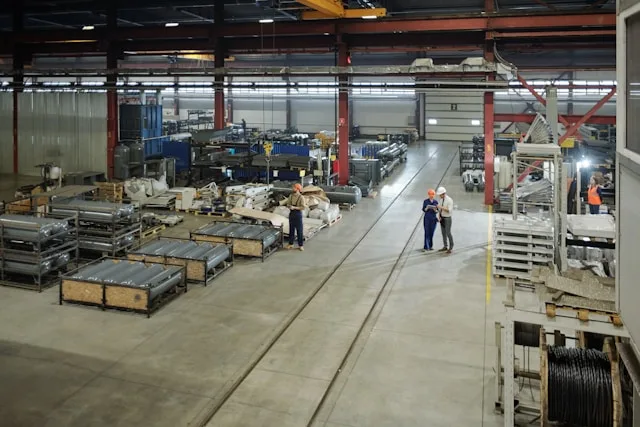
Danieli & C. Officine Meccaniche closed fiscal year 2023/2024 with €4.37 billion in revenue and an order backlog of €4.5 billion. The group's Buttrio headquarters sits at the centre of a supplier network that generates an estimated 15 to 18% of the Province of Udine's industrial GDP. By every financial measure, this is an engineering cluster in a position of considerable strength.
The workforce required to execute that backlog is a different story. According to Unioncamere FVG's Excelsior monitoring system, 42% of mechanical engineering firms in the Province of Udine reported extreme difficulty filling automation engineer positions through the final quarter of 2024. The average time to fill a senior role with five or more years of heavy industry experience has stretched to 180 to 210 days. In 2019, it was 90. The order book is full. The engineering benches are not.
What follows is an analysis of the forces behind this mismatch: why a region with 4.2% unemployment and one of Italy's strongest industrial and manufacturing employment bases still cannot produce the specialists its anchor employer needs, what the 2026 outlook means for hiring leaders across the cluster, and what organisations competing for this talent must do differently to secure the profiles that no job board can reach.
The Buttrio Corridor: An Engineering Economy Built Around a Single Anchor
The steel plant engineering cluster centred on Udine's Buttrio industrial corridor is unusual in European manufacturing. It is not a diversified industrial district. It is a vertically integrated ecosystem organised around one company's production model, with over 200 precision engineering SMEs operating within a 15-kilometre radius of Danieli's headquarters, most of them serving the group's just-in-time manufacturing flow as exclusive or near-exclusive suppliers.
This concentration has created economic resilience and talent vulnerability in equal measure. The cluster's export orientation is extreme: over 90% of Danieli's revenue comes from international markets, and a comparable share applies to the subcontractor base. When global steel capital expenditure cycles are favourable, the entire corridor prospers. When they are not, the impact propagates through hundreds of small firms simultaneously.
Danieli's Four Operating Arms
The group's Italian headcount of approximately 4,300 is distributed across four principal entities. Danieli & C. Officine Meccaniche handles parent-level plant engineering. Danieli Automation, based in Buttrio with around 1,200 employees, develops industrial control systems, software, and electrical engineering solutions. Danieli Centro Cranes produces heavy-lifting equipment for steel plant environments. Danieli Service manages aftermarket maintenance and spare parts logistics. Each entity has distinct talent requirements, but they share the same constrained talent pool.
The Supplier Network's Hidden Fragility
The 200-plus SMEs averaging 15 to 50 employees face a particular version of the hiring challenge. They cannot offer the career breadth, international mobility, or compensation premiums that Danieli itself provides. Yet they compete for the same mechanical and automation engineering graduates from the University of Udine's annual output of approximately 350 engineering degrees. The result is a tiered talent market where the anchor firm absorbs the strongest graduates and the supplier base struggles to retain mid-career specialists who recognise their market value.
This dynamic matters for every hiring leader in the cluster because it means the talent shortage is not distributed evenly. It is concentrated in the second and third tier, precisely where production bottlenecks are most difficult to resolve.
The Decarbonisation Paradox: Record Demand, Shrinking Client Budgets
The most consequential tension in this market is not between supply and demand for talent. It is between the type of work the cluster is winning and the willingness of global steel producers to fund it.
Danieli's order backlog is driven by premium-priced green steel technologies. Hydrogen-based Direct Reduction, electric arc furnace installations, and the Q-Smart digital platform represent the technology-driven future of steelmaking. These projects command higher margins than traditional blast furnace work, and they require a workforce with fundamentally different skills: mechatronics rather than pure mechanical engineering, data science rather than manual process control, hydrogen safety certification rather than conventional combustion expertise.
Yet global steel capital expenditure by major clients has been revised downward. According to McKinsey's Global Steel Outlook, firms including ArcelorMittal and Tata Steel reduced capex projections by 8 to 12% for 2025, driven by weak Chinese demand and energy price uncertainty. Global capacity utilisation averaged just 76.1% in 2024 per the World Steel Association.
The implication for the Udine cluster is a bifurcation that hiring leaders must understand. Technology leaders like Danieli are capturing a shrinking pool of high-value projects. The broader supplier base, dependent on volume, faces exposure to cyclical volatility even as the anchor firm reports record backlogs. For 2026, the World Steel Association projects a modest 1.2% recovery in global steel demand, with greenfield projects concentrated in the Middle East and India. Udine's cluster is positioned to serve these markets through Danieli's turnkey plant offerings, but pricing pressure from German competitor SMS group, headquartered in Düsseldorf, remains acute.
The talent consequence is direct. The workforce the cluster needs in 2026 is not the workforce it built over the previous two decades. Capital has moved toward decarbonisation faster than human capital has followed.
A Skills Mismatch That Unemployment Figures Cannot Reveal
The Province of Udine's unemployment rate of 4.2% sits well below Italy's national average of 6.3%. Friuli Venezia Giulia's youth unemployment rate of 14.2% is nearly nine percentage points below Italy's 22.8%. By aggregate labour market standards, this is one of the tightest employment markets in the country.
These figures are misleading for any hiring leader trying to fill an automation architect or commissioning engineer role. The structural skills mismatch in this market is the central obstacle, and it operates at a level that aggregate employment data cannot capture.
The Training Pipeline Gap
The University of Udine's Department of Engineering awards approximately 350 engineering degrees annually. In response to the cluster's evolving needs, it launched a specialised master's track in Industrial Digitalisation for the 2025/2026 academic year. Intake is capped at 40 students per year. The cluster's demand for hybrid mechatronics and data science profiles exceeds this output by a factor that the university itself has acknowledged through the programme's creation.
The core problem is temporal. The industry's digitisation requirements have moved at a pace that academic curricula have not matched. The gap between what the University of Udine produces and what Danieli Automation requires is estimated at three to five years. Graduates entering the workforce today carry strong fundamentals in mechanical engineering but lack the integrated competency in Siemens TIA Portal, Rockwell Automation platforms, Python and C++ for industrial IoT, and hydrogen process safety standards that the cluster's most critical roles demand.
The Retirement Wave Compounding the Mismatch
INPS projections indicate that 28% of the Friuli Venezia Giulia metalmeccanico workforce will reach retirement age by 2027. This is not a distant demographic risk. It is a replacement hiring crisis that compounds the skills mismatch at the exact seniority level where institutional knowledge is most concentrated. The senior metallurgists and commissioning engineers approaching retirement carry decades of plant-specific process knowledge that cannot be transferred through a training programme or a job description. When they leave, the knowledge leaves with them.
The organisations that have not begun building a proactive talent pipeline for these replacement hires are already behind schedule. The 180 to 210 day average time to fill a senior automation role means that a search initiated on the day an experienced engineer submits notice will, on average, leave the role unfilled for three to four months after their departure.
The Roles That Define This Shortage
Three role categories concentrate the most acute scarcity in the cluster. Each has distinct market characteristics, and each demands a different hiring approach.
Industrial Automation Engineers
PLC and SCADA specialists carry a vacancy rate of 8.4% across the sector, according to Excelsior InfoCamere data. At the senior level, a specialist with five or more years of heavy industry experience commands a base salary of €58,000 to €75,000 in Udine, per the Michael Page Salary Guide 2024 for Northeast Italy. Danieli pays 15 to 25% above the national metalmeccanico collective agreement minimums for technical roles, with performance bonuses adding 20 to 30% to base salary for senior staff.
These are not roles where job postings generate useful candidate flow. The professionals who can programme integrated automation systems for a steel plant environment are already employed. Their average tenure exceeds eight years. Their unemployment rate is effectively zero.
Commissioning Engineers
This is the most acutely scarce profile in the cluster. A steel plant commissioning engineer requires international mobility, metallurgical process knowledge, and the ability to manage complex technical operations across cultural and linguistic boundaries. The profile demands fluency in Italian and English technical communication, with Middle East and India project exposure increasingly expected.
Among practitioners with more than seven years of experience, unemployment is effectively zero. Over 80% of placements in this specialism occur through direct headhunting rather than response to posted vacancies, according to Hays Italy's 2024 engineering hiring guide. Active candidates in this category are predominantly junior professionals with fewer than three years of experience, or engineers displaced by plant closures in declining steel regions.
Hydraulics Specialists
Required for heavy machinery maintenance across both Danieli's own operations and the broader crane and lifting equipment supply chain, hydraulics specialists face a shortage driven primarily by the aging technical workforce. This is a role category where the retirement wave hits hardest because the skills are acquired through years of hands-on experience rather than academic training. The replacement pipeline is thin.
The compensation gap between these roles in Udine and equivalent positions in Milan or international markets creates persistent outward pressure on the talent base. This geographic dynamic is not a background condition. It is the mechanism through which the shortage sustains itself.
The Compensation Equation That Works Against Udine
A senior automation engineer in Udine earns a base of €58,000 to €75,000. The same profile in Milan commands €85,000, a premium of 25 to 35%. Turin's Stellantis and automotive automation clusters offer comparable salaries to Milan with stronger union-mandated benefits. The cost of living differential partially offsets the Milan premium, with living costs approximately 40% higher in Lombardy's capital, but the net advantage still favours the larger city for many candidates.
The international pull is more severe. Germany's Ruhr industrial region and Switzerland's ABB and Siemens operations recruit Italian engineers with salary premiums of 40 to 60%, translating to €90,000 to €110,000 for mid-level roles. Language barriers limit outflow to approximately 5 to 8% of graduates annually, according to AlmaLaurea's 2023 graduate profile data for FVG. But among the most skilled and internationally mobile professionals, precisely the ones the cluster needs most, the outflow rate is higher.
At the executive level, the picture shifts. A VP of Digitalisation or industrial CTO in the Udine cluster commands €140,000 to €200,000 plus bonus. VP Operations roles for steel plants sit at €150,000 to €220,000. Executive Project Director positions begin at €160,000. These figures are competitive by Italian industrial standards but remain below what equivalent roles command in Germany or Switzerland.
The compensation challenge is not simply that Udine pays less. It is that the gap widens at the exact seniority level where the shortage is most acute. A junior engineer considering Milan faces a moderate premium partially offset by higher rent. A senior commissioning engineer considering Düsseldorf faces a 50% salary increase in a lower cost-of-living environment. The negotiation required to retain or attract these candidates goes well beyond base salary. It requires a proposition built around project significance, technical challenge, and career trajectory that only a small number of employers in this cluster can credibly offer.
Regulatory Acceleration and the Energy Cost Squeeze
Two regulatory forces will shape the cluster's talent needs through 2026 and beyond. Neither is optional, and both create hiring implications that most organisations in the cluster have not yet fully priced in.
CBAM and the Green Investment Trigger
The EU Carbon Border Adjustment Mechanism reaches full implementation in 2026. For the Udine cluster, CBAM creates a dual effect. On the demand side, it increases compliance costs for carbon-intensive steel imports into Europe, accelerating the business case for greenfield investments in lower-carbon production technology. This is precisely what Danieli builds. On the supply side, it introduces uncertainty around hydrogen infrastructure timelines that may freeze client capex decisions pending clarity on energy availability and pricing.
The talent implication is that the cluster needs professionals who understand both the engineering and the regulatory dimensions of decarbonisation. Hydrogen process safety certification to IEC 61511 standards, EU Taxonomy documentation requirements, and CBAM compliance are not traditional mechanical engineering competencies. They represent an entirely new skills layer that the workforce must acquire while simultaneously maintaining existing capabilities.
Energy Costs Eroding Supplier Margins
Italian industrial electricity prices averaged €0.185 per kilowatt hour in 2024, compared to €0.12 in Germany and €0.10 in France, according to Eurostat's electricity price statistics. For the 200-plus precision manufacturing SMEs in the supplier base, this differential erodes margins on energy-intensive processes. The consequence for talent is indirect but real: suppliers with compressed margins invest less in workforce development, pay lower salaries, and lose mid-career engineers to the anchor firm or to markets with better compensation structures.
The infrastructure constraints compound this pressure. Heavy machinery transport via the A34 motorway and Port of Trieste connectivity adds five to seven days to delivery schedules for oversized loads. The Province of Udine's working-age population is projected to decline by 12% by 2040. These are not cyclical problems. They are embedded constraints that will shape the talent market for the next fifteen years.
What This Market Requires From a Hiring Strategy
The conventional approach to filling engineering roles, posting a vacancy, waiting for applications, screening inbound candidates, does not work in this market. It reaches a fraction of the viable talent pool. The professionals who can deliver a hydrogen-ready steel plant on schedule in India are not browsing job boards. They are mid-project, well-compensated, and not considering a move unless someone approaches them with a proposition they have not seen before.
The original analytical observation that runs through this entire market is this: the investment in green steel technology has not reduced the cluster's workforce needs. It has replaced one category of worker with another that does not yet exist in sufficient numbers. Danieli's R&D headcount in automation grew 12% year-on-year through 2024 not because the business is expanding headcount as a general strategy, but because the skills it needs have changed faster than the available workforce has adapted. Capital moved faster than human capital could follow.
For organisations hiring in this cluster, three realities must inform the approach.
First, the candidate pool is almost entirely passive. Commissioning engineers, automation architects, and senior metallurgists with steel plant experience exhibit average tenures exceeding eight years. They are not on the market. They must be found, assessed, and engaged through targeted executive search methods that reach the professionals who have never responded to a job posting and never will.
Second, speed matters more in this market than in almost any other industrial hiring context. With time-to-fill averaging 180 to 210 days for senior roles, the cost of a prolonged vacancy is measured in project delays, client penalties, and lost position in a competitive field where SMS group is actively recruiting the same profiles from the same geography.
Third, the proposition must be built before the search begins. A passive candidate in this market will not move for money alone. They will move for a project they cannot access elsewhere, a technical challenge that advances their career, and a compensation structure that reflects the market reality rather than a collective agreement minimum. KiTalent's approach to talent mapping in specialised industrial markets is designed to identify these candidates before a vacancy forces a reactive search, providing the market intelligence that allows organisations to build the right proposition for the right individuals.
KiTalent delivers interview-ready executive candidates within 7 to 10 days through AI-enhanced direct headhunting, reaching the 80% of senior professionals who are not visible on any job board. With a 96% one-year retention rate across 1,450-plus executive placements, the model is built for markets where the hidden majority of qualified candidates will never appear in a conventional search process.
For organisations competing for automation, commissioning, and process engineering leadership in Udine's steel plant cluster, where every month of vacancy erodes project margin and competitive position, start a conversation with our industrial executive search team about how we approach this market differently.
Frequently Asked Questions
Why is it so difficult to hire automation engineers in Udine's steel engineering cluster?
The difficulty stems from a structural skills mismatch. The Province of Udine's 4.2% unemployment rate masks the fact that 42% of mechanical engineering firms report extreme difficulty filling automation roles. The professionals required need hybrid competencies spanning mechatronics, industrial IoT programming, and steel process knowledge. The University of Udine produces approximately 350 engineering graduates annually, but its specialised Industrial Digitalisation master's track admits only 40 students per year. Meanwhile, 28% of the existing metalmeccanico workforce reaches retirement age by 2027, removing institutional knowledge faster than the training pipeline can replace it.
What do senior steel plant engineering roles pay in the Udine area?
Compensation varies considerably by specialism and seniority. Senior automation engineers earn €58,000 to €75,000 base, while senior metallurgists and process managers command €65,000 to €85,000. At the executive level, VP of Digitalisation or industrial CTO roles sit at €140,000 to €200,000 plus bonus. Danieli pays 15 to 25% above national collective agreement minimums for technical roles, with performance bonuses adding 20 to 30% to base salary. Milan offers 25 to 35% premiums for equivalent automation roles, and German and Swiss employers offer 40 to 60% premiums, creating persistent outward pressure on Udine's talent base.
What is driving demand for green steel engineering talent in Friuli Venezia Giulia?
Danieli's €4.5 billion order backlog is concentrated in decarbonisation technologies: hydrogen-based Direct Reduction, electric arc furnaces, and AI-driven process control platforms. The EU's Carbon Border Adjustment Mechanism, reaching full implementation in 2026, accelerates the commercial case for lower-carbon steel production globally. This shifts the workforce requirement from traditional mechanical engineering toward hydrogen process safety, digital twin integration, and predictive maintenance algorithms. The cluster's technology and AI-focused talent needs now extend well beyond conventional steel plant engineering.
How can companies attract passive steel plant commissioning engineers?
Among commissioning engineers with more than seven years of experience, unemployment is effectively zero and average tenure exceeds eight years at firms like Danieli, Tenova, or SMS group. Over 80% of placements in this specialism occur through direct headhunting rather than job postings. Attracting these candidates requires a compelling project proposition, internationally competitive compensation, and a search methodology designed for identifying and engaging professionals who are not actively looking. KiTalent's AI-enhanced direct search reaches these candidates within 7 to 10 days, delivering interview-ready shortlists built from the passive talent pool that conventional methods cannot access.
Which cities compete with Udine for industrial engineering talent?
Milan is the primary domestic competitor, offering 25 to 35% salary premiums for equivalent roles alongside a diversified job market that reduces career risk. Turin's Stellantis and automotive automation clusters attract mechanical engineers with similar heavy-industry profiles. Internationally, Germany's Ruhr region and Swiss employers including ABB and Siemens recruit Italian engineers with 40 to 60% salary premiums. Language barriers limit annual graduate outflow to international markets to approximately 5 to 8%, but among the most senior and internationally mobile specialists, the outflow rate is materially higher. Benchmarking compensation against these competitor markets is essential for any organisation serious about retaining its strongest engineers.
What are the biggest risks facing Udine's steel engineering cluster through 2026?
Three risks converge. First, the demographic decline: the province's working-age population is projected to fall 12% by 2040, tightening labour supply regardless of cyclical conditions. Second, energy cost disparity: Italian industrial electricity costs 54% more than in Germany and 85% more than in France, compressing margins for the 200-plus precision manufacturing SMEs in Danieli's supply chain. Third, regulatory complexity: CBAM and EU Taxonomy requirements demand documentation and compliance capabilities that many subcontractors lack, risking their exclusion from green supply chains. Together, these forces require hiring leaders to think beyond filling today's vacancies toward building succession plans and talent pipelines that account for a fundamentally different workforce structure.