Leuven's Additive Manufacturing Medtech Cluster: The Regulatory Surge That Created a Hiring Crisis Nobody Expected
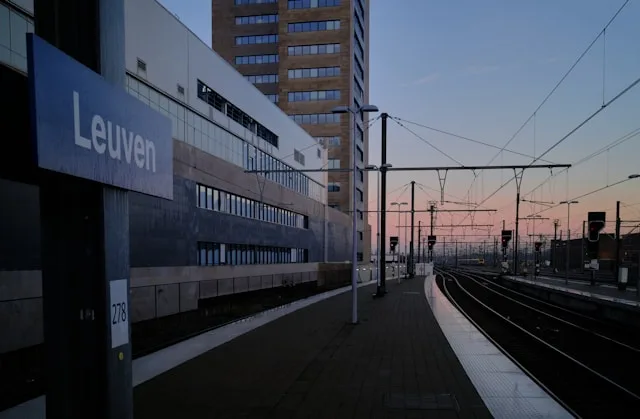
Leuven's additive manufacturing and medtech cluster entered 2026 with a paradox. The EU Medical Device Regulation that was supposed to slow the ecosystem down has instead accelerated hiring demand in the very functions that were already hardest to fill. Medtech job postings across the Leuven corridor rose 38% through 2024, with AM-specific roles climbing 52% year on year. The cluster is not contracting under regulatory pressure. It is expanding in the worst possible place: the roles where the candidate pool was already thin.
The tension is specific and measurable. Senior MDR regulatory affairs roles in Leuven now take an average of 142 days to fill, more than double the 68-day market average. Clinical application engineers with surgical planning experience sit at a 90% passive candidate ratio. Metal AM process engineers command 20-30% premiums to relocate from Germany, and even those premiums do not always close the deal. This is a market where the investment in innovation has outrun the supply of people qualified to bring that innovation through regulatory clearance and into serial production.
What follows is a ground-level analysis of why Leuven's AM-medtech cluster faces this specific hiring challenge, what is driving each shortage, and what organisations in this market need to do differently to secure the leadership and specialist talent that determines whether their products reach patients or stall in a regulatory queue.
Inside the Cluster: How One Anchor Firm Shaped an Entire Talent Market
Materialise NV, headquartered at Technologielaan 15 in Heverlee-Leuven, is not merely the largest employer in this cluster. It is the ecosystem's gravitational centre. With approximately 1,100 FTEs at its Leuven headquarters and consolidated revenue of €202.4 million in 2023, the company sets the terms for how talent moves through the region. Its medical segment alone generated €78.3 million, and its Mimics Innovation Suite employs more than 340 specialised medical software engineers in Leuven.
The company's influence extends well beyond its own payroll. Alumni from Materialise have founded or co-founded at least 12 local medtech and AM ventures since 2015. This talent incubation effect is a defining feature of the cluster, but it creates a secondary problem: every spin-out that succeeds draws from the same pool of experienced professionals that Materialise and UZ Leuven also need. The passive candidate identification challenge in this market is not abstract. It is a direct consequence of a talent pool where the same 200-300 senior specialists are known to every hiring manager in a 25-kilometre radius.
Anchor Dependency as a Systemic Risk
The concentration is striking. Between 35% and 40% of local cluster employment remains tied to Materialise. A strategic restructure or headquarters relocation would devastate the ecosystem, according to a 2024 risk assessment by Leuven MindGate. This is not a distant hypothetical. It is the kind of single-point-of-failure that shapes how every other employer in the corridor must think about talent strategy. When one firm accounts for more than a third of specialist employment, every other organisation is hiring from its orbit.
The broader SME ecosystem, companies with fewer than 50 employees, generates an estimated €180-220 million in combined revenue. But that revenue is heavily weighted toward R&D services rather than product sales, reflecting the cluster's fundamental character: strong at invention, weaker at commercialisation. The roughly 40 active medtech and AM companies in the Leuven-Kortrijk corridor and the 180 companies represented by Leuven MindGate form a dense network. Dense, but fragile in its dependency on a single anchor.
The Knowledge Engine: KU Leuven and UZ Leuven
KU Leuven, ranked as Europe's most innovative university by Reuters in 2024, produces over 200 master's graduates annually with AM or medtech specialisation. Its technology transfer office created 108 spin-outs between 2019 and 2023, with 23% focused on medical devices or digital health. The university's Prometheus research group and spin-out Baboly, founded in 2022, are advancing bioprinting and organ-on-chip applications, though these remain pre-revenue.
UZ Leuven, one of Europe's largest university hospitals with 1,995 beds, performs more than 2,000 surgeries annually using Materialise patient-specific guides. Its 3D Planning Lab employs 12 clinical engineers in hybrid MD/engineer roles. This clinical anchor is critical because it creates the demand signal that pulls innovation from laboratory to operating theatre. But the pipeline from graduation to clinical engineering competence takes years, not months. The supply of junior biomedical engineering graduates is adequate. The supply of experienced professionals who can work at the intersection of surgery, regulation, and additive manufacturing is not.
What makes this cluster architecture distinctive is not any single institution. It is the tight interdependency between all three anchors. And that interdependency is now being tested by a regulatory transition that demands skills none of them were designed to produce at scale.
The MDR Bottleneck: How Regulation Became a Hiring Accelerator
Here is the original synthesis that frames this entire market: the EU Medical Device Regulation has not suppressed the Leuven cluster. It has inflated demand for regulatory and quality assurance talent to a degree that the cluster's own innovation capacity now depends on roles that barely existed at this scale five years ago. The regulatory burden did not kill jobs. It created them in a category where the talent pool was already insufficient.
The numbers are specific. As of early 2025, only 36 notified bodies were designated under MDR EU 2017/745 for Class III devices, compared to more than 80 under the previous MDD directive. Local manufacturers reported average conformity assessment durations of 18-24 months for patient-specific implants. Historically, the same process took 6-9 months. For a cluster where cranio-maxillofacial guides and hip and pelvic reconstructions represent 60% of medical AM output, this timeline extension directly constrains revenue.
By the second quarter of 2026, the MDR transition was expected to normalise as notified body capacity expanded and legacy MDD certificates expired. That stabilisation is now underway, but it has not reduced hiring pressure. It has shifted it. The pent-up product pipelines now releasing into the system require post-market surveillance capability, clinical evaluation report maintenance, and ongoing post-market clinical follow-up planning. MedTech Europe's regulatory roadmap projected a 25-30% increase in local regulatory affairs hiring to manage these obligations. That projection appears to be materialising.
Reimbursement: The Second Regulatory Wall
Even where CE marking is achieved, commercialisation faces a second barrier. Belgium's INAMI/RIZIV has not established specific reimbursement codes for patient-specific 3D printed implants. A company can invest two years in MDR conformity assessment, secure its CE mark, and then discover that the Belgian healthcare system has no mechanism to pay for its product at a price that supports the manufacturing cost. This creates a commercial dead zone that the cost of a failed executive hire only compounds. A VP of Regulatory Affairs hired to manage MDR transition who lacks reimbursement strategy experience may deliver the CE mark but not the market access.
The implication for hiring is that regulatory affairs leadership in this cluster requires a broader skill set than the title suggests. The role is not simply about technical file management. It encompasses notified body relationship management, reimbursement advocacy, and post-market surveillance architecture. Finding candidates who combine all three is the central recruitment challenge for every AM-medtech company in Leuven attempting to cross from prototype to commercial product.
Three Roles the Cluster Cannot Fill Fast Enough
MDR Regulatory Affairs Specialists
Senior regulatory affairs roles in Leuven's AM-medtech sector take an average of 142 days to fill, according to the Hays Belgium Salary Guide 2024. The market average across all sectors is 68 days. That gap represents more than two additional months of regulatory delay for every unfilled position.
The pattern is consistent across the SME tier. Multiple Leuven-based companies with 20-50 employees reported regulatory manager roles remaining vacant for eight months or longer through 2024, according to the Flanders Make Industry Survey 2024. These companies turned to interim contractors at €800-€1,000 per day to maintain technical file submissions. One CMF implant developer paused CE marking for a novel titanium mesh product for 11 months because it could not secure a permanent Regulatory Affairs Manager.
The cost arithmetic is brutal. An interim contractor at €900 per day for 11 months represents approximately €200,000. A permanent hire at €85,000 base salary with a 10% bonus would cost less than half that over the same period, while building institutional knowledge that contractors take with them when they leave. The economic case for getting executive search right in this market is not theoretical. It is the difference between a product reaching patients and a product sitting in a regulatory queue.
AM Process Engineers for Metal 3D Printing
The shift from prototyping to serial production in medical-grade titanium (Ti6Al4V ELI) and cobalt-chrome demands process validation expertise that most AM engineers do not possess. Installation qualification, operational qualification, and performance qualification protocols for Class III implants require a specific combination of materials science, manufacturing process control, and regulatory awareness.
According to the Robert Walters Salary Survey 2024, German AM talent relocating to Belgium commands premiums of 20-30%. Materialise reportedly recruited a Senior AM Process Engineer from Siemens Healthineers in Erlangen, Germany in 2024, offering a 25% compensation premium and a relocation package to secure expertise in electron beam melting parameter optimisation for orthopaedic implants. This is consistent with the broader pattern: Leuven must import what it cannot grow domestically, and the import cost is rising.
The problem is compounded by the cluster's manufacturing infrastructure gap. No ISO 13485 certified facility in Leuven currently offers electron beam melting or selective laser melting capacity for titanium implants exceeding 5,000 units per year. Companies outsource serial production to facilities in Tuttlingen, Germany or Munich. When the manufacturing happens elsewhere, the process engineers follow the work. Flanders Make's €12 million investment in ISO 13485-certified AM production lines aims to change this equation, but new facilities need people to run them.
Clinical Application Engineers
This is the scarcest category of all. Clinical application engineers occupy a hybrid role requiring either an MD or a biomedical engineering background combined with AM software proficiency, specifically in tools like Mimics and 3-matic. An estimated 90% of qualified candidates are passive, currently embedded in academic partnerships or university hospital positions where they have no reason to look elsewhere.
Baboly, the KU Leuven bioprinting spin-out, restructured its entire hiring approach in 2024 after failing to secure a Clinical Application Engineer through standard recruitment channels. The company created a Clinical Fellowship partnership with UZ Leuven, funding a two-year post-doctoral position that converts to permanent employment. It bought the pipeline rather than competing on the open market. This is the kind of strategic talent pipeline investment that only makes sense in a market where conventional methods have failed.
The Baboly example is instructive, but it is not scalable. Not every 20-person spin-out can fund a two-year fellowship to fill a single role. And the approach only works when there is an academic partner willing to host the arrangement. For companies without a direct UZ Leuven relationship, the question remains: how do you reach the 90% of clinical engineers who will never see your job posting?
Compensation in Leuven's AM-Medtech Market: Competitive Regionally, Vulnerable Internationally
Belgian executive compensation in medtech sits 15-25% below Swiss and German equivalents, though it remains competitive with the Netherlands. The specific ranges for Leuven's key roles illustrate both the opportunity and the constraint.
At the senior specialist and manager level, MDR regulatory affairs professionals command €75,000-€95,000 base with a 10% bonus. AM process and manufacturing specialists sit at €65,000-€85,000. Medical software engineers earn €70,000-€90,000, and clinical application engineers fall between €60,000 and €78,000.
At the VP and executive level, the ranges shift materially. Regulatory affairs and quality assurance VPs earn €130,000-€165,000 base plus 25-30% bonus and equity. Manufacturing operations VPs command €120,000-€150,000 plus long-term incentives. Software engineering VPs reach €125,000-€160,000 plus equity.
The premium for dual competency is real and documented. Candidates who combine regulatory expertise with AM technical knowledge, or software engineering with clinical application experience, command 15-20% above their single-track peers. This premium exists because these hybrid profiles are where the salary negotiation dynamic favours the candidate most decisively. Employers cannot substitute two single-competency hires for one dual-competency specialist without losing coordination speed.
The International Compensation Gap
Leuven's vulnerability is not its absolute compensation levels. It is the gap with the markets from which it must recruit. Basel offers 40-60% salary premiums for equivalent medtech roles, along with stronger late-stage clinical infrastructure. Munich provides access to a larger domestic market and established reimbursement pathways for AM devices. Eindhoven offers 10-15% higher net salaries, a more mature deeptech VC ecosystem, and an English-dominant working environment.
Leuven's counter-arguments are real but harder to quantify in an offer letter: lower housing costs than Eindhoven (though Leuven city centre costs rose 18% between 2022 and 2024), better work-life balance metrics than Basel, and lower operational costs for startups than Munich. For international executive candidates evaluating a move, these quality-of-life factors matter. But they matter most to candidates who are already open to considering Leuven. The 80-90% of senior specialists who are passive and embedded in their current markets require a different kind of proposition entirely.
The compensation data reveals a market that can retain talent it already has more easily than it can attract talent from abroad. This asymmetry shapes every search strategy in the cluster.
The Scale-Up Trap: Why Innovation Stays Small
KU Leuven generated 23 medtech and AM spin-outs between 2021 and 2023 and filed 147 patents in additive manufacturing applications. This is extraordinary output by any European standard. But LSEC data indicates that only three of those ventures have grown beyond 25 employees. None has reached Materialise-scale in the past decade.
The pattern is consistent: Leuven excels at research commercialisation and early-stage company creation, then loses those companies to larger ecosystems as they scale. The reasons are identifiable. Late-stage VC funding, Series B and beyond, often requires relocation to London, Boston, or Basel to secure lead investors. Belgium ranks seventh in Europe for medtech VC investment per capita, behind the Netherlands and Switzerland. The announced €40 million increase in medtech allocation from LRM and KU Leuven Research & Development is a meaningful response, but it addresses Series A and early Series B. It does not close the gap at the stage where companies need €50-100 million to build manufacturing capacity.
The manufacturing constraint compounds the problem. Limited Class 7 and Class 8 cleanroom space for post-processing and packaging of Class III AM devices in the Leuven region forces scale-up companies to look elsewhere for production. When production moves, leadership follows. A VP of Manufacturing Operations will not run a Tuttlingen production line from Leuven indefinitely.
Energy and Operational Cost Pressures
Belgian industrial electricity prices of €180-200/MWh in 2024, according to Eurostat's energy price database, remained above French and Nordic levels. For energy-intensive metal AM processes, where a single electron beam melting machine can consume 15-25 kW during build cycles lasting 24-72 hours, this cost differential is not trivial. It directly affects the business case for retaining serial manufacturing in Belgium rather than outsourcing to jurisdictions with lower energy costs.
Flanders Make's Factory of the Future initiative, investing €12 million in ISO 13485-certified AM production lines in Leuven, represents the most direct attempt to break this pattern. If the investment succeeds in creating locally competitive serial manufacturing, it will also create 40-60 new roles in production engineering, quality management, and operations leadership. Those roles do not currently exist in the local talent market at the volumes required. The initiative solves one constraint while intensifying another.
The cluster's future depends not on whether it can continue generating innovation. It depends on whether it can retain the companies that commercialise it and attract the leaders who scale them.
What Hiring Leaders in This Market Need to Understand
Three dynamics define the Leuven AM-medtech executive search challenge in 2026, and they are distinct from the dynamics in larger medtech markets like Basel or Boston.
First, the talent pool is small and fully visible to every employer. In a cluster of 2,800-3,200 professionals where the key anchor employs 1,100, the notion of a hidden candidate market barely applies at the local level. Everyone knows everyone. The competitive advantage goes not to the employer with the best job posting, but to the one with the best intelligence about who is ready to move and what proposition would move them. This is a market where talent mapping produces more value than in markets ten times its size, because the map is complete enough to act on.
Second, the language requirement narrows the pool further than many international hiring leaders expect. While KU Leuven offers English-language programmes and the cluster's working language is increasingly English, Belgian labour regulations and patient-facing roles often require Dutch and French bilingualism. A candidate from Munich or Eindhoven who is technically perfect but speaks neither Dutch nor French faces a real barrier in roles with clinical or regulatory authority interaction. This is not a soft cultural preference. It is a functional constraint that eliminates candidates who would otherwise be strong fits.
Third, the counteroffer risk in this market is exceptionally high. When an employer identifies and engages a senior MDR specialist or a clinical application engineer, the current employer almost certainly knows about the approach within days. In a cluster this dense, information travels fast. The candidates who are most attractive are also the ones whose departure would be most damaging to their current employer. The counteroffer arrives before the first interview is complete.
The Approach That Works
UZ Leuven's pilot programme for in-hospital 3D printing of surgical guides is expected to create demand for 40-50 hybrid clinical-engineering roles by the end of 2026. Point-of-care manufacturing is a growth vector that requires biomedical engineers with AM operational expertise, a profile that sits at the intersection of the cluster's three scarcest categories.
Organisations hiring for these roles cannot rely on job boards or inbound applications. The active candidate market in Leuven's AM-medtech sector consists primarily of junior biomedical engineers with fewer than three years of experience and general software developers without medical device specialisation. The senior specialists, the regulatory affairs professionals, the AM process engineers, the clinical engineers, are not looking.
Reaching them requires a methodology built for passive markets. It requires knowing not just who they are, but where they sit in their current compensation band, what their non-compete constraints look like, and what kind of role change would justify the disruption. In a cluster where 80-90% of the talent that matters is passive, the organisations that succeed are the ones whose search partner can access that population directly.
KiTalent's approach to executive search in healthcare and life sciences markets is designed for exactly this condition. Using AI-enhanced talent identification to map passive candidate populations and direct headhunting methodology to engage them, the firm delivers interview-ready candidates within 7-10 days. In a market where the average regulatory affairs search runs 142 days and the cost of delay is measured in months of lost CE marking progress, compressing the front end of the search process is not a convenience. It is a commercial imperative.
With a 96% one-year retention rate across 1,450 executive placements and a pay-per-interview model that eliminates upfront retainer risk, KiTalent's headhunting methodology is built for markets where the margin for error is small and the cost of a failed search is high.
For organisations competing for MDR regulatory leadership, AM process engineering talent, or clinical application engineers in Leuven's medtech cluster, where the candidates you need are not visible on any job board and the cost of a vacant role compounds weekly in regulatory delay, speak with our executive search team about how we approach this market.
Frequently Asked Questions
What is the Leuven additive manufacturing medtech cluster?
The Leuven AM-medtech cluster is a concentration of approximately 40 active companies and 2,800-3,200 professionals working in medical 3D printing, patient-specific implant development, and related software within a 25-kilometre radius of Leuven, Belgium. The cluster is anchored by Materialise NV, KU Leuven, and UZ Leuven university hospital. It is supported by organisations including Leuven MindGate and Flanders Make. The cluster's primary output includes cranio-maxillofacial surgical guides, orthopaedic implants, and medical imaging software, with KU Leuven producing 15-20 deep-tech spin-outs annually.
Why are MDR regulatory affairs roles so hard to fill in Leuven?
Senior MDR regulatory affairs positions in Leuven take an average of 142 days to fill, more than twice the 68-day market average. The EU Medical Device Regulation transition reduced the number of notified bodies from 80 to 36 while increasing documentation requirements for Class III devices. This created simultaneous demand from every medtech company in the region. An estimated 80-85% of qualified regulatory affairs specialists are passive candidates, making direct headhunting for specialised medtech roles essential rather than optional.
What do medtech executives earn in Leuven, Belgium?
VP-level regulatory affairs and quality assurance roles in Leuven command €130,000-€165,000 base salary plus 25-30% bonus and equity participation. VP manufacturing operations roles sit at €120,000-€150,000 plus long-term incentives. Software engineering VPs earn €125,000-€160,000 plus equity. Candidates with dual competencies spanning regulatory and AM technical expertise command 15-20% premiums. Belgian medtech compensation runs 15-25% below Swiss equivalents but remains competitive with the Netherlands.
How does Leuven compete with Eindhoven, Basel, and Munich for medtech talent?
Leuven faces direct talent competition from Eindhoven (10-15% higher net salaries, more mature VC ecosystem), Basel (40-60% salary premiums, stronger clinical infrastructure), and Munich (larger domestic market, established reimbursement pathways). Leuven's advantages include lower housing costs relative to these competitors, proximity to Brussels for EU regulatory affairs careers, KU Leuven's specific research expertise in patient-specific implant design, and lower operational costs for startups. These factors aid retention more than attraction.
What is the biggest hiring risk for AM-medtech companies in Leuven?
The greatest risk is anchor dependency combined with a small, fully visible talent pool. With Materialise accounting for 35-40% of cluster employment, and the total senior specialist pool numbering only a few hundred individuals, every search operates in a market where all employers know the same candidates. Counteroffers are frequent, and passive candidate ratios reach 90% for clinical engineering roles. Companies that rely on job postings or inbound applications reach only the active fraction of the candidate market, missing the experienced specialists who determine whether products reach clinical use.
How long does it take to hire a senior AM process engineer in Belgium?
While no precise average days-to-fill figure is published for this specific role, the pattern data suggests timelines comparable to the 142-day average for senior regulatory affairs roles. Metal AM process engineers with validation expertise in medical-grade titanium are recruited primarily from German manufacturers, with relocation premiums of 20-30% required to secure moves to Belgium. KiTalent's executive search methodology delivers interview-ready candidates within 7-10 days by mapping passive candidate populations through AI-enhanced identification and engaging them through direct outreach.