Łódź Textile Manufacturing: Why the Investment Solving Labour Shortages Is Creating Worse Ones
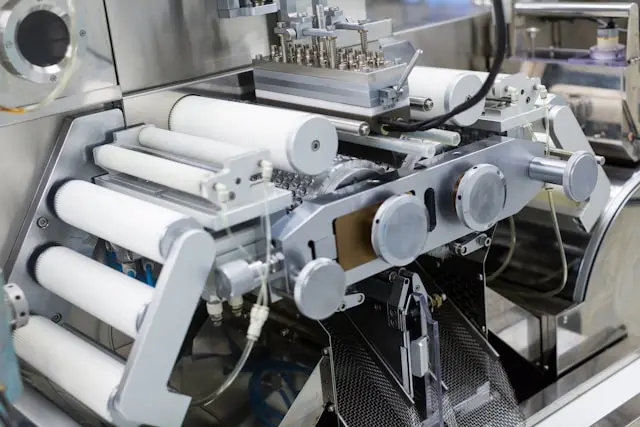
Łódź's textile sector invested PLN 850 million in automation and technical textile R&D for the 2025 to 2026 cycle. That figure represents a 15 per cent increase over the previous two years. On paper, the logic is straightforward: replace departing workers with machines, improve output per head, and compete with German and Turkish producers on quality rather than cost. On the ground, the logic has collapsed. The engineers and technicians required to install, programme, and maintain the new equipment do not exist in sufficient numbers. For every ten automation engineering vacancies posted in the Łódź region, only three qualified candidates enter the recruitment process.
This is not a generic skills gap story. It is a specific structural failure in which capital has moved faster than human capital can follow. The Łódź Special Economic Zone reports that 65 per cent of textile investors now identify automation technician availability as a critical location factor. Some projects have been delayed six to nine months because technical maintenance teams cannot be staffed. The money is committed. The machines are ordered. The people who make them productive are not there.
What follows is a ground-level analysis of the forces that created this trap, the compensation and competitive dynamics that keep it closed, and what organisations hiring senior technical and leadership talent in Łódź's textile sector need to understand before they commit to their next search.
A Sector That Split in Two
The Łódź textile sector that exists in 2026 bears little resemblance to the one that the city's heritage branding describes. The popular image of Łódź as Poland's textile capital, anchored in the restored red-brick mills of Księży Młyn, is a cultural narrative rather than an economic one. Only 3 per cent of leasable space in Księży Młyn is used for any form of production. The rest is residential, educational, and commercial. Active textile manufacturing left the historic districts years ago.
The Legacy Garment Economy
Approximately 1,200 SMEs still operate in cut-make-trim garment production, concentrated in the Bałuty and Górna districts. These are micro and small enterprises. According to Statistics Poland (GUS), 87 per cent of the roughly 3,200 textile entities in the voivodeship employ fewer than 49 people. They produce small-batch garments, embroidery, and subcontracted work for European brands. Their margins are thin, compressed further by energy costs that remain 30 to 40 per cent above 2021 baselines. They hire sewing operators and quality inspectors from an active candidate market where job postings fill in 15 to 30 days.
The Technical Textile Hub
The growth segment is elsewhere entirely. Between 45 and 50 specialised manufacturers now supply automotive seat fabrics, airbag materials, medical non-wovens, geotextiles, and filtration products. These firms operate in the Łódź SEZ and surrounding municipalities like Pabianice and Zgierz. Sixty per cent of new textile foreign direct investment between 2020 and 2024 targeted technical textile production rather than apparel. The Andrzejów Textile Park, a 15-hectare regenerated industrial site housing 23 SMEs with shared effluent treatment and logistics, has replaced Księży Młyn as the sector's functional manufacturing cluster.
These two economies share a city and a sector classification. They share almost nothing else. The garment SMEs compete on labour cost and speed. The technical textile firms compete on engineering capability and automation. The talent requirements that define senior hiring in each ecosystem have diverged so far that a production manager from one cannot step into the other without a year of retraining.
The Automation Paradox at the Centre of Łódź's Talent Market
The core analytical tension in this market is not that there is a shortage. Shortages are common across European manufacturing. The tension is that the strategy chosen to address the shortage has amplified it.
Łódź manufacturers are automating to offset two forces: a working-age population projected to decline 12 per cent by 2030, and competition from Romania and Bulgaria where production labour costs run 20 to 30 per cent lower. Automation is the rational response. But automation in textile manufacturing is not a matter of purchasing a robot and pressing start. Textile production lines running Dornier, Karl Mayer, or Van de Wiele machinery require PLC programmers fluent in Siemens and Allen-Bradley systems who also understand the physics of spinning, weaving, and knitting under industrial conditions. This combination of skills is rare everywhere. In Łódź, it is acutely rare.
The Polish Agency for Enterprise Development (PARP) ranks textile machine operators and textile technologists among the top 20 shortage occupations in the Łódź region. Engineering roles face a demand-to-supply ratio of 3.2 to 1. The Polish Textile Association reports that 68 per cent of surveyed Łódź manufacturers cite lack of qualified technical staff as the primary barrier to Industry 4.0 adoption. Average plant machinery age is 14.7 years, compared to 8.3 years in German competitor plants. Bridging that gap requires not just capital but people who can integrate legacy equipment with modern control systems, or manage the complete replacement of production lines costing PLN 2 to 5 million each.
The investment has not reduced the workforce. It has replaced one kind of worker with another that does not yet exist in sufficient numbers. Capital moved faster than human capital could follow. That is the paradox defining every senior hire in this market in 2026.
Where the Shortages Are Most Severe
Textile Automation Engineers and Industry 4.0 Technicians
This is the tightest segment. Unemployment among qualified textile automation engineers in the Łódź region is estimated below 2 per cent. Average tenure exceeds seven years. Between 70 and 75 per cent of qualified candidates in this category are passive: employed, not looking, and reachable only through direct headhunting methods. Time-to-fill for roles requiring both textile process knowledge and PLC programming typically exceeds 120 days. Eighty per cent of qualified candidates are fielding multiple offers simultaneously.
The Łódź SEZ's own investor survey confirms that this single role category is the binding constraint on project timelines. Automation investment has a return only when the equipment runs. Equipment runs only when someone qualified maintains it.
Technical Textile R&D Specialists
Senior specialists with seven or more years in polymer science or technical textile development represent what the market data describes as a zero-unemployment segment. The Polish Textile Association estimates that only 15 to 20 such individuals change employers in any given year nationwide. The ratio of active to passive candidates is approximately 1 to 9. Recruitment at this level relies entirely on direct sourcing, academic networking, and, increasingly, international relocation.
The competition for these individuals is not local. It is a zero-sum contest between Łódź, Warsaw, and Silesian manufacturers. The total addressable candidate pool is small enough that a single firm hiring two specialists visibly depletes the supply for every other employer.
Production Directors with Technical Textile Experience
Roles requiring both lean manufacturing expertise and technical textile process knowledge show a 45 per cent abandonment rate in recruitment processes. Employers typically require four to six months to fill these positions. The compromise that most firms eventually make is to hire a general manufacturing manager and accept the gap in textile-specific expertise. Eighty per cent of placements at production director level in technical textiles occur through retained search. Average time-in-role exceeds five years, which means passive candidates in this segment are deeply embedded and difficult to move without a compelling proposition.
The common thread across all three categories is that the candidates who matter most are the ones no job board will reach.
Compensation: What These Roles Actually Pay
Compensation in Łódź's textile sector reflects the bifurcation between legacy garment production and technical textiles. The premium for technical specialisation is large and widening.
A senior textile engineer or technical manager in a garment operation earns PLN 14,000 to 18,500 gross monthly. The same professional in a technical textile firm commands a 15 to 20 per cent premium over that range. At the executive level, a VP of Operations or Technical Director in textile manufacturing earns PLN 28,000 to 42,000 gross monthly, with additional bonuses tied to OEE improvements and automation return on investment. R&D Directors in technical textile innovation earn PLN 25,000 to 35,000, with equity or phantom stock arrangements common in private equity-backed firms.
German language proficiency adds 12 to 15 per cent to base compensation for client-facing technical roles. Six Sigma Black Belt certification in textile applications adds 8 to 10 per cent. These premiums are not negotiable extras. In a market where the salary benchmarking for manufacturing leadership shows consistent upward pressure, they are table stakes for credible offers.
The critical challenge is not the absolute level of compensation. It is the gap between Łódź and its competitors. Warsaw offers 20 to 25 per cent higher salaries for equivalent textile engineering and fashion design talent, though with 40 per cent higher living costs. The net advantage is modest. The real drain runs in the other direction. German textile firms in Bavaria and Baden-Württemberg offer 2.5 to 3.5 times Polish salary levels for comparable roles. According to data from the German Federal Employment Agency and the Polish Ministry of Family and Social Policy, an estimated 200 to 250 Polish textile engineers migrate annually to German technical textile firms. Industry consultants report a consistent pattern: German firms operating near the Polish border actively recruit Łódź technical staff with premiums of 35 to 45 per cent above local market rates.
This creates a permanent talent escalator running westward. Łódź trains the engineers. Germany employs them. The compensation gap is not closing. It is widening fastest at exactly the seniority level where the most critical roles sit.
The Regulatory Squeeze on SMEs
Compensation pressure alone would be manageable. Łódź's textile SMEs face a second, concurrent challenge that compounds the first: a regulatory compliance burden arriving faster than most firms can absorb.
The EU Strategy for Sustainable and Circular Textiles, now in full implementation, mandates Extended Producer Responsibility schemes and microplastic shedding limits. The Corporate Sustainability Due Diligence Directive requires Łódź suppliers to German and Dutch brands to certify supply chain transparency. The CSRD forces Tier 2 and 3 suppliers to certify environmental compliance. The Łódź Voivodeship Marshall's Office estimates that 40 per cent of local textile SMEs will require capital investment of PLN 500,000 to 2 million per entity to meet 2026 chemical and waste standards.
For micro-enterprises with fewer than 10 employees, the due diligence directive requires ERP system investments that 60 per cent have not yet made. Wastewater and chemical management upgrades carry estimated costs of PLN 150,000 to 400,000 per entity.
These are not abstract regulatory risks. They are specific capital requirements arriving on a defined timeline, in a sector where margins are already compressed by energy costs representing 18 to 22 per cent of production costs versus a 12 per cent EU average. The firms that cannot comply will lose access to the German and Dutch brand supply chains that sustain them. The firms that can comply need senior leaders who understand both the technical manufacturing process and the regulatory environment, a profile that barely exists in the current candidate pool.
The regulatory and automation pressures are not separate problems. They converge on the same firms, at the same time, requiring the same scarce category of leader: someone who can simultaneously modernise a production line, implement an ERP system, certify environmental compliance, and manage a workforce through a transition most of them did not expect.
Why Traditional Search Methods Fail in This Market
The talent market intelligence on Łódź's technical textile sector tells a consistent story about search methodology. The candidates who fill the most critical roles in this market are not visible through conventional channels.
For textile automation engineers, 70 to 75 per cent require direct search engagement. For R&D specialists, the active-to-passive ratio is 1 to 9. For production directors, 80 per cent of placements occur through retained search. The Łódź University of Technology's Faculty of Material Technologies and Textile Design produces 120 to 140 textile engineering graduates annually. This is the primary domestic pipeline for technical talent, and it feeds a national market, not a local one.
A search firm posting an advertisement on a Polish job board for a textile automation engineer will reach, at best, 25 to 30 per cent of the viable candidate pool. The other 70 per cent are working, not looking, and will not respond to a listing. They will respond to a direct approach from someone who understands their specialism, knows what their current employer cannot offer them, and can articulate a proposition that justifies the disruption of moving.
The search challenge is compounded by geography. Łódź's advantage is proximity to the German market: a three-hour logistics circle. But the same proximity that makes the city attractive to manufacturers makes its talent pool accessible to German employers offering multiples of the local salary. Retaining and recruiting at the senior level in this market requires speed, discretion, and access to candidates who are not on any database. Firms that rely on contingent recruitment or internal HR teams posting roles to job boards are consistently late. By the time a shortlist is assembled through conventional means, the strongest candidates have already accepted offers from faster-moving competitors, or from international employers using direct search methods to target them specifically.
What This Means for Organisations Hiring in Łódź's Textile Sector
The market conditions described above are not temporary. Demographic decline is structural. The automation investment cycle is committed. The regulatory timeline is fixed. The German compensation gap is persistent. These forces will define hiring in Łódź's technical textile sector for the remainder of this decade.
For organisations with open or upcoming searches at the engineering, R&D, or production leadership level, the practical implications are specific.
First, timelines must be realistic. A 120-day time-to-fill for automation engineering roles is the market norm, not a search failure. Organisations that build their project timelines around a 60-day hire will delay the project, not the hire.
Second, compensation must be competitive with the German corridor, not with the Łódź historical average. The candidates you need are the same candidates that German firms are approaching with 35 to 45 per cent premiums. An offer benchmarked to last year's local median will not reach the shortlist.
Third, search methodology matters more in this market than in almost any other manufacturing segment in Central Europe. When 70 to 80 per cent of viable candidates are passive and the total addressable pool for certain specialisms is measured in dozens rather than hundreds, the difference between a search that reaches them and one that does not is the difference between filling the role and not filling it.
KiTalent delivers interview-ready executive candidates within 7 to 10 days through AI-enhanced talent mapping that identifies the candidates conventional methods miss. With a 96 per cent one-year retention rate across 1,450 executive placements and a pay-per-interview model that eliminates upfront retainer risk, the approach is built for markets exactly like this one: small candidate pools, high passive ratios, and hiring timelines where every week of delay costs real money. For organisations competing for automation engineering, R&D, and production leadership talent in Łódź and the broader Central European textile sector, speak with our executive search team about how we approach this market.
Frequently Asked Questions
What is the current state of Łódź's textile manufacturing sector in 2026?
Łódź's textile sector has split into two distinct economies. Approximately 1,200 SMEs continue in traditional garment cut-make-trim operations, while 45 to 50 specialised manufacturers in the Łódź SEZ produce technical textiles for automotive, medical, and construction applications. Direct manufacturing employment stands at roughly 18,500, stabilised after a decline from 22,100 in 2019. Production value for the voivodeship reached PLN 4.2 billion in 2024. The growth segment is technical textiles, which attracted 60 per cent of new textile FDI between 2020 and 2024. The historic Księży Młyn district retains negligible manufacturing activity, with only 3 per cent of space used for production.
Why is it so difficult to hire textile automation engineers in Łódź?
Unemployment among qualified textile automation engineers in the region is below 2 per cent. These roles require a rare combination of textile process knowledge and PLC programming expertise. For every ten vacancies posted, only three suitable candidates enter the process. Seventy to 75 per cent of qualified individuals are passive candidates who will not respond to job advertisements. Meanwhile, German textile firms actively recruit from the same talent pool with compensation premiums of 35 to 45 per cent above Łódź rates, further depleting local supply.
What do senior textile manufacturing roles pay in Łódź?
Senior textile engineers earn PLN 14,000 to 18,500 gross monthly, with technical textile specialists commanding 15 to 20 per cent premiums. VP Operations or Technical Director roles pay PLN 28,000 to 42,000 monthly plus performance bonuses. R&D Directors earn PLN 25,000 to 35,000, with equity arrangements common in PE-backed firms. German language proficiency adds 12 to 15 per cent, and Six Sigma Black Belt certification adds 8 to 10 per cent. Warsaw offers 20 to 25 per cent more, though cost of living is 40 per cent higher.
How does the EU Green Deal affect Łódź textile manufacturers?
The EU Strategy for Sustainable and Circular Textiles mandates Extended Producer Responsibility and microplastic limits. The CSRD and CSDDD require supply chain transparency certification. The Łódź Voivodeship estimates 40 per cent of textile SMEs need PLN 500,000 to 2 million in capital investment for compliance. Sixty per cent of micro-enterprises lack the ERP systems the directives require. Firms that cannot comply risk losing access to German and Dutch brand supply chains. Meeting these requirements demands leaders with both manufacturing and regulatory expertise, a profile in extremely short supply.
How can executive search help fill technical textile roles in Łódź?
In a market where 80 per cent of production director placements and 90 per cent of R&D specialist hires occur through direct search, conventional job advertising reaches only a fraction of viable candidates. KiTalent's AI-enhanced direct headhunting methodology identifies passive candidates across the full market, including those employed at competitors and those in adjacent sectors with transferable expertise. The pay-per-interview model means organisations only pay when they meet qualified candidates, reducing the financial risk of searches in a market where timelines are inherently longer.
Is Łódź competitive with other European textile manufacturing locations?
Łódź retains clear advantages in technical textile specialisation and proximity to the German market. Poland holds 8 to 9 per cent of German textile imports. However, Romania and Bulgaria offer 20 to 30 per cent lower production labour costs, drawing garment CMT operations away. Turkey provides integrated supply chains Łódź cannot match. Germany itself competes for the same senior engineering talent at 2.5 to 3.5 times Polish salary levels. The city's competitive position depends on its ability to retain and develop the specialised engineering talent that makes its technical textile cluster distinctive.