Madison's Advanced Manufacturing Paradox: $200 Million in New Factories, Not Enough People to Run Them
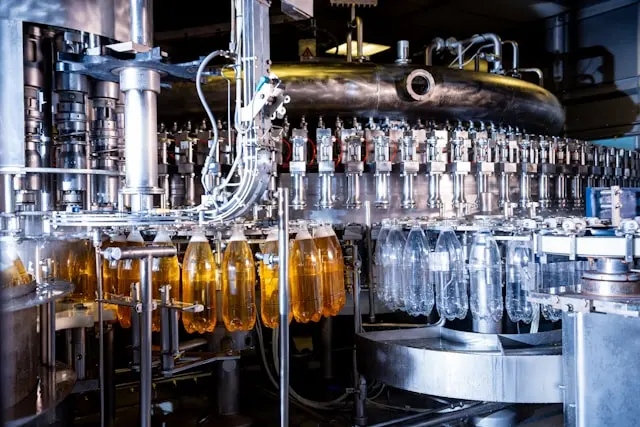
More than $200 million in capital investment has flowed into Madison's advanced manufacturing facilities since 2022. New production lines have been installed. Refrigeration campuses have expanded. Diagnostic manufacturing operations have scaled to meet national demand. The physical infrastructure of Madison's industrial base has never been more modern or more capable.
The workforce has not kept pace. Manufacturing employment in the Madison MSA has grown just 1.2% per year across the same period. The investment went into automation, robotics, and precision equipment that requires a different kind of worker: one who programmes five-axis CNC machines rather than operating manual lathes, who integrates collaborative robots rather than standing on an assembly line, who holds FDA compliance credentials rather than a general machining certificate. Capital moved faster than human capital could follow. The result is a market where factories are expanding but the roles inside them are going unfilled.
What follows is an analysis of the forces reshaping Madison's manufacturing sector in 2026: where the hiring gaps are deepest, what is driving them, who the major employers are competing against, and what organisations in this market need to understand before they launch their next senior search.
A Market Defined by Three Verticals, Not One
The conventional picture of Madison manufacturing centres on Sub-Zero Group and its luxury appliance production. That picture is incomplete. The sector now operates across three distinct verticals, each with its own talent requirements, compensation dynamics, and competitive pressures.
Consumer Appliance Manufacturing
Sub-Zero Group, with approximately 1,800 local employees across its Fitchburg and Madison campuses, remains the single largest manufacturing employer in the MSA. The company completed a $65 million expansion of its refrigeration manufacturing campus in 2023 and continues to anchor the west-side industrial corridor. Its workforce needs are concentrated in CNC programming, metal fabrication, and production engineering.
Medical Device and Diagnostics
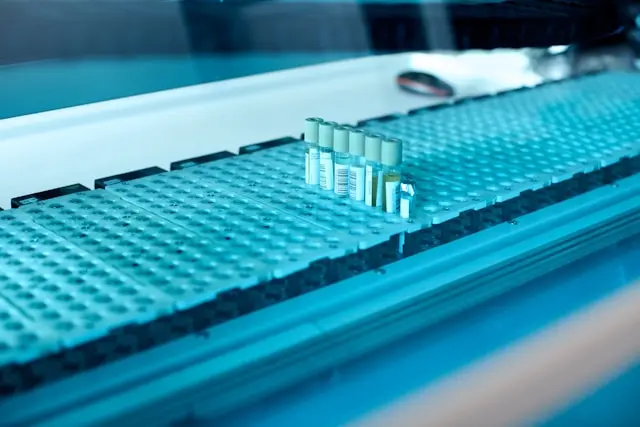
This is the growth vertical. Exact Sciences Corporation employs roughly 2,500 manufacturing and laboratory operations staff locally, spread across the University Research Park and the East Washington Avenue corridor. Promega Corporation adds another 1,200 employees at its Fitchburg and Madison life sciences manufacturing facilities. The University Research Park now hosts 37 medical device and advanced manufacturing tenants across 1.3 million square feet of specialised lab and production space. FDA-registered manufacturers and precision machine shops serving healthcare, agriculture, and defence supply chains form a dense cluster with particular strength in biomedical engineering and life sciences production.
Precision Machining and Tier 2 Supply
The south side's Rimrock Road industrial corridor and South Towne Drive host traditional machining and metal fabrication operations. These firms serve as Tier 2 suppliers to the larger OEMs, producing components for everything from medical devices to agricultural equipment. They are also the most vulnerable to consolidation and the most constrained by capital equipment financing costs that have delayed automation investment.
The three verticals are not independent. Medical device manufacturers source precision components from south-side machine shops. Sub-Zero's automation upgrades create demand for the same PLC programmers that Exact Sciences needs for its diagnostic lines. When talent is scarce in one vertical, the effects propagate across all three.
The Workforce Numbers Behind the Headlines
Madison's advanced manufacturing sector employs between 18,500 and 20,000 workers across the MSA, representing roughly 9% of total private employment. Capacity utilisation runs at 82% to 85%, according to Federal Reserve Bank of Chicago data from late 2024. These are healthy figures on paper.
The tension sits underneath them. The Wisconsin Department of Workforce Development reported 2.3 job openings per unemployed manufacturing worker in the Madison MSA as of December 2024. The statewide figure was 1.8. Madison's ratio is not merely above average. It is the kind of figure that makes traditional job advertising functionally irrelevant for senior roles. When there are more than two openings for every available worker, the candidates who can fill the most demanding positions are not browsing job boards. They are already employed, already compensated well, and already solving problems their current employers cannot afford to lose them from.
Manufacturing job postings in the Madison MSA increased 34% between the fourth quarter of 2022 and the fourth quarter of 2024, according to Lightcast Job Posting Analytics. Unemployment in manufacturing trades fell to 1.9% across the same period. Wage growth in advanced manufacturing reached 4.2% year over year, outpacing the national manufacturing average of 3.1%.
The 2026 outlook projects 2% to 3% headcount growth, tempered by automation-driven productivity gains. A Wisconsin Manufacturers & Commerce survey from December 2024 found that 68% of Madison-area manufacturers plan equipment upgrades in 2026, with particular emphasis on collaborative robotics and CNC automation. The investment will create more roles that require programming and integration expertise. It will not create more people who possess that expertise.
Three Shortages That Are Reshaping Hiring Strategy
The scarcity is not evenly distributed. Madison's manufacturing talent deficit concentrates in three specific categories, each with its own dynamics and its own implications for how organisations must approach recruitment.
CNC Programming: The 140-Day Search
Senior CNC programmers, particularly those with five-axis and Mastercam expertise, represent the single hardest hire in this market. An estimated 80% of qualified candidates are passive. They average seven to ten years of tenure with their current employers. They do not respond to job postings because they are not looking.
Sub-Zero Group has publicly documented difficulty filling senior CNC programmer positions for its refrigeration component manufacturing. According to the Wisconsin State Journal and Job Center of Wisconsin vacancy duration data, specific Mastercam programmer roles remained open for more than 140 days during 2024. The company subsequently partnered with Madison College to create a customised apprenticeship track to address the gap. That partnership is an acknowledgement that standard recruitment channels had failed for this category of hire.
A 140-day vacancy for a production-critical role is not merely an inconvenience. It is a constraint on output. Every week a five-axis CNC programming position sits empty is a week of production capacity that goes unrealised, regardless of how much capital has been invested in the machines themselves.
Automation Engineering: The Poaching Premium
PLC programming and robotics integration talent is approximately 75% passive in the Madison MSA. The supply is marginally more active in Milwaukee, but Madison's medical device cluster has created a compensation dynamic that pulls talent eastward.
According to Milwaukee Business Journal reporting and Wisconsin Manufacturing Extension Partnership labour market briefings from 2024, Exact Sciences has recruited senior automation engineers from Milwaukee-area manufacturers, including Rockwell Automation's supply chain partners, offering compensation premiums of 15% to 20% above southeastern Wisconsin market rates. The premium reflects the scarcity. It also reflects the reality that Madison's diagnostic manufacturing operations require vision systems and PLC expertise that overlaps directly with traditional industrial automation skills, creating cross-sector competition for a single talent pool.
For organisations that have not yet adapted their approach to identifying passive senior candidates, the 15% to 20% premium is only the beginning of the cost. The real cost is the search itself: the months spent waiting for applications that do not arrive, the shortlists populated by candidates who lack the specific systems experience the role requires.
Medical Device Quality Engineering: The Regulatory Lock-In
Medical device quality directors represent the most passive category in the market, with an estimated 85% of qualified candidates currently employed and not actively searching. The reason is structural. FDA 21 CFR Part 820, ISO 13485 quality management, and cleanroom manufacturing protocols create a body of regulatory expertise that takes years to accumulate. Switching employers means absorbing a new facility's compliance architecture from scratch, a transition that carries personal regulatory liability.
Quality Assurance Directors in medical device manufacturing command $160,000 to $195,000 in base salary in Madison, according to the Life Science Connect Medical Device Industry Salary Survey. The premium is not simply market-driven. It is risk-driven. These professionals carry the weight of FDA inspection outcomes on their credentials, and their willingness to move depends on far more than compensation. It depends on the compliance maturity of the destination organisation, the stability of its regulatory history, and the autonomy the role offers.
This is why retained executive search firms, rather than job boards, dominate this segment. Witt/Kieffer's 2024 medical device executive search analysis confirmed the pattern: candidates at this level rely on trusted intermediaries and direct approach rather than open market signals.
The University Paradox: 1,200 Engineers a Year and a Persistent Skills Gap
UW-Madison's College of Engineering produces approximately 1,200 graduates annually. It operates one of the nation's top biomedical engineering programmes. The University Research Park sits adjacent to a cluster of manufacturers who need precisely the skills those graduates are developing. The proximity should solve the talent problem.
It does not. Local manufacturers report persistent shortages not of design engineers or research scientists but of production-ready automation technicians and precision machinists. The gap is a category mismatch. The university's output is concentrated in theoretical engineering, research, and design. The roles manufacturers cannot fill are applied manufacturing trades: associate-degree-level precision machining, hands-on PLC integration, and quality system implementation.
Madison College's Centre for Advanced Manufacturing and Engineering, operating on the south side, partially addresses this gap. But the pipeline it produces is narrower than the demand it faces. The 28% of Madison's precision machining workforce that is over age 55, as documented by the Wisconsin Department of Workforce Development's long-term occupational projections, is retiring into a market where Gen Z entrants are insufficient to replace them.
This is the original analytical tension that defines Madison's manufacturing market in 2026. The city has invested heavily in academic research infrastructure and capital equipment. It has not invested proportionally in the middle-skills pipeline that connects those two assets. The result is a workforce shaped like an hourglass: plenty of entry-level assemblers and operators at the bottom, a growing number of research-oriented engineers at the top, and a thinning band of experienced production specialists in the middle who actually make the machines run. Every automation investment that replaces a manual process with a programmable one widens the gap further, because the new role requires someone from that shrinking middle band, not someone from either end.
For hiring leaders, the implication is that this is not a shortage you can recruit your way out of on a standard timeline. The candidates exist, but they are locked into current roles by tenure, by compensation, and by the sheer scarcity that makes their current employers unwilling to let them leave without a fight.
Compensation Benchmarks: What Madison Pays and Where the Premiums Sit
Madison's compensation structure for advanced manufacturing reflects the bifurcation between traditional machining and medical device production.
At the engineering management level, Senior Manufacturing Engineering Managers earn $115,000 to $135,000 in base salary. Medical device specialists command a 10% to 12% premium over traditional machining equivalents. The premium is directly tied to regulatory burden: an engineering manager overseeing FDA-regulated production carries compliance responsibilities that a counterpart in appliance manufacturing does not.
At the senior leadership level, Vice Presidents of Operations and Plant Managers overseeing multi-site or high-complexity single-site operations earn $185,000 to $240,000 in base, with total cash compensation reaching $275,000 to $320,000 including incentives. Medical device executives at the VP level consistently sit in the upper quartile. The regulatory liability attached to their roles explains the premium. A VP of Operations at an FDA-registered facility does not merely manage production. They are personally accountable for compliance outcomes that can result in consent decrees, warning letters, or facility shutdowns.
Senior Quality Engineers in individual contributor roles earn $95,000 to $118,000. Quality Assurance Directors in medical device manufacturing earn $160,000 to $195,000, a figure that reflects both the scarcity of qualified candidates and the regulatory weight of the position.
Compensation benchmarking in this market must account for an additional variable. Madison's housing costs have risen 34% between 2019 and 2024, according to the Federal Reserve Bank of Minneapolis Housing Affordability Monitor. A relocation candidate assessing an offer is not comparing base salary to their current package in isolation. They are comparing total cost of living. A $15,000 raise that is offset by $20,000 in additional annual housing costs is not a raise. It is a pay cut that happens to look like a promotion on paper.
The Competitive Geography: Milwaukee, Chicago, and Minneapolis
Madison does not compete for manufacturing talent in isolation. Three metropolitan areas exert constant gravitational pull on the same candidate pools, and each competes with a different advantage.
Milwaukee: Deeper Base, Higher Pay
Milwaukee offers 10% to 15% compensation premiums for senior CNC programmers and automation engineers over Madison market rates. Its industrial base is deeper and more diversified, with Rockwell Automation, GE Healthcare, and a broad tier of automotive and industrial suppliers creating a larger employer ecosystem. Milwaukee manufacturers actively recruit Madison talent for senior specialist roles. Madison retains an advantage in medical device-specific quality engineering, where its cluster density and proximity to UW-Madison's biomedical engineering programme create a more compelling career proposition.
Chicago: The Remote-Hybrid Play
Chicago commands 20% to 25% salary premiums over Madison, but median home prices run 1.6 times higher. The more disruptive competitive tactic is not pure relocation. Chicago firms target Madison's senior manufacturing executives and automation specialists with remote-hybrid arrangements, offering access to Chicago-tier compensation while allowing the candidate to remain in Madison. This approach undermines Madison employers' assumption that geography provides a natural retention barrier. It does not, when the competitor is willing to flex on presence requirements.
Minneapolis-St. Paul: The Promotion Track
Minneapolis competes specifically for medical device talent, anchored by Medtronic and Abbott's presence. Compensation is comparable to Madison, but Minneapolis offers larger corporate structures with more visible promotion pathways. According to the Life Science Connect salary survey, Minneapolis firms have successfully recruited Madison's mid-level quality engineers by offering rapid advancement into director-level roles. For a quality engineer in Madison earning $110,000 with limited upward mobility, a Minneapolis offer at $115,000 with a clear path to a $170,000 directorship is a proposition that base salary alone cannot counter.
Understanding these competitive dynamics is essential for any talent mapping exercise in this market. The candidates you lose are not disappearing randomly. They are moving along predictable vectors, toward predictable employers, for predictable reasons. A retention strategy that does not address those specific reasons is not a strategy. It is a hope.
What 2026 Demands of Hiring Leaders in This Market
The convergence of capital investment, automation adoption, demographic attrition, and cross-market competition has created a hiring environment where the conventional approach consistently fails. Posting a role, waiting for applications, and interviewing whoever appears is a method that reaches, at most, 20% of the viable candidate pool for senior CNC programming, automation engineering, or medical device quality leadership. The other 80% must be found through direct identification and approach.
Madison's lack of dedicated manufacturing executive search infrastructure compared to Milwaukee or Chicago compounds the problem. The firms that operate in this market often lack the AI-enhanced talent identification capability required to map passive candidates across a tripartite industrial geography spanning Fitchburg, the University Research Park, and the south-side machining corridor. The search is not merely competitive. It is structurally different from searches in markets with larger, more active candidate pools.
The cost of a slow search in this environment is measured in production capacity. Every month a senior automation engineer role sits open is a month of delayed robotics integration. Every quarter without a medical device quality director is a quarter of heightened regulatory exposure. The financial impact of a prolonged executive vacancy in a manufacturing operation is more directly measurable than in most other sectors, because the output loss shows up in units, not just in strategic delay.
KiTalent's approach to this market delivers interview-ready candidates within 7 to 10 days by mapping the passive talent pools that job boards and conventional recruiters cannot reach. With a 96% one-year retention rate across 1,450 executive placements, the method is designed for precisely the market conditions Madison's manufacturers face: high passivity, acute scarcity, and a competitive field that punishes delay. The pay-per-interview model removes upfront retainer risk. Clients pay when they meet qualified candidates, not before.
For organisations hiring senior manufacturing leadership in the Madison MSA, where the candidates you need are solving problems their current employers depend on and the cost of a 140-day vacancy is measured in lost production, start a conversation with our industrial and manufacturing search team about how we identify and engage the talent this market requires.
Frequently Asked Questions
What are the hardest manufacturing roles to fill in Madison, Wisconsin in 2026?
The three most difficult categories are senior CNC programmers with five-axis and Mastercam expertise, automation engineers with PLC programming and robotics integration skills, and medical device quality directors holding ISO 13485 and FDA compliance credentials. All three categories operate as predominantly passive candidate markets, meaning more than 75% of qualified professionals are currently employed and not actively searching. Standard job advertising reaches a fraction of the viable candidate pool. Direct headhunting methods are the primary means of engaging these candidates.
What does a VP of Manufacturing Operations earn in Madison?
Vice Presidents of Operations and Plant Managers overseeing multi-site or high-complexity operations in the Madison MSA earn $185,000 to $240,000 in base salary, with total cash compensation reaching $275,000 to $320,000 including performance incentives. Medical device manufacturing executives consistently command upper-quartile packages due to the personal regulatory liability attached to FDA-governed production. Senior Manufacturing Engineering Managers earn $115,000 to $135,000, with a 10% to 12% premium for medical device specialisation over traditional machining roles.
Why is Madison competing with Milwaukee and Chicago for manufacturing talent?
Milwaukee offers 10% to 15% salary premiums for senior CNC programmers and automation engineers, drawing on a deeper and more diversified industrial base. Chicago commands 20% to 25% premiums and increasingly targets Madison talent through remote-hybrid arrangements. Minneapolis competes specifically for medical device quality engineers, offering clearer promotion tracks through larger corporate structures at Medtronic and Abbott. Madison's retention advantage lies in quality of life and medical device cluster density, but these factors alone do not counter structured compensation and career progression offers.
How does automation investment affect manufacturing hiring in Madison?
Madison manufacturers have invested over $200 million in facilities and equipment since 2022, with 68% planning further equipment upgrades in 2026 focusing on collaborative robotics and CNC automation. However, aggregate manufacturing employment has grown only 1.2% annually, indicating that automation is replacing manual roles faster than medical device growth creates new ones. The net effect is a concentration of hiring demand in high-skill, high-wage roles requiring programming and integration expertise, while traditional operator positions remain flat.
What workforce challenges do medical device manufacturers face in Madison?
Medical device manufacturers face a combination of regulatory complexity and talent scarcity. Smaller precision machine shops serving medical OEMs report compliance costs consuming 8% to 12% of revenue. University Research Park has less than 5% vacancy for wet lab and manufacturing space, constraining startup scaling. The quality engineering talent pool is approximately 85% passive, with candidates locked in by regulatory expertise that takes years to develop and carries personal liability. KiTalent's executive search methodology is built for markets with this profile: high passivity, regulatory complexity, and a candidate pool that responds to direct approach rather than open advertising.
What is the retirement risk for Madison's manufacturing workforce?
Twenty-eight percent of Madison's precision machining workforce is over age 55, according to Wisconsin Department of Workforce Development long-term occupational projections. Gen Z entrants are insufficient to replace projected retirements, creating a demographic cliff that will intensify shortages in CNC programming and traditional machining over the next five to seven years. The retirement wave is concentrated in the skilled trades that form the middle band of the workforce, between entry-level operators and research-oriented engineers. Building a proactive talent pipeline before these retirements accelerate is the most effective hedge available.