Sassuolo's Ceramic Logistics Paradox: Production Falls, Talent Gaps Widen

Ceramic tile production in Sassuolo's industrial district fell 8.2% by volume in 2024. Logistics employment barely moved. Vacancies for specialist roles actually increased by 23%. That combination should be impossible under normal labour market conditions. It is not. It is the signal of a sector undergoing a structural shift that most hiring leaders in the district have not yet fully absorbed.
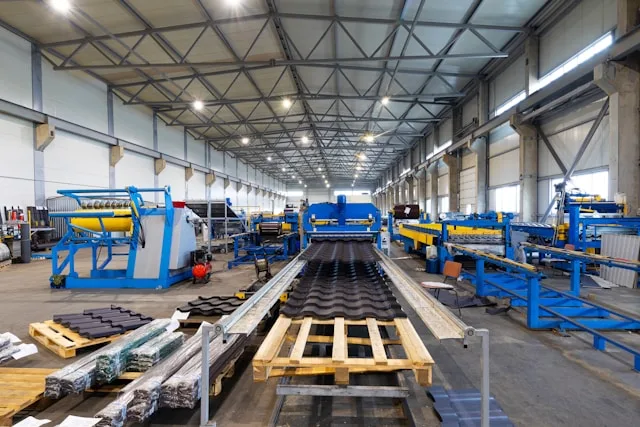
The Sassuolo ceramic district still handles approximately 400 million square metres of tile annually, with individual pallets weighing 1,000 to 1,500 kg. This is not general cargo. It requires flatbed transport with shock-absorbent suspension, cantilever racking rated above 3,000 kg per arm, humidity-controlled storage for porous ceramics, and breakage-prevention protocols that do not exist in standard logistics training. The professionals who understand these systems are scarce, ageing, and not looking for new jobs. Meanwhile, a new category of role, the sustainability logistics manager, has emerged from regulatory pressure with almost no qualified candidate pool to fill it.
What follows is an analysis of the forces reshaping this district's talent market: the counter-cyclical demand dynamics that make logistics hiring harder during a production downturn, the compensation structures that both attract and repel the candidates this sector needs, and the specific executive roles where the gap between supply and demand has become acute enough to threaten operational continuity.
The District That Defies Its Own Downturn
The Sassuolo logistics corridor generated an estimated €890 million in revenue in 2024, down 4.3% from 2023. Warehousing utilisation rates in dedicated ceramic facilities averaged 76%, a sharp drop from 89% in 2022. By every top-line measure, this is a contracting market. Yet logistics employment remained effectively flat, declining just 0.3%, while technical vacancies rose.
The explanation lies in a structural shift that has been building since the 2022 energy crisis. Ceramic manufacturers, battered by natural gas price volatility that pushed production capacity utilisation as low as 68% during that period, have been shedding fixed logistics costs from their balance sheets. The outsourcing wave has been steady and accelerating. Manufacturers who once ran captive fleet operations and in-house warehousing are transferring those functions to third-party logistics providers. The headcount does not disappear. It migrates from manufacturing payroll to 3PL payroll.
This creates counter-cyclical demand. Even as production falls, the pool of logistics providers absorbing that work needs more people, not fewer, because they are also absorbing the management complexity, the export documentation, and the compliance burden that manufacturers previously handled internally.
The result is a district where production volume and logistics hiring demand have decoupled. Leaders who look at the manufacturing output data and assume they are hiring into a buyer's market are making a dangerous miscalculation.
Where the Talent Gaps Are Most Acute
Export Supply Chain Leadership
The role of Responsabile Supply Chain with export orientation sits at the centre of the district's talent crisis. These professionals need deep expertise in Incoterms 2020, heavy-load maritime insurance, and customs regulations spanning the United States and the Gulf Cooperation Council. They must understand the specific economics of ceramic freight, where logistics costs represent 12 to 15% of export value for heavy porcelain tiles, roughly double the ratio for lighter building materials.
The average time-to-fill for this role reached 78 days in 2024, according to Randstad Italia's salary research. That compares to 42 days for general logistics management. The gap tells you everything about the specificity of the skills required.
Iris Ceramica Group, one of the district's major manufacturers with captive logistics operations, publicly listed a Supply Chain Export Manager role in Fiorano Modenese for 140 days during 2024. According to reporting in Ceramic World Review, the company ultimately recruited from a competitor in Castellon, Spain, reportedly offering a 25% premium above standard salary bands to secure the candidate. When a district employer must recruit internationally at that kind of premium for a single role, the local talent pool is not thin. It is functionally exhausted.
Ceramic-Specialist Warehouse Management
Warehouse managers with ceramic specialisation occupy perhaps the most closed talent pool in the district. The passive-to-active candidate ratio stands at approximately 9:1, according to Randstad Italia's logistics competency research. Nine out of ten qualified candidates are employed, not looking, and unlikely to respond to a job advertisement.
The technical requirements explain the closure. Managing cantilever racking for large-format tiles at loads exceeding 3,000 kg per arm is not a skill that transfers directly from general warehousing. Humidity-controlled storage for porous ceramics requires specific material science knowledge. Breakage-liability allocation under the district's Ceramic Logistics Protocol adds a regulatory layer unique to this cluster. Candidates who have mastered all three typically arrived through years of apprenticeship within the district itself. The pipeline is narrow and slow.
The consequence, documented by both Randstad Italia and ManpowerGroup, is that senior warehouse positions requiring this expertise routinely remain unfilled for 90 to 120 days. Employers frequently settle for candidates from general construction materials backgrounds and invest in six-month technical training programmes. The cost of that settling is real: lost efficiency during the training window, higher breakage rates, and slower throughput at exactly the moment when utilisation rates need to recover.
The Sustainability Role That Barely Exists
The third critical gap is the newest and potentially the most dangerous. Implementation of the EU Corporate Sustainability Reporting Directive in 2026 mandates Scope 3 emissions reporting for ceramic exporters. Logistics providers who cannot demonstrate low-emission trucking or provide verified carbon accounting face contract non-renewal.
The role this creates, sustainability logistics manager with carbon accounting expertise for heavy road transport and intermodal optimisation, effectively did not exist in the district two years ago. The candidate pool has not had time to form. At the executive level, this role commands €90,000 to €120,000 base salary, putting it in direct competition with supply chain director roles for the same budget allocation. The tension is not just a talent gap. It is a capital allocation problem, and the next section explains why that matters more than it appears.
The Green Investment Trap: Capital vs. Compensation
This is where the district's two most pressing challenges collide. The sector faces mandatory investment of €30 to €40 million in sustainable fleet upgrades across its logistics SMEs to meet 2026 CSRD sustainability clauses. That figure, drawn from Confindustria Ceramica's sustainability agenda, represents the cost of converting or replacing diesel flatbed fleets and installing emissions monitoring systems across a fragmented base of small operators.
Simultaneously, aggregate logistics wage growth in the district moderated to 2.1% in 2024, below Italy's 3.5% inflation rate. In real terms, compensation is falling.
The paradox is sharp. The district needs to spend heavily on green infrastructure and spend heavily on talent acquisition at the same time. For SME logistics operators, those two demands draw from the same limited pool of capital. Every euro committed to a fleet upgrade is a euro not available for the signing premium that might persuade a passive supply chain director to move. Every month of delay on the fleet upgrade brings the CSRD compliance deadline closer and increases the risk that a major exporter client will move its contract to a provider who has already invested.
This tension is the defining challenge of the district's talent market in 2026. It is not a hiring problem and not an infrastructure problem. It is both at once, competing for the same money. The organisations that resolve it first will be the ones that can still attract tier-one clients and tier-one talent by 2027. The rest face a compounding disadvantage: lower margins from infrastructure non-compliance, lower attractiveness to candidates from wage stagnation, and lower utilisation from client attrition. The spiral is already visible in some of the district's smaller operators.
Compensation: What the District Pays and Why It Loses
Executive compensation in Sassuolo's ceramic logistics sector tells a story of premiums and penalties that varies sharply by role and by comparison market.
At the senior specialist and manager level, supply chain managers earn €52,000 to €68,000 base with a 10 to 15% bonus. Logistics operations managers sit at €48,000 to €62,000. Export managers in the ceramic sector earn €45,000 to €58,000 base, while sustainability and ESG logistics leads command €55,000 to €70,000.
At the executive level, the numbers shift meaningfully. Supply chain directors earn €95,000 to €125,000 base with 20 to 25% bonus potential. Logistics operations directors reach €85,000 to €110,000. Export directors in the ceramic sector sit at €75,000 to €95,000. Sustainability logistics directors earn €90,000 to €120,000.
These figures, drawn from Michael Page Italy and Hays Italy salary data adjusted for the Emilia-Romagna industrial corridor, contain two embedded dynamics that every hiring leader in the district needs to understand.
The Milan Discount and the Castellon Drain
Emilia-Romagna logistics salaries trade at a 12 to 15% discount to Milanese benchmarks. Sassuolo competes on proximity to manufacturing and lower housing costs. Milan's cost-of-living premium exceeds 40%, which theoretically offsets the salary gap. In practice, the offset works for senior executives with families who value the district's quality of life. It fails for mid-career professionals who prioritise career mobility and international exposure. Milan offers both. Sassuolo does not.
The more surprising competitor is Castellon, Spain. Europe's second-largest ceramic cluster offers salaries 15 to 20% lower than Emilia-Romagna, but Spain's lower tax burden and climate advantages have been attracting Italian mid-career professionals, particularly for roles covering North African and Latin American markets. According to industry data from ASCER, this flow is not trivial. It is a steady leak of bilingual export logistics talent from a district that cannot afford to lose any.
The Ceramic Premium
The one compensation advantage the district holds is specificity. Executive roles in ceramic logistics command a 10 to 12% premium over general industrial logistics, reflecting the breakage-liability expertise and heavy-load certification that distinguish these roles. A logistics director with ceramic-specific experience earns more than a peer in automotive or food logistics at the same seniority level. This premium, however, only works as a retention tool for professionals already in the niche. It does nothing to attract candidates from adjacent sectors, because the premium reflects a skill they do not yet possess.
For organisations trying to benchmark compensation against market rates, the critical insight is that Sassuolo's salary bands are neither high enough to pull talent from Milan nor low enough to be offset by cost-of-living advantages alone. The district occupies an uncomfortable middle ground where compensation must be supplemented by something else to close senior hires.
Infrastructure and Regulation: The Structural Costs That Shrink the Talent Pool
The district's talent challenges do not exist in isolation. They are amplified by physical infrastructure constraints and regulatory burdens that affect both the economics of logistics operations and the attractiveness of the district as a place to build a career.
Road Congestion and the Missing Rail Link
Ninety percent of the district's road freight moves via the A1 Autostrada del Sole and the provincial SS12. Traffic congestion at the Modena Nord exit adds an average 4.5 hours to transit times for full truckloads, according to ANFIA data, costing €180 to €220 per shipment in additional fuel. The absence of a direct rail spur to Sassuolo's industrial areas forces costly drayage from Bologna Interporto at €350 to €400 per container. Spanish competitors in Castellon, with port-proximate production, do not face this cost. The structural disadvantage is embedded and ongoing.
The €240 million expansion of Bologna Interporto, scheduled for completion in Q2 2026, will add 45,000 square metres of heavy-load warehousing marketed to ceramic logistics operators. This investment could reduce district-specific warehousing costs by 8 to 10% through intermodal efficiency gains. For logistics leaders and the professionals who run these operations, the Interporto expansion represents the single most material infrastructure improvement in a generation. But it also shifts the centre of gravity for warehousing operations 40 kilometres northeast, toward Bologna and away from Sassuolo itself. Whether that migration pulls talent with it or pushes talent toward Bologna's broader career opportunities is an open question.
Regulatory Pressure on Capacity
Italy's Decreto Trasporti mandates stricter driver rest periods and cabotage enforcement, reducing available capacity for international ceramic haulage. The EU Mobility Package requirements for driver repatriation every four weeks have increased operational costs for Middle East and North Africa export routes by 8 to 12%. For the professionals managing these routes, the regulatory complexity has increased faster than compensation has adjusted. A supply chain director managing ceramic exports to the Gulf states in 2026 carries a regulatory burden that the same role in 2020 did not involve. The job has become harder. The pay has not kept pace.
The district's road transport dominance, with 82% of tile exports moving by specialised flatbed to the Port of Ravenna, Genoa, and overland to Northern Europe, makes these regulatory costs inescapable. Intermodal shifting is the obvious answer, and the Interporto expansion supports it. But shifting modes requires professionals who understand both road and rail logistics for heavy ceramics. That hybrid skill set is even rarer than either individual competency.
The Competitive Geography of Talent
The district does not compete for logistics talent in isolation. Its competitors are specific and their advantages are clear.
Milan, the primary Italian logistics hub, offers 25 to 35% higher base salaries for equivalent supply chain director roles. Bologna provides comparable compensation to Sassuolo but offers materially superior career mobility across sectors: food, automotive, fashion, and technology all compete for supply chain talent in Bologna. The University of Bologna's supply chain programmes create a graduate pipeline that Bologna-based employers capture more effectively than Sassuolo's smaller firms.
Verona's Quadrante Europa logistics hub provides another alternative for senior logistics professionals who want to remain in northern Italy without committing to a single-sector district. And Castellon, as noted, draws bilingual professionals with its lower tax burden and Mediterranean quality of life.
The remote work question is relevant but limited. Logistics operations require physical presence. However, back-office export documentation and supply chain planning roles face competition from shared service centres in Krakow and Lisbon, where multilingual order management staff cost 30% less than their Italian equivalents. Any district employer who has not already lost back-office planning roles to offshore competition will face increasing pressure to do so.
For senior executive roles, the competition is even more pointed. Supply chain directors with export orientation in this specialism are 85% passive, with average tenure of 4.2 years in current positions. They are not reading job postings. They are not attending career fairs. Moving them requires direct identification and approach, a compelling narrative about the role, and a compensation package that addresses the specific trade-offs they are making by choosing Sassuolo over Milan, Bologna, or Castellon.
What Hiring Leaders in the District Must Do Differently
The conventional approach to filling senior logistics roles in the Sassuolo district, posting on Italian job boards, waiting for applications, screening for ceramic sector experience, is reaching a diminishing fraction of the viable candidate pool. When 85% of supply chain directors and 90% of specialist warehouse managers are passive, a posting-and-waiting strategy contacts at most 10 to 15% of the market. The other 85% must be found through deliberate, systematic identification.
The district's talent market has three characteristics that demand a different method.
First, the candidate pool is closed. Ceramic logistics expertise is non-transferable in both directions. Candidates from general logistics need six months of training to become productive. Candidates from within the niche are known to each other and to every employer in the district. Poaching is visible and its consequences are immediate. When Furlog SpA recruited a senior operations director from the Bologna automotive logistics sector in Q2 2024, according to Il Sole 24 Ore, the reported compensation package exceeded €130,000 annually, a 35% premium over the previous role. That is the price of importing expertise from an adjacent sector. The price of extracting it from within the district is even higher, because the losing employer retaliates.
Second, the timeline is compressing. Warehousing utilisation is expected to return to 82 to 85% by Q4 2026 as production recovers. CSRD compliance deadlines are fixed. The Bologna Interporto expansion completes in mid-2026. Every one of these events requires leaders in place before it arrives, not after. A 78-day average time-to-fill for supply chain roles, let alone the 90 to 120 days typical for specialist warehouse managers, means that any search initiated after Q1 2026 risks missing the operational window entirely.
Third, the sustainability transition creates roles that have no established pipeline. There is no graduate programme producing sustainability logistics managers with carbon accounting expertise for heavy ceramic transport. These candidates must be assembled from adjacent competencies: carbon accounting professionals who learn logistics, or logistics professionals who learn carbon accounting. Identifying which individuals in either category are capable of making that transition is not something a job posting can do. It requires systematic talent mapping and direct, confidential assessment.
KiTalent's methodology is built for exactly this kind of market. AI-enhanced direct headhunting identifies passive candidates across closed talent pools, delivering interview-ready shortlists within 7 to 10 days. The pay-per-interview model means organisations commit budget only when they are meeting qualified candidates, not before. In a district where the cost of a failed or delayed executive search compounds with every week of vacancy, that speed and that pricing structure are not conveniences. They are operational necessities.
For organisations competing for supply chain, warehouse management, and sustainability leadership in the Sassuolo ceramic district, where the candidates you need are not visible on any job board and the timeline for filling these roles is shorter than the market's average time-to-fill, speak with our executive search team about how we approach this market.
Frequently Asked Questions
What is the average salary for a supply chain director in Sassuolo's ceramic logistics sector?
Supply chain directors in the Sassuolo ceramic district earn €95,000 to €125,000 base salary, with bonus potential of 20 to 25% tied to export volume throughput. These figures reflect a 10 to 12% premium over general industrial logistics at the same seniority, owing to the specialised breakage-liability and heavy-load expertise the role requires. Emilia-Romagna salaries trade at a 12 to 15% discount to Milan, though lower cost of living partially offsets this gap. Compensation benchmarking from firms like KiTalent can help employers position packages competitively against Milan, Bologna, and Castellon, the three primary competing labour markets for this talent.
Why is it so hard to hire logistics managers in the Sassuolo ceramic district?
The difficulty stems from extreme specialisation. Ceramic logistics requires expertise in cantilever racking for loads exceeding 3,000 kg, breakage-prevention protocols, and humidity-controlled storage that does not exist in general logistics training. The passive-to-active candidate ratio for specialist warehouse managers is approximately 9:1. Average time-to-fill for senior ceramic logistics roles reached 78 days in 2024, nearly double the rate for general logistics management. These professionals transition primarily through referral networks and direct headhunting approaches rather than job advertisements.
How does CSRD regulation affect ceramic logistics hiring in 2026?
The EU Corporate Sustainability Reporting Directive requires ceramic exporters to report Scope 3 emissions from 2026, which means their logistics providers must demonstrate low-emission trucking and verified carbon accounting. An estimated €30 to €40 million in fleet upgrades is needed across the district's logistics SMEs. This has created urgent demand for sustainability logistics managers with carbon accounting expertise, a role category that barely existed two years ago. Employers must compete for these professionals against the same capital budget being directed toward fleet investment, creating a direct tension between infrastructure spend and talent acquisition.
How does Sassuolo compete with Milan and Bologna for logistics talent?
Sassuolo cannot match Milan's 25 to 35% salary premium or Bologna's cross-sector career mobility. It competes on proximity to the manufacturing cluster, lower housing costs, and the ceramic-specific compensation premium of 10 to 12% above general industrial logistics. For senior professionals with families, the quality-of-life argument has weight. For mid-career professionals prioritising career breadth, it often does not. The district's smaller employers also struggle to capture graduates from the University of Bologna's supply chain programmes, which Bologna-based firms access more effectively through structured talent pipeline strategies.
What is the role of Bologna Interporto in Sassuolo's ceramic logistics?
Bologna Interporto is the critical multimodal anchor for the district, handling 18% of containerised tile exports via rail-ship intermodal services. Its €240 million expansion, due for completion in Q2 2026, will add 45,000 square metres of heavy-load warehousing specifically marketed to ceramic logistics operators. This investment could reduce district warehousing costs by 8 to 10% through intermodal efficiency gains. However, the shift moves warehousing capacity away from Sassuolo toward Bologna, which may pull logistics leadership talent toward Bologna's broader employment market over time.
How can KiTalent help with executive hiring in Sassuolo's ceramic logistics sector?
KiTalent delivers interview-ready executive candidates within 7 to 10 days through AI-enhanced direct candidate identification across passive talent pools. In a market where 85% of qualified supply chain directors are not actively looking and specialist warehouse managers exhibit a 9:1 passive-to-active ratio, conventional job advertising reaches a fraction of the viable candidate pool. KiTalent's pay-per-interview model means clients invest only when meeting qualified candidates, and a 96% one-year retention rate ensures placements endure beyond the initial appointment.