Makassar's Port Expansion Is Outpacing the Talent Required to Run It
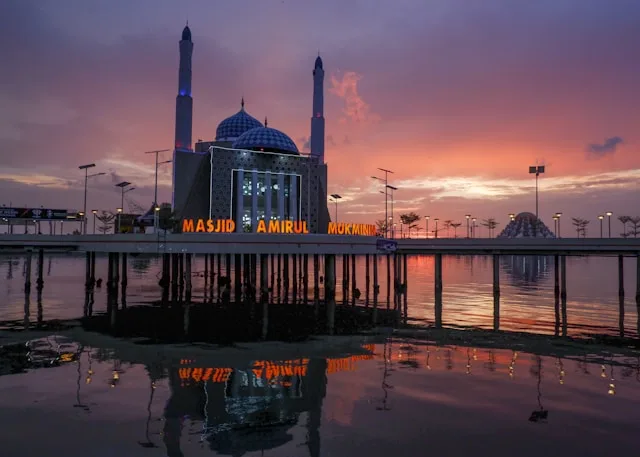
Pelindo has committed IDR 2.4 trillion to expanding Makassar New Port's container capacity by 800,000 TEUs. Cranes can be ordered. Berths can be poured. But the terminal operations managers, marine surveyors, and reefer technicians required to run a port of that scale cannot be manufactured on a procurement timeline. As of early 2026, with MNP already operating at 78% of installed capacity, the local maritime workforce shows acute shortages in every category that matters for the port's next phase.
The core problem is not that Makassar lacks maritime workers. It employs roughly 8,200 skilled professionals in maritime logistics, with another 14,600 in associated warehousing and supply chain roles. The problem is that the specific expertise needed for a modern transshipment hub, from terminal automation systems to cold chain certification, exists in numbers far below what the infrastructure investment assumes. Demand for experienced container terminal operations managers exceeds supply by a factor of four to one. Only 12 BKI-certified marine surveyors reside in the city, compared to 89 in Surabaya for comparable cargo volumes.
What follows is an analysis of the forces reshaping Makassar's maritime logistics sector, the employers driving that change, and what senior leaders need to understand before making their next hiring or retention decision in Eastern Indonesia's most consequential port city.
The Infrastructure Is Moving Faster Than the People
The gap between physical capacity and human capital in Makassar is not a future risk. It is a present condition.
MNP's Phase II expansion, covering 2025 through 2027, will add capacity to bring the port's total throughput potential to 2.3 million TEUs annually. A dedicated vehicle terminal will handle automotive exports routed through Makassar from Java-based assembly plants. Cold chain infrastructure already supports 78,000 TEU refrigerated container slots, positioning MNP as the cold chain gateway for frozen fish exports from Maluku and Papua.
These are real, funded commitments disclosed to Indonesia's Financial Services Authority. They are not speculative. But the talent pipeline analysis tells a different story. According to the Indonesia Logistics Association's Eastern Branch, the infrastructure investment timeline is running approximately 36 months ahead of the human capital development cycle. Physical capacity will be ready before qualified operators are available to use it efficiently.
This is the analytical claim at the centre of this article. Capital investment in Makassar's port infrastructure has not reduced the workforce gap. It has replaced one kind of worker with another that does not yet exist in sufficient numbers. The port that Pelindo is building requires terminal automation specialists, TOS implementation engineers, and certified reefer technicians. The port that Makassar's labour market currently supplies is staffed for a previous generation of maritime operations. The investment itself has widened the gap, not narrowed it.
The consequence is predictable. Even as berths are completed and gantry cranes installed, operational efficiency will lag behind capacity unless the talent problem is addressed on a timeline that matches the construction schedule.
Where the Shortages Are Most Acute
Terminal Operations and Port Management
The most visible shortage sits at the operational heart of the port. Experienced container terminal operations managers, professionals who coordinate vessel planning, stevedore deployment, and berth allocation, are in critically short supply. According to Michael Page Indonesia's 2025 salary data, demand for these managers exceeds local availability by four to one.
The PT Tanto Intim Line case illustrates what this ratio means in practice. According to Bisnis Indonesia's maritime recruitment coverage from March 2025, the shipping line maintained an open vacancy for a Terminal Operations Manager for 11 months before filling it through an internal transfer from Surabaya. The transferred manager received a 35% salary premium above market rate. An 11-month vacancy at this level is not an inconvenience. It is a costly executive hiring failure that constrains every downstream operation the role touches.
Marine Surveyors and Classification Specialists
The surveyor shortage is perhaps the most structurally embedded constraint. BKI's 2024 distribution report shows only 12 active classified surveyors residing in Makassar. For context, Surabaya has 89 for a comparable cargo volume. These professionals hold certifications from Lloyd's Register or BKI that take years to earn and cannot be accelerated. The shortage is not a hiring problem. It is a knowledge problem. You cannot recruit experience that does not yet exist in sufficient quantity.
This deficit has direct commercial consequences. Vessel inspections, classification renewals, and cargo certification all depend on surveyor availability. Bottlenecks at this stage cascade into berthing delays, insurance complications, and regulatory exposure.
Cold Chain and Reefer Technicians
MNP's 78,000-TEU reefer capacity makes Makassar the cold chain pivot point for Eastern Indonesia's fishery exports and consumer goods distribution. The estimated shortage of 140 certified reefer technicians, reported by the Indonesia Logistics Association's workforce survey, represents a direct operational constraint on this function.
The dynamics in this segment are instructive. Cold Chain Logistics Managers holding HACCP and GDP certifications typically receive three to four competing offers within 48 hours of becoming available in the Makassar market. Average tenure at employers runs just 18 months due to continuous poaching. This is not a market where posting a job advertisement and waiting for applications produces results. It is a market where the hidden 80% of passive candidates are the only viable talent pool, and reaching them requires a fundamentally different approach.
The Passive Candidate Problem in a Thin Market
The passivity rates in Makassar's maritime talent pool are among the most extreme in any Indonesian sector market.
According to Hays Indonesia's 2025 Maritime Practice Report, 85% of qualified harbour masters and marine surveyors are employed and not actively seeking new roles. They move only through direct headhunter outreach or competitor poaching. For reefer technicians with dual electrician and mechanic certification, the active candidate ratio is one active seeker for every four open roles. And for terminal IT systems specialists, those who implement platforms like NAVIS or TBA, the passivity rate reaches 90%.
These figures reshape the hiring equation entirely. In a market where nine out of ten candidates for a critical technology role are not looking, the traditional job posting methodology reaches at most 10% of the viable pool. The firms that continue to rely on job boards and inbound applications in this market are not running a search. They are running a lottery with poor odds.
The categories that do show meaningful active mobility, general logistics coordinators, customs brokerage assistants, and stevedoring supervisors, are not the categories where the shortages bite hardest. The talent that is easy to find is not the talent the port expansion requires. The talent the expansion requires is overwhelmingly passive.
This is why direct headhunting methodology matters disproportionately in thin, specialised markets like Makassar's maritime sector. When the total qualified population for a given role in a city numbers in the dozens rather than the hundreds, every individual must be identified, assessed, and approached. There is no volume funnel to rely on.
Surabaya, [Batam](/batam-indonesia-executive-search), and Singapore Are Pulling Talent Upward
Makassar does not compete for maritime talent in isolation. It sits at the bottom of a three-tier gravity well that pulls qualified professionals toward larger, better-compensated markets.
The Surabaya Draw
Surabaya is the dominant competitor. It offers 25 to 30% higher base salaries for port operations roles, superior international schooling for expatriate families, and a pathway to ASEAN regional positions that Makassar cannot match. Tanjung Perak's deeper drafts of 14 metres versus MNP's 12 metres mean Surabaya handles direct international liner services. This translates into more complex, more prestigious operational roles that attract ambitious mid-career professionals.
The Pelindo Division IV harbour master poaching case from late 2024, reported by Tribun Timur, demonstrates the pull in reverse. To bring a 15-year experienced professional from Surabaya's Meratus Line to Makassar, Pelindo Division IV reportedly offered a housing allowance package valued at IDR 45 million annually on top of base salary. Benefits of this kind were not standard in the candidate's previous role. The move triggered a compensation review at Meratus for its remaining Makassar-based harbour masters.
When the flow of talent runs consistently from Makassar to Surabaya, reversing it requires compensation packages that exceed standard market benchmarking.
The Batam and Singapore Effect
Batam competes specifically for marine engineers and ship repair supervisors. Its Free Trade Zone status allows foreign-flagged vessel repair work that Makassar's customs territory restrictions prohibit, and it enables tax-efficient net salary arrangements unavailable on the mainland. For ship repair professionals, the calculation is straightforward. The work is more varied, the regulatory environment more favourable, and the take-home pay higher.
At the C-suite level, Singapore exerts the strongest gravitational pull. For CEOs and COOs of shipping lines, Singapore offers compensation multiples of four to five times the Makassar equivalent, plus proximity to regional headquarters and global shipping networks. This effectively drains the top tier of Makassar's talent pool for any role with international scope.
The cumulative effect is a market where career progression stalls at the country-level Eastern Indonesia ceiling. Professionals who want ASEAN regional responsibility leave for Surabaya or Jakarta. Those who want global exposure leave for Singapore. Makassar retains the operationally focused middle, but even that middle is being actively recruited away.
The Compensation Gap Is Real but Misunderstood
Makassar's maritime compensation runs 15 to 20% below Surabaya and 35 to 40% below Jakarta for equivalent roles. At first glance, this makes Makassar look like a cost-efficient hiring market. It is not. The discount reflects a structural disadvantage that makes hiring harder, not easier.
A Port Operations Manager at senior specialist level earns IDR 450 to 650 million annually in Makassar. The same role pays materially more in Surabaya. At executive level, a Director of Operations or General Manager commands IDR 1.2 to 1.8 billion, with performance bonuses reaching six months' salary. These are competitive packages within the Makassar context but insufficient to attract talent from larger markets without supplementary benefits.
The non-monetary components matter as much as base salary. Housing allowances, rotation schedules that allow periodic returns to Java, and education subsidies for children attending Surabaya or Jakarta schools have become standard expectations for senior hires relocating to Makassar. Organisations that benchmark only on base salary will consistently lose candidates to competitors who structure total packages more creatively.
For reefer technical specialists, the numbers tell a particularly tight story. A senior specialist earns IDR 240 to 360 million annually. A Head of Technical Services, the apex of that career path in Makassar, earns IDR 480 to 720 million. The compression between specialist and head-of-function levels is notable. It means the financial incentive for career progression within the city is limited, reinforcing the pull toward markets where the ceiling is higher.
This compensation architecture creates a specific challenge for executive search in maritime and industrial sectors. The offer that closes a hire in Makassar is rarely the offer a firm initially plans to make. It is the offer the firm revises upward after losing its first-choice candidate to a competing approach.
Structural Headwinds That Will Not Resolve Quickly
Several forces constrain Makassar's maritime sector growth in ways that capital investment alone cannot address.
Regulatory Constraints on International Ambitions
Indonesia's cabotage law restricts foreign-flagged vessels from domestic shipping routes, protecting local carriers but limiting Makassar's potential as an international transshipment hub. Revision discussions for the maritime transportation bill stalled in Q1 2025 and show no sign of resumption. Meanwhile, Makassar's status outside any Free Trade Zone imposes 7.5% import duty on foreign vessel spare parts, according to Ministry of Finance regulations, reducing the competitiveness of local ship repair yards against Batam.
The draft limitation at MNP, 12 metres versus the 14 metres needed for post-Panamax vessels, forces mainline carriers to transship via Singapore or Port Klang rather than making direct calls. This caps Makassar at feeder port status for the foreseeable future, limiting both cargo volume growth and the complexity of operational roles available in the market.
The Ship Repair Contraction
While Makassar's container logistics sector grows, the ship repair sub-sector has contracted by 12% since 2022, measured by vessel calls and dry dock utilisation. PT PAL Indonesia's Makassar facility completed 34 vessel repairs in 2024, down from 41 in 2022, citing competition from private yards in Batam. The city's repair berths cannot accommodate vessels over 10,000 DWT, a constraint that diverts larger commercial work to Surabaya or Batam entirely.
This contraction matters for talent strategy because it narrows the professional ecosystem. A comprehensive maritime hub generates diverse career paths across logistics, repair, classification, and marine engineering. A pure logistics and distribution node offers fewer specialisms and therefore attracts a narrower talent pool. The data suggests Makassar is evolving toward the latter, and organisations mapping the talent available in this market need to account for that trajectory.
Land Scarcity and Rising Costs
According to Colliers Indonesia's Q4 2024 industrial market report, industrial land prices in metropolitan Makassar increased 14% year-on-year, compressing margins for third-party logistics providers. Combined with truck turnaround times of 4.2 hours between MNP and the Makassar industrial zone, compared to 2.1 hours at Surabaya's Lamong Bay Terminal, the logistics infrastructure supporting the port creates friction that affects both operational efficiency and the attractiveness of the city as a business base.
For hiring leaders, this translates into a retention consideration. Professionals who relocate to Makassar encounter cost-of-living pressures that are not fully reflected in the headline salary discount versus Jakarta or Surabaya. The gap between compensation and living costs is part of why counteroffers and poaching cycles are so prevalent in this market.
What This Means for Organisations Hiring in Makassar
The Makassar maritime logistics market in 2026 presents a specific and unusual hiring challenge. It is not a market where demand generically exceeds supply. It is a market where a generation of port infrastructure is being built to specifications that assume a workforce the city has not yet developed.
The implications for hiring leaders are concrete. First, any search for senior maritime professionals in Makassar must be designed as a passive candidate exercise from the outset. Active applicant pools are vanishingly thin at the manager level and essentially non-existent for surveyors, terminal systems specialists, and certified reefer technicians. Second, compensation offers must be structured as total packages, not base salary benchmarks. The housing allowances, rotation schedules, and education subsidies that close hires in Makassar are non-negotiable for candidates relocating from Java. Third, search timelines must account for the reality that Makassar is a market where the qualified population for many critical roles numbers in the dozens. An 11-month vacancy is not an outlier. It is the predictable outcome of applying conventional hiring methods to an unconventional market.
KiTalent's approach to markets like Makassar centres on AI-powered talent mapping that identifies the full qualified population for a role, including the 85 to 90% who are passive, and engages them through direct outreach rather than advertising. With a pay-per-interview model that eliminates retainer risk and a track record of delivering interview-ready candidates within 7 to 10 days, the method is designed for exactly the kind of thin, specialised market where traditional search approaches consistently fail.
For organisations competing for maritime operations and logistics leadership in Makassar, where the infrastructure timeline waits for no one and the talent pool is measured in dozens rather than hundreds, speak with our executive search team about how we approach this market. A 96% one-year retention rate across 1,450 completed placements reflects what happens when search methodology matches market reality.
Frequently Asked Questions
What are the hardest maritime logistics roles to fill in Makassar?
Container terminal operations managers, BKI-certified marine surveyors, and reefer technicians with dual electrician and mechanic certification are the three most constrained categories. Demand for terminal operations managers exceeds supply four to one. Only 12 active classified surveyors reside in Makassar versus 89 in Surabaya. Reefer technicians face an estimated shortage of 140 certified professionals. These roles require years of accumulated certification and cannot be filled through graduate recruitment or rapid upskilling, making proactive talent identification essential for any organisation hiring in this sector.
What do senior maritime professionals earn in Makassar compared to Surabaya?
Makassar compensation for maritime executives runs 15 to 20% below Surabaya and 35 to 40% below Jakarta. A Port Operations Manager at executive level earns IDR 1.2 to 1.8 billion annually in Makassar with bonuses reaching six months' salary. However, non-monetary benefits including housing allowances valued at IDR 45 million annually, rotation schedules, and education subsidies have become standard for relocation hires. Total package benchmarking rather than base salary comparison is critical for competitive offers.
Why is passive candidate search particularly important in Makassar's maritime sector?
Eighty-five percent of qualified harbour masters and marine surveyors in Makassar are employed and not actively seeking new roles. For terminal IT systems specialists implementing platforms like NAVIS, the passivity rate reaches 90%. In a market this thin, job advertising reaches at most 10 to 15% of viable candidates. KiTalent's direct headhunting methodology identifies and engages the full qualified population, including passive professionals who would never see a job posting.
How does Makassar New Port's expansion affect hiring demand through 2027?
Pelindo's IDR 2.4 trillion Phase II expansion will add 800,000 TEU of capacity and a dedicated vehicle terminal. This creates demand for terminal automation specialists, vehicle logistics coordinators, and additional operations managers beyond current shortages. The Indonesia Logistics Association estimates infrastructure investment is running approximately 36 months ahead of workforce development, meaning hiring competition will intensify as new capacity comes online.
What structural constraints limit Makassar's maritime talent pool?
Three factors compress the local talent market. MNP's 12-metre draft restricts the port to feeder status, limiting the complexity of operational roles. Indonesia's cabotage law caps international transshipment potential. And career progression stalls at the Eastern Indonesia regional level, with ambitious professionals leaving for Surabaya, Jakarta, or Singapore for ASEAN or global roles. These constraints mean organisations must compete for a smaller, geographically bounded professional population.
How can organisations reduce time-to-hire for maritime roles in Makassar?
The most effective approach combines three elements. First, engage a specialist executive search partner with mapped access to passive candidates across Eastern Indonesia and Java. Second, structure compensation as total packages including relocation benefits from the outset rather than negotiating them reactively. Third, begin searches before vacancies become urgent. In a market where an 11-month terminal operations manager vacancy is documented, proactive pipeline development is the only reliable defence against operational gaps.