Makkah's Construction Boom Is Spending Billions. The Talent to Deliver It Is Leaving.
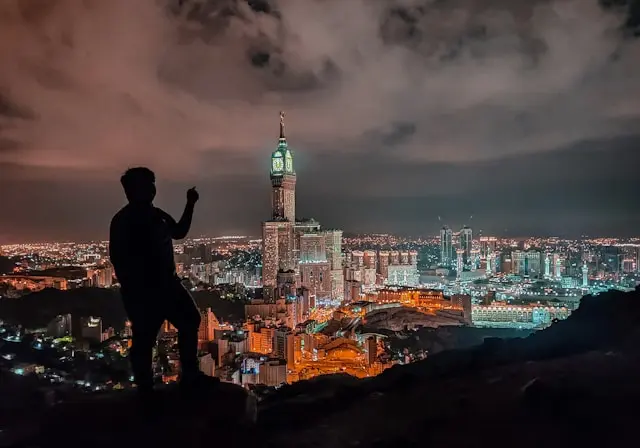
Makkah's real estate transaction volume hit SAR 47.2 billion in 2024. A third of that was concentrated in commercial and hospitality assets clustered around the most constrained development corridor in the Middle East. By any capital metric, the city is in the middle of one of the largest construction cycles in its modern history.
The problem is not money. The problem is that the professionals capable of delivering these projects are being pulled away at an accelerating rate. Riyadh's giga-projects offer 18 to 25 percent premiums over Makkah compensation. Dubai offers effective net-of-tax advantages of 25 to 30 percent. Jeddah, 60 kilometres down the road, offers a commutable alternative with fewer constraints. The capital flowing into Makkah's development pipeline and the human capital required to execute it are moving in opposite directions.
What follows is a ground-level analysis of why this decoupling is happening, which roles are most affected, what it costs in time and money when searches fail, and what organisations operating in this market need to understand before they commit to their next senior hire.
A Market Where Capital Has Outrun the Workforce
The scale of Makkah's construction activity is difficult to overstate. As of early 2025, the city accounted for roughly 18 percent of Saudi Arabia's active high-rise construction value for buildings above 20 storeys. Jabal Omar Development Company completed structural work on its Phase 4 towers in late 2024, adding 1,200 hospitality keys and 600 residential units. The Address Jabal Omar and Raffles Makkah Palace are now operational. Citywide luxury hotel inventory has reached approximately 155,000 keys.
Yet the Saudi Contractors Authority reported a national construction vacancy rate of 14.3 percent in Q4 2024, with Makkah representing the tightest regional market due to project concentration. That figure describes the entire sector, including low-skill labour. At the executive and specialist level, the picture is more severe. The Saudi Project Management Institute estimates only 400 to 450 professionals in the entire Kingdom possess both PMP certification and proven Hajj-season project delivery experience. JODC and Umm Al Qura have maintained open requisitions for Hajj-Integrated Project Directors for durations exceeding 180 days on average.
This is the central analytical point of this article, and it is one the data does not state outright but strongly supports: Makkah's construction market has created a capital trap. Investment continues to pour in because the returns during peak pilgrimage seasons are extraordinary. But the very conditions that generate those returns, religious sensitivity requirements, Hajj blackout periods, heritage oversight, infrastructure moratoriums, make the market uniquely difficult to staff. Capital can arrive in a wire transfer. The people who know how to build under these conditions cannot be manufactured, and they are choosing to go elsewhere.
The Hajj Constraint No Other Market Faces
Every construction market has seasonal disruptions. Weather in northern Europe, monsoons in South Asia, hurricane seasons in the Gulf of Mexico. Makkah has something qualitatively different: a mandatory work stoppage within the Central Area (the 5-kilometre radius around the Haram) for three to four weeks during Hajj season, during which all construction activity ceases entirely.
What Hajj Means for Project Timelines
This is not a slowdown. It is a hard stop. Cranes are locked. Sites are cleared. Workers are redeployed. The project director who manages this process must plan backward from a religious calendar that shifts annually, integrating the cessation into a construction programme that answers to commercial investors expecting predictable completion dates.
Ministry of Hajj and Umrah crowd-control requirements further mandate that all new developments within the Central Area obtain approval for pedestrian flow simulations before planning permissions are granted. According to the Saudi Contractors Authority's 2024 Regulatory Impact Assessment, this adds 8 to 14 months to the planning process and requires specialised crowd-safety engineering consultants. The software tools involved, LEGION and MassMotion, are niche. The global pool of professionals qualified to perform these simulations for high-density religious gatherings is estimated at 300 to 400 people worldwide.
What This Means for Talent
The result is a market where the most critical project leadership roles require a combination of skills that almost no other construction market demands simultaneously: PMP-level project management discipline, intimate familiarity with Hajj logistics constraints, the ability to manage regulatory relationships with both the RCMC and the Ministry of Hajj, and the cultural fluency to operate in a city where religious protocol shapes every aspect of daily operations. A project director who has delivered a 50-storey tower in Dubai or Riyadh is not automatically qualified to deliver one in Makkah. The failure to recognise this distinction is one of the most common sources of search failure in this market.
Heritage Rules That Reshape Projects Mid-Construction
The Royal Commission for Makkah City and Holy Sites holds veto power over architectural aesthetics and material palettes for every project in the central zone. This is not a theoretical constraint. It has been exercised repeatedly, with material consequences.
Four major tower proposals in the historic district north of the Haram were halted or fundamentally redesigned due to proximity to Ottoman-era mosques and the Kaaba's visual sightlines. According to JODC's 2023 annual report, the redesign of the Jabal Omar Phase 4 façade to incorporate more traditional Hijazi architectural motifs added SAR 180 million to project costs and delayed completion by eight months.
This creates a talent requirement that sits at the intersection of two disciplines that rarely overlap. The RCMC requires architects certified in Islamic heritage preservation, specifically Ottoman and early Islamic architectural syntax, who also possess modern BIM capabilities. The Saudi Council of Engineers' professional registry shows fewer than 60 Saudi nationals and 200 expatriates holding the RCMC heritage certification combined with Revit or ArchiCAD proficiency. Employers including RCMC-contracted design firms report typical search durations of 9 to 12 months for these profiles, often requiring recruitment from Istanbul, Cairo, or European conservation programmes, as reported by Construction Week Saudi Arabia in October 2024.
The shortage is not cyclical. It is a knowledge problem. You cannot recruit experience in Ottoman-era Islamic architectural preservation from a market that has never needed it at scale. The academic pipeline is narrow. The certification pathway is long. And every new project in Makkah's central zone that encounters an RCMC intervention creates fresh demand for the same finite pool of specialists that traditional recruitment channels cannot reach.
Where the Talent Is Going and Why
Makkah is not competing against a single rival. It is competing against three, each offering a different proposition to a different segment of the workforce.
Riyadh: Premium Pay and Modern Infrastructure
The giga-projects, NEOM, Red Sea Global, Qiddiya, Diriyah Gate, are offering premiums of 18 to 25 percent above Makkah rates for Project Directors and BIM specialists, according to the Hays Saudi Arabia Salary Guide 2024. Riyadh also offers superior international schooling infrastructure and a less restrictive social environment for expatriate families. The InterNations Expat City Ranking for 2024 confirms what recruitment firms already know: mid-career professionals with families choose Riyadh. Makkah retains single-status expatriates or those with specific religious motivation.
This is a structural disadvantage that compensation alone cannot solve. An organisation competing for a Senior Project Director in Makkah is not just offering a salary. It is asking a candidate to accept a city with fewer international schools, limited entertainment infrastructure, and summer working conditions where temperatures regularly exceed 45 degrees Celsius during Hajj season.
Dubai: The Tax Arbitrage
Dubai's zero-income-tax environment creates an effective 25 to 30 percent premium over Makkah for comparable senior roles, even though nominal salaries are 10 to 15 percent lower. The established construction sector and lifestyle advantages compound this. Of particular concern for Makkah employers: professionals with Hajj logistics experience can monetise that niche from Dubai, working as consultants to Saudi clients remotely without enduring the operational constraints of being based in the city itself.
Jeddah: The Commutable Alternative
Jeddah Economic City and the KAFD expansion projects sit just 60 kilometres away. According to JLL's Saudi Arabia Labor Mobility Report for 2024, mid-level engineers who might otherwise work in Makkah are choosing Jeddah for lower cost of living and fewer social restrictions. The commute is not practical for daily site management, making these professionals effectively lost to the Makkah talent pool.
The combined pressure from these three markets means that Makkah's construction sector is not simply facing a shortage. It is facing a drain. The professionals best qualified for the most critical roles have rational, defensible reasons to work somewhere else.
Compensation in Makkah: The Haram Premium and Its Limits
Makkah's compensation structure reflects what the market calls the "Haram premium," a 15 to 25 percent uplift over equivalent roles in Riyadh or Jeddah. This premium exists because of project complexity, religious sensitivity, and the genuinely difficult working conditions during summer Hajj periods. But the premium is reaching the limits of what it can accomplish.
A Construction Project Director at VP level overseeing SAR 1 billion or more in mixed-use tower development commands SAR 55,000 to 75,000 per month in base salary, plus housing allowances of SAR 8,000 to 12,000 and project completion bonuses equivalent to three to six months' salary. Notably, bonuses are increasingly tied to zero-incident Hajj logistics integration rather than pure schedule adherence.
Senior Project Managers responsible for day-to-day management of 50-plus-storey hospitality towers earn SAR 32,000 to 48,000 monthly. Heritage Conservation Architects command SAR 28,000 to 42,000, with a 20 percent uplift for RCMC certification holders. BIM Managers sit at SAR 26,000 to 38,000, though the Head of Digital Construction title can push that to SAR 45,000 to 60,000.
These figures are competitive within Saudi Arabia. They are not competitive against Dubai's tax advantage or Riyadh's giga-project premiums. For a senior professional evaluating a move, the Makkah package must compensate not just for the work but for the city. Few hiring organisations in this market have fully internalised what that requires. The counteroffer risk is compounded by the fact that a candidate in Makkah being approached by a Riyadh recruiter is receiving both a financial and a lifestyle upgrade in a single conversation.
The Peripheral Shift: Where Growth Is Moving in 2026
With virtually no remaining developable plots in the Jabal Omar model, the 2026 pipeline is shifting from core to peripheral development. Construction starts in the central zone are forecast to decline 12 percent year on year, while activity in the outer ring beyond the 5-kilometre radius is projected to increase 28 percent.
The two primary growth zones are the HHR station district in Al-Rusaifa and the Makkah Gate development by Umm Al Qura for Development and Construction, a 1.2 million square metre mixed-use zone roughly 8 kilometres from the Haram. Makkah Gate targets value-oriented pilgrim housing and retail, a segment the market has systematically underbuilt.
This peripheral shift carries its own talent implications. The skills needed to develop a hotel tower within the Haram's visual sightlines are different from those needed to plan a mixed-use suburban district with integrated transport links to the HHR station. Talent mapping for these emerging zones requires identifying professionals with master-planning and transit-oriented development experience, disciplines that have been less in demand in Makkah's previous development cycles. Meanwhile, the implementation of the new Holy Sites Infrastructure Code, anticipated to take effect in 2025 or early 2026, mandates stricter seismic resilience standards and smart-building integration for crowd monitoring. This adds 5 to 8 percent to construction costs but also creates fresh demand for specialists in BIM and IoT infrastructure who may not yet be present in the Makkah workforce.
The infrastructure constraints are equally material. Makkah's water and sewage systems operate at 92 percent capacity during peak pilgrimage. The National Water Company has imposed moratoriums on new connection approvals for developments exceeding 30,000 square metres GFA until the completion of the Al-Washla wastewater treatment expansion, estimated for 2027. Several hotel tower projects are effectively frozen as a result. Developers cannot build what the infrastructure cannot serve, regardless of how much capital they deploy.
Why Conventional Search Methods Fail in This Market
The passive candidate dynamics in Makkah's construction sector are unusually extreme, even by executive search standards. In three of the most critical role categories, the market is functionally invisible to job boards and inbound recruitment channels.
Hajj-experienced Project Directors operate in a market with functional zero unemployment. According to industry reporting in MEED, the major contractors maintain informal agreements not to actively poach from one another. These agreements are routinely bypassed by Riyadh-based giga-project recruiters, but they remain effective at suppressing open-market movement within Makkah itself. Heritage Conservation Specialists are typically embedded in academic institutions such as King Saud University or Umm Al-Qura University, or working within heritage firms in Istanbul and Cairo. They do not browse job boards. They are activated through academic conference networks and personal referrals. Senior Crowd Safety Engineers belong to a global niche of perhaps 300 to 400 professionals. Recruitment occurs exclusively through specialist headhunting rather than public vacancy postings.
The combined effect is a market where the 80 percent of senior professionals who are not actively looking represent closer to 95 percent of viable candidates for the most critical roles. Posting a vacancy and waiting for applications is not an inefficient strategy here. It is a non-strategy. The professionals these projects need must be identified, approached, and persuaded individually.
For organisations operating in this environment, the cost of a slow or poorly targeted search is not merely inconvenience. It is measured in Hajj-season delays, RCMC redesign cycles, and infrastructure moratoriums that can freeze a project for years. A search methodology built for passive candidate identification and designed to deliver interview-ready candidates within days rather than months is not a luxury in this market. It is the difference between a project that moves and one that stalls.
KiTalent's AI-powered talent mapping, combined with direct headhunting across international specialist networks, reaches the candidates who do not appear on any job board and would never respond to an advertisement. With a 96 percent one-year retention rate for placed candidates and a pay-per-interview model that eliminates upfront retainer risk, the approach is built for markets exactly like this: high stakes, thin talent pools, zero margin for error.
For organisations competing for heritage architects, Hajj-integrated project directors, or crowd safety engineers in one of the most constrained construction markets on earth, speak with our executive search team about how we approach this market.
Frequently Asked Questions
What makes Makkah's construction talent market different from the rest of Saudi Arabia?
Makkah's construction sector operates under constraints that no other Saudi market faces. The mandatory Hajj-season work stoppage within the 5-kilometre Central Area, RCMC heritage veto powers over architectural design, and Ministry of Hajj crowd-simulation approval requirements add 8 to 14 months to planning permissions. These conditions require project leaders with a combination of religious logistics experience, heritage sensitivity, and crowd-safety engineering knowledge that fewer than 450 professionals in the Kingdom possess. Combined with land costs exceeding SAR 90,000 per square metre near the Haram, only sovereign-backed entities can participate in central zone development.
What do senior construction roles pay in Makkah in 2026?
Construction Project Directors at VP level commanding SAR 1 billion or more in project scope earn SAR 55,000 to 75,000 per month base salary in Makkah, plus housing allowances and completion bonuses of three to six months' salary. Senior Project Managers earn SAR 32,000 to 48,000 monthly. Heritage Conservation Architects with RCMC certification command SAR 28,000 to 42,000 with a 20 percent uplift. These figures include the "Haram premium," a 15 to 25 percent uplift over comparable Riyadh roles, though salary benchmarking shows this premium is insufficient to offset Dubai's tax advantages or Riyadh's giga-project compensation.
Why are heritage conservation architects so hard to recruit in Makkah?
Fewer than 260 professionals globally hold the RCMC heritage certification for Ottoman and early Islamic architectural preservation combined with modern BIM proficiency in Revit or ArchiCAD. These specialists are typically embedded in academic institutions or heritage firms in Istanbul and Cairo, not actively searching job boards. Employers report search durations of 9 to 12 months. The pipeline cannot scale quickly because the certification pathway is long and the academic programmes that train these professionals are few. Direct identification through conference networks and specialist headhunting is the only effective recruitment method.
How does Hajj season affect construction project delivery in Makkah?
All construction within the 5-kilometre Central Area around the Haram ceases entirely for three to four weeks during Hajj. This is not a slowdown but a mandatory shutdown. Cranes are locked, sites cleared, and workers redeployed. Project directors must plan backward from a religious calendar that shifts annually, integrating the cessation into programmes answering to commercial investors expecting fixed completion dates. Completion bonuses are increasingly tied to zero-incident Hajj integration rather than schedule adherence, reflecting how central this constraint is to project success.
How does KiTalent approach executive search in constrained markets like Makkah's construction sector?
KiTalent uses AI-enhanced talent mapping to identify passive candidates in niche global pools, including heritage architects, crowd safety engineers, and Hajj-experienced project directors who are not visible on any recruitment platform. The firm delivers interview-ready candidates within 7 to 10 days through direct headhunting rather than job advertising, operating on a pay-per-interview model with no upfront retainer. With 1,450 or more executive placements completed and a 96 percent one-year retention rate, the methodology is designed for markets where the candidates you need must be found and persuaded individually rather than attracted through postings.
What is the biggest risk for Makkah real estate developers in 2026?
The convergence of infrastructure constraints poses the greatest risk. Water and sewage systems at 92 percent capacity have triggered National Water Company moratoriums on new connections for large developments. The new Holy Sites Infrastructure Code adds 5 to 8 percent to construction costs through seismic and smart-building mandates. Meanwhile, the talent drain to Riyadh and Dubai continues to thin the pool of qualified project leaders. Developers face a market where capital is abundant but the physical and human infrastructure to deploy it is tightening simultaneously, a combination that historically produces cost overruns and timeline failures.