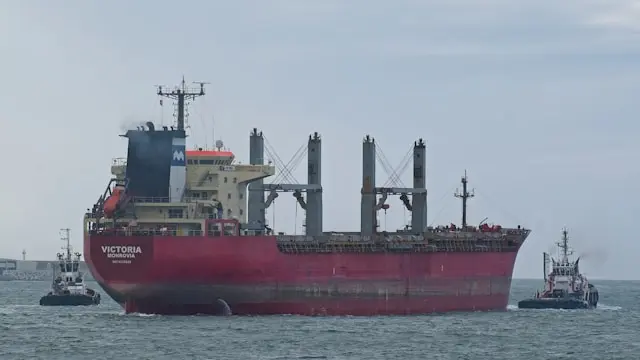
Porto Torres Maritime Logistics: Why the Biorefinery Transition Created a Talent Market the Local Workforce Cannot Fill

The Port of Porto Torres processed approximately 1.2 million passengers and 400,000 freight units in 2024. By most measures, it is a functioning, mid-sized Mediterranean port with stable ferry traffic, a growing Ro-Ro operation, and an industrial hinterland anchored by one of Italy's most closely watched energy transition projects. On the surface, this is not a market in crisis.
Beneath that surface, the numbers tell a different story. The port's freight portfolio has narrowed sharply since the closure of the Federico II coal-fired power plant in 2023, which reduced dry bulk volumes by approximately 60% compared to 2019 baselines. In its place, the conversion of the Saras refinery into a biorefinery has introduced an entirely new category of cargo: biofuel feedstocks and specialty chemicals requiring sophisticated handling protocols, safety certifications, and digital logistics coordination that did not exist in this market five years ago. The talent required to operate this new port is not the talent that operated the old one.
What follows is a ground-level analysis of the forces reshaping Porto Torres as a maritime employment market, where the shortages are most acute, and what organisations hiring in this region need to understand before they commit to a search. The core finding is counterintuitive: a province with 14.2% unemployment cannot fill its most critical port roles, and the reasons are systemic rather than cyclical.
A Port in Transition: What Porto Torres Actually Looks Like in 2026
Porto Torres maintains 7,800 linear metres of quay across 13 berths. Four dedicated Ro-Ro and ferry berths in the Darsena di Ponente process approximately 380,000 commercial vehicles and 120,000 passenger cars annually. The container terminal, operated by Medcenter Container Terminal (MCT), has a nominal capacity of 300,000 TEUs but runs at just 45-50% utilisation. Two ship-to-shore cranes of super post-panamax class serve a yard constrained by 14.5-metre depth at the container quay, which blocks ultra-large container vessel access.
The port's most distinctive feature is also its most consequential constraint. It lacks direct rail access to the quayside. Rail freight must transfer via road haulage from the Porto Torres-Sassari rail line terminus, 3.5 kilometres from the container terminal. This gap is not incidental. It means Porto Torres cannot participate in Italy's "Motorways of the Sea" intermodal incentive programmes, cannot capture transshipment container traffic destined for central Italian markets, and remains structurally limited to Sardinian-origin and Sardinian-destination cargo.
A €45 million rail extension project, the "Raccordo Ferroviario Portuale," had its tender specifications published in December 2024, with construction scheduled for 2026 to 2028. Until that line is operational, every growth projection for the port depends on traffic that can be generated without intermodal connectivity. For hiring leaders, this matters directly: the 400 net new logistics jobs projected by the regional development accord signed in June 2024 are contingent on both the rail link's completion and the biorefinery reaching full output scale. Neither is guaranteed on schedule.
The Molo di Levante extension, adding 350 metres of quay and 12-metre draft, is scheduled for completion in Q3 2026. If delivered, it could attract post-panamax feeder services from carriers like MSC or CMA CGM. That would shift the port's operational profile again, adding a new category of vessel calls and a new set of workforce requirements on top of an already stretched talent base. For anyone involved in executive hiring across industrial and manufacturing operations, Porto Torres represents a market where infrastructure investment is creating demand faster than people can be trained to meet it.
The Energy Transition Talent Paradox
This is the central analytical tension in Porto Torres, and it is the insight that most hiring leaders outside the region will miss.
The Saras refinery completed its conversion to biorefinery operations in Q2 2024. Crude oil import volumes through the port declined 40% year-over-year as a result. In their place, the facility now handles biofuel feedstocks and specialty chemicals, with projected throughput of 2.5 million tons annually by 2026. The liquid bulk quays, stretching 2,100 metres, serve this operation along with Air Liquide Italia's packaged gases facility.
The transition sounds like a straightforward industrial upgrade. It is not. The cargo has changed in kind, not just in volume. Biofuel feedstocks and specialty chemicals require ADN and IMDG Code certifications for handling. They require different safety protocols, different equipment, and different training from the coal and crude oil that previously dominated. The Consorzio Operativo Porto Torres (COPT), the primary stevedoring cooperative, reported only 65 members with the required IMDG certifications against a requirement for 90 to meet the biorefinery's logistics needs.
At the same time, the province has surplus availability of traditional bulk cargo handlers whose skills in coal and ore movement are declining in relevance. The market therefore exhibits two conditions simultaneously: structural unemployment in legacy port skills and acute shortage in specialised chemical logistics. These are not contradictory findings. They describe different subsets of the same workforce, and the gap between them cannot be closed by simple retraining.
The retraining assumption deserves scrutiny. IMDG certification is not a weekend course. Terminal operators serving the chemical quays have maintained open calls for certified stevedores for 8 to 12 month durations. COPT and similar cooperatives have offered €3,000 to €4,000 training subsidies to existing members, according to FILT-CGIL's 2024 observatory on Sardinian port labour. The subsidies have not resolved the gap. The certification pipeline is too slow for the rate at which the biorefinery's logistics demands are scaling. Capital investment moved faster than human capital could follow, and the gap is widening.
This is the original synthesis that connects the data: the energy transition in Porto Torres has not reduced the port's workforce requirements. It has replaced one category of worker with another that does not exist in sufficient numbers locally, and the timeline for producing that workforce through certification and training exceeds the timeline on which the biorefinery needs it. The hidden 80% of passive talent in this market is not merely passive. Much of it does not yet exist.
Three Roles That Define the Shortage
Certified Dangerous Goods Handlers
The shortage of IMDG-certified stevedores is the most operationally immediate constraint. With only 65 certified members at COPT against a requirement of 90, the port runs every chemical terminal shift with fewer qualified handlers than its safety protocols demand. The 8 to 12 month vacancy durations reported for these roles reflect a market failure in ready-trained supply, not a compensation failure. The pay is not the problem. The pipeline is.
As EU FuelEU Maritime regulations took effect in January 2025, the port also requires STCW-certified personnel for LNG fuel transfer operations. The port hosts one LNG bunker vessel, the Coral Fraseri, with operational capacity of 500 cubic metres per hour, serving Grimaldi's growing LNG-powered fleet. Each new LNG vessel call adds demand for a certification category that barely exists in the Sardinian labour market.
Port Operations Managers with Digital Competencies
MCT's 30-year concession extension, signed in 2022 and expiring in 2052, includes mandatory investment clauses requiring €30 million in terminal electrification and digital gate automation by 2027. The penalty for missed milestones is €500,000 per annum. This creates a contractual obligation to automate that is running ahead of the workforce's capacity to operate automated systems.
The specific gap is in mid-to-senior managers capable of running Terminal Operating Systems such as Navis N4 or SAP Transportation Management. Both MCT and Grimaldi have cited this as the primary constraint on their automation rollout, according to Federlogistica-Confindustria's 2024 survey on digital competencies in Italian ports. Candidates with five or more years of Porto Torres-specific experience, critical for managing the relationship with the Port System Authority (AdSP), are 90% passive according to LinkedIn Talent Insights data from Q4 2024. They are not looking. They are not on job boards. And the pool of people who could replace them from outside the region requires relocation to an island with limited urban amenities and no direct high-speed rail connection to the mainland.
This is the kind of search where conventional recruiting methods consistently fail, because the candidate you need is employed, content, and invisible to every inbound channel.
Maritime Pilots
The Corps of Maritime Pilots for Porto Torres maintains only six licensed pilots. Two face mandatory retirement by 2026. The training pipeline for a replacement pilot is three years. There is no lateral hiring mechanism: maritime pilotage in Italy is a state-licensed profession with an exclusive national training programme. The market for experienced pilots is, in practical terms, 100% passive, and the supply cannot be accelerated.
The corps has already restructured to 24-hour shifts from 12-hour shifts, an arrangement sanctioned by the Ministry of Infrastructure to maintain port operations despite being two pilots below optimal manning levels. This is not a sustainable operational model. It is a stopgap, and it has a visible expiry date.
Compensation and the Island Premium
Terminal Operations Directors at Porto Torres command base salaries of €120,000 to €150,000, plus performance bonuses of 15 to 20%, with housing allowances common for non-local hires. Port Operations Managers earn €55,000 to €72,000 annually under the CCNL Porti e Terminals collective agreement, with hazardous cargo premiums adding 15% for chemical terminal assignments. Maritime pilots earn €80,000 to €110,000 on a fee-based model, with senior pilots exceeding €130,000.
These figures need context. Genoa, the primary competitor for senior maritime logistics talent, offers compensation premiums of 20 to 25% for equivalent roles, a deeper talent pool, proximity to the University of Genoa's naval architecture programme, and the lifestyle advantages of a major mainland city. When Grimaldi Lines reportedly recruited a Terminal Operations Director for its Porto Torres facility in 2023, industry publication Ship2Shore reported that the hire came from a competing Genoa-based terminal operator and required a compensation premium of 25 to 30% above Genoa market rates plus a relocation package. The premium was necessary to secure expertise in Ro-Ro optimisation software that could not be sourced locally.
The compensation challenge in Porto Torres is not that salaries are low in absolute terms. It is that the effective cost of attracting mainland talent to Sardinia includes a relocation premium, a lifestyle adjustment premium, and often a partner employment consideration that adds 25 to 40% to the headline salary. For any hiring leader considering how to structure a competitive offer in a constrained market, Porto Torres illustrates the principle clearly: the package that moves a passive candidate must account for everything the candidate gives up, not just everything you offer.
Cagliari presents a different competitive dynamic. It competes not for executives but for certified stevedores and port operations staff, offering larger container volumes, higher vessel call frequency, better shift differentials, and crucially, better rail connectivity for commuter access. COPT reports losing approximately 10 to 15 stevedores annually to Cagliari-based terminals. At the operational workforce level, the competition is about shift patterns and transport links, not compensation.
The Demographic Clock
The Province of Sassari's maritime logistics workforce exhibits an age profile that compounds every other challenge described in this article. According to INAIL's 2023 report on port employment dynamics, 42% of COPT members are aged over 50. Only 8% are under 30. The national average for Italian port workers under 30 is 28%.
This is not an abstract demographic trend. It means that within the next decade, nearly half the cooperative's experienced workforce will retire. The knowledge they carry about Porto Torres-specific operations, AdSP relationship management, and the particular handling requirements of each quay section will leave with them. At the same time, University of Sassari graduates in business administration and engineering show 65% out-migration to mainland Italy or northern Europe within two years of graduation, according to AlmaLaurea's 2023 intermediary report.
The port is therefore losing experienced workers to retirement and potential replacements to emigration simultaneously. Northern European ports like Rotterdam and Antwerp attract young graduates with English-speaking environments and salaries 40 to 50% higher for automation engineers. Livorno offers mainland connectivity and a diversified industrial base. Porto Torres offers neither, and the "island lifestyle" value proposition that works for some senior executives does not resonate with a 25-year-old engineer evaluating career trajectory.
For organisations building long-term talent pipelines, this demographic data is not background noise. It is the defining constraint. Any workforce plan for Porto Torres that does not account for age-profile risk is a plan built on a workforce that will not exist in ten years.
Structural Constraints on Search Strategy
Italian port labour law adds a layer of complexity that hiring leaders from other markets may not anticipate. Law 84/1994 and Legislative Decree 169/2016 impose strict limitations on temporary employment in port operations. During seasonal peaks, particularly the July-August ferry surge when Ro-Ro traffic spikes, operators cannot scale the workforce through temporary hires in the way a logistics provider might on the mainland. The result is a structural reliance on overtime rather than flexible capacity, which increases burnout risk and accelerates the departure of younger workers who see more sustainable working conditions elsewhere.
The cooperative labour structure itself creates search complexity. COPT's 220 registered members operate under a collective framework where individual mobility is constrained by cooperative membership rules, union agreements, and the specific licensing regime of the port authority. Poaching a certified stevedore from COPT to a direct employer contract requires navigating these structures, and the process is slower and more legally complex than a standard employment transfer.
For senior roles, the search challenge is different but equally severe. The average tenure of a Terminal Operations Director in Italian secondary ports exceeds seven years. Eighty percent of placements at this level occur through direct executive search rather than advertisement, according to Odgers Berndtson's 2024 Transport and Logistics Executive Compensation Report. In Porto Torres specifically, the candidate pool for someone who understands both digital terminal management and the particular regulatory environment of an AdSP Mare di Sardegna concession is vanishingly small. A talent mapping exercise for this role would likely identify fewer than 30 viable candidates across all of Italy, and most of them are in Genoa or Livorno with no obvious incentive to move.
The counteroffer risk in this market is correspondingly high. When a passive candidate in a stable role receives an approach, their current employer has every reason to match or exceed any offer, because replacing that person will take 12 months or more.
What This Means for Hiring Leaders in 2026
The automation investment mandated by MCT's concession agreement is designed to increase throughput capacity by 40% by 2027. The regional development accord projects 400 net new logistics jobs by the same date. These two targets sit in tension. Automation typically reduces labour intensity per TEU. The job growth projection relies entirely on new traffic generation from the rail intermodal opening, not from operational expansion at current volumes. If the Raccordo Ferroviario Portuale construction slips past 2028, the automation proceeds on schedule but the traffic that would justify new headcount does not arrive.
This creates a specific risk for any organisation planning workforce expansion in Porto Torres: the jobs you are hiring for today may exist in a different form by 2028, and the timeline for the infrastructure that would create additional roles is uncertain. Smart hiring in this environment means building a team that can operate at current scale while being prepared for a step-change that may or may not arrive on time.
The candidates who can do this are not abundant. They sit at the intersection of traditional maritime operations knowledge and digital systems fluency. They need to understand both the physical logistics of chemical cargo handling and the software platforms that will increasingly manage those operations. The cost of hiring the wrong person at this level, in a market this thin, is not merely financial. It is measured in months of operational delay on automation projects with contractual penalty clauses attached.
For organisations competing for terminal operations leadership and specialised logistics talent in Porto Torres, where the candidate pool is measured in dozens rather than hundreds and the cost of a slow search compounds with every passing month, speak with our executive search team about how KiTalent approaches markets where 80% of viable candidates are not visible through any conventional channel. KiTalent delivers interview-ready executive candidates within 7 to 10 days through AI-enhanced direct headhunting methodology, with a 96% one-year retention rate for placed candidates. In a market where a single bad hire can stall a €30 million automation programme, that retention rate is not a statistic. It is a risk control measure.
Frequently Asked Questions
What are the most in-demand maritime logistics roles in Porto Torres in 2026?
The three most acute shortages are IMDG-certified dangerous goods handlers for the chemical and biorefinery quays, port operations managers with digital terminal operating system competencies (particularly Navis N4 and SAP Transportation Management), and licensed maritime pilots facing a retirement-driven capacity constraint. The dangerous goods certification gap is the most operationally urgent, with the stevedoring cooperative reporting a shortfall of approximately 25 certified handlers against biorefinery logistics requirements. These shortages are compounded by a demographic profile in which 42% of the existing port workforce is aged over 50.
What does a Terminal Operations Director earn in Porto Torres?
Base salaries for Terminal Operations Directors in Porto Torres range from €120,000 to €150,000, with performance bonuses of 15 to 20%. Non-local hires typically receive housing allowances as part of the relocation package. Attracting senior talent from mainland competitors like Genoa often requires a total compensation premium of 25 to 40% above mainland rates once relocation, lifestyle adjustment, and partner employment considerations are factored in. The effective cost of hiring at this level is materially higher than headline salary data suggests, and organisations should benchmark against the full package rather than base salary alone through structured market benchmarking.
Why is hiring for Porto Torres port roles difficult despite high regional unemployment?
The Province of Sassari's unemployment rate of 14.2% masks a severe skills mismatch. The available labour pool contains surplus traditional bulk cargo handlers whose skills in coal and ore movement have declining relevance since the Federico II plant closure. The roles in demand require specialised certifications in dangerous goods handling, LNG bunkering operations, and digital logistics systems that the local workforce largely does not possess. Certification pipelines for these skills take 8 to 12 months minimum, and 65% of local university graduates emigrate to mainland Italy or northern Europe within two years of graduation.
How does Porto Torres compete with Genoa and Cagliari for maritime talent?
Porto Torres competes on different dimensions with each city. Against Genoa, it must overcome a 20 to 25% base compensation gap and the lifestyle draw of a major mainland city, typically through relocation packages and the appeal of Sardinia's quality of life. Against Cagliari, it loses operational-level staff to higher vessel call frequency, better shift differentials, and superior commuter rail connectivity. The competitive dynamic requires different strategies at different seniority levels, with senior hires requiring bespoke packages and operational staff retention requiring infrastructure and schedule improvements.
What impact will the rail extension have on Porto Torres port employment?
The €45 million Raccordo Ferroviario Portuale, with construction scheduled for 2026 to 2028, is projected to enable 400 net new direct logistics jobs by 2027. However, this projection is contingent on the rail link's timely completion and the biorefinery reaching full output scale. The rail extension would allow Porto Torres to capture intermodal container traffic destined for central Italian markets for the first time, opening new revenue streams and associated employment. Any construction delay would undermine the employment forecast while automation investments under the MCT concession agreement proceed independently.
How can organisations find qualified maritime logistics executives in Sardinia?
The senior maritime logistics talent pool in Sardinia is extremely limited. Eighty percent of Terminal Operations Director placements in secondary Italian ports occur through executive search rather than job advertising. Candidates with Porto Torres-specific experience in AdSP compliance and terminal management are almost entirely passive. KiTalent's approach to this market uses AI-powered talent mapping to identify and engage the small number of qualified candidates across Italian and Mediterranean port networks, delivering interview-ready shortlists within 7 to 10 days rather than the months-long timelines typical of conventional search in this market.