Malmö's Logistics Sector Is Growing Into a Space That Cannot Hold It: The Hiring Crisis Behind the Öresund Corridor
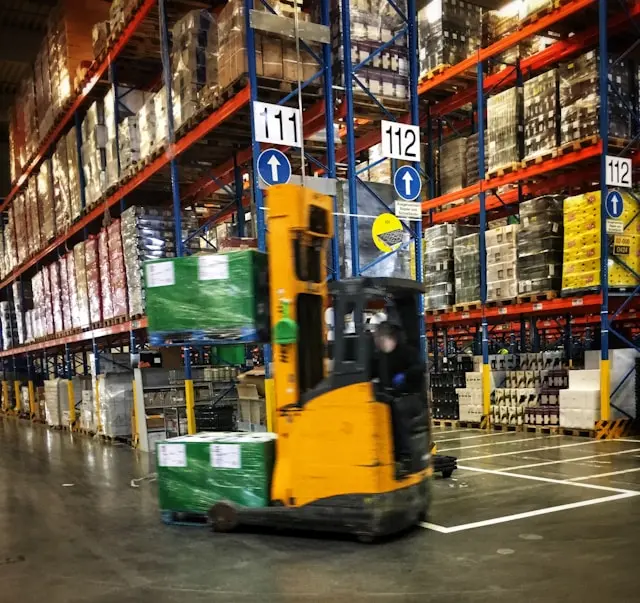
Malmö's logistics and freight sector employs 12,400 people and handles 4.2 million tonnes of Ro-Ro cargo through its port terminals annually. By every throughput metric, the sector is healthy. Container volumes have grown at 3.4% CAGR. Warehousing vacancy has compressed from 9.1% in 2021 to 6.2% by late 2024. Investment is flowing into terminal automation, green corridor electrification, and rail yard modernisation. The numbers suggest a sector in confident expansion.
The numbers do not tell the full story. Malmö's logistics sector is expanding into a market where industrial land is almost exhausted, where Copenhagen pays senior professionals 25 to 30% more for equivalent roles thirty minutes away, and where the green transition demands skills that fewer than 120 qualified professionals in the Öresund region possess. Region Skåne's transport vacancy rate of 6.8% sits well above the 4.2% national average, and 60% of haulage firms report driver vacancies exceeding 90 days. The sector is not struggling because demand is weak. It is struggling because the physical, regulatory, and human infrastructure required to sustain its growth trajectory is running out simultaneously.
What follows is a ground-level analysis of the forces reshaping Malmö's logistics market, the specific roles where hiring has stalled, and what senior leaders responsible for freight, port, and supply chain operations need to understand before their next executive search.
The Binational Illusion: Why the Öresund Bridge Creates a Talent Drain, Not a Talent Pool
The conventional wisdom about Malmö's logistics market begins with the Öresund Bridge. A thirty-minute crossing connects Malmö to Copenhagen and, by extension, to one of northern Europe's most developed freight and distribution clusters. The logic follows that proximity to Copenhagen deepens the available talent pool. Malmö's employers can recruit from both sides of the bridge. The binational integration should, in theory, produce a richer and more competitive labour market.
The data contradicts this assumption at the executive and senior technical levels. Copenhagen-based logistics roles pay 25 to 30% more than equivalent positions in Malmö after purchasing power parity adjustment, according to analysis from the Øresundsinstituttet and Numbeo Cost of Living data. Malmö's cost of living has converged to only 12% below Copenhagen's, which means the salary gap substantially exceeds the cost-of-living gap. For a supply chain director or port operations manager weighing two offers, the arithmetic is straightforward: Copenhagen pays materially more, and living costs are only marginally higher.
This creates what the compensation data reveals as a net talent drain at the senior level. The Öresund Bridge does not equalise the two markets. It connects a lower-paying market to a higher-paying one with minimal friction. Danish firms can and do poach senior talent with DKK-denominated contracts, creating a talent arbitrage effect that suppresses Swedish-side executive compensation growth. The bridge is not a bridge for Malmö's employers. It is an exit ramp for Malmö's best candidates.
The implication is that Malmö's logistics employers are not competing in a local market or even a regional one. They are competing against Copenhagen's compensation structure every time they try to retain or recruit a senior professional. And the tools available to offset that gap, including Swedish tax incentives and lower operational costs, do not translate into personal compensation in ways that move individual candidates. This dynamic shapes every executive search conducted in this market, and any hiring strategy that ignores it will fail.
Port Operations: Stable Throughput, Constrained Capacity, and a Workforce in Transition
Copenhagen Malmö Port AB, the binational port authority owned equally by By & Havn Copenhagen and Malmö Stad, operates Malmö's Norra Hamnen and Yttre Hamnen terminals. The Swedish side handles approximately 320,000 TEU in container volumes and 4.2 million tonnes of Ro-Ro cargo, maintaining 14 regular Ro-Ro connections to Continental Europe. The primary routes serve Travemünde, Rostock, and Klaipeda, positioning Malmö as the principal Swedish entry point for trailer traffic destined for southern Sweden and Norway.
CMP's "Digital Port 2026" and Its Workforce Consequences
CMP's automation roadmap, branded "Digital Port 2026," targets semi-automated gate processing and AI-driven yard management. The stated objective is to reduce truck turnaround times from 45 minutes to 25 minutes. The investment is commercially rational. Faster turnaround means higher throughput per terminal acre, which matters enormously when physical expansion is functionally impossible.
The workforce consequence is less comfortable. CMP estimates the automation programme will displace approximately 15 to 20% of manual terminal operative roles. These are not distant projections. The gate automation and yard management systems are being implemented now. The roles being created in their place, automation technicians and systems integration specialists, require fundamentally different skills. CMP employs approximately 450 people in its Malmö operations across stevedoring, vessel traffic services, and terminal management. A 15 to 20% displacement means 65 to 90 manual roles eliminated, replaced by a smaller number of technical roles that the existing workforce is not trained to fill.
The 80-to-120 Problem
The talent pool for port operations managers with both maritime logistics experience and IT systems integration competence is constrained to approximately 80 to 120 qualified individuals across the entire Öresund region, according to recruitment data from Poolia and Unionen salary statistics. Recruitment for these hybrid roles typically runs four to six months. Employers frequently resort to poaching from Copenhagen's Maersk Terminals or from Gothenburg Port, offering salary premiums of 15 to 20% above standard operations manager compensation.
This is the core paradox of CMP's automation investment. The capital has moved faster than the human capital required to operate it. Malmö is installing systems that require specialists who do not exist in sufficient numbers within commuting distance. Every port operations manager hired from Copenhagen or Gothenburg arrives with a relocation package costing SEK 200,000 to 300,000 and a salary premium that further widens the gap between what Malmö pays and what it needs to pay. The hidden 80% of passive candidates in this market are not reading job boards. They are embedded in competing port operations across Scandinavia and northern Europe, and reaching them requires methods that conventional recruitment cannot provide.
Land Scarcity and the Regulatory Ceiling on Growth
Malmö's logistics property stock totals approximately 1.8 million square metres of modern warehousing. At 6.2% vacancy in late 2024, the market is tight but not yet critical. The trajectory, however, points toward a much harder constraint.
No greenfield logistics development will be permitted within Malmö's municipal boundaries after the 2026 implementation of the new Detailed Development Plan for the Nyhamnen district. Nyhamnen, the area that might logically absorb logistics expansion given its port adjacency, has been designated for 7,000 residential units. The political choice has been made: Malmö's waterfront will house people, not freight.
Fosie, Bulltofta, and the Contamination Cost
The remaining industrial zones, primarily Fosie and Bulltofta, face their own constraints. Soil contamination remediation in these areas costs SEK 800 to 1,200 per square metre, according to Malmö's Environmental Administration. This cost deters speculative development and ensures that only operators with long time horizons and guaranteed tenants will build. Catena AB's market analysis projects annual rent increases of 4 to 5% through 2026 as supply fails to meet absorption demand.
Industrial zoning availability in Malmö's prime logistics corridors hovers near 3 to 4%, well below the 8% threshold that market benchmarking research identifies as the equilibrium point for healthy logistics real estate function. The Environmental Court has further restricted nighttime truck movements between 22:00 and 06:00 in the Fosie area, reducing warehouse throughput efficiency by 12 to 15%. Operators who depend on overnight receiving and dispatch cycles face a structural productivity penalty that cannot be engineered away.
For hiring leaders, the land scarcity translates directly into a talent implication. As Malmö's logistics footprint cannot grow outward, it must grow upward and smarter. That means hiring executives who can extract more output from constrained space through automation, process redesign, and intermodal optimisation. The demand is not for more logistics managers. It is for a different kind of logistics manager entirely.
The Green Transition: Policy Ambition Colliding with Freight Reality
Here is the analytical tension that defines Malmö's logistics sector in 2026, and it is one that no local economic development plan explicitly acknowledges: the city cannot simultaneously grow freight volumes and meet its emissions targets under current modal split conditions.
Road transport maintains 87% of freight modal share in Region Skåne, according to Transport Analysis Sweden's regional statistics. Rail handles only 11% of non-bulk goods despite the Skåne Regional Transport Plan's target of 30% rail modal share by 2030. Container volumes are growing at 3.4% CAGR. Warehousing absorption exceeds supply. Every metric that signals economic health in the logistics sector also signals increasing truck movements and carbon intensity.
Shore Power and the ETS Cost Squeeze
The Öresund Green Corridor initiative, funded under the EU TEN-T programme, mandates shore power installation at Norra Hamnen by the end of 2026. All Ro-Ro vessels must use onshore power supply or battery hybrid systems by 2027. CMP estimates terminal electrification will require SEK 180 to 220 million in investment.
Simultaneously, the full implementation of EU Emissions Trading System Phase 4 for maritime transport in 2026 adds an estimated EUR 15 to 25 per TEU in carbon costs for vessels calling Malmö. For a feeder and distribution port operating on thinner margins than deep-sea gateways, this cost compression is material. The economics of running smaller vessels on shorter routes become harder to justify when carbon pricing applies uniformly regardless of voyage length.
The Skills That Do Not Yet Exist in Sufficient Numbers
The green transition requires a workforce competence that barely existed five years ago. Carbon footprint accounting for Scope 3 emissions, alternative fuels infrastructure management covering LNG, electric charging, and hydrogen, and sustainability-integrated supply chain leadership are now table-stakes requirements for senior roles. PostNord AB's experience illustrates the challenge. According to its 2023 annual report and organisational restructuring documentation, PostNord created a dedicated Sustainable Freight Transformation Director role for its Southern Sweden operations after a six-month search process that involved executive search firms. The search duration signals what the compensation data confirms: this is a passive candidate market where traditional recruitment methods consistently fail.
Supply chain directors with genuine green logistics competence command a 12 to 15% salary premium over conventionally qualified peers, according to Unionen and Michael Page Sweden salary data. At the executive level, directors with P&L responsibility and sustainability expertise earn SEK 1,100,000 to 1,450,000 annually plus 20 to 30% variable compensation. Even at these levels, total cash compensation remains 18 to 22% below equivalent roles in Stockholm, which draws talent with both higher pay and a greater concentration of multinational headquarters.
The Wage Ceiling and Malmö's Subordinate Position
The compensation data tells a story that Malmö's economic development narrative prefers not to emphasise. At every seniority level in logistics, Malmö pays less than its competitor markets. The gaps are not trivial.
For truck drivers, Gothenburg offers 8 to 12% higher wages through port complexity bonuses. Copenhagen pays 25 to 30% more after purchasing power adjustment. For supply chain executives, Stockholm offers 20 to 25% premiums. For port operations executives, the recruitment net must extend to Rotterdam, Hamburg, and Copenhagen, with relocation packages adding SEK 200,000 to 300,000 to the cost of each hire.
Malmö's logistics employers face what amounts to a structural wage ceiling imposed by the city's position in the Öresund hierarchy. Swedish-side compensation cannot easily match Danish-side compensation because the underlying business models operate on different margin structures. Swedish transport firms negotiated a 3.2% wage increase for 2024 to 2025 through the Swedish Transport Workers' Union (Transportarbetareförbundet), above inflation but nowhere near sufficient to close the Copenhagen gap.
What the Dichotomy Means for Executive Search
A supply chain director earning SEK 1,200,000 in Malmö could earn the equivalent of SEK 1,550,000 or more in Copenhagen. The bridge commute is thirty minutes. The cost of living differential is 12%. The arithmetic does not favour Malmö.
The only proposition that reliably moves senior candidates toward Malmö rather than away from it is one that conventional compensation cannot deliver: a role with more strategic scope, more autonomy, and a more compelling transformation mandate than what Copenhagen offers. That means the organisations best positioned to hire in this market are those pursuing the most ambitious operational changes, including automation, green corridor implementation, and intermodal integration. They have something to offer beyond a salary number. The employers still running legacy operations with conventional role definitions will lose their best candidates to counteroffers from across the bridge every time.
What Hiring Leaders in Malmö's Logistics Sector Must Understand
The synthesis that emerges from this data is one that should concern every senior logistics leader operating in the Öresund region: Malmö's logistics sector is not facing a hiring shortage in the conventional sense. It is facing a structural misalignment between where the sector is heading and where its available talent currently sits. The automation investment, the green corridor mandates, the land scarcity forcing operational intensification: all of these demand a workforce that combines maritime operations expertise with technology fluency, sustainability competence, and cross-border regulatory knowledge. That combination barely exists as a career profile. You cannot recruit experience that has not yet been produced in sufficient quantity.
This is not a problem that more job advertisements will solve. The passive candidate ratio for senior logistics roles in Skåne confirms it. Average tenure in senior positions is 4.2 years with 6% annual voluntary turnover, according to Mercer's Total Remuneration Survey for Sweden. Ninety percent or more of qualified candidates for supply chain director and port operations manager roles are employed and not actively seeking. The professionals who possess the exact combination of green logistics, automation, and cross-border expertise are solving novel problems at their current employers. They are not browsing LinkedIn job listings.
The Transportföretagen projects a shortfall of 4,500 truck drivers in southern Sweden by 2026. At the operational level, driver recruitment remains an active candidate market characterised by 18% annual turnover and demographic retirement waves. But at the leadership level, where the decisions about automation sequencing, sustainability compliance, and cross-border operations are made, the market is profoundly passive.
The organisations that will hire successfully in this market are those that understand three realities. First, the compensation proposition must address the Copenhagen gap explicitly, whether through equity participation, transformation mandates, or non-monetary role design that offers scope unavailable across the bridge. Second, the search method must reach candidates who are not visible on any job board or recruitment platform. Third, the timeline must be compressed because in a market with 80 to 120 qualified candidates for your most critical roles, a slow search does not produce a longer shortlist. It produces no shortlist at all.
How KiTalent Approaches This Market
Malmö's logistics talent market rewards precision and penalises delay. KiTalent's approach to executive search in industrial and logistics sectors is built for exactly these conditions. AI-powered talent mapping identifies the full universe of qualified candidates across the Öresund region, Gothenburg, and northern European port cities before a search formally begins. This means interview-ready candidates presented within 7 to 10 days, not a months-long cycle that runs out of viable options.
The pay-per-interview model eliminates the retainer risk that makes executive search prohibitive for mid-market logistics operators. Clients pay only when they meet qualified candidates. Weekly reporting provides full pipeline transparency, and a 96% one-year retention rate across 1,450 completed executive placements confirms that the candidates presented are not just available but committed.
For organisations competing for supply chain directors, port operations managers, and green logistics leadership in a market where the talent pool numbers in the dozens rather than hundreds, start a conversation with our executive search team about how we identify, reach, and move the passive candidates that define this market.
Frequently Asked Questions
What is the average salary for a supply chain director in Malmö?
Supply chain directors with P&L responsibility in Malmö earn SEK 1,100,000 to 1,450,000 annually in fixed salary, plus 20 to 30% variable compensation according to Korn Ferry's Nordic Executive Compensation Report. Directors with sustainability and ESG specialisation command a 12 to 15% premium. Total compensation remains 18 to 22% below equivalent roles in Stockholm and approximately 25 to 30% below Copenhagen after purchasing power adjustment. Relocation packages of SEK 200,000 to 300,000 are common when recruiting from outside the region.
Why is it so hard to hire logistics executives in Malmö?
Three factors converge. First, over 90% of qualified candidates for senior logistics roles in Skåne are employed and not actively looking, with average tenure of 4.2 years and only 6% annual voluntary turnover. Second, Copenhagen's proximity allows Danish employers to recruit Malmö-based talent at 25 to 30% salary premiums. Third, the green transition and port automation programme demand a hybrid skill set combining operations, technology, and sustainability expertise that fewer than 120 professionals in the Öresund region possess. Conventional job advertising reaches almost none of them.
How does the Öresund Bridge affect Malmö's logistics talent market?
The bridge connects Malmö to Copenhagen's higher-paying logistics market with a thirty-minute crossing. Rather than creating a shared talent pool, this produces a net talent drain at the senior level. Copenhagen logistics roles pay 25 to 30% more for equivalent positions, while Malmö's cost of living has converged to only 12% below Copenhagen's. Danish firms actively recruit Swedish-side professionals with DKK-denominated contracts, creating competitive pressure that Malmö employers must address through role design and non-monetary value propositions.
What is CMP's Digital Port 2026 programme and how does it affect hiring?
Copenhagen Malmö Port's "Digital Port 2026" initiative introduces semi-automated gate processing and AI-driven yard management at Malmö's terminals, targeting a reduction in truck turnaround times from 45 to 25 minutes. The programme will displace approximately 15 to 20% of manual terminal operative roles while creating demand for automation technicians and systems integration specialists. The qualified talent pool for these hybrid roles is extremely limited across the region, and recruitment cycles typically run four to six months.
How can KiTalent help with logistics executive recruitment in Malmö?
KiTalent uses AI-powered talent mapping to identify the full universe of qualified passive candidates across the Öresund region and northern European port cities before a search begins. This enables interview-ready candidate presentations within 7 to 10 days. The pay-per-interview model means clients pay only when they meet qualified candidates. With a 96% one-year retention rate across over 1,450 executive placements, KiTalent is positioned to reach the senior logistics professionals who are not visible through conventional recruitment channels.
What are the biggest risks to Malmö's logistics sector in 2026?
The primary risks include land scarcity following the Nyhamnen residential rezoning, EU ETS Phase 4 adding EUR 15 to 25 per TEU in carbon costs for vessels, Öresund Bridge capacity saturation at 4,000 vehicles per hour with no expansion possible before 2035, and competition from ports in Trelleborg and Gothenburg investing in new Ro-Ro terminals. Labour cost inflation negotiated at 3.2% above inflation compounds the challenge. Each of these risks intensifies demand for senior leaders with transformation and adaptation capabilities.