Marcianise Logistics in 2026: Capital Has Moved Faster Than the Workforce Can Follow
Marcianise sits at the intersection of two motorways and one of southern Europe's largest retail complexes. Centro Commerciale Campania draws between 15 and 18 million visitors annually and anchors a distribution ecosystem that directly employs roughly 4,000 workers across transport, warehousing, and administrative functions. Warehousing vacancy rates in the Caserta North micro-market fell to 4.2% by the third quarter of 2024. Class A logistics rents climbed 12% from 2022 levels. By the numbers, this looks like a market that works.
The numbers conceal a specific problem. Logistics operators across the Marcianise and Caserta province corridor are investing heavily in automation, with 35 to 40% of local firms planning to implement automated storage and retrieval systems or robotic picking solutions through 2025 and 2026. That investment is projected to eliminate 15 to 20% of entry-level manual warehouse roles. It is also projected to create demand for more than 200 technical maintenance and warehouse management system specialist positions. Those specialists do not exist in sufficient numbers in Campania. The result is a market where capital expenditure has outpaced human capital, and the productivity gains those investments were supposed to deliver remain stranded.
What follows is an analysis of how this gap formed, why it is widening, and what it means for organisations trying to hire and retain the leadership talent that keeps distribution networks running in southern Italy's most concentrated logistics cluster.
The Automation Investment Is Real. The Workforce Behind It Is Not
The investment thesis for Marcianise logistics is straightforward. E-commerce fulfilment capacity across southern Italy grew at a projected 8.3% compound annual growth rate through 2026, according to Assologistica's sector forecast. The proposed Marcianise Logistics Park, a 45,000 square metre speculative development by Consorzio ASI Caserta, signals continued confidence in the area's distribution potential, though groundbreaking remains pending environmental clearance.
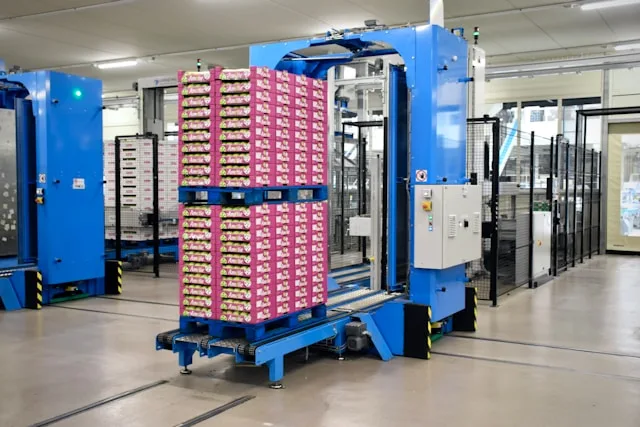
Operators are not waiting for new buildings. They are upgrading the ones they have. Automated storage and retrieval systems, robotic picking, and integrated warehouse management platforms are moving from pilot programmes to full deployment across the industrial zone. This is not speculative. Fondazione Edison and Assologistica documented that 35 to 40% of Marcianise-based logistics firms planned implementation of these technologies through this period.
Here is what the investment forecasts did not account for: the people required to make the technology work. An automated warehouse is not a lights-out warehouse. It requires WMS engineers who can configure SAP EWM or Manhattan Associates platforms, automation technicians who maintain robotic systems, and operations managers who understand both the physical flow and the digital layer simultaneously. Unemployment among qualified WMS specialists in Campania sits below 2%. The automation capital is deployed. The human capital to operate it is not available.
This is the original tension at the heart of Marcianise's logistics market in 2026. The sector has not reduced its workforce through automation. It has replaced one kind of worker with another that does not yet exist in sufficient numbers locally. Every euro spent on warehouse robotics without a parallel investment in talent pipeline development extends the timeline for return on that capital.
Where the Shortages Are Most Acute
WMS Specialists and Operations Managers
The most consequential hiring gap in Marcianise sits at the intersection of technology and operations management. Senior operations roles in the Caserta logistics corridor take an average of 8.4 months to fill, according to Michael Page Italy's 2024 supply chain salary data. SAP EWM specialist roles in the region's 3PL operators typically remain open for six to nine months. Firms frequently resort to temporary contractors at 40 to 50% cost premiums while the permanent search continues.
The passive candidate dynamics make this worse. Hays Italy's Skills Index estimated that 85 to 90% of qualified WMS implementation specialists in Campania are not actively seeking new roles. Among senior operations managers with ten or more years of experience, the passive ratio is 75%. The small number of candidates who are actively looking often represent departures from distressed employers rather than the high-performing talent that direct headhunting methods are designed to reach.
A standard job posting in this market reaches, at best, the 10 to 15% of qualified professionals who happen to be in motion. The other 85% must be identified, approached, and given a reason to consider a move. For an operations director role paying €85,000 to €120,000 in base salary plus performance bonus, the proposition must be specific and credible. Generic outreach does not work in a market this small.
Certified Materials Handling and Hazardous Goods Roles
Below the executive level, the shortage of certified forklift operators with ADR (hazardous goods) certification presents a different kind of constraint. The vacancy rate for specialised materials handling roles requiring this certification reached 34% across Campania. Wholesale distributors serving Centro Commerciale Campania typically experience four to five month delays in staffing dangerous goods handling positions, according to Conftrasporto Campania's freight transport report. Regulatory preference favours permanent staff in these roles, but the reality is heavy reliance on temporary agency workers.
The ADR certification bottleneck is not a training problem that resolves in weeks. It is a regulatory pipeline problem that takes months to clear, and the throughput of newly certified operators does not match the pace at which positions open.
Supply Chain Data Analysts
Job postings for analytics roles in the Caserta logistics corridor increased by 156% between 2022 and 2024. Only 23% of those postings were filled within 90 days. The gap reflects a broader pattern across Italian logistics: as operators digitise their supply chains, they need analysts who can interpret the data those systems produce. The local labour market has not generated these professionals at anything close to the required rate. LinkedIn Economic Graph data confirms what operators on the ground already know. The candidates are not there.
A Compensation Market Caught Between Milan and [Naples](/naples-campania-italy-executive-search)
Marcianise occupies an awkward position in Italy's logistics compensation hierarchy. Senior roles pay 12 to 18% below Milan benchmarks. They pay 8 to 10% above Naples city centre rates. The premium over Naples reflects the concentration of large-scale distribution infrastructure in the Caserta industrial zone. The discount to Milan reflects everything else: career trajectory, international exposure, and the density of multinational headquarters that the north offers.
For an Operations Director at a large 3PL or retail distribution operation, base salary ranges from €55,000 to €72,000 at senior manager level and €85,000 to €120,000 at executive level, the latter typically including a 20 to 30% performance bonus and company car. Supply Chain Directors command €48,000 to €65,000 at senior manager level and €75,000 to €95,000 at executive level, according to Hays and PageGroup Italy salary benchmarks.
At the top of the market, Chief Logistics Officers and country-level logistics managers covering the southern region earn €110,000 to €150,000 plus long-term incentive plans. Korn Ferry's Italy logistics compensation study identified this range. It also identified the constraint that makes these roles extraordinarily difficult to fill: only three to four professionals in the entire Campania region possess the bilingual capability and multi-site management experience that multinational 3PLs operating in Marcianise require.
That figure is worth sitting with. Three to four people. Not three to four hundred. Three to four. This is not a talent shortage that conventional recruitment methods can address. It is a captive market where every qualified candidate is known, employed, and performing.
The IT-logistics hybrid professional category faces particular compensation pressure. These professionals can command €15,000 to €20,000 premiums by relocating to Milan or, increasingly, by working remotely for northern-based firms while remaining in Campania. The remote option is especially corrosive to local retention because it removes the relocation friction that traditionally kept talent anchored. An employer in Marcianise now competes not just with Milan firms willing to relocate a candidate, but with Milan firms willing to let the candidate stay home. Understanding what drives executive compensation in this sector is essential for any organisation trying to construct an offer that holds.
The Talent Drain Runs North, and Now East
Approximately 15% of logistics managers trained in Campania relocate to northern Italy within five years, according to Fondazione Symbola data. The draw is clear: Milan and the Po Valley corridor offer 25 to 35% higher base salaries, multinational headquarters, and the career progression that comes with managing operations at continental scale rather than regional scale.
Rome presents a different competitive dynamic. Compensation runs 8 to 12% above Campania levels, and the high-speed rail connection from Caserta station puts central Rome within 30 minutes. Senior professionals living in northern Caserta province increasingly commute to Rome for roles that offer proximity to regulatory bodies and central government contracts. They do not formally leave the Marcianise talent pool. They simply become unavailable to it during working hours.
The emerging competition from Apulia is newer and less discussed, but it carries a specific risk. Bari and Brindisi offer roughly equivalent compensation to Campania, but new port infrastructure at Taranto and Brindisi, supported by EU-funded logistics parks, is creating an alternative distribution axis for southern Italy. The logistics talent market is increasingly bifurcated between a western corridor anchored by Campania and an eastern corridor anchored by Apulia. Talent arbitrage between the two regions is real and growing. A supply chain director who can manage port-adjacent distribution has options that did not exist five years ago.
For organisations mapping the competitive field for senior logistics talent in Italy, the implication is that Marcianise's addressable candidate pool is smaller than the regional population data suggests. The top of the market is three to four people. The next tier is being pulled toward Milan, commuting to Rome, or considering Apulia. What remains is contested by every operator in the industrial zone simultaneously.
Infrastructure Creates the Demand and the Constraint
Centro Commerciale Campania, with its 180-plus retail tenants requiring daily replenishment logistics, generates a stable and substantial demand floor. The retail complex and its associated distribution operations employ an estimated 800 to 1,000 staff across logistics and retail functions through Gruppo Finiper alone. BRT operates a provincial sorting hub with approximately 180 staff. SDA Express Courier runs a sorting and delivery hub with around 120. Amazon maintains last-mile delivery stations and subcontractor hubs serving the Caserta-Naples corridor.
This density should create resilience. In theory, a concentrated cluster of logistics employers generates a self-reinforcing talent market: workers develop sector-specific skills, employers benefit from a local labour pool, and the cluster deepens over time.
The A1 motorway dependency undermines that resilience. The Napoli Nord to Caserta stretch experiences congestion rates of 28% during peak hours, increasing last-mile delivery costs by an estimated 12 to 15% compared to free-flow conditions, according to Autostrade per l'Italia traffic data. Naples and Caserta province restricted traffic zones prohibit heavy goods vehicle access during daytime hours, typically 07:00 to 19:00. This forces night-shift operations, which raises labour costs and limits the pool of workers willing to accept the schedules.
There is no viable alternative heavy-goods route. A single severe disruption to the A1 would simultaneously incapacitate the retail distribution network and the industrial zone's supply chains. This is a degree of infrastructure fragility that more mature logistics corridors, like those in Emilia-Romagna with redundant rail and road options, have designed out of their systems. Marcianise has not.
The infrastructure constraint also shapes hiring in a less obvious way. An executive considering relocation to lead operations in Marcianise will assess the infrastructure limitations as a professional risk factor. Managing a distribution network with a single arterial road and daytime vehicle restrictions is a harder operational brief than managing one with redundant connections. The role is more demanding, not less, and the compensation does not fully reflect that.
What the Regulatory Environment Adds to the Difficulty
Italy's transport permit system and driver Certificate of Professional Competence requirements create compliance bottlenecks that 23% of Marcianise-based logistics firms cite as their primary barrier to expansion, according to CNA Caserta survey data. Pending Euro 7 vehicle emissions standards threaten to increase fleet renewal costs by 20 to 30% for local distributors. This cost pressure is likely to consolidate market share toward larger national operators with the capital reserves to absorb it, potentially displacing smaller regional firms and the talent they employ.
The seismic classification of Campania as a moderate-to-high risk zone adds another layer. Retrofitting older industrial buildings, specifically the pre-1990s stock that comprises a meaningful portion of Marcianise's warehouse space, costs an estimated €400 to €600 per square metre. This creates a disincentive for logistics investment in heritage industrial buildings and concentrates demand on the limited supply of modern Class A space, which is already at 4.2% vacancy.
The DIA (Anti-Mafia Investigation Directorate) reports ongoing monitoring of logistics tenders in Caserta province, noting documented risks of organised crime infiltration in transport and logistics sectors, particularly through subcontracting and labour supply agencies, as detailed in the DIA's semi-annual report on Campania logistics. For multinational operators, this risk profile shapes both investment decisions and the compliance expertise they require in local leadership. A supply chain director in Marcianise needs operational skills and governance capabilities that would be unnecessary in a logistics role in Veneto or Emilia-Romagna. The role demands more. The market supplies less.
What Hiring Leaders in This Market Need to Do Differently
The Marcianise logistics talent market in 2026 presents a specific challenge that generic hiring strategies will not resolve. The candidate pool for senior roles is exceptionally small. The passive candidate ratios are among the highest in any Italian sector, with 85 to 90% of WMS specialists and 75% of senior operations managers not actively looking. The compensation market sits in an uncomfortable middle ground: too low to compete with Milan on salary alone, too high relative to local cost structures for many SME operators to stretch further.
The sector is projected to add 600 to 800 net new positions by end of 2026. These are not replacing departures. They are net additions to a market that already cannot fill its existing vacancies. The Q4 2024 fill rate across the Caserta logistics corridor stood at 62%. That means 38% of posted roles went unfilled. Adding several hundred more openings to a market with a 38% unfilled rate does not produce a hiring wave. It produces a hiring crisis.
The cost of leaving critical roles vacant in a market structured like this is not just the direct expense of temporary contractors at 40 to 50% premiums. It is the stranded automation capital. It is the warehouse robotics system running at 60% capacity because no one on site can configure it properly. It is the supply chain data that gets collected but never analysed because the analyst role has been open for seven months.
For the specific challenge of leadership recruitment across industrial and manufacturing operations in southern Italy, the conventional approach of posting a role, screening applicants, and building a shortlist from inbound interest will reach a fraction of the available talent. In Marcianise, that fraction is closer to 10% than 25%.
KiTalent's approach to this market begins with AI-enhanced talent mapping that identifies the passive professionals who will never appear on a job board. With interview-ready candidates delivered within 7 to 10 days and a pay-per-interview model that removes the upfront retainer risk, the method is designed for exactly the kind of constrained, passive-dominated market that Marcianise represents. The 96% one-year retention rate for placed candidates reflects the depth of candidate assessment before introduction, not just speed of delivery.
For organisations competing for the three to four bilingual, multi-site logistics leaders in Campania, or for the WMS engineers whose unemployment rate sits below 2%, speak with our executive search team about how we identify and reach the candidates this market makes invisible to conventional methods.
Frequently Asked Questions
What is the average time to fill a senior logistics role in Marcianise?
Senior operations management roles in the Marcianise and Caserta logistics corridor take an average of 8.4 months to fill, according to Michael Page Italy salary data. SAP EWM specialist positions typically remain open for six to nine months. This extended timeline reflects the extremely high passive candidate ratio in the market, with 85 to 90% of qualified WMS specialists not actively looking for new roles. Firms frequently engage temporary contractors at 40 to 50% cost premiums during the search period, making the total cost of a delayed hire considerably higher than the salary saving from a longer process.
What do senior logistics executives earn in the Caserta province?
Operations Directors at large 3PL or retail distribution operations in Marcianise earn €85,000 to €120,000 at executive level, typically with a 20 to 30% performance bonus and company car. Supply Chain Directors command €75,000 to €95,000 at executive level. Chief Logistics Officers covering the southern region earn €110,000 to €150,000 plus long-term incentive plans. These figures track 12 to 18% below Milan benchmarks but 8 to 10% above Naples city centre, reflecting the specific concentration of large-scale distribution infrastructure in the area.
Why is warehouse automation creating a talent shortage rather than reducing headcount?
Automation in Marcianise's logistics sector is projected to eliminate 15 to 20% of entry-level manual roles while simultaneously creating demand for over 200 technical maintenance and WMS specialist positions. The specialists required to configure, maintain, and optimise automated systems do not exist in sufficient numbers locally. Unemployment among qualified WMS specialists in Campania is below 2%. The net effect is not workforce reduction but workforce transformation, and the transformation is outpacing the local supply of qualified professionals.
How does KiTalent approach hiring in passive candidate markets like Marcianise?
KiTalent uses AI-powered talent identification to map professionals who are employed, performing, and not visible on any job board. In markets where 75 to 90% of qualified candidates are passive, this direct search method reaches the full talent pool rather than the small fraction that traditional job advertising can access. Candidates are delivered interview-ready within 7 to 10 days, with a pay-per-interview pricing model that removes upfront retainer risk for the client.
What are the main competitors for logistics talent in Campania?
Marcianise competes with three primary markets. Milan and the Po Valley offer 25 to 35% higher salaries and multinational career paths, drawing approximately 15% of Campania-trained logistics managers within five years. Rome, accessible via 30-minute high-speed rail from Caserta, attracts senior professionals with 8 to 12% pay premiums and proximity to government contracts. Bari and Brindisi represent newer competition, with EU-funded port infrastructure creating an alternative distribution axis for southern Italy at roughly equivalent compensation levels.
What regulatory factors affect logistics hiring in the Caserta province?
Italy's transport permit system and driver CPC certification requirements create compliance bottlenecks that 23% of local firms cite as their primary expansion barrier. Pending Euro 7 emissions standards may increase fleet renewal costs by 20 to 30%, potentially consolidating the market toward larger operators. Naples and Caserta province restricted traffic zones prohibit heavy vehicle access during daytime hours, forcing night-shift operations that increase labour costs and narrow the available workforce. These regulatory conditions mean that senior logistics leaders in this market need governance and compliance expertise beyond standard operational capability.