Why Marcianise is a deceptively difficult executive market
Searches in Marcianise are managed from KiTalent's Turin hub, with support from our other hubs when the candidate pool crosses markets. Marcianise looks, from the outside, like a hiring market defined by volume. Three Amazon fulfilment centres. A DHL hub. An Esselunga distribution centre that added 600 jobs in 2025 alone. Unemployment has fallen from 12.4% to 9.8% in three years. The temptation is to treat this as a straightforward logistics recruitment challenge. That assumption fails at the senior level.
The executives who run these operations, who lead the automation programmes, who manage the environmental compliance and the cross-border freight corridors, are a fundamentally different population from the warehouse staff that dominates Marcianise's employment statistics. They are scarce. They are concentrated in a small number of competing employers. And most of them are already performing well enough that no job posting will reach them.
The ASI Marcianise is 94% occupied. Industrial land prices have reached €85 to €120 per square metre, among the highest in Southern Italy. This scarcity is not just a real estate problem. It is a leadership problem. When Dachser and Geodis acquire local trucking firms to secure last-mile access to the Naples metro area, they need operational directors who understand both the physical constraints of a saturated zone and the regulatory complexity of expanding into neighbouring municipalities like Recale and Portico di Caserta. Those leaders are not browsing job boards. They are embedded in the firms already operating here, and reaching them requires direct headhunting built on individually crafted outreach.
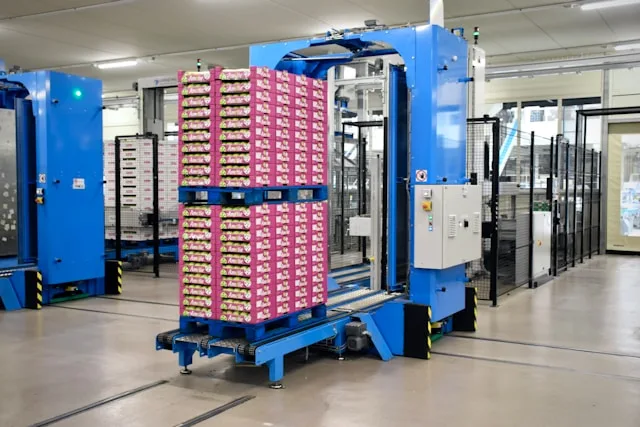
The deployment of AI-driven yard management systems, autonomous mobile robots in Amazon and DHL facilities, and the hydrogen logistics pilot funded by the PNRR is creating a new category of executive role. Marcianise's employers no longer need traditional warehouse general managers. They need leaders who can run a 5G-connected industrial zone, integrate predictive maintenance algorithms, and manage a workforce transitioning from manual handling to cobot operation. The DIGI-MECH Lab, launched in 2025, exists precisely because this skills gap is real. But the lab trains technicians. The senior leaders who design and oversee these transformations are a different search altogether.
Sixty per cent of Interporto employees commute from Naples, Caserta, and Maddaloni. This means the executive population is dispersed across a wide metropolitan area. It also means that any search limited to Marcianise itself will miss the majority of relevant candidates. The professionals who lead supply chain operations here live across Campania, and some of the most capable have been recruited from Northern Italian logistics hubs or from international operators entering the Southern Italian market. Mapping this dispersed, mobile population before a mandate begins is not optional. It is the foundation of a credible talent mapping exercise.
These dynamics are why a transactional search model fails in Marcianise. The market requires a Go-To Partner approach: continuous intelligence, pre-existing relationships with the passive majority of senior talent, and the ability to present calibrated shortlists before competing employers fill the same narrow pool.