

Lake Como Luxury Hospitality Hiring in 2026: A Labour Market Split in Two
Lake Como's luxury hospitality sector earned average daily rates of €890 in 2024. That figure rose 12% year on year, driven by American and Middle Eastern visitors who now...
Como, Italy Executive Search
KiTalent brings sector-specific intelligence and direct headhunting capability to senior leadership searches across Como.
Track record on suitable mandates: 7–10 working days to validated shortlist · 96% one-year retention · NPS 72. How we measure performance.
Searches in Como are managed from KiTalent's Turin hub, with support from our other hubs when the candidate pool crosses markets. From the outside, Como looks like a small city with a narrow set of industries. That appearance misleads. The executive talent market here is shaped by forces that make conventional search methods especially ineffective: a specialised industrial district where everyone knows everyone, a Swiss border that drains skilled workers, and seasonal demand cycles that compress hiring windows into unpredictable bursts.
Job postings in Como produce thin response rates for senior roles. The professionals who run textile finishing operations, lead hotel portfolios, or manage export sales into volatile luxury markets are not scanning career sites. They are embedded in roles they have held for years, often at family-owned firms where loyalty runs deep. Reaching them requires direct headhunting grounded in sector-specific relationships, not database queries.
The Distretto Serico comprises roughly 1,376 companies and 15,515 employees. That is a large cluster by national standards, but a small professional community by any measure. A Head of R&D at Mantero knows the production director at Ratti. A sustainability officer at one converter has worked with the chemical suppliers used by half the district. Approaching candidates clumsily here does not just fail to produce results. It damages the client's reputation in a market where the next hire, supplier, or customer is often the same person. Every search in Como's textile sector must be conducted with the care of a confidential transaction, because that is exactly what it is.
An estimated 28,000 workers from the Como province cross into Switzerland daily as frontalieri. Swiss wages for technical and managerial roles routinely exceed Italian equivalents by 40% or more, with favourable tax treatment adding further pull. This does not just reduce the available pool of mid-career professionals. It creates a compensation distortion that makes standard Italian salary benchmarks almost useless for senior hires in Como. Any search that does not account for cross-border wage dynamics will produce offers that candidates politely decline.
Como's textile exporters saw U.S.-bound shipments rise 12.1% in the first nine months of 2025, yet firms like Ratti reported revenue declines tied to global luxury demand softening. Tourism presences in the city grew 137% between 2009 and 2024, but that growth concentrates in a six-month window that compresses hiring timelines to the point where a three-month search process means missing an entire season. When demand shifts, the firms that have already identified and pre-qualified candidates act. Everyone else waits for the next cycle. These dynamics explain why a Go-To Partner approach built on continuous market intelligence, not reactive search, is the only model that consistently delivers results in a market this specialised and this interconnected.
Como is not one talent pool. It is a set of overlapping professional communities, each with distinct compensation norms, career patterns, and competitive dynamics. A search methodology that works for a textile R&D director will not work for a hospitality general manager. The following sectors define the executive market here.
Design, finishing, printing, and supply-chain leadership for the Distretto Serico and its global luxury clients. Luxury and retail executive search
General management, revenue optimisation, and experiential programming for Lake Como's premium hotel and tourism market. Travel and hospitality executive search
Plant leadership, process automation, and operations management for the machinery and component SMEs in Como's hinterland. Industrial manufacturing executive search
Senior roles in the restaurant, catering, and artisan food operations that serve both residents and the visitor economy. Food, beverage, and FMCG executive search
Product management, digital design, and sustainability technology leadership for the emerging textile-tech and smart-tourism ecosystem. AI and technology executive search
Como's executive search market is strongest where its economic specialisation is deepest.
The silk and textile cluster remains Como's economic identity. Global luxury houses increasingly want to own or control their upstream supply chains, as Chanel's acquisition of a 35% stake in Mantero in April 2025 demonstrates. This vertical integration trend is creating demand for leaders who can bridge artisanal production with corporate governance standards set in Paris or Milan.
The provinces of Como and Lecco recorded approximately 4.3 million overnight presences in 2024. Growth is real, but so is strain: overtourism concerns are driving policy conversations about short-stay regulation, zoning, and service capacity. Hospitality operators need general managers who can optimise yield across compressed seasons, manage regulatory risk, and build off-season revenue…
The hinterland towns of Guanzate, Lomazzo, and Grandate host a cluster of SMEs producing textile machinery, precision components, and automation systems. These firms feed the local textile value chain but also supply broader Lombard industrial networks. Plant directors, mechatronics engineers at senior level, and operations leaders with process-automation expertise are consistently difficult…
Industrial, Manufacturing, and Robotics · Industrial Automation
The launch of FilidInnovazione in early 2025, combined with PNRR-funded NODES activities at ComoNExT and the University of Insubria, signals an emerging ecosystem for textile digitisation, circularity, and material research. These ventures need leaders who can translate research capability into commercial output: chief technology officers, heads of innovation, and product managers with…
Nearly every senior hire in Como touches an international dimension. Textile firms export to global luxury houses. Hotels serve predominantly foreign guests.
Companies rarely need only reach in Como. They need interpretation, calibration, and a search architecture that reflects the real structure of the market.
Our team runs Como mandates through KiTalent's four regional hubs, combining local market intelligence with cross-border execution across Europe, the Americas, the Middle East, and Asia Pacific.
The strongest executives in Como are passive. Our direct headhunting approach engages the passive majority of senior talent through discreet outreach rooted in real market knowledge.
Our parallel mapping methodology means we already hold live intelligence on restructuring, transition windows, compensation patterns, and candidate attraction opportunities when a brief arrives.
In Como, the cost of a wrong executive hire extends far beyond the recruitment fee. Our Proof-First Search model lets clients see real market output and qualified candidates before the bulk of the investment is committed.
Related city stories from the same regional talent cluster.
Bergamo is Lombardy's third-largest provincial economy, built on precision manufacturing, a globally connected airport logistics corridor, and an innovation district that links…
Brescia is one of Italy's most concentrated advanced manufacturing economies: roughly 116,000 registered enterprises, a precision engineering cluster with deep roots in Val…
Busto Arsizio is the operational spine of the Malpensa air cargo corridor and one of Lombardy's most concentrated precision manufacturing districts. With 1,200 mechatronics and…
Milan's northern corridor has quietly become one of Lombardy's most complex hiring environments. Cinisello Balsamo sits at the intersection of advanced manufacturing, logistics…
These resources provide deeper market intelligence and explain how KiTalent turns insight into a faster, more transparent search process.
Lake Como's luxury hospitality sector earned average daily rates of €890 in 2024. That figure rose 12% year on year, driven by American and Middle Eastern visitors who now...
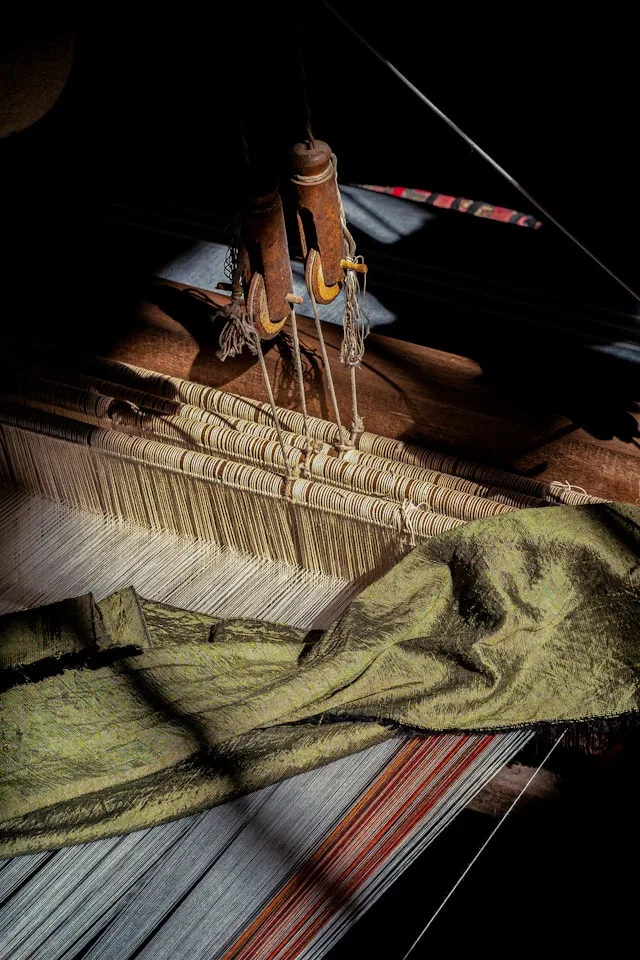
Como province generates €1.5 billion annually from silk and luxury textiles. More than 80% of that revenue comes from export markets. France alone absorbs nearly a third of the...

The precision mechanics district spanning Como and Lecco provinces generated over €9 billion in aggregate turnover across 3,200 enterprises in 2024. Export penetration reached...
Use these pages to navigate between parent markets, sector pages, and supporting articles.
These are the questions most closely tied to how executive search really works in Como.
Como's executive talent pool is smaller and more specialised than its economic output suggests. The textile district employs over 15,000 people across roughly 1,376 firms, but the senior leaders within that cluster know each other and rarely respond to job advertisements. The additional pressure of 28,000 frontalieri crossing into Switzerland daily further depletes the local pool of experienced managers. Companies use executive recruiters because the candidates they need are employed, satisfied, and invisible to conventional methods. A search partner with pre-existing relationships in the district and cross-border market intelligence is the only reliable path to a strong shortlist.
Milan offers scale and anonymity. Como offers neither. In Milan, a recruiter can approach ten candidates at competing firms without anyone noticing. In Como's textile district, a single poorly handled outreach can become common knowledge within days. Compensation dynamics are also different: Milan benchmarks against national and European financial-centre norms, while Como benchmarks against Swiss cross-border wages and the specific economics of artisanal manufacturing. The search methodology must be calibrated to a market where discretion, sector expertise, and speed matter more than reach.
We begin with the intelligence we have already built. Our team maintains continuous talent mapping across Italy's luxury textile, hospitality, and manufacturing sectors, tracking career movements and compensation evolution in real time. When a Como mandate arrives, we are not starting from zero. We identify and engage candidates through direct, confidential outreach designed for a market where reputation is currency. Every search includes full market benchmarking that accounts for Swiss cross-border dynamics and district-specific compensation norms.
Our standard is 7 to 10 days from mandate confirmation to a qualified shortlist of interview-ready candidates. In Como, this speed is possible because we have already mapped the relevant talent populations before the brief arrives. The alternative in this market is a search that stretches across two or three months, during which the best candidates accept other offers, seasonal windows close, and the cost of a vacant leadership seat compounds.
The frontalieri effect is the single most underestimated factor in Como hiring. An estimated 28,000 workers from the province commute to Switzerland, drawn by wages that can exceed Italian equivalents by 40% or more. For executive roles, this creates a dual challenge: the local pool of experienced managers is smaller than demographic data suggests, and compensation expectations are shaped by Swiss, not Italian, benchmarks. Any search that ignores this dynamic will fail at offer stage. Effective recruitment here requires compensation intelligence that spans both sides of the border and a value proposition that goes beyond salary to address career scope, autonomy, and quality of professional life.
Whether you are building a leadership team or filling a succession gap in Como, we can help you map the talent landscape, calibrate the brief, and reach the passive candidates who will not surface through any other method.
What we bring to Como executive mandates:
Executive search and direct headhunting · Talent mapping and market intelligence · Compensation benchmarking and mandate calibration · Connection to KiTalent's four regional hubs, Proof-First Search, and our international executive search network.
Whether you are running a live mandate or want to pressure-test a brief before going to market, this is the right place to start the conversation.
Author of record: Milena Vitale, Associate Director. Based on local market intelligence and executive-search data.
Share your CV and a sentence on the mandate types you'd consider. We respond within five working days.