Como's Silk District Is Exporting at Record Levels While Its Workforce Disappears
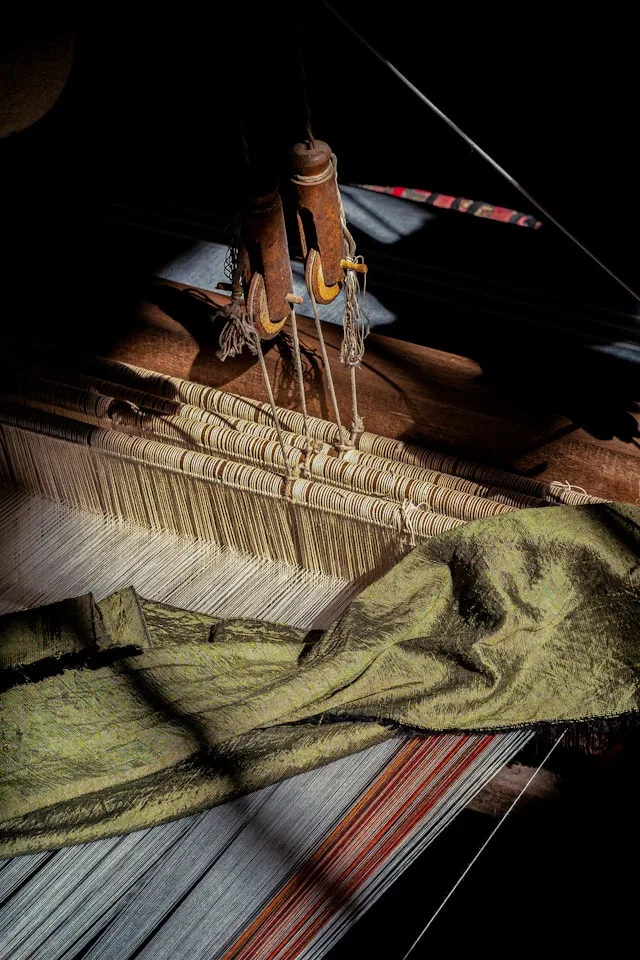
Como province generates €1.5 billion annually from silk and luxury textiles. More than 80% of that revenue comes from export markets. France alone absorbs nearly a third of the district's output, feeding the supply chains of the world's most prestigious fashion houses. By every commercial measure, the district is thriving.
Yet 38% of the technical workforce is over 55. Master finishers and loom technicians are retiring at a rate of 12% per year. Chemical engineer vacancies sit unfilled at triple the district's general unemployment rate. Digital textile technician searches at major printing houses run eight to twelve months, with 40% failing to close entirely. The sector's global success has not translated into local talent attraction. It has, in fact, obscured the depth of the problem.
What follows is a ground-level analysis of Como's silk and luxury textiles hiring market in 2026: where the shortages are most acute, why they resist conventional solutions, and what the demographic trajectory means for organisations that depend on this district's output. The companies best positioned to act are those that understand the talent market's structure before they enter it.
The Commercial Paradox: Record Exports, Collapsing Talent Pipeline
Como's silk district delivered 12% value growth between 2021 and 2023, a trajectory that continued modestly into 2025 with 2-3% annual gains in line with McKinsey's State of Fashion projections. That growth has now carried into 2026, supported by European luxury groups actively nearshoring production away from Asian supply chains.
The commercial picture masks a deeper dysfunction. Enrollment in ITS TAM textile technology programmes in Como declined 15% between 2020 and 2024. The apprenticeship pipeline managed through the Como campus processes 120 to 150 students annually, a number that has not kept pace with retirement volumes. The district is producing luxury goods at a rate its workforce cannot sustain.
This is the paradox at the centre of Como's textile economy. The sector's export success depends on capabilities held by a generation that is leaving. The generation replacing them is smaller, differently skilled, and increasingly drawn to Milan, where equivalent digital design roles pay 25-35% more. The commercial engine is running well. The human infrastructure beneath it is eroding.
Graduate Attraction: The Sector's Invisible Ceiling
A 22-year-old graduate in Lombardy choosing between a digital design role at a Como printing house and a comparable position at a Milan fashion headquarters faces a straightforward calculation. Milan offers higher compensation, faster career progression toward brand-side leadership, English-language working environments, and proximity to the headquarters of LVMH, Kering, and Prada Group. Como offers deep craft expertise, proximity to production, and a lifestyle advantage that matters more at 40 than at 22.
The result is measurable. Como firms lose 40% of under-35 digital design graduates to Milan within three years, according to Unioncamere Lombardia's professional flow data. The district is functioning as a training ground for talent that matures elsewhere. This pattern would be manageable if the incoming cohort were large enough to absorb the attrition. It is not.
The Demographic Cliff Behind the Numbers
The phrase "aging workforce" appears in nearly every manufacturing sector report in Europe. In Como's silk district, the specifics make it more than a cliché.
Thirty-eight percent of the technical workforce is aged 55 or older. The 12% annual retirement rate among master finishers and loom technicians is not a projection. It is a rate observed through 2024 and expected to continue through 2027, according to ENAIL Lombardia's workforce analysis. These are not administrative roles that can be backfilled through conventional recruitment. A master printer with hand-screen expertise specific to Como's heritage techniques holds knowledge that takes a decade to acquire and exists in no formal training programme.
The retirement wave is removing tacit knowledge from the district. Younger workers entering the sector are digitally native but lack the craft foundation that underpins quality consistency in heritage silk production. The Fondazione Museo della Seta's Heritage Skills Audit identified this as a quality risk, not merely a staffing risk. When a master finisher retires without transferring technique, the capability leaves with them permanently.
The Compression Between Heritage and Digital
The district now operates two production systems in parallel. Traditional rotary printing and hand-screen techniques serve the highest-value luxury orders. Digital textile printing, which accounts for 35-40% of sample production and 15-18% of bulk production as of late 2025, serves the growing demand for faster turnaround and customisation.
Each system requires a different workforce. Heritage craft roles demand years of apprenticeship and physical proximity to master practitioners. Digital roles demand proficiency in NedGraphics Texcelle, Lectra Kaledo, and Adobe Textile Designer, along with colour separation expertise specific to textile substrates. The district needs both. It is struggling to find either.
The investment in digital finishing equipment, forecast at €45-50 million across the district in 2025-2026, has not reduced the workforce requirement. It has replaced one category of worker with another that does not yet exist in sufficient numbers locally. Capital moved faster than human capital could follow.
Three Roles the District Cannot Fill
Digital Textile Designers
Demand for CAD/CAM specialists proficient in NedGraphics, Lectra Kaledo, and Adobe Textile Designer exceeds supply by approximately three to one. Average time-to-fill for senior digital pattern designers runs 4.5 to 6 months, nearly double the 2.5-month average for traditional designers. Major printing houses report digital textile technician roles remaining open for 8 to 12 months, with 40% of searches failing entirely and requiring interim contractors at a 35-45% cost premium.
The quality mismatch compounds the volume shortage. Entry-level digital design roles attract active candidates at a 60% ratio. But high application volume masks poor fit. Graduates arrive with generic CAD proficiency but lack the textile-specific colour separation and substrate knowledge that production demands. The gap between "can use the software" and "can prepare a production-ready digital print file for silk" is measured in years of specialist experience.
Chemical Engineers in Textile Finishing
The district shows an 18% vacancy rate for chemical process manager roles, against 6.2% general unemployment in the sector. These engineers manage enzymatic finishing, digital ink chemistry, wastewater treatment, and REACH compliance simultaneously. The skill combination is rare. The talent pool is predominantly passive, with average tenures of 8 to 12 years and minimal presence on job portals.
Recruitment in this category relies almost entirely on direct search and industry referral networks. Approximately 70-80% of placements are sourced through headhunters or internal referrals rather than applications. A conventional job posting for a senior finishing engineer in Como reaches, at best, 20-30% of the viable candidate pool. The remainder must be identified and approached directly.
Como-based firms have begun poaching finishing specialists from Biella's wool district and Prato's textile cluster, offering 20-25% salary premiums plus relocation packages. This solves individual searches but intensifies competition across Italian textile districts without expanding the total supply.
Supply Chain Sustainability Managers
The newest scarcity category is also the most acute. Roles requiring expertise in Life Cycle Assessment, Higg Index FEM, EU Digital Product Passport compliance, and blockchain traceability have proliferated since 2022, with 60% of major firms creating C-suite adjacent sustainability positions. KPMG Italy's 2024 supply chain survey, citing Como district respondents, described the local talent pool for these roles as "effectively zero."
This forces firms into two options: recruit from Milan at a cost premium that reflects both the salary differential and the candidate's perceived career risk of moving to a smaller market, or recruit internationally. Neither option is fast. Both require a search methodology that reaches professionals who are not looking.
The Compensation Equation: Como vs. Milan vs. Switzerland
Compensation in Como's silk district operates under three competing gravitational forces. Milan pulls digital and sustainability talent east with 25-35% salary premiums. Switzerland pulls executive and R&D talent north with 60-80% higher net compensation and favourable cross-border tax regimes. Como itself offers lower cost of living, roughly 15-20% below Milan, but this discount is insufficient to offset the salary gap at junior and mid-career levels where financial obligations are highest.
The figures tell a specific story. A senior digital textile designer in Como earns €42,000 to €58,000. The same profile in Milan commands €55,000 to €78,000. A Technical Director in Como earns €95,000 to €140,000, with a 20-25% premium for candidates carrying Hermès, LVMH, or Kering supplier experience. A General Manager of a mid-size firm in the €30-80 million revenue range earns €120,000 to €180,000 in total compensation.
Heritage craft roles illustrate a different dynamic. A master printer specialising in high-definition hand-screen techniques earns €38,000 to €52,000, with a 30-40% premium for skills specific to Como's traditions. These premiums exist because the skills cannot be sourced elsewhere. They are not competitive against Milan or Swiss alternatives. They are monopoly pricing for capabilities that exist in a shrinking number of individuals.
The Swiss border, only 30 kilometres north, creates the most disruptive pressure at the senior level. The Ufficio di Statistica del Canton Ticino's cross-border worker data shows a pattern consistent with what Osservatorio del Lavoro Frontaliero describes as "hollowing out" of Como's senior executive tier. Production facilities remain in Como. The leaders who run them increasingly live and are compensated in Switzerland. For organisations trying to recruit executive talent into Como-based roles, this creates a proposition challenge that salary alone cannot resolve. The role must offer something a Swiss-based position cannot: direct ownership of production heritage, creative autonomy, or a seat at the table of a company's transformation.
The Sustainability Paradox and the Hollowing-Out Risk
Como's luxury textile sector markets itself as an integrated cluster delivering sustainable, heritage-quality production. Eighty-five percent of major exporters have achieved or are pursuing OEKO-TEX Standard 100 and GOTS certification, driven by the supplier requirements of LVMH, Kering, and Hermès. The narrative is compelling. The economics behind it tell a more complicated story.
Italian industrial electricity costs of €0.28 to €0.32 per kilowatt hour are 40-50% above French rates and 60% above Portuguese textile regions, according to Eurostat's industrial consumer electricity data. Energy-intensive dyeing and finishing operations bear the full weight of this disadvantage. The EU Industrial Emissions Directive 2024/1785 requires textile finishing facilities to achieve Best Available Techniques compliance by 2027, mandating closed-loop water systems at an estimated district-wide cost of €85-120 million.
The result is quiet nearshoring. Volume production has partially migrated to Como-managed facilities in Romania's Bihor region and along the Lugano corridor into Switzerland. Como retains high-value finishing, sample production, and R&D. But the tension between marketing "100% Como craftsmanship" and the economic reality of partial delocalisation is growing more difficult to sustain.
This tension has direct talent implications. The finishing jobs that migrate to Romania do not return. The engineers and technicians who would have filled those roles in Como now have fewer positions to occupy locally. The district's total headcount is projected to contract by 1-2% through 2026, but the composition shift is more important than the net change: technical-specialist roles are growing by 8% in projected demand, while production operative positions are declining by 5%. The district is becoming smaller and more specialised simultaneously.
For hiring leaders, this means the roles that remain in Como are harder to fill than the roles that left. The cost of a failed senior hire in a district where every specialist knows every other specialist is measured not just in recruitment fees but in reputational damage within a tightly networked community.
What This Means for Organisations Hiring in Como's Textile District
The executive search challenge in Como is not a generic talent shortage. It is a market with three specific structural characteristics that conventional hiring methods cannot address.
First, the candidate pool for the most critical roles is overwhelmingly passive. Chemical engineers, master finishers, and senior technical directors maintain tenures of 8 to 12 years. They do not browse job boards. They do not attend recruitment fairs. They are known to their peers and to the headhunters who work this market consistently. An organisation relying on advertised vacancies in Como's textile sector is reaching at most 20-30% of the viable candidate population.
Second, the compensation differential with Milan and Switzerland means that any offer to a senior candidate must include a proposition beyond salary. A Technical Director earning €140,000 in Como could earn €180,000 or more across the Swiss border with favourable tax treatment. The candidate who stays or moves to Como is making a lifestyle and career-stage decision. The search process must identify candidates for whom that decision is natural rather than trying to overcome a financial gap with a counteroffer.
Third, the demographic urgency creates a compressed timeline. Every year of delay in filling a senior technical role means another cohort of heritage knowledge exits the district without transfer. A search that runs 12 months for a digital finishing specialist is not merely slow. It is a permanent capability loss for the organisation.
KiTalent works with organisations across luxury goods and manufacturing sectors facing exactly this combination of passive candidate markets, cross-border compensation pressure, and specialist skill scarcity. The firm's AI-enhanced talent mapping methodology identifies candidates who are not visible through conventional channels. Its pay-per-interview model means clients invest only when they meet qualified candidates, with interview-ready shortlists delivered within 7 to 10 days. Across 1,450 executive placements completed globally, KiTalent maintains a 96% one-year retention rate, a metric that reflects the precision of candidate-to-role matching rather than volume.
For organisations competing for textile finishing engineers, sustainability directors, or creative leadership in Como's silk district, where the candidates you need have worked at the same firm for a decade and have never appeared on a job board, speak with our executive search team about how we approach this market.
Frequently Asked Questions
What is the average salary for a senior textile designer in Como in 2026?
A senior digital textile designer with 8 to 12 years of experience in Como earns €42,000 to €58,000 in base salary. Creative Directors and Design Leads earn €75,000 to €110,000, often with bonus structures tied to collection commercialisation. These figures sit 15-20% below equivalent Milan roles, reflecting Como's lower cost of living. Candidates with direct experience supplying Hermès, LVMH, or Kering command premiums of 20-25% above market median. The compensation gap with Milan narrows at senior levels where proximity to production becomes a genuine career differentiator.
Why is it so difficult to hire chemical engineers for textile finishing in Como?
Como's textile finishing sector requires chemical engineers who combine enzymatic treatment expertise, digital ink chemistry, wastewater management, and REACH regulatory compliance. This combination is rare globally and rarer still with silk-specific experience. The vacancy rate for chemical process managers in the district runs at 18%, triple the sector's general unemployment rate. Average tenures of 8 to 12 years mean these professionals rarely appear on job markets. Approximately 70-80% of placements in this category come through direct headhunting or industry referral rather than job applications.
How does Como compete with Milan and Switzerland for luxury textile talent?
Como cannot match Milan's 25-35% salary premium for digital and sustainability roles or Switzerland's 60-80% net compensation advantage for executive positions. Instead, Como's value proposition centres on production proximity, heritage craft depth, and creative autonomy unavailable in corporate headquarters settings. At senior career stages, this proposition is genuinely compelling. For under-35 professionals, however, it is insufficient: 40% of young digital design graduates leave for Milan within three years.
What sustainability regulations are affecting Como's textile sector in 2026?
Two major EU regulations are reshaping the district. The Industrial Emissions Directive 2024/1785 requires Best Available Techniques compliance for finishing facilities by 2027, mandating closed-loop water systems at an estimated district cost of €85-120 million. The EU Digital Product Passport, effective in phases from 2027 to 2030, requires full traceability infrastructure. For Como's SMEs, which comprise 70% of the district, these requirements create both capital burden and demand for sustainability professionals who are in critical shortage locally.
How can executive search firms help luxury textile companies hire in Como?
Como's senior talent market is 70-80% passive. The most capable chemical engineers, technical directors, and heritage craftspeople have long tenures and no presence on recruitment platforms. KiTalent's AI-enhanced talent mapping identifies these professionals through systematic market analysis rather than advertising. The firm's methodology reaches candidates across Como, competing Italian textile districts, and cross-border markets. Interview-ready candidates are typically presented within 7 to 10 days, compressing timelines that conventionally run 4 to 12 months in this sector.
What is driving the retirement crisis in Como's silk industry?
Thirty-eight percent of Como's technical textile workforce is aged 55 or older, with master finishers and loom technicians retiring at 12% annually. This rate reflects the post-war generation that built the district's reputation exiting without full skills transfer. Heritage techniques such as hand-screen printing and traditional jacquard programming require a decade of apprenticeship and are not captured in any formal curriculum. The Fondazione Museo della Seta has identified the loss of tacit craft knowledge as the district's most pressing long-term risk.