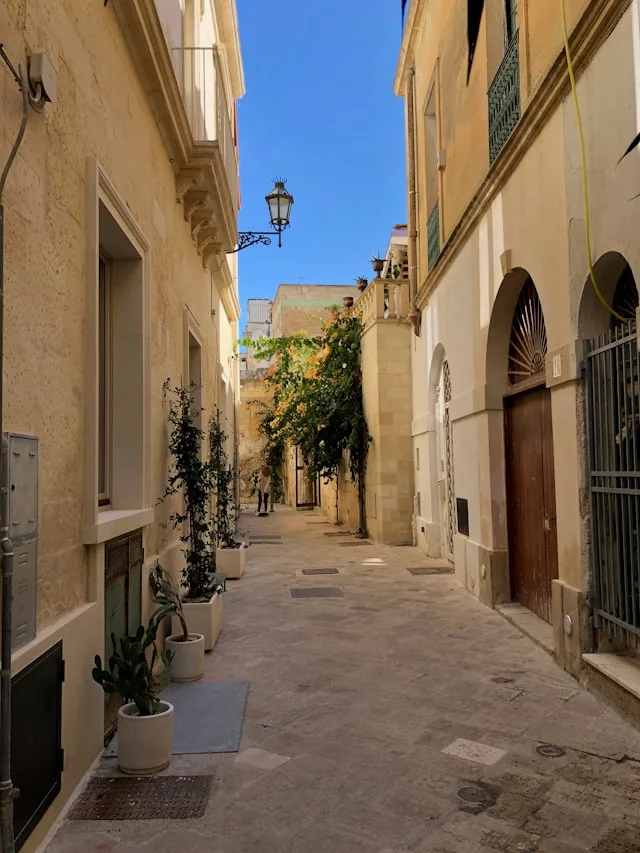
Lecce, Italy Executive Search

Executive Search in Lecce

KiTalent brings sector-specific intelligence and direct headhunting capability to senior leadership searches across Lecce.

Track record on suitable mandates: 7–10 working days to validated shortlist · 96% one-year retention · NPS 72. How we measure performance.

Why Lecce is a deceptively complex executive market

Searches in Lecce are managed from KiTalent's Turin hub, with support from our other hubs when the candidate pool crosses markets. Post a senior role on a generalist platform in Lecce and the response will fall into two categories. You will receive applications from candidates who are available because they operate in the seasonal hospitality economy. And you will hear nothing from the aerospace engineers, heritage data scientists, and agri-biotech directors who are actually building the city's next decade. The visible candidate pool here is misleading. The talent that matters is embedded in research institutes, spin-offs, and niche manufacturing firms that do not advertise their people.

Lecce's GDP per capita reached an estimated €24,800 in 2026, narrowing the gap with Italy's national average of €32,100. That convergence is driven by two engines running in parallel: heritage-tech and cultural tourism on one side, aerospace R&D and precision bio-economy on the other. Each engine demands a fundamentally different kind of leader. A Chief Sustainability Officer for a luxury hotel group in the Baroque Quarter has almost nothing in common with an Aerospace Project Integration Manager coordinating between Lecce's photonics labs and Leonardo S.p.A.'s supply chain in Brindisi. Yet both roles draw from the same small city. Search firms that treat Lecce as a single market miss this duality entirely.

The University of Salento and CNR institutes (ISASI for photonics, IBAM for cultural heritage science) are the real talent incubators here. The SpinUni programme graduated eight startups in 2025, raising a combined €22 million. Companies like ArtVisio and OleaSense emerged from lab benches, not from corporate leadership programmes. This means the executive candidates in Lecce's growth sectors are often researcher-entrepreneurs. They respond to scientific credibility and strategic vision, not to generic recruiter outreach. Reaching them requires direct headhunting built on individual, informed engagement.

Lecce's working-age population with tertiary education sits at 31%. The senior professional community within aerospace, heritage-tech, and agri-biotech is even smaller. Confindustria Lecce, the Technological District of Apulia, and the university's spin-off network function as overlapping circles. A poorly managed search process, a withdrawn offer, or a candidate treated as an afterthought will be known across these networks within days. This is a market where employer brand protection is not a luxury. It is a prerequisite for being taken seriously on the next mandate. These dynamics make Lecce a market where the Go-To Partner model outperforms transactional recruitment. Success depends on pre-existing intelligence, sector fluency, and a process that earns trust in a tight community.


What is driving executive demand in Lecce

Several structural forces are converging to shape executive demand across Lecce.

Aerospace, photonics, and advanced engineering

Lecce controls the R&D layer of a supply chain whose heavy manufacturing sits 40 kilometres away in Brindisi and Grottaglie. CNR-ISASI employs 280 staff. The Lecce Aerospace Lab, co-funded by the Apulian High Technology District, shifted from pure research to prototyping for Leonardo S.p.A. and Thales Alenia Space in 2025. Over 45 SMEs now specialise in photonic sensors, drone avionics, and composite materials testing. The leadership demand here is for integration managers who can bridge lab-stage innovation with industrial-scale production. KiTalent's aerospace, defence, and space practice works with exactly this profile: technically credible leaders who can operate across research and production cultures simultaneously.

Heritage-tech and creative industries

The Baroque Living Lab initiative, a collaboration between the Municipality and CNR-IBAM, has turned Lecce's historic centre into a testing ground for AR tourism and AI-driven conservation. Inglobe Technologies leads in augmented reality for cultural heritage. Roughly 12% of Italy's heritage-tech startups are now Salento-based. This converges with Lecce's traditional leather and design district, where firms like Cuoieria Fiorentina are experimenting with digital fashion and Web3 integration for "Made in Salento" branding. Creative Directors who understand both traditional craftsmanship and digital product development are in high demand. Our luxury and retail and AI and technology sector teams regularly encounter this hybrid profile in cross-sector searches.

Agri-tech and the circular bio-economy

The Salento Olive Oil District lost vast tracts of productive groves to Xylella fastidiosa. The recovery effort has accelerated precision agriculture adoption. The Bioindustry Park in Monteroni hosts AgriSalento 4.0, and 2025 saw a €14 million Series B for XylellaGuard (plant-health biotech) alongside French group AgriNovus establishing a logistics hub in Lecce's Surbo industrial zone. Senior roles in this cluster combine deep scientific knowledge with commercial instinct: the ability to turn phyto-recovery research into a scalable business. This overlaps with the broader food, beverage, and FMCG and healthcare and life sciences sectors where scientific leadership meets market execution.

Sustainable hospitality and ESG-driven tourism

Lecce's tourism economy is professionalising under pressure. The EU Corporate Sustainability Reporting Directive, adopted in 2025, now requires Chief Sustainability Officers in hotel chains and large cooperatives. The city's Airbnb Plus regulations and Heritage Hosting zones signal a shift from volume tourism to high-value, managed experiences. Leaders in this space need operational rigour and ESG fluency. Our travel and hospitality practice sees this pattern across Mediterranean destinations where regulatory frameworks are reshaping what was once an informal industry.

Cross-border complexity

The €89 million in FDI deployed in 2025 came primarily from French and German aerospace SMEs and Dutch agri-tech ventures. These investors bring reporting structures, compliance expectations, and cultural norms that differ materially from southern Italian business culture. Search mandates in Lecce increasingly require candidates who can operate across these boundaries. Our international executive search capability, coordinated from our European headquarters in Turin, addresses this directly.

Sector strengths that define Lecce executive search

Lecce's executive search market is strongest where its economic specialisation is deepest.

Why companies partner with KiTalent for executive search in Lecce

Companies rarely need only reach in Lecce. They need interpretation, calibration, and a search architecture that reflects the real structure of the market.

We operate across Italy

Our team runs Lecce mandates through KiTalent's four regional hubs, combining local market intelligence with cross-border execution across Europe, the Americas, the Middle East, and Asia Pacific.

We reach the candidates that matter

The strongest executives in Lecce are passive. Our direct headhunting approach engages the hidden 80% of passive talent through discreet outreach rooted in real market knowledge.

We do not start from scratch

Our parallel mapping methodology means we already hold live intelligence on restructuring, transition windows, compensation patterns, and candidate attraction opportunities when a brief arrives.

Our model de-risks the investment

In Lecce, the cost of a wrong executive hire extends far beyond the recruitment fee. Our Proof-First Search model lets clients see real market output and qualified candidates before the bulk of the investment is committed.

Essential reading for Lecce hiring decisions

These resources provide deeper market intelligence and explain how KiTalent turns insight into a faster, more transparent search process.

Frequently asked questions about executive search in Lecce

These are the questions most closely tied to how executive search really works in Lecce.

Why do companies use executive recruiters in Lecce?

Lecce's growth sectors are narrow and specialised. The senior talent pool in aerospace photonics, heritage-tech, or agri-biotech is small enough that every relevant candidate can be mapped by name. Job postings will not reach them. Most are embedded in research institutes, running spin-offs, or leading niche operations. They are not actively looking. An executive recruiter with pre-existing market intelligence and sector credibility is the only reliable way to identify, engage, and assess these leaders before a competitor does.

What makes Lecce different from Bari or other Apulian cities?

Bari is Lecce's industrial and financial complement, not its rival. Bari hosts the Adriatic Tech Corridor's corporate headquarters, port logistics, and heavier manufacturing. Lecce controls the R&D layer: photonics, heritage science, and agri-biotech research that feeds into Brindisi's production facilities and Bari's commercial infrastructure. Executive searches in Lecce require scientific credibility and an understanding of researcher-entrepreneur career paths. The candidate motivations, compensation structures, and professional networks differ materially from those in Bari's more corporate environment.

How does KiTalent approach executive search in Lecce?

Searches are coordinated from our European headquarters in Turin, with consultants who understand southern Italy's regulatory environment, compensation dynamics, and professional culture. We begin with the intelligence we already hold through continuous talent mapping across Lecce's key sectors. Direct, individually crafted outreach to passive candidates follows. Every engagement includes comprehensive market benchmarking so clients understand not just who is available, but what the full senior talent market looks like. Our interview-fee model means clients evaluate real candidates before making their primary financial commitment.

How quickly can KiTalent present candidates in Lecce?

Our standard is 7 to 10 days from brief confirmation to a qualified shortlist. In Lecce, this speed comes from parallel mapping: we track the aerospace spin-off ecosystem, the heritage-tech community around CNR-IBAM, and the agri-biotech cluster at the Monteroni campus continuously, not only when a mandate arrives. When a client defines a need, we activate pre-existing relationships and validated intelligence rather than starting cold research.

How does the small size of Lecce's professional community affect executive search?

It raises the stakes for every interaction. In a market where 45 aerospace SMEs and a university spin-off network overlap socially and professionally, a poorly handled approach, a confidentiality breach, or a disrespectful candidate experience will circulate within days. This is why process quality and employer brand protection are central to our methodology. Every candidate interaction is treated as a branding exercise for the client. In communities this interconnected, the quality of your search process determines whether the best candidates will take your call on the next mandate.

Start a conversation about your Lecce search

Whether you are building a leadership team or filling a succession gap in Lecce, we can help you map the talent landscape, calibrate the brief, and reach the passive candidates who will not surface through any other method.

What we bring to Lecce executive mandates:

Executive search and direct headhunting · Talent mapping and market intelligence · Compensation benchmarking and mandate calibration · Connection to KiTalent's four regional hubs, Proof-First Search, and our international executive search network.

Tell us about your Lecce hiring challenge

Whether you are running a live mandate or want to pressure-test a brief before going to market, this is the right place to start the conversation.

Explore Our Executive Search Guides

Produced by KiTalent Research. Based on local market intelligence and executive-search data. Reviewed by Sonia Sarnataro.