Lecce's Pietra Leccese Sector in 2026: Why the Stone That Built the Baroque Is Losing the People Who Know How to Work It
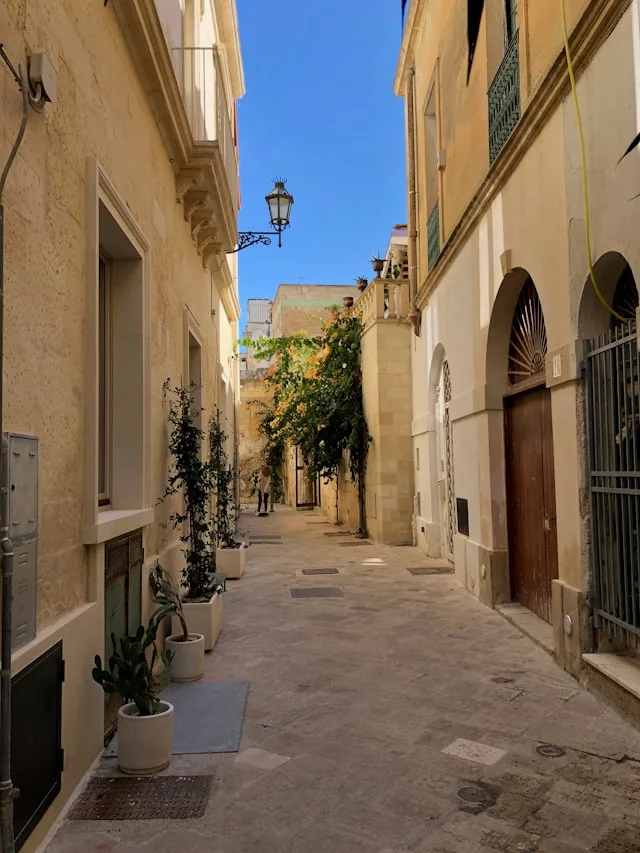
Lecce's historic centre exists because of a single material. The honeyed limestone known as pietra leccese gave sculptors the softness to carve the Baroque facades of Santa Croce, the Duomo, and the Palazzo dei Celestini. It gave builders an abundant local resource that hardened with exposure to air. And it gave the Salento a living craft tradition stretching back more than four centuries. That tradition is now in measurable decline, not because demand has fallen, but because the people capable of doing the work are disappearing faster than they can be replaced.
The numbers tell a specific story. Across Lecce province, 38% of registered master carvers are over 55. Only 12 to 15 certified stone conservators operate in the entire province, a figure insufficient for the current volume of heritage restoration contracts. Vacancy rates for specialised stonemasonry roles hit 4.8% in 2024, more than double the general construction average of 2.1%. Senior carver searches routinely last eight to ten months. The candidate pool for the most critical roles is 85 to 90% passive: not on job boards, not looking, not reachable through conventional recruitment.
What follows is a ground-level analysis of the forces reshaping Lecce's stone sector, the specific roles that are hardest to fill, and what organisations competing for artisan and technical talent in this market need to understand before their next hire. The paradox at the centre of this market is that the same regulations constraining its growth are also the reason it remains economically viable. Understanding that paradox is the starting point for any serious hiring strategy in this sector.
A Sector Running Near Capacity With Nowhere to Expand
The pietra leccese sector in Lecce province supports approximately 1,200 to 1,500 enterprises. These range from raw extraction operations in the Cursi-Melpignano quarry corridor to semi-finished processing workshops, artistic carving studios, and specialist heritage restoration firms. Formal employment stands at roughly 3,200 to 3,500 workers, with an additional 800 to 1,000 informal or seasonal workers during peak restoration periods.
Current capacity utilisation runs at 85 to 90%. That sounds healthy. It masks the fact that the constraint is not demand but regulation.
The number of active licensed quarries in the Murge Leccesi has fallen from over 120 in the 1990s to approximately 45 to 50 today. Progressive closure of non-compliant cave abusive and exhaustion of accessible seams account for most of this decline. The Puglia regional quarry plan now imposes a moratorium on new concessions in hydrogeologically sensitive areas covering roughly 60% of the extraction zone, according to Regione Puglia's Deliberazione della Giunta Regionale n. 1582/2023. This cap on raw material supply is not temporary. It is structural, and it will persist through 2026 and beyond.
The Illicit Quarry Problem
An estimated 15 to 20 unauthorised quarries continue operating in the Cursi area. These sites evade royalties and safety standards, undercutting compliant operators by 20 to 25% on raw block pricing. According to operational reports from the Carabinieri's Cultural Heritage Protection unit cited in La Gazzetta del Mezzogiorno, these illicit operations represent a persistent competitive distortion. They pull labour away from legitimate employers by offering cash wages with no contractual obligations, and they depress prices in the commodity segment of the market.
For legitimate operators, the response has been to move upmarket. Heritage restoration projects command 40 to 60% higher margins than new construction stonework. Bespoke architectural carving for hospitality and residential clients pays a premium that imported Turkish travertine and Chinese granite cannot touch. But moving upmarket requires precisely the skilled workers who are in shortest supply.
The Import Squeeze and the Premium Defence
Turkish travertine delivered to Lecce construction sites now costs 30 to 40% less than local pietra leccese for equivalent volume, according to data from the ICE-Agenzia's observatory on the stone sector. Chinese granite has captured a further share. Together, imports account for approximately 30 to 35% of the mid-market ornamental stone segment in Southern Italy, according to the Centro Studi Confindustria Marmomacchine's 2024 report on Italy's stone sector.
This import pressure has not destroyed Lecce's stone economy. It has bifurcated it.
The commodity end of the market, where volume and price determine the buyer's decision, is under severe pressure. Firms operating exclusively in this segment face margin compression that makes investment in workforce development difficult. The premium end, where authenticity, craftsmanship, and heritage certification drive value, remains protected. No Turkish quarry can supply a carver who reproduces seventeenth-century Baroque capitelli by hand. No Chinese manufacturer holds the abilitazione required under Italy's Cultural Heritage Code to touch a protected monument.
This bifurcation is the defining characteristic of the Lecce stone market in 2026. It means that the talent most urgently needed is concentrated at the premium end, where candidates are fewest, oldest, and least visible to conventional recruitment methods. The commodity end has labour availability but declining economic viability. The premium end has strong demand and sustainable margins but cannot find the people to do the work.
The Three Roles This Market Cannot Fill
Master Stonecarvers: *Maestri d'Ascia*
The most acute shortage in Lecce's stone sector is not a generic labour gap. It is a shortage of carvers capable of freehand Baroque ornamental reproduction. These are professionals who can look at a damaged seventeenth-century capital or facade element and reproduce it in pietra leccese using traditional scalpello e gradina techniques, sometimes augmented by modern 3D scanning for documentation purposes.
Average time-to-fill for senior carver positions exceeds eight to ten months, according to CNA Puglia's 2024 skills gap survey. The passive candidate ratio is approximately 85%. The most skilled practitioners are typically self-employed or embedded in family workshops with multi-decade client relationships. They do not use job boards. They do not attend recruitment fairs. In many cases, their workshops have waiting lists of clients extending 18 months or more.
One documented case, reported by Corriere del Salento in February 2024, illustrates the pattern. Laboratorio De Rocco, seeking a senior carver for cathedral restoration work, held the position open for 11 months. The eventual hire was a 58-year-old retiree from a competitor. This is not an anomaly. It is the norm: a candidate pool consisting predominantly of passive, ageing professionals who can only be reached through direct headhunting approaches and reputation networks.
Stone Conservators: *Restauratori di Beni Culturali*
If master carvers are hard to find, certified stone conservators are harder still. Under Ministerial Decree 169/2020, restoration work on protected cultural heritage requires specific abilitazione certification. Only 12 to 15 certified stone restorers currently operate in Lecce province. That number is insufficient for the volume of restoration contracts in the pipeline.
The market for these professionals is 90% or more passive. They hold stable positions with public administrations or established firms. They receive multiple offers simultaneously when they do become available. According to sectoral reporting in Il Sole 24 Ore's Puglia edition, Stone Project Srl reportedly extended a 25% salary premium above standard market rates to secure a conservator for the Basilica di Santa Croce restoration project. That premium is becoming the cost of entry, not the exception.
The certification bottleneck creates a structural constraint that no volume recruitment strategy can overcome. You cannot recruit a certification that takes years to obtain. You can only identify and approach the people who already hold it.
Quarry Engineers and Environmental Compliance Managers
The third critical shortage sits at the intersection of mechanical engineering, hydrogeology, and environmental compliance. Karst quarrying in the Murge Leccesi presents specific technical challenges that generic mining engineers are not equipped to handle. The regulatory environment adds further complexity: Environmental Impact Assessment preparation under EU Green Deal implementation, navigation of the Piano Cave licensing framework, and compliance with the Cultural Heritage Code all require specialist knowledge.
Energy costs now represent 18 to 22% of production costs, up from 12 to 15% in 2020, under the pressure of Fit for 55 regulations. A Quarry Technical Director must manage these rising costs while maintaining compliance with an increasingly demanding regulatory stack. The compensation for this role, €65,000 to €85,000 annually, rarely exceeds €90,000 due to the SME structure of the sector. That ceiling limits the market's ability to attract candidates from larger extractive industries.
The Demographic Cliff and the Apprenticeship Paradox
The workforce demographics tell a story that compensation alone cannot resolve. With 38% of registered maestri over 55, the sector faces a projected 25% reduction in certified master carvers by 2030, according to INPS data. The knowledge held by these professionals is embodied, not codified. It exists in muscle memory, in the ability to read a stone's grain before cutting, in decades of experience with pietra leccese's specific properties: its softness when freshly quarried, its hardening on exposure to air, its vulnerability to salt crystallisation.
Lecce province records a 14.2% general unemployment rate. The assumption that high unemployment automatically generates available apprentices is wrong.
The reality is the opposite. Younger workers in the Salento consistently prefer precarious service-sector roles, particularly in the growing tourism and hospitality economy, over the physical demands and three- to four-year training period required for maestro status. This preference persists even when artisan wages exceed entry-level service pay by 20 to 30%. The training path for stonemasonry requires years of low-paid apprenticeship with no guarantee that the trainee will develop the skill level needed for heritage-grade work. The service sector offers immediate income, lower physical strain, and social proximity to a peer group that has largely abandoned manual trades.
This is the paradox that makes the Lecce stone market's talent crisis fundamentally different from a conventional hiring shortage. It is not a shortage of available people. It is a shortage of people willing to invest years in acquiring a skill that the market desperately needs but that the culture has stopped valuing as a career path. The sector's training institutions, including IPSIA "G. Pellegrino" and programmes coordinated by CNA Puglia and Confartigianato Imprese Lecce, produce graduates. But the conversion rate from graduate to practising master carver remains low, and the dropout rate during the apprenticeship years is high.
Compensation: What the Market Actually Pays
Compensation in Lecce's stone sector reflects the tension between the high value of the work and the small scale of the employers. Nearly every firm in this market is an SME. Family ownership remains the dominant governance model. This structure caps executive compensation below the levels available in Northern Italian stone districts or international markets.
At the specialist and manager level, a Capo Cantiere or Workshop Production Manager earns €42,000 to €52,000 base salary plus performance bonuses under the CCNL Artigianato Edile e Affini national contract. A Restoration Project Manager without executive responsibilities earns €38,000 to €48,000, with a 15 to 20% premium for holders of the abilitazione certification.
At the executive level, a Direttore Tecnico di Cava earns €65,000 to €85,000 annually. A Managing Director of a mid-sized integrated firm with 40 or more employees earns €75,000 to €110,000, with meaningful variance depending on whether the firm is family-owned or professionally managed. A Chief Restorer commanding international project oversight can reach €80,000 or above in rare cases, but the typical range is €58,000 to €72,000.
These figures must be read against the competition. Carrara's marble district pays 25 to 35% more for equivalent master carver roles, with base salaries of €55,000 to €70,000. Matera, which has emerged as a competitor for restoration talent following its 2019 European Capital of Culture designation, offers similar cost-of-living but stronger public-sector contract pipelines. Switzerland and Germany recruit Italian stone conservators for heritage projects at €75,000 to €95,000 for mid-level roles, net of expatriate tax advantages.
The gap is widening fastest at exactly the seniority level where the shortage is most acute. A 35-year-old certified conservator with ten years' experience faces a clear economic calculation: stay in Lecce at €50,000, or accept a position in Zurich at €85,000. The counteroffer dynamics in this market are particularly difficult because Lecce's SMEs often lack the financial headroom to match even a modest external offer.
Heritage Regulation: The Constraint That Sustains the Market
Here is the original synthesis that this article's data demands, and the insight that most employers in this sector have not yet internalised.
The same heritage-protection framework that employers cite as their primary operational constraint is the mechanism that prevents the commoditisation of their product and sustains the premium pricing that makes skilled employment economically viable. Remove the regulatory constraints on quarrying and heritage restoration, and the market floods with cheap stone and unqualified labour. Margins collapse. The premium that justifies a €70,000 salary for a master carver disappears. The sector's economic model depends on scarcity: scarcity of authentic material, scarcity of certified skills, and scarcity of access to protected sites.
This is not an abstract observation. It has direct implications for executive hiring in this sector.
A Quarry Technical Director who views regulation solely as an obstacle will make poor strategic decisions. The right hire for this role is someone who understands that the regulatory environment is part of the value proposition. UNESCO buffer zones, the Cultural Heritage Code, the quarry licensing moratorium: these are not bugs in the system. They are the features that keep Turkish travertine out of the premium segment and keep pietra leccese at the centre of Salento's cultural economy.
The same logic applies to restoration leadership. A Chief Restorer who can navigate certification requirements and regulatory protocols is not just a compliance necessity. That person is a revenue enabler. Their certification is the licence that allows the firm to bid on contracts that uncertified competitors cannot touch.
What a Realistic Hiring Strategy Looks Like in This Market
The conventional search playbook fails in Lecce's stone sector for three compounding reasons. First, the candidate pool is overwhelmingly passive. Second, the pool is small enough that every serious candidate is already known to competitors. Third, the sector's SME structure means most employers lack dedicated talent acquisition functions. Hiring happens through word of mouth, through consortium networks, and through the kind of slow, informal approach that works until a role becomes genuinely urgent.
When a role becomes urgent, the cost of a slow search becomes tangible. A heritage restoration contract with a fixed timeline does not wait for an 11-month recruitment process. A quarry operating without a qualified Technical Director faces regulatory exposure that compounds daily.
Three principles apply to any serious hiring effort in this market.
First, every search for a senior specialist or executive role must begin with direct identification and approach. The 85 to 90% passive candidate ratio means that visible candidates, those actively looking, represent the weakest segment of the talent pool. The strongest candidates must be found, assessed, and approached individually. Talent mapping across the sector is not a luxury in a market this small. It is the baseline.
Second, compensation packages must be structured to compete not only with domestic alternatives in Carrara and Matera but with international offers from Switzerland and Germany. This does not always mean matching salary pound for pound. It means understanding what holds a candidate in the Salento: proximity to family, quality of life, connection to a specific material and tradition. Then building a proposition around those anchors while closing the financial gap as far as the firm's economics allow. Effective negotiation in these circumstances requires understanding the candidate's full decision calculus, not just their current salary.
Third, the long-term solution requires investment in the training pipeline. But the short-term reality is that the pipeline will not produce results for three to four years at minimum. Any organisation hiring today must accept that they are recruiting from a fixed and shrinking pool of experienced professionals. Speed matters. Method matters. The firms that act first secure the candidates. The firms that wait find the pool emptier each quarter.
For organisations facing critical leadership or specialist vacancies in Lecce's stone and heritage restoration sector, where the candidates who matter most are not visible on any job board and the timeline for a heritage contract does not accommodate a year-long search, speak with our executive search team about how we identify and deliver interview-ready candidates in this market. KiTalent's AI-enhanced direct headhunting methodology reaches the passive professionals that conventional recruitment cannot access, delivering interview-ready candidates within 7 to 10 days. With a 96% one-year retention rate across 1,450 completed placements, the approach is built for markets where every hire is consequential and every month of vacancy carries a measurable cost.
Frequently Asked Questions
What is the current employment level in Lecce's pietra leccese sector?
Formal employment in the stone sector across Lecce province stands at approximately 3,200 to 3,500 workers, with an additional 800 to 1,000 informal or seasonal workers during peak restoration periods. The broader sector supports 1,200 to 1,500 enterprises spanning extraction, processing, artistic carving, and heritage restoration. Vacancy rates for specialised stonemasonry roles reached 4.8% in 2024, more than double the 2.1% average for general construction, reflecting acute shortages in master carvers and certified conservators rather than general labour availability.
Why are master stonecarver roles so difficult to fill in Lecce?
Three factors compound to make master carver recruitment exceptionally difficult. The candidate pool is approximately 85% passive, meaning most qualified professionals are not monitoring job listings. The training path to maestro status requires three to four years of apprenticeship, deterring younger workers. And 38% of registered masters are over 55, creating a demographic cliff that will remove an estimated 25% of certified carvers by 2030. Average time-to-fill for senior carver positions now exceeds eight to ten months, and KiTalent's direct headhunting approach is specifically designed for markets where passive candidates dominate.
What do senior roles in Lecce's stone sector pay in 2026?
A Quarry Technical Director earns €65,000 to €85,000 annually. Managing Directors of mid-sized integrated firms earn €75,000 to €110,000 depending on governance structure. Chief Restorers typically earn €58,000 to €72,000, with top specialists reaching €80,000 or above for international project oversight. Workshop Production Managers earn €42,000 to €52,000 plus performance bonuses. These figures sit 25 to 35% below equivalent roles in Carrara and substantially below international alternatives in Switzerland and Germany.
How does heritage regulation affect hiring in Lecce's stone sector?
Heritage regulation simultaneously constrains and sustains the sector. The Puglia regional quarry plan caps new concessions in 60% of the extraction zone, limiting supply growth. UNESCO buffer zones and the Cultural Heritage Code impose strict protocols on restoration work. However, these same regulations generate the premium restoration contracts that command 40 to 60% higher margins than new construction stonework. Executive leaders in this market must understand regulation as a value driver, not merely a compliance burden.
What competition does Lecce face for stone sector talent?
Lecce competes for talent with Carrara, where marble district salaries run 25 to 35% higher for equivalent roles. Matera has emerged as a competitor for restoration professionals following its European Capital of Culture designation. Internationally, Switzerland and Germany recruit Italian stone conservators at €75,000 to €95,000 for mid-level roles, creating a persistent outflow of younger certified professionals. Lecce's competitive advantages include lower cost of living, cultural connection to pietra leccese as a material, and the quality of life in the Salento.
How can organisations improve executive hiring outcomes in this niche market?
In a market where 85 to 90% of qualified candidates are passive, conventional job advertising reaches only the weakest segment of the talent pool. Effective hiring requires direct candidate identification, systematic talent mapping, and individual approach through trusted professional networks. Compensation packages must account for international competition, and the hiring timeline must be compressed. A search that runs 11 months in a market with only 12 to 15 qualified conservators risks losing available candidates to faster-moving competitors.