Maribor's Agribusiness Talent Gap: Why 130 Graduates a Year Cannot Fill the Roles This Market Needs
The University of Maribor's Faculty of Agriculture and Life Sciences graduates roughly 130 students every year into the Podravje region's wine, fruit processing, and food manufacturing economy. On paper, that throughput looks sufficient for a sector whose largest single employer runs fewer than 500 people. In practice, vacancy fill rates for the roles that matter most sit between 35% and 45%. The graduates arrive. The shortages deepen. The numbers do not contradict each other. They describe a market where the talent pipeline and the talent demand have quietly diverged.
The core problem is not volume. It is specialisation. The processors, wineries, and cooperatives that anchor Maribor's agribusiness economy increasingly need professionals who combine traditional food science or oenology credentials with digital fluency, international certification expertise, and multilingual capability. The university curriculum produces agronomists and oenologists trained in the fundamentals. Industry needs automation engineers who understand food-grade robotics, food safety managers who can lead a BRC or IFS audit in English and German, and cellar masters who can manage a premium vintage programme and a wine tourism operation simultaneously. The mismatch is not a failure of education. It is a structural lag between what the curriculum teaches and what the market now requires.
What follows is an analysis of how this gap formed, why it is widening, and what it means for any organisation trying to hire specialist or leadership talent in Maribor's agribusiness and food processing sector in 2026. The compensation dynamics, the competitive geography, and the passive candidate reality all point in the same direction: conventional recruitment methods reach a fraction of the available talent, and the organisations that adapt their search approach will be the ones that fill the roles that define their competitiveness.
The Podravje Agribusiness Economy in 2026: Smaller Than It Looks, More Complex Than It Appears
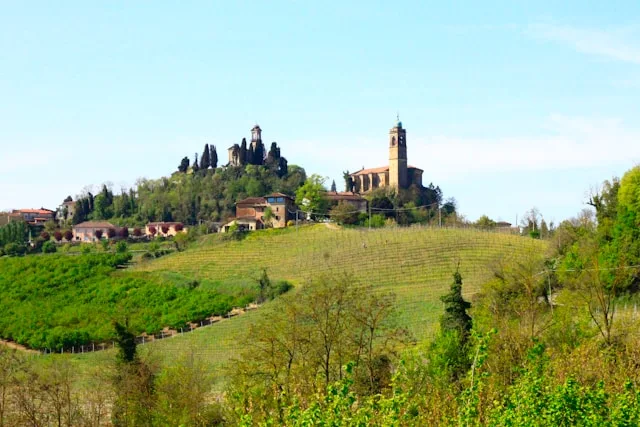
The Podravje region surrounding Maribor accounts for roughly 25% to 30% of Slovenia's total wine output across approximately 3,800 to 4,200 hectares of vineyards. The Drava Valley's intensive orchards supply the country's primary apple and pear production zone, feeding juice concentrate facilities, distilleries, and small-scale specialty food producers. These are not large industries by European standards. But they are industries where individual hires carry outsized weight.
The region's processing economy operates as a loose network of cooperatives, micro-wineries, and SMEs rather than a formalised industrial cluster. The Agricultural Cooperative Drava consolidates output from over 400 smallholders. Žito d.o.o., a Podravka Group subsidiary, employs 450 to 500 people in Maribor producing cereal, flour, and bakery products. Perutnina Ptuj, 25 kilometres away in Ptuj, employs over 1,800 in poultry processing under Fortenova Group ownership. Vinag Maribor, the municipally owned wine cellar that was once the region's largest, now operates at 30% to 40% of its peak capacity after years of financial restructuring, employing 40 to 50 people where it once employed over 120.
This is a sector where a single food safety manager departure can jeopardise an EU retail certification. Where a cellar master vacancy lasting seven months forces an internal promotion that stretches a junior oenologist beyond their experience. Where the difference between a cooperative that invests in optical sorting technology and one that does not is often the availability of a single agricultural automation engineer. The talent problem in Maribor agribusiness is not about thousands of unfilled roles. It is about dozens of roles whose vacancy has consequences far beyond the job description.
Investment Is Arriving. The People to Operate It Are Not
EU Common Agricultural Policy innovation subsidies for the 2023 to 2027 cycle have channelled projected investment of €15 to 20 million into the Podravje region through 2026. The money targets exactly the capabilities this market lacks: robotic harvesting assistance, optical sorting systems, and cold-chain expansion. The investment thesis is sound. Slovenian agribusiness needs automation to compensate for shrinking farm labour pools and to meet tightening EU Green Deal compliance requirements.
The problem is that capital can arrive in a quarter. The professionals who commission, operate, and maintain that capital take years to develop.
Agricultural automation engineers who understand both food-grade robotics and precision agriculture IoT systems command €38,000 to €52,000 at the senior specialist level and €70,000 to €95,000 at the director level in the Podravje region, according to the Employment Service of Slovenia's high-skill occupation wage data from 2024. Those figures sound manageable until you compare them with what Graz offers. Ninety kilometres to the north, across the Austrian border, equivalent roles pay 2.5 to 3.0 times the Slovenian rate. The University of Maribor's Faculty of Agriculture and Life Sciences produces graduates with foundational knowledge. The ones who develop the specific automation and data analytics skills the market demands tend to pursue careers across the border before Slovenian employers ever get to make an offer.
The Cold Chain Bottleneck
Cold chain logistics directors face a parallel squeeze. Fruit drying and pressing facilities ran at 85% to 90% capacity utilisation in the second half of 2024, constrained not only by energy costs (industrial electricity at €0.18 to €0.22 per kilowatt-hour) but by refrigerated storage capacity that has not kept pace with production volume. Expanding that capacity requires not just capital expenditure but professionals who hold HACCP and Good Distribution Practice credentials. Senior specialists in this domain earn €30,000 to €40,000 regionally. At the executive level, the range stretches to €60,000 to €80,000. These are roles where the candidate pool is national at best and where the passive candidate ratio mirrors the broader pattern: the people qualified to do this work are already employed and not watching job boards.
The trajectory established through 2025 has continued into 2026. Investment in equipment and infrastructure is accelerating. The supply of people qualified to run that equipment remains flat. Every automation installation that goes live without a qualified engineer to maintain it is a depreciation event, not a productivity gain.
The Wine Tourism Paradox: Growing Revenue, Shrinking Labour
Wine tourism revenue in the Maribor Lent district grew by an estimated 12% year-over-year in 2024. The Lent Old Vine, the world's oldest documented grapevine at over 450 years, draws more than 120,000 tourist visits annually. The Slovenian Tourist Board's strategic plan through 2026 projects 10% to 12% annual increases in enotourism revenue, with Maribor positioning itself as the gateway to the Styrian Wine Roads.
At the same time, seasonal labour availability for the agricultural harvest contracted by 8% to 10% in 2024. The region requires an estimated 3,500 to 4,500 seasonal workers annually for vineyard and orchard harvesting, with 60% to 70% sourced from Bosnia and Herzegovina, Serbia, and North Macedonia. In 2024, approximately 200 harvest positions in the Maribor vicinity went unfilled due to delayed work permit processing under increasingly strict seasonal worker quota and housing inspection requirements.
This is the paradox at the heart of Maribor's agribusiness economy. The tourism side of the value chain is pulling the sector toward international visibility, higher margins, and premium positioning. The production side is losing the fundamental labour input that makes the product possible. A winery cannot offer a world-class tasting experience built on a vintage it could not fully harvest. An orchard processor cannot scale cold-pressed juice production when 200 seasonal picking positions go unfilled. The economic visibility of the sector is increasing. The agricultural labour sustainability underpinning it is not.
What This Means for Senior Roles
The tourism-agriculture convergence creates a specific kind of executive hiring challenge. The cellar master role at a Styrian winery in 2026 is not the cellar master role of a decade ago. It requires someone who can manage a premium vintage programme under increasingly volatile climate conditions (15% to 20% yield losses from spring frost in 2024 alone), oversee compliance with Slovenia's Vrhunsko and Deželno vino PDO standards, and simultaneously manage or contribute to a wine tourism operation that generates a growing share of the business's revenue. According to regional labour market monitoring by the Employment Service of Slovenia, the cellar master position at Vinag Maribor remained vacant for seven months during 2023 to 2024 and was ultimately filled by internal promotion after external recruitment failed to yield candidates with the combined enology and tourism management experience the role required, as reported by the Slovenian newspaper Večer in March 2024.
The role requires bilingual capability in Slovenian and English at minimum, with German increasingly expected. Senior oenologists with university degrees and WSET Level 3 or equivalent certification face unemployment below 2% in Slovenia. Only 10% to 15% of qualified candidates are actively looking at any given time. The rest must be found through direct headhunting approaches because they will not respond to a job board posting they never see.
The Certification Gap: BRC, IFS, and the Cost of Not Having the Right Person
Slovenia's food processors increasingly depend on EU retail contracts that require BRC (British Retail Consortium) or IFS (International Featured Standards) certification. These are not optional quality marks. They are market access requirements. A processor without current BRC or IFS certification is locked out of contracts with the supermarket groups that dominate European food retail.
The number of professionals in the Podravje region who can lead a BRC or IFS audit, manage the documentation cycle, and maintain certification through annual surveillance audits is small. The ratio of active to passive candidates among senior food safety auditors is approximately one to four, according to Adecco Slovenia's food industry recruitment analysis from 2024. The ones with dual Slovenian-German language skills and IFS certification rarely apply to public postings. They move through network referrals or retained executive search.
The market pattern is visible in the documented behaviour of the region's larger employers. According to Finance.si's reporting in June 2024, Žito recruited a Quality Assurance Manager from competing regional bakery group Mlinotest with a compensation premium of approximately 18% to 20% above the regional median to secure BRC certification expertise necessary for EU retail contracts. This is not an isolated incident. It is the typical recruitment pattern for QA specialists in the Styrian food processing sector, as confirmed by the Chamber of Agriculture and Forestry's labour market survey.
The Compensation Arithmetic
Food technology and QA managers in the Maribor region earn €35,000 to €48,000 at the senior specialist level. At the executive and director level, the range extends to €65,000 to €90,000. These figures sit 20% to 30% below comparable roles in Austria and roughly 15% below what Ljubljana-based multinationals like Atlantic Grupa or Droga Kolinska offer, according to the Deloitte Central Europe Salary Survey from 2024.
The arithmetic creates a persistent gravitational pull. A food safety manager earning €42,000 in Maribor can commute to Ljubljana, 90 minutes away, for €50,000 to €55,000 at a multinational with a clearer career trajectory. Or they can accept a role in Graz for roughly double. Maribor's lower cost of living (approximately 12% below Ljubljana in housing costs) partially offsets the gap. But it does not close it. And it cannot offset the career trajectory differential that a multinational posting provides. Organisations in this market that rely on salary benchmarking alone will consistently find themselves outbid by competitors who offer a combination of higher pay and broader scope.
The Succession Crisis Behind the Shortage
The talent problem in Maribor agribusiness has a demographic layer that compensation adjustments cannot address. The average age of farm holders in the Podravje region is 56.4 years. Thirty-four percent are over 65. The number of registered agricultural holdings in the Maribor catchment is declining at 2% to 3% annually as aging farmers exit without successors.
This is not a future risk. It is a current condition.
When a 68-year-old vineyard owner retires without a successor, the cooperative absorbs the holding or it goes fallow. The cooperative gains acreage but does not gain the tacit knowledge that vineyard required. The specific microclimate understanding, the rootstock history, the decade-by-decade yield pattern that informed pruning and harvesting decisions: these are knowledge assets that cannot be documented in a handover manual. They leave with the person.
The consolidation is inevitable. The Chamber of Agriculture and Forestry's regional reports describe it as culturally contested but economically unavoidable. Cooperatives will grow larger. Small-scale vineyard diversity, the quality that underpins the region's premium wine tourism brand, will diminish unless new operators enter. And the talent pipeline to produce new operators does not exist at sufficient scale: the University of Maribor's 130 annual graduates are entering food technology, quality assurance, and research roles, not taking over 6.8-hectare family vineyards.
Here is the analytical point that connects the data: the succession crisis and the skills mismatch are not separate problems. They are the same problem expressing itself at two different career stages. At the entry level, the university produces generalists when the market needs specialists. At the exit level, the sector loses highly specific local knowledge when experienced operators retire. The gap in the middle, where a specialist with ten years of regional experience and modern technical credentials would sit, is precisely the gap that is hardest to fill. It cannot be recruited from a job board. It cannot be trained in a single year. And it is widening at both ends simultaneously.
Why Conventional Search Methods Fail in This Market
The mathematics of candidate availability in Maribor's agribusiness sector are unfavourable for any employer relying on job postings and inbound applications.
Unemployment among certified oenologists in Slovenia sits below 2%. For food safety auditors with BRC or IFS credentials, the active-to-passive ratio is one to four. For agricultural automation engineers, the primary competitor for talent is not another Slovenian employer but the Austrian labour market, where salary multiples of 2.5 to 3.0 render standard Slovenian offers non-competitive on price alone.
These are markets where 85% of qualified candidates are employed and not looking. A job advertisement reaches the 15% who are in transition, recently relocated, or actively dissatisfied. The other 85% must be identified through talent mapping, assessed for motivation triggers beyond compensation, and approached with a proposition that addresses what their current role lacks.
The challenge is compounded by the market's small size. In a financial services hub with thousands of potential candidates, a broad search occasionally surfaces a strong match by volume alone. In a market where the total population of qualified cellar masters in the country numbers in the low hundreds, there is no volume to rely on. Every search is a precision exercise. Every approach must be individually constructed. The firms that treat this market like a standard recruitment assignment, posting a role and waiting for applications, will experience the same pattern of failure that Vinag experienced during its seven-month cellar master vacancy.
For executive hiring across food, beverage, and agribusiness sectors, the method must match the market. KiTalent's AI-enhanced talent mapping identifies the passive candidates who constitute 85% of this market's qualified professionals, delivering interview-ready shortlists within 7 to 10 days rather than the months-long timelines this region has normalised. With a 96% one-year retention rate on placed candidates, the approach is designed for markets where the margin for a wrong hire is especially narrow and where every search must reach candidates who are not visible through conventional channels.
What Hiring Leaders in Maribor's Agribusiness Sector Should Understand
The Maribor agribusiness talent market in 2026 is defined by four converging pressures: a skills mismatch between university output and industry demand, a demographic succession crisis that is eroding tacit knowledge, a compensation gap that channels the best graduates toward Ljubljana and Graz, and an investment cycle that is deploying automation faster than the workforce to operate it can be developed.
None of these pressures will resolve through patience. The investment subsidies have timelines. The EU retail certifications have renewal cycles. The harvest does not wait. The organisations that fill critical specialist and leadership roles in this market will be the ones that accept two realities. First, the candidates they need are almost certainly employed and not looking. Second, the proposition required to move them extends beyond salary to include scope, progression, and a credible answer to the question of why Maribor rather than Graz or Ljubljana.
For organisations competing for oenology leadership, food safety expertise, or agricultural automation talent in Slovenia's Podravje region, where the candidate pool is measured in dozens rather than hundreds, speak with our executive search team about how we identify and engage the professionals this market requires.
Frequently Asked Questions
Why is it so difficult to hire senior oenologists in Maribor?
Certified oenologists in Slovenia face unemployment below 2%. Active job postings reach only 10% to 15% of qualified professionals. The remaining 85% are employed in roles they are not actively seeking to leave. Maribor's proximity to Graz, where equivalent roles pay 2.5 to 3.0 times Slovenian rates, further reduces the available pool. Combined requirements for oenological science, tourism management, and bilingual capability narrow the field to a very small number of candidates. Direct headhunting approaches that identify and engage passive candidates are the only reliable method to fill these roles within a reasonable timeframe.
What do food safety managers earn in the Maribor region?
Senior specialist and manager-level food safety and QA professionals earn €35,000 to €48,000 gross annually in the Podravje region. Executive and director-level roles range from €65,000 to €90,000. These figures sit 20% to 30% below comparable roles in Austria and approximately 15% below Ljubljana-based multinationals. Employers competing for BRC and IFS certified professionals should expect to offer premiums of 18% to 20% above regional medians to attract talent from competing firms, particularly where German language skills are required alongside technical certification.
How does Graz compete with Maribor for agribusiness talent?
Graz, located 90 kilometres north across the Austrian border, offers salary multiples of 2.5 to 3.0 times Slovenian rates for senior agricultural engineers and oenologists. Cross-border labour agreements facilitate recruitment directly from the University of Maribor's graduate pool. Maribor's lower cost of living partially offsets the gap, but it cannot match the career trajectory breadth or compensation scale available in Austria. This dynamic makes Graz the primary destination for Maribor's most qualified agricultural graduates seeking higher wages.
What is driving investment in Podravje agribusiness through 2026?
EU Common Agricultural Policy innovation subsidies for the 2023 to 2027 cycle are channelling €15 to 20 million into the region, focused on robotic harvesting assistance, optical sorting systems, and cold-chain expansion. The investment addresses two converging pressures: declining seasonal labour availability and tightening EU Green Deal compliance requirements around pesticide and fertiliser use. The challenge is that qualified agricultural automation engineers and technology professionals to commission and operate new equipment remain in severe shortage.
How does KiTalent approach executive search in niche agribusiness markets?
KiTalent uses AI-enhanced talent mapping to identify passive candidates who represent the majority of qualified professionals in specialised markets. In sectors like Slovenian agribusiness, where the total candidate population for roles such as cellar masters or BRC lead auditors is measured in dozens nationally, conventional job advertising reaches a fraction of viable talent. KiTalent delivers interview-ready candidates within 7 to 10 days through direct identification and engagement, with a pay-per-interview model that eliminates upfront retainer risk for hiring organisations.
What is the succession crisis affecting Slovenian agriculture?
Thirty-four percent of farm holders in the Maribor statistical region are over 65. The average age is 56.4 years. Registered agricultural holdings are declining at 2% to 3% annually as farmers retire without successors. This creates a knowledge loss that cooperative consolidation cannot fully replace, particularly in viticulture where microclimate expertise and vineyard-specific knowledge are accumulated over decades. The crisis directly intensifies demand for experienced mid-career professionals who can bridge generational knowledge gaps, a candidate profile that is exceedingly rare and almost entirely passive.