Mariehamn's Financial Cluster Punches Above Its Weight. Its Talent Market Cannot Keep Up.
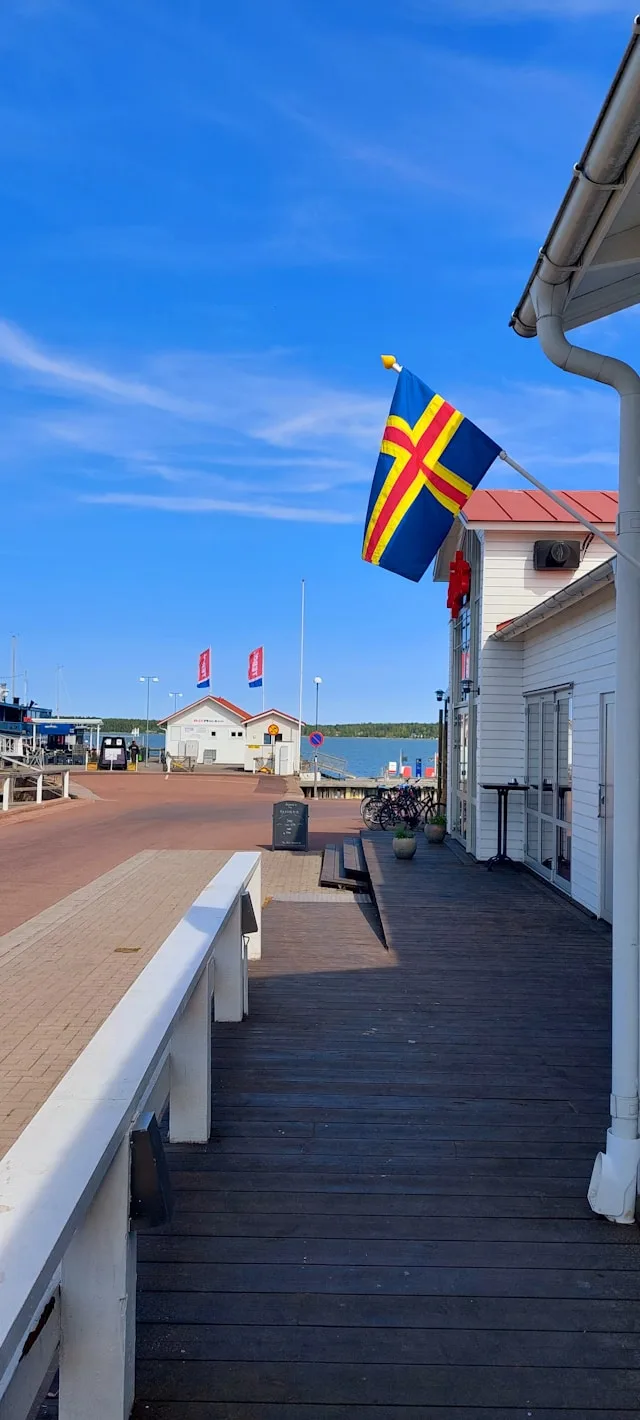
A city of 11,700 people processing digital banking transactions for 1.8 million Nordic customers is an anomaly worth examining. Mariehamn, the capital of the autonomous Åland Islands, hosts a financial services and technology cluster that generates roughly 28% of the archipelago's GDP. Three anchor employers, Crosskey Banking Solutions, Ålandsbanken, and Alandia Insurance, collectively employ over 700 people in a market where total sector employment reaches 1,180. That is 18% of local employment, against a 7% average for comparable Nordic cities.
The anomaly comes with a structural cost. Åland's university produces 25 to 30 business and IT graduates per year. Local unemployment for skilled white-collar roles is functionally zero. The firms driving Mariehamn's outsized economic contribution cannot source the talent they need from the community they sustain. They recruit from Helsinki, Stockholm, and Turku, often at premiums that erode the cost advantages that made Åland attractive for incorporation in the first place.
What follows is a ground-level analysis of how this cluster operates, where its talent constraints are most acute, and what the interplay between Åland's fiscal advantages and its demographic limits means for any organisation trying to hire or retain senior professionals here. The data reveals a market where capital investment and human capital supply have moved in opposite directions, and where the conventional playbook for filling critical roles fails before it begins.
A Financial Cluster Built on Three Pillars and One Vulnerability
Mariehamn's financial services sector functions less like a diversified market and more like a tightly interlocked ecosystem. Crosskey, owned by Sweden's Länsförsäkringar Group since a SEK 775 million acquisition in 2019, provides core banking systems, digital channels, and API management for over 40 Nordic financial institutions from its Mariehamn headquarters. Ålandsbanken, with a market capitalisation of approximately €320 million, serves as both a private banking institution and a reference client for Crosskey's platforms. Alandia Insurance, with €250 million in gross written premium, anchors the maritime and transport insurance segment and provides specialised products for the shipping sector that feeds Ålandsbanken's corporate lending book.
The Ecosystem's Strength Is Also Its Risk
This interdependence creates efficiencies that a larger, more fragmented market cannot replicate. But it also creates concentration risk that hiring leaders must weigh carefully. Crosskey, Ålandsbanken, and Alandia account for 60% of financial sector employment in Mariehamn. A restructuring decision at any one of them, particularly a consolidation of Crosskey's operations into Länsförsäkringar's Swedish infrastructure, would send systemic shocks through the entire local labour market.
The vulnerability is not theoretical. Crosskey's Swedish parent could, at any point, decide that maintaining a 240-person engineering centre on an island accessible primarily by ferry or short-hop flight is less efficient than consolidating into Stockholm or Gothenburg. That decision would not just reduce Crosskey's headcount. It would remove the anchor client relationship that makes Ålandsbanken's technology strategy viable and destabilise the island's ability to attract any technology talent at all.
For now, the opposite signal is stronger. Crosskey expanded into new harbour-front office space during 2023 and 2024. Ålandsbanken renovated its headquarters. Both moves suggest continued commitment to physical presence. But the hiring data tells a different story, and the tension between these two signals is the most important dynamic in this market.
The Cluster Is Expanding. The Workforce Is Not Following.
Crosskey has announced platform expansion targeting the embedded finance market, projecting 15% headcount growth in software development and regulatory technology roles through 2026. Ålandsbanken's digital wealth management rollout requires an estimated 40 additional specialists in UX design, compliance automation, and sustainable finance analytics. Alandia is consolidating Nordic operations into Mariehamn, projecting 25 net new roles in maritime risk modelling and corporate underwriting.
Combined, these three employers are looking to add roughly 100 to 120 positions in a market that produces fewer than 30 relevant graduates annually and sits at 3.2% unemployment. The arithmetic does not work.
Where the Candidates Actually Are
The response has been predictable and revealing. Approximately 40% of Crosskey's new technical hires now work fully remote from Helsinki or Stockholm without relocating. Ålandsbanken and Crosskey have both created hybrid compliance-technology positions with fully remote arrangements for candidates who refuse to move to the islands. According to reporting in Ålandstidningen, Alandia relocated a senior underwriter from Copenhagen to fill a maritime cyber underwriting role, offering a compensation package 35% above the local median.
The cluster is investing in physical infrastructure that assumes geographic concentration while simultaneously hiring a workforce that is geographically dispersed. Capital investment and talent strategy are pointing in different directions. The firms expanding office space in Mariehamn are filling those offices, in part, with desks that remain empty because their occupants live 300 kilometres away.
This is the original analytical tension at the heart of the Mariehamn market: the cluster's brand depends on physical co-location, but its survival depends on abandoning it. The tax advantages, the regulatory coordination, and the institutional identity all presuppose a place-based cluster. The talent market has already moved past that model. The organisations that reconcile this contradiction fastest will be the ones that can actually staff their growth plans.
Why Mariehamn's Most Critical Roles Take Twice as Long to Fill
The vacancy rate in Mariehamn's financial and IT sectors averaged 4.8% throughout 2024, more than double the 2.1% rate across the broader Åland economy. Software development roles accounted for 35% of open positions. Compliance and risk management made up 22%. Specialised insurance underwriting represented 18%.
But the vacancy rate alone understates the severity. Senior Cloud Architect positions advertised by Crosskey and Ålandsbanken during 2024 remained open for an average of 7.5 months, according to data from the Finnish Association of Software Architects. The equivalent role in Helsinki filled in 3.2 months. A Mariehamn-based search for a cloud architect with Kubernetes and fintech-specific experience takes more than twice as long as the same search in Finland's capital, despite Mariehamn employers offering compensation packages that approach or match Helsinki levels after adjusting for Åland's tax advantages.
The 90% Passive Problem
The duration data makes more sense when set against the passive candidate ratios. Senior fintech software architects with ten or more years of experience operate in a market that is 90% passive. These professionals maintain average tenures of 4.2 years. They do not respond to job postings. They are not on job boards. They must be identified and approached directly.
Maritime insurance underwriters with cyber specialisation present an even more extreme case. The global talent pool is estimated at fewer than 800 professionals. Alandia reports that 100% of recent senior hires in this category were initiated through direct headhunting rather than applications. When a total global supply of 800 people underpins one of your growth verticals, traditional recruitment is not merely inefficient. It is irrelevant.
DORA compliance specialists sit at a 30:70 active-to-passive split overall. But among candidates with three or more years of financial services ICT risk experience, the ratio shifts to 85% passive. The active candidates available tend to lack the specific regulatory depth that Åland's dual compliance environment demands, a pattern consistent with why conventional executive recruiting frequently fails in markets with highly specialised requirements.
Åland's Tax Advantage Creates a Paradox It Cannot Solve Alone
Åland's autonomous status within Finland gives it a distinctive fiscal profile. No wealth tax. Favourable property taxation. A top marginal income tax rate of roughly 45%, compared to 52% in Sweden. For high-earning executives, these advantages create net compensation parity with Helsinki despite nominal salary discounts of 10 to 15%. For very senior leaders, the tax structure can make Mariehamn genuinely more attractive than Stockholm on a take-home basis.
This is the mechanism that attracted capital and institutional headquarters to the islands. It works well for incorporation decisions and for recruiting executives whose compensation is high enough for the tax differential to matter. It does not work for the mid-career specialists, the senior developers, the compliance managers in the 28 to 35 age bracket, who form the operational backbone of any financial services organisation.
The Missing Middle
Åland experiences 22% net outmigration of university-age cohorts, those aged 19 to 24, to mainland Finland and Sweden. Only 45% return within ten years. The result is a "missing middle" in exactly the demographic band where organisations need experienced specialists and emerging leaders. The tax regime pulls in high-net-worth executives at the top. The education system pushes out young professionals at the bottom. The middle, where the actual work gets done, remains structurally depleted.
The same autonomous status that creates the tax advantage also limits access to Finnish mainland education subsidies and university research partnerships. Åland's fiscal incentives attract the capital. Its educational autonomy starves the labour supply that capital requires. This is not a temporary imbalance that will correct with a few more graduates. It is an embedded structural feature of the autonomous arrangement itself, and it means Mariehamn's financial cluster will remain permanently dependent on talent imported from competing markets.
For hiring leaders, the implication is direct. You cannot build a long-term workforce strategy in Mariehamn on the assumption that local talent will eventually catch up to local demand. The gap is structural. Every workforce plan must begin with the question of how to attract and retain professionals from Helsinki, Stockholm, or further afield, and what the true cost of doing so actually is.
What Roles Cost in Mariehamn, and Why the Gaps Are Misleading
Compensation in Mariehamn's financial cluster operates on two tiers that do not always align with what mainland Nordic markets would predict. Understanding both tiers is essential for any organisation designing an offer or benchmarking against competitors.
Technology and Engineering Leadership
A CTO or VP of Engineering at the senior specialist or manager level commands €95,000 to €120,000 annually. At the executive or VP level, the range extends to €160,000 to €210,000, with material variation based on equity participation tied to Crosskey's growth. These figures carry an important qualifier: Mariehamn's cost of living sits approximately 8% below Stockholm. Combined with the tax differential, a €180,000 package in Mariehamn delivers comparable or superior take-home value to a €220,000 package in Stockholm.
But the comparison breaks down for candidates evaluating career trajectory. Stockholm offers Klarna, Tink, SEB, and Swedbank within commuting distance. Mariehamn offers three employers. A candidate accepting a senior technology role in Mariehamn is making a career concentration bet that only pays off if the cluster continues to grow. According to patterns reported by the Åland Chamber of Commerce, Crosskey and Ålandsbanken lose 15 to 20% of senior technical recruits to Stockholm-based competitors annually, a retention cost that effectively inflates the real expense of maintaining technical leadership.
Compliance and Risk Leadership
Head of Compliance and Chief Risk Officer roles range from €85,000 to €105,000 at senior manager level, rising to €140,000 to €175,000 at executive level. DORA-specific expertise commands a premium that pushes the ceiling toward €190,000, according to the Association of Finnish Banks. The dual regulatory environment created by Åland's autonomous status adds 8 to 12% to compliance costs compared to mainland Finland, and the professionals who can manage that duality are among the scarcest in the market.
Maritime and Insurance Leadership
Senior maritime underwriters earn €75,000 to €95,000. On the Chief Underwriting Officer track, the range reaches €130,000 to €160,000. The competitive pressure here comes from London and Copenhagen, where equivalent roles carry premiums of 25 to 30%. Alandia's ability to retain its most experienced underwriters depends on whether the quality-of-life proposition and tax advantage can offset a €40,000 to €50,000 annual salary gap. For some candidates, particularly those with families drawn to the islands' environment, it can. For those who prioritise career optionality or urban amenities, it cannot. This split means Alandia's senior insurance recruitment requires a fundamentally different value proposition for each candidate archetype.
The forward-pointing question is not whether Mariehamn can match mainland salaries. In many cases, it effectively does. The question is whether it can match mainland career depth, and what happens when it cannot.
DORA, Open Banking, and the Skills That Did Not Exist Three Years Ago
The EU Digital Operational Resilience Act entered full force in January 2025, imposing ICT risk management, incident reporting, and third-party oversight requirements on every financial institution in the EU. Local institutions anticipated dedicating 12 to 18% of IT budgets to DORA implementation. For a smaller institution like Ålandsbanken, with a €5.2 billion balance sheet, the estimated compliance investment of €2.5 to €3.5 million represents a disproportionate burden compared to larger mainland banks that can spread the cost across bigger technology teams.
The Hybrid Role Problem
DORA has not simply created demand for more compliance officers. It has created demand for a role that barely existed before 2023: the hybrid compliance-technology professional who understands both ICT risk frameworks and the engineering systems those frameworks govern. Ålandsbanken and Crosskey have both restructured internal roles to create these hybrid positions. But the candidates who can fill them, those with three or more years of financial services ICT risk experience, are 85% passive according to FIN-FSA assessment data.
Simultaneously, Crosskey's transition from core banking maintenance to cloud-native open banking APIs has rewritten its technical requirements. PSD2 compliance, OAuth 2.0 implementation, event-driven architecture, Kubernetes in regulated environments: these are competencies that technology and AI-focused executive search specialists encounter across every Nordic financial institution, but the supply of professionals who combine them with experience in smaller, relationship-driven banking environments is vanishingly thin.
The regulatory and technology shifts are compounding each other. DORA demands compliance capacity that Mariehamn's institutions lack. Open banking demands engineering capacity they also lack. And the professionals who sit at the intersection of both, who can build compliant API architectures and explain them to a regulator, represent a candidate pool so small that no job board, no LinkedIn post, and no traditional recruitment agency will surface them. Only systematic talent mapping that identifies where these professionals currently work, and what it would take to move them, has any realistic chance of filling these roles.
The Remote Work Paradox That Defines This Market
Perhaps the most striking data point in the Mariehamn market is this: approximately 12% of the financial cluster's existing workforce holds secondary employment or a full-time remote role with a mainland competitor while maintaining residence on the islands. Talent is not leaving Mariehamn physically. It is leaving economically, redirecting productive capacity to Helsinki or Stockholm employers who offer higher compensation without requiring relocation.
This "talent poaching without migration" creates a competitive dynamic that traditional retention strategies cannot address. The employee still lives in Mariehamn. They still appear in local population statistics. But their productivity, their intellectual contribution, and their career development accrue to an employer 300 kilometres away. For Mariehamn's anchor institutions, the hidden cost of this pattern is not measured in resignation letters. It is measured in reduced engagement, split attention, and institutional knowledge that gradually migrates to competitors without a single farewell email being sent.
The response from local employers has been pragmatic but asymmetric. They now offer fully remote arrangements to attract candidates from Helsinki and Stockholm who will not relocate. But those same remote arrangements make it easier for existing local employees to work for mainland competitors. Every policy designed to attract external talent simultaneously loosens the retention grip on internal talent.
Mariehamn's housing market compounds the problem from another angle. Residential property prices rose 8.5% in 2024, constrained by strict environmental and building regulations. For external candidates considering relocation, the housing cost erodes part of the tax advantage that was supposed to make the move attractive. For candidates choosing to stay remote, the housing constraint becomes another reason not to move.
The firms that will win this market are the ones that accept its defining reality: Mariehamn in 2026 is not a physical labour market in the traditional sense. It is a headquarters location with a distributed workforce, competing for talent against every remote-friendly employer in the Nordic region. The search strategy must match that reality.
What This Means for Hiring Leaders Targeting Mariehamn's Cluster
The conventional executive search approach, advertising a role, collecting applications, building a shortlist from respondents, reaches at most 10 to 15% of viable candidates in Mariehamn's financial cluster. The remaining 85 to 90% of the people who could fill your most critical roles are passive, employed, and not monitoring any job board. In a market of 800 maritime cyber underwriters globally, or a 90% passive pool of fintech architects, the only method that works is direct identification and approach of specific individuals.
The search must also account for Mariehamn's specific competitive geometry. You are not competing against one city. You are competing against the entire Nordic remote work market simultaneously. A candidate in Helsinki considering your Mariehamn-based CTO role is also considering staying at their current employer, accepting a remote offer from a Stockholm fintech, or taking an in-person role in Copenhagen. Your offer must be calibrated against all of those alternatives, not just against the last person who held the role.
KiTalent's approach to markets like Mariehamn, where the candidate pool is small, deeply passive, and geographically distributed, relies on AI-enhanced talent mapping that identifies candidates across borders before a search formally begins. The firm delivers interview-ready executive candidates within 7 to 10 days, with a pay-per-interview model that eliminates the upfront retainer risk that makes speculative searches in small markets particularly expensive. For a cluster where a single senior hire can take 7.5 months through conventional channels, the difference between a responsive and an unresponsive search method is measured in regulatory exposure, project delays, and competitive ground lost.
KiTalent's 96% one-year retention rate is especially relevant in a market where retention is the central vulnerability. Placing a candidate who leaves within 12 months in a market this thin does not just waste the search fee. It removes one of a handful of viable candidates from circulation entirely, making the next search even harder.
For organisations hiring into Mariehamn's financial cluster, where the talent pool is smaller than the ambition, the regulatory demands are escalating, and the candidates you need are invisible to every conventional method, start a conversation with our executive search team about how we map and reach the professionals this market requires.
Frequently Asked Questions
What financial services companies are based in Mariehamn, Åland?
Mariehamn's financial cluster is anchored by three institutions. Crosskey Banking Solutions, owned by Sweden's Länsförsäkringar Group, provides core banking and open banking platforms for 40+ Nordic financial institutions from a 240-person Mariehamn headquarters. Ålandsbanken (Bank of Åland) operates its private banking and sustainable finance platforms locally with 280 staff. Alandia Insurance manages Nordic maritime, transport, and cyber insurance operations with 190 employees. Together these three employers account for 60% of Mariehamn's financial sector workforce and drive demand for specialised technology, compliance, and underwriting talent.
Why is it difficult to hire senior technology professionals in Mariehamn?
Three factors converge. First, the local university produces only 25 to 30 relevant graduates annually, far below employer demand. Second, 90% of senior fintech architects are passive candidates who do not respond to job postings. Third, Mariehamn competes for the same professionals against Stockholm and Helsinki, which offer broader career trajectories and 20 to 35% compensation premiums. Cloud architecture roles in Mariehamn took an average of 7.5 months to fill in 2024, compared to 3.2 months in Helsinki, reflecting the compounding difficulty of recruiting to a small, geographically isolated market.
What are the tax advantages of working in Åland's financial sector?
Åland's autonomous tax regime offers a top marginal income tax rate of approximately 45%, compared to 52% in Sweden. There is no wealth tax, and property taxation is favourable. For high-earning executives, these advantages create net compensation parity with Helsinki despite nominal salary discounts of 10 to 15%, and can deliver superior take-home pay compared to Stockholm after adjusting for the 40% cost-of-living differential. These benefits are most meaningful at senior executive level, where the tax-adjusted compensation comparison materially shifts the value proposition.
What is DORA and how does it affect hiring in Åland's financial sector?
The EU Digital Operational Resilience Act (DORA) took full effect in January 2025, requiring financial institutions to implement ICT risk management frameworks, incident reporting systems, and third-party oversight protocols. Åland's institutions anticipated dedicating 12 to 18% of IT budgets to compliance. The regulation has created acute demand for hybrid compliance-technology professionals who understand both regulatory frameworks and engineering systems. Qualified candidates with three or more years of relevant experience are 85% passive, making direct search the only viable recruitment approach for these roles.
How does KiTalent approach executive search in small, specialised markets like Mariehamn?
KiTalent uses AI-enhanced talent mapping to identify and approach passive candidates across Nordic and international markets before a search formally begins. In markets where the total viable candidate pool may number in the hundreds globally, conventional job advertising is ineffective. KiTalent delivers interview-ready candidates within 7 to 10 days under a pay-per-interview model, eliminating the upfront retainer risk that makes speculative searches in small markets expensive. The firm's 96% one-year retention rate addresses the specific retention vulnerability that defines Mariehamn's cluster. Learn more about how specialist headhunting differs from traditional recruitment methods.
What salary can a Chief Risk Officer expect in Mariehamn's financial sector?
A Head of Compliance or Chief Risk Officer at senior manager level earns €85,000 to €105,000 annually. At executive and VP level, the range extends to €140,000 to €175,000, with DORA-specific expertise pushing the ceiling toward €190,000 according to Association of Finnish Banks data. Åland's dual regulatory environment, requiring simultaneous compliance with EU frameworks and Åland-specific implementation acts, adds complexity that commands a premium. After adjusting for Åland's tax advantages and lower cost of living, these figures deliver comparable purchasing power to higher nominal salaries in Helsinki or Stockholm.