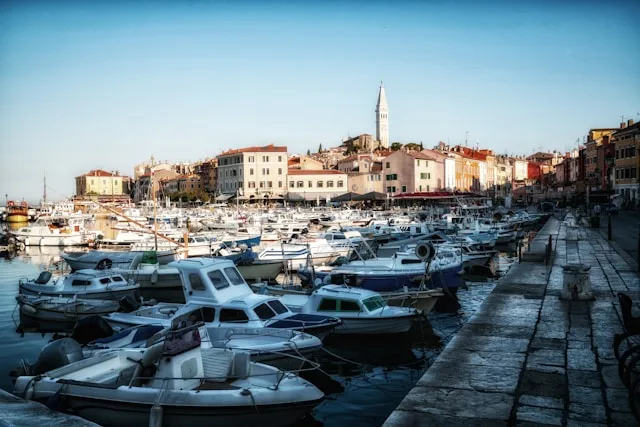
Marseille's 12.8% Unemployment Rate Hides the Worst Executive Hiring Market on the French Mediterranean
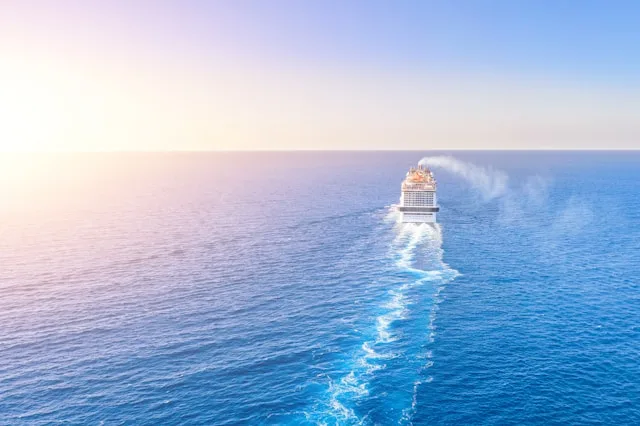
Marseille has more unemployed residents than any comparable French city. It also cannot fill its most senior hospitality and cruise operations roles. That contradiction is not a paradox waiting to be resolved. It is a permanent feature of this market, and any organisation hiring leadership talent here without understanding it will lose months, candidates, and competitive position.
The city's tourism infrastructure tells a growth story. France's largest cruise port processed an estimated 1.55 million passenger movements in 2024 across 520 ship calls. MuCEM draws 2.3 million visitors a year. Approximately 1,200 new hotel rooms are under construction for 2026 opening. The trajectory is unmistakable: more passengers, more rooms, more visitors, more revenue. But the talent required to run that infrastructure at the senior level does not exist in Marseille in sufficient numbers. It must be found, approached, and moved from elsewhere.
What follows is a structured analysis of the forces shaping Marseille's cruise, tourism, and hospitality sector in 2026, the specific executive roles where scarcity is most acute, what those roles pay, and what organisations hiring in this market need to understand before they begin a search. The gap between Marseille's labour surplus and its leadership deficit is not closing. It is widening as every new hotel opening and terminal expansion adds demand to a pool that was already insufficient.
Marseille's Tourism Economy in 2026: Growth Colliding with Capacity
The numbers suggest a market approaching its pre-pandemic ceiling. The Grand Port Maritime de Marseille projects 1.7 to 1.8 million cruise passenger movements in 2026, approaching but still short of the 1.9 million peak reached in 2019. This stabilisation reflects environmental capacity limits rather than any softening in demand. The GPMM's "Port Horizon 2025" infrastructure programme has completed the expansion of Terminal Cap Janet, adding 15% berth capacity. Whether environmental permits allow full utilisation remains uncertain.
Across the broader metropolis, direct tourism employment stands at an estimated 28,000 to 32,000 full-time equivalents, representing 8.5% of private sector employment. Factor in indirect and induced roles, and the total dependency reaches approximately 65,000 jobs. The seasonal concentration is extreme: Q2 and Q3 generate 65 to 70% of annual hospitality revenue, meaning recruitment activity compresses into two intense waves each year.
The Hotel Pipeline and Its Staffing Implications
The 1,200 rooms under construction or conversion for 2026 represent a 12% increase in Marseille's city-centre inventory. The Hilton Marseille Vieux-Port conversion accounts for 180 rooms. The Moxy Marseille Euroméditerranée adds 220 rooms for Marriott International. Twelve independent boutique properties in the Panier district collectively deliver more than 400 rooms.
Each of these openings requires a pre-opening management team: a general manager, a director of operations, a revenue manager, a director of sales, an F&B director. Twelve simultaneous boutique openings in a single district create a concentrated pulse of demand for exactly the same senior profiles. The branded openings compete for the same talent from a different direction, offering career progression within international groups. Independent operators counter with equity participation or profit-sharing. Both are drawing from the same insufficient local pool.
Cruise Infrastructure: Growth Under Regulatory Constraint
The tension between expansion and environmental regulation defines the cruise segment's workforce planning problem. The GPMM operates three dedicated terminals: Cap Janet, Joliette, and the Marseille Provence Cruise Terminal at La Joliette. Shore power infrastructure remains limited, with only two berths currently equipped for cold ironing. The "Marseille Respire" air quality initiative imposes strict emission controls on cruise vessels, with non-compliance penalties ranging from €50,000 to €200,000 per violation.
This creates contradictory hiring signals. Terminal operators need to staff for projected growth toward two million annual passenger movements by 2027 or 2028. Municipal environmental regulations and EU Green Deal maritime provisions may simultaneously impose daily passenger caps or reduce call volumes. Do you hire for expansion, or plan for contraction? The organisations operating in this space must hire leaders capable of managing both scenarios, and those leaders are exceptionally scarce.
The environmental compliance role itself illustrates the problem. Shore power infrastructure managers require a rare combination of maritime operations experience and electrical engineering qualifications. Fewer than 50 professionals with this dual competency currently reside in the Marseille metropolitan area. Candidates are predominantly sourced from Northern European ports such as Rotterdam and Hamburg, or from Middle Eastern cruise terminals in Dubai and Abu Dhabi.
The Skills Mismatch That Unemployment Data Cannot Reveal
Marseille's 12.8% metropolitan unemployment rate, according to INSEE's most recent figures, runs nearly double the national average of 7.4%. Youth unemployment among the 18 to 25 cohort reaches 22%. On the surface, this should mean abundant labour supply for a growing tourism sector.
It does not. The tourism sector reports persistent inability to fill 15 to 20% of seasonal positions, and the scarcity at executive level is acute. The unemployment surplus and the hospitality deficit coexist because they describe entirely different populations.
The unemployed population concentrates in Marseille's peripheral arrondissements, the 13th through 16th, where housing is affordable but public transport connectivity to central tourism employers is poor. The executive roles that remain unfilled require trilingual capabilities, international brand experience, and digital fluency that the local labour market cannot supply in volume. Between these two populations sits a gap that no amount of aggregate unemployment can bridge.
This is the analytical core of the Marseille hiring challenge. It is not a shortage in the conventional sense. It is a mismatch between where the people are and where the jobs are, between the skills that exist locally and the skills that senior roles demand, and between the compensation these roles offer and the cost of living in the arrondissements where those roles are based.
Housing affordability compounds the problem. Central Marseille, the 1st through 7th arrondissements where hotels and cruise terminals operate, has experienced 18% rent inflation between 2020 and 2024, according to SeLoger.fr rental index data. Hospitality workers at every level are being displaced outward. For senior hires relocating from Barcelona, Dubai, or Paris, the cost-of-living calculation includes housing that has repriced materially in four years. For operational staff, it means early morning commutes on congested routes with limited public transport for shift work hours.
Where the Executive Talent Gaps Are Most Acute
Hospitality job postings in the Bouches-du-Rhône department increased 34% year-over-year in Q2 2024, according to Pôle Emploi's labour market analysis. Time-to-fill for skilled positions extended from 28 days in 2019 to 47 days. That aggregate figure understates the problem at the senior level, where specific roles routinely exceed four to six months unfilled.
Luxury Hotel General Managers
This is the most passive candidate category in the market. An estimated 90% or more of qualified luxury hotel general managers are not actively seeking new roles. Average search duration for an external placement runs four to six months, driven partly by the three-month notice period standard in French employment contracts and partly by the dynamics of counteroffers that employers use to retain departing leaders.
The trilingual requirement intensifies the scarcity. Properties targeting Gulf state and Chinese tour operator segments need general managers fluent in French and English plus Arabic or Mandarin. Luxury hotel openings in the Euroméditerranée district regularly encounter six to nine month search timelines for these profiles, according to aggregate search duration data from industry compensation surveys. Employers routinely approach candidates at existing Marseille properties or competing Mediterranean markets such as Barcelona and Lisbon, offering 20 to 25% salary premiums to secure them.
Revenue Management Directors
An estimated 85 to 90% of revenue management directors operate as passive candidates. Average tenure in the current role is 4.2 years. These professionals do not monitor job boards. Recruitment occurs through industry conferences, HFTP events, or direct approaches by retained search partners.
The capability requirement is evolving. Advanced proficiency in IDeaS, Duetto, or Atomize platforms is now table stakes. The premium attaches to candidates who combine these platforms with Python and SQL data manipulation skills. This profile is scarce in Marseille's regional market compared to Paris or London. A 15 to 20% compensation premium applies for candidates with advanced analytics and AI pricing tool expertise.
Digital Marketing and Distribution Leaders
Digital marketing and e-commerce director roles for tourism groups show a 68% vacancy rate after 90 days on the market, compared to 34% for equivalent roles in Paris. The gap reflects severe scarcity in omnichannel tourism distribution expertise: OTA management, Booking.com Genius programme optimisation, Expedia TravelAds, and meta-search bidding algorithms. Marseille sits 40% below demand for senior-level OTA strategists when benchmarked against Barcelona. The candidates who hold these skills can work from anywhere and frequently do. Persuading them to relocate to Marseille requires a proposition that extends well beyond compensation.
Cruise Terminal Operations and Environmental Compliance
Cruise terminal operations managers represent an estimated 80% passive ratio within a total addressable market of just 120 to 150 qualified professionals in Southern France. Movement occurs primarily through internal promotion within port authorities or lateral transfers between Marseille, Toulon, and Nice terminals. The market is a closed ecosystem.
Environmental compliance and shore power infrastructure managers face vacancy periods exceeding four months. The cold ironing transition demands candidates who bridge maritime safety protocols under the ISPS Code with electrical engineering qualifications. These professionals command substantial premiums and are almost always sourced internationally.
Compensation: What These Roles Actually Pay
Marseille's hospitality compensation sits in a specific position relative to its competitors. It is materially below Paris, slightly below Barcelona for cruise operations, and fundamentally non-competitive with Dubai's tax-free packages. Understanding these differentials is essential for any organisation structuring an offer.
At the senior specialist and manager level, a hotel operations manager overseeing a property of 150 rooms or more earns €58,000 to €72,000 in base salary, with luxury properties at the upper range and total compensation reaching €65,000 to €85,000 including bonus. Revenue managers earn €52,000 to €68,000 base. F&B directors command €55,000 to €70,000 base, rising above €75,000 for Michelin-starred property experience. Cruise terminal operations managers earn €62,000 to €78,000 on the public sector scale at GPMM, with private terminal operators paying €68,000 to €85,000.
At the executive level, luxury hotel general managers earn €90,000 to €130,000 base, with international branded properties pushing to €110,000 to €150,000 including bonus potential. Regional directors of operations overseeing three to six properties across Provence-Alpes-Côte d'Azur earn €120,000 to €160,000 base. Directors of sales and marketing for hotel clusters earn €85,000 to €110,000, with a 10 to 15% premium for MICE specialisation driven by Euroméditerranée conference centre demand.
The competitive gap with Paris is stark. A hotel general manager in Paris commands €140,000 to €180,000 for an equivalent role, a 30 to 40% premium over Marseille. Barcelona's cruise port, handling 2.1 million passengers annually, offers 15 to 20% higher compensation for terminal operations roles while maintaining a lower cost of living by approximately 8% according to Numbeo indices. Dubai's tax-free salaries deliver an effective 25 to 35% premium before considering the career acceleration that market offers.
The implication for salary benchmarking is clear. Organisations hiring at the executive level in Marseille must compete not with local market rates but with the rates offered by every Mediterranean city and Gulf state capable of attracting the same candidate. Independent operators have begun offering equity participation and profit-sharing arrangements to close the gap. Branded operators counter with progression pathways to regional or corporate roles. Both strategies acknowledge that base compensation alone will not move the candidates this market needs.
The Competitors Pulling Talent Out of Marseille
The brain drain operates on three axes, each targeting a different experience band and role type.
Paris draws senior hospitality executives through career trajectory. A general manager move to Paris positions a candidate for regional or corporate headquarters progression within international hotel groups. The 30 to 40% salary premium is the immediate incentive. The long-term incentive is visibility within a larger organisation. Marseille properties, particularly independents, struggle to match this with anything other than lifestyle and autonomy.
Barcelona competes directly for Mediterranean cruise and digital tourism talent. Its cruise port is larger. Its compensation for terminal operations and port agency roles is higher. Its cost of living is lower. Industry reports indicate that some Marseille-based cruise executives maintain cross-border commuting arrangements along the Perpignan-Barcelona corridor, effectively working in Spain's market while nominally residing in France.
Dubai targets the 8 to 12 year experience level most aggressively. This is the demographic of hotel GMs and F&B directors who have built their careers in European luxury hospitality and are seeking international exposure. Tax-free salaries and rapid career acceleration make Dubai an offer that Marseille's market cannot match financially. The result is a persistent outflow of mid-career leaders at exactly the seniority level where Marseille's growth demands the most hiring.
Lyon competes on a different dimension: stability. Its corporate client base in pharmaceutical and biotech sectors provides year-round employment for corporate travel management and MICE professionals. For a senior MICE specialist weighing Marseille's seasonal revenue concentration against Lyon's steady demand profile, the choice often favours predictability. This competition is quieter but material.
The cumulative effect is that Marseille's executive talent pool is being drawn down from multiple directions simultaneously, while the local supply of replacements depends almost entirely on developing or relocating professionals from markets that are themselves competing for the same people. Any search strategy that begins and ends with the local market will fail.
What This Means for Organisations Hiring in Marseille
The central insight of this market is that capital has moved faster than human capital can follow. Terminal expansions, hotel conversions, boutique developments, and shore power installations all represent committed investment. The professionals required to operate these assets at the leadership level were never present in Marseille in sufficient numbers, and the growth trajectory has accelerated demand without a corresponding acceleration in supply.
For hiring leaders, the practical consequences are specific. A search for a luxury hotel general manager in this market must reach candidates in Barcelona, Lisbon, Dubai, and Paris. It must account for three-month French notice periods. It must present a compensation package that acknowledges the competitive differentials documented above. And it must do all of this within a timeline dictated by pre-opening schedules and seasonal revenue windows that do not flex.
The same applies to cruise terminal operations leaders, revenue management directors, and digital distribution specialists. These are not roles that can be filled through job advertising. The passive candidate ratios, ranging from 80% to over 90% in the most critical categories, mean that the vast majority of qualified professionals will never see a job posting. They must be identified, mapped, and approached directly through proactive talent identification and direct headhunting methods.
KiTalent's AI-enhanced direct search methodology is built precisely for markets with this profile: high growth, acute executive scarcity, and a candidate population that is overwhelmingly passive. By combining AI-powered talent mapping with direct candidate engagement, KiTalent delivers interview-ready leadership candidates within 7 to 10 days, at a fraction of the four to six month timelines that define traditional searches in Marseille's hospitality market. The pay-per-interview model means organisations invest only when they meet qualified candidates, eliminating the upfront retainer risk that makes long searches financially punishing.
With a 96% one-year retention rate across 1,450 executive placements and an average client relationship exceeding eight years, KiTalent brings both the methodology and the track record that this market demands. For organisations competing for leadership talent across hospitality and tourism, where a six-month vacancy in a general manager role costs a hotel its entire peak season, speak with our executive search team about how we approach senior hospitality searches in the Mediterranean market.
The Regulatory Pressure That Makes Every Hire More Urgent
Two regulatory forces are compressing the timeline for every senior hire in Marseille's tourism sector.
The first is environmental. The "Marseille Respire" air quality programme and EU Green Deal maritime provisions are creating a new category of compliance role that barely existed five years ago. Environmental compliance officers for cruise operations must understand both maritime regulations and municipal air quality standards. The penalty structure, €50,000 to €200,000 per violation, means the cost of not having this role filled is not hypothetical. It is a defined financial exposure that accrues with every non-compliant ship call.
The second is operational. France's 35-hour working week and mandatory rest period regulations complicate seasonal staffing flexibility in ways that Spanish and Italian competitors do not face. The administrative burden of SAF-T reporting for VAT and payroll digitalisation disproportionately affects independent hotels lacking enterprise resource planning systems. These regulatory realities increase the value of senior operations and finance leaders who can manage compliance without sacrificing operational efficiency. They also make those leaders harder to find, because the required expertise is jurisdiction-specific and does not transfer cleanly from other Mediterranean markets.
Local resident opposition to cruise tourism adds a third dimension. Protests against overtourism in the Vieux-Port and Panier districts have intensified through 2023 and 2024, with potential regulatory caps on daily passenger disembarkation under discussion by the municipality. A senior leader managing cruise terminal operations in Marseille must now balance commercial growth objectives against community stakeholder management, a combination of skills that narrows the candidate field further still.
Frequently Asked Questions
What is the average salary for a luxury hotel general manager in Marseille in 2026?
A luxury or upper-upscale hotel general manager in Marseille earns €90,000 to €130,000 in base salary. International branded properties operated by Marriott, Hilton, or Accor's luxury division push total compensation to €110,000 to €150,000 including performance bonus. Independent luxury boutiques increasingly offer equity participation or profit-sharing to compete. These figures sit 30 to 40% below equivalent roles in Paris and trail Dubai's tax-free packages by an effective 25 to 35%.
Why is Marseille's hospitality sector struggling to hire despite high local unemployment?
Marseille's 12.8% unemployment rate masks a deep skills mismatch. The unemployed population concentrates in peripheral arrondissements with limited transport connectivity to central tourism employers. Senior hospitality roles require trilingual capabilities, international brand experience, and digital fluency that the local labour market cannot supply. Housing affordability constraints in central arrondissements further limit workforce mobility. The result is simultaneous surplus and scarcity operating in the same city.
How long does it take to fill a senior hospitality role in Marseille?
Time-to-fill for skilled hospitality positions in the Bouches-du-Rhône department has extended from 28 days in 2019 to 47 days. Senior roles take considerably longer. Luxury hotel general manager searches typically run six to nine months when trilingual capabilities are required. Digital marketing and e-commerce director roles show a 68% vacancy rate after 90 days on the market. KiTalent's direct headhunting methodology compresses these timelines by reaching passive candidates who never appear on job boards.
What executive roles are hardest to fill in Marseille's cruise and tourism sector?
The most acute scarcity affects four categories: luxury hotel general managers with trilingual capabilities (90%+ passive candidate ratio), revenue management directors with advanced analytics skills (85 to 90% passive), environmental compliance and shore power infrastructure managers (fewer than 50 qualified professionals in the metropolitan area), and digital marketing directors with omnichannel tourism distribution expertise (68% vacancy rate after 90 days).
How does Marseille's hospitality compensation compare to Barcelona and Paris?
Paris offers a 30 to 40% salary premium over Marseille for equivalent hotel leadership roles. Barcelona's cruise port pays 15 to 20% more for terminal operations and port agency roles while maintaining approximately 8% lower cost of living. Dubai's tax-free salaries deliver an effective 25 to 35% premium. Organisations hiring in Marseille must benchmark against these competing markets, not against local rates, to attract leadership-calibre candidates. Market benchmarking data is essential before structuring any senior offer.
What is KiTalent's approach to hospitality executive search in Mediterranean markets?
KiTalent uses AI-enhanced talent mapping combined with direct headhunting to identify and engage passive candidates who represent 80 to 90% of the qualified talent pool for senior hospitality roles. The pay-per-interview model eliminates upfront retainer risk. Interview-ready candidates are delivered within 7 to 10 days. With a 96% one-year retention rate and more than 1,450 executive placements completed, KiTalent is built for markets where traditional job advertising reaches fewer than 20% of viable candidates.