Mecca's Pilgrim Economy Is Scaling Fast. Its Talent Pipeline Is Not Built for the Surge.
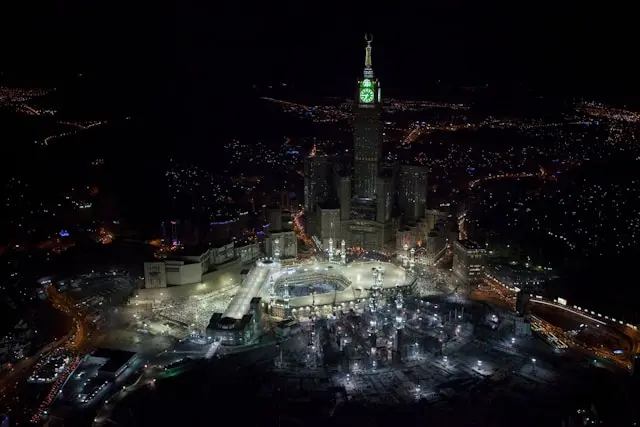
Mecca processed over 15 million Umrah visitors in 2025 alongside its annual Hajj intake of roughly 2 million pilgrims. The city's retail and foodservice sector earned 60 to 70 per cent of its annual revenue in a window of six to eight weeks. That concentration of demand is not new. What is new is the infrastructure built to absorb it: the SR 50 billion Masar Makkah project, which will add 2,500 retail units and 400 food and beverage outlets along the pilgrim route to the Grand Mosque, is entering its critical delivery phase in 2026.
The problem is not capital. Capital has arrived at scale, channelled through the Public Investment Fund and Vision 2030 directives that target 30 million annual Umrah visitors by 2030. The problem is that the leaders required to operate this infrastructure at pilgrim-season intensity do not exist in sufficient numbers. A Hajj catering operations director capable of managing 50,000 meals per day needs HACCP certification, bilingual Arabic and English fluency, and specific experience with seasonal surge mobilisation. That profile takes years to develop and cannot be manufactured by a quota system. A supply chain director who understands reverse logistics for pilgrim baggage, cold chain transport across Mecca Province, and Saudi customs clearance for religious goods is a candidate pool measured in dozens, not hundreds.
What follows is a ground-level analysis of the forces reshaping Mecca's commercial cluster, the specific executive roles where shortages are most acute, and what organisations operating in this market must understand about hiring strategy before the next Hajj season arrives. The data draws on 2024 and 2025 labour market surveys, compensation benchmarks, and recruitment intelligence from across the Kingdom and the wider GCC.
A Market Split in Two: The Bifurcation Defining Mecca's Commercial Sector
Mecca's retail and foodservice economy is no longer a single market. It is two markets operating under the same municipal licensing framework but serving fundamentally different customer segments with fundamentally different capital structures.
The Formalised Religious Tourism Economy
The first market is the formalised religious tourism economy. This is the Abraj Al-Bait complex with its 600 retail outlets across 150,000 square metres of gross leasable area. It is the Masar Makkah project introducing thousands of new commercial units. It is luxury abaya retailers, international F&B franchises, and IoT-tracked logistics networks connected to the Ministry of Hajj and Umrah's Nusuk digital platform. This segment absorbs 80 per cent of new capital investment. It employs only 35 per cent of the sector's workforce.
The Traditional Pilgrim Economy
The second market is the traditional pilgrim economy. The Al-Khalil Road gold souk, with its 350 independent jewellers employing 2,500 workers. The Al-Hijaz textile market, with 1,200 wholesalers and retailers selling Ihram clothing and religious textiles. The informal laundries, small transport operators, and seasonal caterers who collectively process an estimated 65 per cent of transaction volume for mass-market pilgrims. This segment faces 15 to 20 per cent annual rent inflation driven by urban regeneration, and 12 per cent of its food and beverage vendors faced temporary closure in 2024 due to new fire safety regulations.
The executive talent implications of this bifurcation are severe. Capital and media attention concentrate on the formalised economy. The traditional economy, which serves the majority of pilgrims, is being squeezed by regulation and displacement without a corresponding investment in the operational leaders who could help it modernise. The result is a widening service gap for lower-income pilgrims and a concentration of executive hiring demand in the formalised segment, where the roles are harder to fill and the candidate pools are thinner. Understanding how executive search addresses these structural mismatches is essential for any organisation entering this market.
What 18 Million Pilgrims in 2026 Means for Hiring Demand
The trajectory established through 2025 has continued into 2026. Umrah pilgrim numbers are now approaching 18 to 20 million annually, up from 13.55 million in 2023. The King Abdulaziz International Airport expansion in Jeddah is increasing passenger capacity to 30 million per year, which feeds directly into Mecca's supply chain throughput. Hajj-specific quick service restaurant postings and pilgrim convenience retail positions are growing at 12 to 15 per cent year on year.
The demand increase is not evenly distributed across roles. Frontline service positions, while numerically dominant, remain staffed through established expatriate recruitment channels from Egypt, Pakistan, Bangladesh, and the Philippines. The bottleneck sits at the operational leadership level: the directors and vice presidents who design the systems that make a 400,000-meal-per-day catering operation function during peak season, or who manage a retail podium serving pilgrims from 80 countries with different languages and purchasing behaviours.
Job postings for Hajj Operations Manager roles increased 45 per cent year on year in the third quarter of 2024. Qualified candidate supply simultaneously decreased 12 per cent, driven in part by Saudization-related expatriate visa restrictions. The retail sector reports 28 per cent of management roles at Store Manager level and above remaining vacant for 90 days or more. The equivalent figure in Riyadh is 18 per cent.
This gap is not cyclical. It reflects a systemic mismatch between the speed of infrastructure investment and the pace at which the human capital required to operate that infrastructure can be developed. Capital moved faster than talent could follow. That is the central tension defining this market in 2026.
The Three Roles Mecca Cannot Fill Fast Enough
Three executive categories exhibit the most acute shortages. Each combines technical certification requirements, linguistic demands, and operational experience that is unique to the pilgrim economy and cannot be sourced from adjacent sectors without material adaptation.
Director of Large-Scale Pilgrim Catering Operations
This role oversees central kitchen operations, HACCP compliance, and the seasonal mobilisation of thousands of temporary workers to produce 20,000 to 50,000 meals per day. The Saudi Catering & Contracting Company, the primary contractor for Ministry of Hajj feeding programmes, has capacity to produce 400,000 meals daily during peak season and employs 8,500 seasonal workers alongside 1,200 permanent staff. The operational complexity is closer to military logistics than to conventional hospitality.
Approximately 85 per cent of qualified candidates for these roles are passive, according to the Hays Saudi Arabia Salary Guide 2024. Average tenure in current positions exceeds 4.5 years. Time-to-fill for a Head of Catering Operations at a major Hajj feeding contractor typically runs six to nine months. Recruitment intelligence from the Saudi Foodservice Industry Association indicates that a typical search in 2024 for a role at this level received zero qualified applications within the first 90 days, forcing the employer to promote internally and backfill lower positions.
At executive level, compensation runs SAR 70,000 to 95,000 per month, with seasonal performance bonuses equivalent to three to six months of salary. Even at these levels, the pool of candidates who combine HACCP certification, bilingual Arabic and English proficiency, and direct experience managing Hajj-scale food production is vanishingly small. This is not a role where organisations can afford the hidden cost of a wrong executive hire. A failed placement during Hajj season carries reputational and regulatory consequences that extend well beyond the financial.
Supply Chain Director for Hajj and Umrah Logistics
The second critical shortage is in Hajj-specific supply chain leadership. Almajdouie Group operates 1.2 million square metres of warehousing in Mecca Province and processes 25,000 tonnes of pilgrim luggage and supplies annually through its dedicated Hajj logistics terminal. Saudi Post's Wasseel pilgrim luggage service processed 1.8 million bags in 2024. These are not conventional distribution networks. They require expertise in seasonal surge management, customs clearance for religious goods, reverse logistics for pilgrim baggage, and cold chain transport at extreme temperatures.
The talent pool is estimated at 70 to 75 per cent passive. According to the Cooper Fitch KSA Salary Guide 2024, logistics firms serving the pilgrim sector report typical poaching premiums of 30 to 35 per cent above standard supply chain salaries. A typical recruitment scenario involves a Mecca-based logistics firm recruiting a Supply Chain Director from a Dubai-based competitor, offering a SAR 25,000 monthly premium to secure the transfer. That premium reflects the scarcity of candidates who hold both GCC logistics certification and Saudi religious tourism operational knowledge.
Compensation at executive level ranges from SAR 75,000 to 105,000 per month, with housing and transport allowances adding 25 to 30 per cent. By 2026, the Nusuk platform's integration of retail and F&B booking will require supply chain firms to adopt API-connected inventory management systems. This adds a technical layer to an already narrow candidate specification. Understanding how to map talent pools in niche logistics markets is no longer optional for employers in this space.
Senior Retail Operations Director for Luxury Mall Environments
The third shortage centres on retail operations leadership for Abraj Al-Bait and the incoming Masar Makkah retail podiums. These roles require international luxury retail brand experience, tenant mix optimisation expertise, and pilgrim customer experience design capabilities. The Abraj Al-Bait complex alone houses 600 retail outlets anchored by high-end watch, jewellery, and abaya retailers serving affluent pilgrims.
Sixty per cent of candidates for these roles are passive, particularly Saudi nationals with bilingual capabilities and international retail brand experience. These candidates are typically retained through equity-equivalent long-term incentive plans by regional mall operators in Riyadh and Dubai. Compensation at VP level ranges from SAR 80,000 to 120,000 per month, with considerable variation based on profit-and-loss responsibility.
The hiring difficulty here is compounded by Saudization requirements. The retail sector must achieve 30 per cent Saudi nationalisation in sales roles by mid-2026, up from 25 per cent in 2024. Current Saudi participation in retail sales roles stands at just 18 per cent. Young Saudi nationals overwhelmingly prefer administrative or technology sector employment over frontline retail. This creates a double bind: organisations need Saudi national leaders who can build Saudi national teams, but those leaders are among the scarcest profiles in the market.
The Saudization Paradox: Why the Quota and the Candidate Pool Are Moving in Opposite Directions
Here is the analytical claim that the data supports but that is rarely stated directly: Saudization quotas in Mecca's retail and foodservice sector are not solving the talent problem. They are deepening it. The quotas restrict the expatriate labour pool that has historically staffed 78 per cent of the sector. At the same time, the Saudi nationals who are supposed to replace those workers are not entering frontline retail and catering roles. They are entering technology, government, and corporate headquarters positions in Riyadh, where career trajectories are faster and the work environment aligns more closely with their preferences.
The mandate carries real financial weight: fines of SAR 4,800 per month per unmet quota position, applied per establishment. For a multi-site retailer operating a dozen locations, non-compliance costs compound rapidly. But the supply of Saudi nationals willing and qualified to fill these roles is not responding to the mandate at the pace required. The gap between the 18 per cent current participation rate and the 30 per cent target by mid-2026 represents thousands of positions that must be filled with candidates who largely do not yet exist in the pipeline.
This creates a perverse incentive structure. Organisations that invest in developing Saudi national talent are rewarded with higher costs in the short term and the risk of losing those trained employees to competitors or to Riyadh-based employers offering better career paths. Organisations that fail to invest face mounting fines and, eventually, licence suspension. Neither path produces the experienced operational leaders that the sector's expansion demands. The constraint is not regulatory. It is developmental. You cannot recruit experience that does not yet exist in sufficient quantity, and no quota system accelerates the clock on developing that experience.
For organisations confronting this tension, the most effective approach is to simultaneously recruit experienced expatriate leaders who can build and train Saudi national teams. That requires identifying passive senior candidates across multiple geographies who bring the operational expertise to manage at pilgrim scale while also possessing the mentorship capability to develop Saudi successors.
The Geography of Competition: Why Dubai and Jeddah Keep Winning
Mecca does not compete for executive talent on a level field. It competes against Dubai, which offers 15 to 25 per cent higher net compensation for equivalent hospitality and retail operations roles due to tax-free income. It competes against Jeddah, located just 70 kilometres away, which offers a coastal lifestyle, a more flexible social environment, and a 12 per cent lower cost of living for expatriates. It competes against Riyadh, which offers faster promotion tracks into regional director and corporate headquarters roles.
The dynamics of this competition are specific and measurable. According to data from the Cooper Fitch KSA Salary Guide, Dubai-based executives of Lebanese, Jordanian, or Egyptian origin who hold GCC hospitality and F&B experience require premiums of 30 per cent or more to relocate to Mecca's more restrictive environment. Jeddah-based executives increasingly resist daily commuting or relocation to Mecca due to higher congestion and stricter religious environment constraints, requiring employers to offer housing allowances or dedicated shuttle services.
Riyadh presents a different competitive challenge. As the Vision 2030 administrative centre, it offers stronger career trajectories into government and corporate headquarters roles. Saudi national retail and F&B executives in Riyadh report faster promotion tracks to regional director level. This pulls exactly the talent that Mecca's Saudization mandates require.
The net effect is a market where the compensation required to attract and retain executive talent is structurally higher than in any comparable Saudi city. Yet the seasonal revenue concentration of 60 to 70 per cent in a six-to-eight-week window makes sustained high compensation packages financially challenging for many employers, particularly traditional souk operators and smaller catering firms. This is why the counteroffer dynamic is particularly destructive in this market. An employer who spends nine months recruiting a catering operations director and then loses them to a Dubai counteroffer has lost not just a candidate but an entire Hajj preparation cycle.
What a Search Strategy for This Market Actually Requires
Conventional executive recruitment methods reach a fraction of the viable candidate pool in Mecca's pilgrim economy. When 85 per cent of qualified catering operations directors and 70 to 75 per cent of supply chain directors are passive, the hidden majority of candidates who are not actively looking represents the only realistic source of qualified hires.
The Kafala sponsorship system adds a further constraint. Expatriate workers under individual sponsorship cannot easily transfer between employers during Hajj season, reducing labour market liquidity at precisely the moment when demand spikes. A candidate identified in March for a role starting before Hajj in June may face legal barriers to transfer that add weeks or months to the process. Search timelines in this market must account for visa processing, sponsorship transfer, and the 90-day temporary work visa cap that applies to seasonal logistics and catering positions.
For organisations building leadership teams in Mecca's retail and foodservice sectors, the practical requirements are clear. First, candidate identification must begin six to nine months before the role is needed, not three. Second, the search must extend beyond Saudi Arabia into Dubai's events logistics sector, Jeddah's port logistics community, and the wider GCC hospitality management pool. Third, the compensation proposition must be designed to offset Mecca's lifestyle constraints with specific, tangible benefits: housing within the Haram vicinity, family schooling support, and clearly defined career progression that does not dead-end in an operational silo.
The firms that succeed in this market are those that treat executive hiring as a strategic function rather than an administrative one. They invest in proactive talent pipelines that maintain relationships with potential candidates across multiple geographies year-round, rather than launching searches only when a vacancy opens. They use market benchmarking to ensure their compensation packages are competitive against Dubai and Riyadh, not just against other Mecca employers. And they recognise that in a market where the most qualified candidates are not looking, the only way to reach them is through direct, confidential, AI-enhanced headhunting that maps the entire available talent pool before approaching a single candidate.
What Comes Next: The 2026 Inflection Point
The convergence of forces in 2026 makes this the most consequential year for executive hiring in Mecca's commercial sector since the launch of Vision 2030. The Masar Makkah development is delivering its first phase of retail and F&B units. Saudization quotas are escalating to 30 per cent. The Nusuk platform is requiring digital integration from supply chain firms. Pilgrim numbers are approaching 20 million. And commercial rents within one kilometre of the Haram have increased 200 per cent since 2019, displacing traditional traders and compressing margins for any operator without institutional-grade capital.
The organisations that fill their leadership gaps before the next Hajj season will operate from a position of strength. Those that do not will face a compounding problem: each season without the right operational leadership degrades service quality, increases regulatory risk, and makes the organisation less attractive to the candidates it needs. KiTalent delivers interview-ready executive candidates within 7 to 10 days through AI-powered talent mapping that reaches the passive specialists this market demands. With a 96 per cent one-year retention rate across 1,450 executive placements and a pay-per-interview model that eliminates upfront retainer risk, the approach is designed for markets exactly like this one: high stakes, thin candidate pools, and zero tolerance for slow searches.
For organisations competing for catering operations directors, supply chain leaders, or retail operations executives in Mecca's pilgrim economy, where the candidates you need are passive, geographically dispersed, and structurally difficult to move, speak with our executive search team about how we approach this market before the next Hajj cycle begins.
Frequently Asked Questions
What is the average salary for a Hajj catering operations director in Mecca?
At executive level, a Director of Catering Operations or VP of Operations in Mecca commands SAR 70,000 to 95,000 per month in base salary, with seasonal performance bonuses equivalent to three to six months of additional pay. At senior manager level, the range is SAR 35,000 to 50,000 per month excluding housing. These figures reflect the 2024 compensation benchmarks from the Hays and Cooper Fitch KSA salary guides. The seasonal bonus component is distinctive to Hajj-facing roles and reflects the concentration of operational intensity into a six-to-eight-week peak period. Candidates with direct Hajj-scale experience command the top end of these ranges.
Why is executive hiring in Mecca harder than in Riyadh or Dubai?
Three factors converge. First, 60 to 85 per cent of qualified candidates for Mecca's critical roles are passive and not actively seeking new positions. Second, Mecca's lifestyle environment is more restrictive than Dubai or Jeddah, requiring compensation premiums of 30 per cent or more to attract Dubai-based executives. Third, Saudization quotas are tightening the expatriate labour pool while Saudi nationals overwhelmingly prefer roles in Riyadh's corporate sector. These dynamics mean that conventional recruitment approaches reach only a fraction of viable candidates in this market.
How does Saudization affect retail hiring in Mecca?
The retail sector must achieve 30 per cent Saudi national workforce participation by mid-2026. Current participation stands at 18 per cent. Non-compliance carries fines of SAR 4,800 per month per unmet position. The gap creates acute demand for Saudi national managers who can both perform senior operational roles and build Saudi teams beneath them. Employers face a structural challenge because young Saudi nationals prefer technology and administrative roles over frontline retail, making recruitment and retention of qualified Saudi retail talent one of the sector's most pressing concerns.
What is the Masar Makkah project and how does it affect hiring?
Masar Makkah is a SR 50 billion infrastructure development that will add 2,500 retail units and 400 food and beverage outlets along the pilgrim route to the Grand Mosque. Its first phase is entering delivery in 2026, increasing formal retail stock by approximately 30 per cent. This expansion requires hundreds of experienced retail operations managers, F&B directors, and supply chain leaders who do not currently exist in the local market in sufficient numbers. The project is expected to intensify competition for senior leadership in retail and hospitality across the entire GCC.
How can organisations find passive executive candidates for Mecca's pilgrim economy?
The most effective approach combines AI-powered talent mapping with direct headhunting across multiple geographies. The relevant candidate pool spans Mecca, Jeddah, Dubai, and wider GCC hospitality and logistics sectors. Since 70 to 85 per cent of qualified candidates are not actively job seeking, organisations must engage them confidentially through direct search rather than job advertising. KiTalent's methodology identifies and approaches these candidates through systematic market mapping, delivering interview-ready shortlists within 7 to 10 days and achieving a 96 per cent one-year retention rate on placed executives.
What are the biggest risks of a failed executive hire in Mecca's pilgrim sector?
A failed senior hire in this market carries disproportionate consequences because of the seasonal revenue concentration. If a catering operations director or supply chain leader departs or underperforms during Hajj preparation, the organisation cannot simply restart the search mid-cycle. The six-to-nine-month typical time-to-fill means the gap may persist through an entire Hajj season, resulting in degraded service quality, potential regulatory sanctions from Balady municipal licensing, and reputational damage with the Ministry of Hajj and Umrah that can affect future contract eligibility.