Mecca's Pilgrimage Hospitality Sector in 2026: Why the Fastest Growing Market Cannot Find the Leaders It Needs
Mecca's hotel sector generated 95% occupancy and daily rates above $670 during Ramadan 2024. Then, for months afterwards, that same inventory dropped below 40% occupancy. No other hospitality market on earth operates under this degree of seasonal violence, and no other market asks its leaders to manage both extremes simultaneously while adhering to religious compliance standards that have no parallel in conventional hotel management.
That volatility sits at the centre of a hiring problem that is getting worse, not better. The Saudi government's Vision 2030 programme targets 30 million annual Umrah visitors by the end of the decade. Umrah numbers reached 13.5 million through November 2024 and are projected to hit 18 to 19 million in 2026. The hospitality infrastructure is scaling to meet that demand: new towers, new keys, new management contracts with international brands. But the leaders required to run these operations do not exist in sufficient numbers. Supervisory vacancy rates in Mecca's hospitality sector run between 18% and 22% year-round. Senior Operations Director searches at five-star Haram-proximate hotels typically take 120 to 180 days to fill. The capital is arriving. The capacity is being built. The people are not.
What follows is a ground-level analysis of the forces shaping Mecca's pilgrimage hospitality talent market in 2026: where the shortages concentrate, why conventional recruitment methods cannot reach the candidates this market requires, and what senior hiring leaders need to understand before committing to a search in one of the world's most specialised employment environments.
A Market Unlike Any Other: Mecca's Hospitality Operating Model
The first thing any hiring executive must understand about Mecca's hospitality sector is that it operates under a hybrid public-private governance model that fundamentally limits what private employers can do. The Ministry of Hajj and Umrah controls pilgrim quotas, licenses service providers, and now administers all Umrah e-visa issuance through its Nusuk platform. The Hajj itself is capped at approximately 1.8 million international pilgrims under a fixed ratio of one pilgrim per thousand citizens of each Muslim-majority country. This ceiling exists regardless of how many hotel rooms are built.
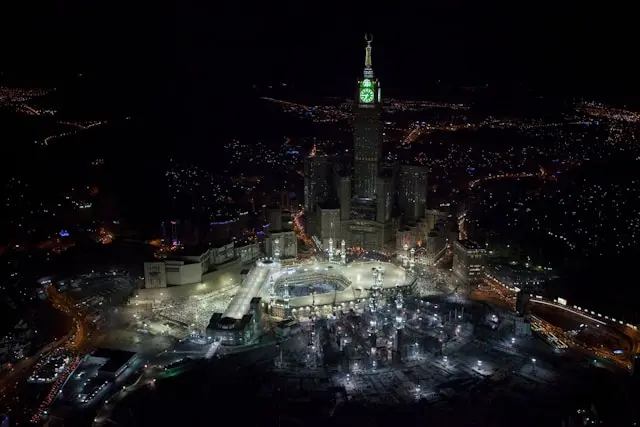
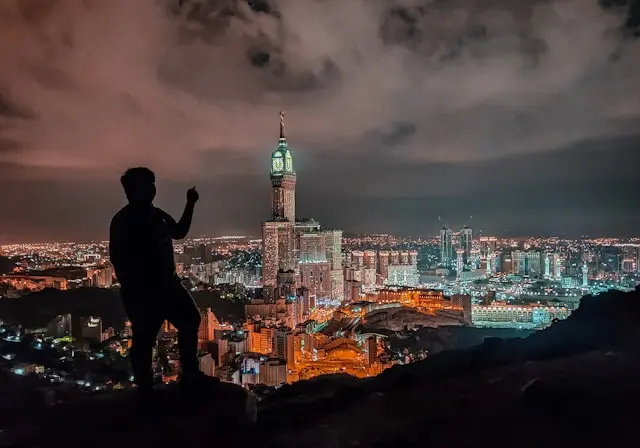
Private operators function within these constraints. The Abraj Al-Bait Complex, which remains the physical anchor of Mecca's premium hospitality zone, comprises over 10,000 rooms operated by Fairmont, Raffles, Swissôtel, and Conrad under management contracts. Ownership sits with Saudi Binladin Group and entities connected to the Public Investment Fund. Jabal Omar Development Company, the largest publicly listed pilgrim accommodation provider, operates approximately 10,000 keys across 16 towers and is completing Phase 4 by mid-2026, adding another 2,500 keys managed by Hyatt and Marriott. Dur Hospitality is expanding with 1,200 new keys under development. Accor alone has over 30 properties in the city.
The scale is large. The growth is real. But the operating model creates a talent requirement that no other hospitality market replicates. Leaders in Mecca's hotel sector need the revenue management sophistication to handle extreme price elasticity between peak and trough, the regulatory knowledge to work within Ministry permitting systems, the linguistic range to serve pilgrim populations from Indonesia, Pakistan, Malaysia, Turkey, and dozens of other countries, and the cultural competency to manage operations under Islamic jurisprudential standards. Finding all of that in a single executive is the core hiring challenge.
The Seasonality Problem: Why Mecca's Business Model Creates a Talent Market That Defies Convention
Mecca's hospitality sector runs on what the data reveals as a 12-week peak model. Ramadan, the Hajj period, and the preparation weeks surrounding them generate 65% to 70% of annual revenue for Haram-proximate hotels. During those peaks, five-star properties in the zone within one kilometre of the Grand Mosque achieve occupancy above 95% and ADR between SAR 1,200 and SAR 2,500. During the off-season months of Muharram and Safar, occupancy collapses to 35% to 45%.
The Financial Consequences of Extreme Bifurcation
Average annual occupancy of 55% to 60% masks the operational reality of a 95%/20% peak-to-trough split. This bifurcation is not merely a pricing challenge. It defines the entire employment model. Hotels retain approximately 40% excess staff during off-seasons purely to ensure readiness for Hajj, compressing margins during the months when revenue is lowest. According to Knight Frank's investment analysis, this creates capital inefficiency that conventional hospitality management frameworks are not designed to address.
What This Means for Leadership Hiring
A Revenue Management Director in Dubai or London optimises around consistent demand curves. A Revenue Management Director in Mecca must build a pricing and staffing model that treats the same property as two fundamentally different businesses within the same calendar year. This is not a skill that transfers automatically from international luxury hospitality. It must be learned, and the learning curve is steep enough that employers cannot afford to get the hire wrong.
The consequence for search timelines is direct. A failed executive hire in this market does not merely cost the salary and replacement search fees. It costs a peak season. If a Revenue Management Director is hired in September and proves unable to manage the Ramadan pricing cycle by the following March, the hotel has lost the single largest revenue window of its year. There is no recovery period. The next Ramadan is twelve months away.
The Workforce Gap: 75,000 Additional Workers and Nowhere to Find Them
The Saudi Human Resources Development Fund, Hadaf, projects the need for 75,000 additional hospitality and service sector workers in Mecca Province by end-2026 to meet Vision 2030 targets. Forty percent of those positions are designated for high-skill supervisory and technical roles. That means roughly 30,000 supervisory-level positions need to be created and filled within two years.
Set that demand against supply. Saudi universities produce approximately 4,200 hospitality management graduates annually. Sector demand for Saudi supervisors alone exceeds 12,000. The arithmetic does not work. Even before accounting for attrition, the pipeline produces roughly one-third of what the market requires in Saudi nationals alone.
This supply deficit intersects with the Saudization requirements of the Nitaqat programme, which mandates 30% Saudi workforce composition for hospitality establishments with 50 or more employees. For sales and customer service roles in travel agencies, the target rises to 70%. Saudization rates in Mecca hotels have risen from 12% in 2019 to 22% by late 2024. But data from the Ministry of Tourism's quality assurance metrics shows that customer satisfaction scores for communication effectiveness declined by 8% over the same period.
Here is the analytical tension that the headline numbers do not reveal: the government's localisation drive and the market's linguistic requirements are pulling in opposite directions. The Umrah market is dominated by Indonesian, Urdu, Malay, and Turkish speakers. The expatriate workers who serve those populations most effectively come from the same source countries. Replacing them with Saudi nationals who may lack those languages creates a measurable service quality gap. Hiring strategies in this market have not yet resolved this trade-off. Those that attempt to treat Saudization purely as a compliance exercise, without investing in language training and cultural capability building, will find themselves compliant on paper and failing operationally.
Where the Talent Is Not: Passive Candidates and a Market That Job Boards Cannot Reach
The most critical roles in Mecca's hospitality sector are characterised by passive candidate markets so extreme that conventional recruitment is functionally useless.
General Managers at Haram-proximate hotels present a passive-to-active ratio of roughly 9:1. Between 85% and 90% of qualified candidates are employed and not looking. Their average tenure in current roles is 3.5 years, which is high for hospitality and reflects the difficulty of finding equivalent positions elsewhere. Active candidates for GM roles in this market often signal career distress or termination, not opportunity-seeking. The implication for any search firm relying on job advertising is stark: the candidates responding to your posting are disproportionately the ones you do not want.
Hajj Logistics Specialists present an even more extreme picture. Specialised knowledge of Ministry systems creates captive employment. These professionals move through referral networks, not job boards. The active-to-passive ratio is estimated at 1:9. Reaching them requires direct identification and approach through trusted intermediaries. The 80% of professionals who never appear on job boards are the entire market for this role category.
Sharia Compliance Officers in hospitality represent perhaps the scarcest category of all. Dual qualification in Islamic jurisprudence and hospitality management produces a candidate pool so narrow that it is estimated to be 100% passive. These professionals are recruited directly from competitors or from religious institutions. No job posting will reach them.
The original synthesis this data supports is not simply that demand exceeds supply. It is that Mecca has created a talent market where the most critical roles require a combination of skills that did not exist as a professional category ten years ago. Revenue management, crowd logistics, Sharia compliance, and multilingual pilgrim services used to be handled by separate people or separate organisations. The government's platform consolidation and the sheer growth in visitor numbers have compressed these functions into hybrid roles that require professionals who sit at the intersection of hospitality management, religious scholarship, and logistics engineering. You cannot recruit experience that does not yet exist in sufficient quantity. You can only identify the closest approximations and invest in their development.
The Competitor Markets Pulling Talent Away From Mecca
Mecca does not compete for talent in isolation. It competes against three markets that offer comparable compensation or better lifestyle conditions, and in some cases both.
[Riyadh](/riyadh-saudi-arabia-executive-search): The Giga-Project Premium
Riyadh's giga-projects, including NEOM, Diriyah, and Qiddiya, offer 20% to 35% higher base compensation for equivalent Operations Director roles. According to Cooper Fitch's salary data, General Managers from Mecca's Abraj Al-Bait complex have been recruited to Riyadh's religious tourism-adjacent developments with total compensation premiums of 30% to 40%. Riyadh also provides clearer long-term career trajectories toward regional VP roles across the MENA region and a more cosmopolitan living environment with fewer religious lifestyle restrictions. For a professional with a family, the quality-of-life calculus often favours Riyadh even before the compensation difference is considered.
Dubai and the Red Sea Coast
Dubai offers tax-free income and greater mobility between hospitality groups. Regional directors for Islamic hospitality brands based in Dubai frequently decline Mecca relocations despite higher nominal salaries. The family lifestyle preferences, according to STR Global's workforce mobility data, outweigh the financial offer. Closer to home, the Red Sea Project developments at Amaala and The Red Sea have created a parallel luxury hospitality ecosystem just 300 kilometres from Mecca. These properties offer similar compensation with better coastal living conditions and dramatically less extreme seasonality. Mid-level managers are moving from Mecca's hotel sector to the Red Sea coast, drawn by the prospect of working in luxury hospitality without the operational intensity that Mecca's peak seasons demand.
The pattern is consistent: Mecca pays a 15% to 25% premium over Jeddah for comparable roles, but it still lags behind Riyadh's giga-project compensation. The professionals who choose Mecca do so for reasons beyond money. They are motivated by religious significance, by the unique professional challenge of the market, or by deep personal connection to the pilgrimage mission. A search strategy that leads with compensation alone will lose to Riyadh every time.
The Compensation Bifurcation Hiding Inside the Averages
Aggregate hospitality wage growth in Saudi Arabia moderated to 3.2% in 2024, down from 6.1% in 2022. That figure is misleading. It describes a market that no longer exists as a single entity.
Executive compensation for Hajj-specific operations roles and Sharia-compliant hospitality management has accelerated to 12% to 15% annual growth. General hotel management salaries, by contrast, have stagnated. The market has split in two. One tier serves conventional hospitality functions that can be staffed from the broad Saudi and expatriate labour pool. The other tier serves the specialised religious tourism functions that define Mecca's unique value proposition.
At the executive level, a Director of Operations at a five-star Haram-proximate hotel commands SAR 45,000 to SAR 65,000 monthly. A Cluster Revenue Director earns SAR 40,000 to SAR 55,000. A Hajj/Umrah Country Manager sits at SAR 35,000 to SAR 50,000. Non-Saudi executives in senior roles also receive housing allowances of SAR 60,000 to SAR 100,000 annually and education allowances of SAR 30,000 to SAR 50,000 per child. These additional benefits represent material cost to employers and are a critical component of any competitive offer.
For organisations benchmarking packages, the market intelligence required to structure a competitive offer must reflect this bifurcation. Using aggregate Saudi hospitality data will result in offers that are 8% to 12% below what the specialised candidates actually command. That gap is enough to lose a hire.
The wider implication is that the compensation gap between Mecca's specialised roles and its generalist roles is widening fastest at exactly the seniority level where the most critical positions sit. VP-level Hajj operations leaders now cost 40% more than equivalent hotel operations VPs in the same city. The market is pricing the scarcity of religious tourism expertise separately from the scarcity of general hospitality talent. Hiring leaders who do not understand this distinction will systematically underbid.
What a Search in This Market Actually Requires
A senior executive search in Mecca's pilgrimage hospitality sector fails when it is run like a search in any other market. The reasons are specific and avoidable.
First, the candidate pool is almost entirely passive. For the most critical roles, active candidates represent 10% to 15% of the qualified market. A search that relies on job postings and inbound applications will see a fraction of the talent that exists. Direct headhunting methodology is not a premium option in this market. It is the baseline requirement.
Second, the Ministry of Hajj and Umrah imposes background checks that include both security clearance and religious knowledge verification. International hospitality searches for Director of Religious Tourism Services positions have reportedly stalled when otherwise qualified candidates failed these checks. The verification process is not a formality. A search that presents candidates who have not been pre-screened for Ministry requirements wastes months.
Third, the counteroffer dynamic in this market is severe. Current employers in Mecca know that their staff possess rare, non-transferable knowledge. When a valued Hajj Logistics Coordinator receives an approach, the incumbent employer's counteroffer is often immediate and substantial. A search process that moves slowly gives the current employer time to respond. Speed is not merely desirable. It determines whether the preferred candidate is still available when the offer is made.
Fourth, persuading a passive candidate to relocate to Mecca requires a different proposition than persuading them to relocate to Dubai or Riyadh. The lifestyle trade-offs are real. Candidates with families weigh educational options for their children, social environment for their spouses, and the intensity of the working calendar. The proposition must address all of these explicitly. An offer letter with a competitive salary and a housing allowance is not enough if the candidate's partner has concerns that nobody has taken the time to understand and address.
For organisations competing for senior hospitality and pilgrimage services leadership in Mecca, where the qualified candidates are passive, the verification requirements are unlike any other market, and the cost of a six-month vacancy includes a lost peak season, the difference between a search that delivers and one that stalls is method. KiTalent's AI-enhanced talent mapping identifies qualified candidates within this specialised market in days rather than months. The pay-per-interview model means organisations only invest when they are meeting candidates who have been pre-qualified against the specific requirements of Mecca's operating environment. With a 96% one-year retention rate across 1,450 executive placements, the approach is built for markets where getting the hire wrong is not an option.
Speak with our executive search team about how we approach senior hospitality and pilgrimage services hiring in Mecca and across the Gulf region.
Frequently Asked Questions
What makes executive hiring in Mecca's hospitality sector different from other Gulf markets?
Mecca's hospitality market requires a combination of skills that barely exists as a professional category elsewhere. Leaders must manage extreme seasonal occupancy swings of 95% to below 40%, comply with Ministry of Hajj and Umrah permitting requirements, serve multilingual pilgrim populations from dozens of countries, and operate under Islamic jurisprudential standards. The candidate pool for senior roles is 85% to 90% passive. These requirements make executive search in this market fundamentally different from hotel leadership hiring in Dubai, Riyadh, or any conventional hospitality market.
How long does it take to fill a senior hospitality role in Mecca?
Senior Operations Director roles at five-star Haram-proximate hotels typically take 120 to 180 days to fill, compared to 60 to 90 days for equivalent roles in Riyadh or Dubai. The extended timeline is driven by three factors: the small passive candidate pool, Ministry-required background checks including religious knowledge verification, and the need to structure relocation packages that address lifestyle concerns specific to Mecca. KiTalent's direct headhunting approach delivers interview-ready candidates within 7 to 10 days, compressing the most time-intensive phase of the search.
What are the Saudization requirements for hotels in Mecca?
The Nitaqat programme mandates 30% Saudi workforce composition for hospitality establishments with 50 or more employees. Travel agencies face a higher threshold of 70% for sales and customer service roles. Saudi universities produce approximately 4,200 hospitality management graduates annually against sector demand for over 12,000 Saudi supervisors, creating a persistent compliance challenge that increases the cost and complexity of workforce planning.
How does compensation for hospitality executives in Mecca compare to Riyadh and Dubai?
Mecca pays a 15% to 25% premium over Jeddah for comparable roles but lags behind Riyadh giga-project compensation by 20% to 35% at the Operations Director level. Executive compensation for Hajj-specific roles is growing at 12% to 15% annually, well above the 3.2% aggregate hospitality wage growth. Non-Saudi executives also receive housing allowances of SAR 60,000 to SAR 100,000 and education allowances of SAR 30,000 to SAR 50,000 per child. Accurate salary benchmarking for this market requires distinguishing between general hospitality and specialised religious tourism roles.
What is the impact of the Nusuk platform on private Hajj and Umrah operators?
The Nusuk platform now controls 100% of Umrah e-visa issuance and package licensing, disintermediating approximately 30% of traditional travel agency functions since 2023. Private operators like Seera Group have pivoted from visa procurement to value-added hospitality services. This shift has compressed margins for traditional operators while creating new demand for technology-platform specialists and digital services managers who can build commercial models on top of the government infrastructure.
How many additional hospitality workers does Mecca need by 2026?
The Saudi Human Resources Development Fund projects 75,000 additional hospitality and service sector workers needed in Mecca Province by end-2026. Forty percent of these are designated for high-skill supervisory and technical roles. With Umrah visitation projected to reach 18 to 19 million in 2026 and an additional 8,000 to 10,000 hotel rooms needed within the 2km Haram radius, the workforce gap is growing faster than training pipelines can fill it. Organisations that begin building their talent pipeline now will have a material advantage over those that wait.