Münster's Digital Sector Produces More Graduates Than Almost Any City Its Size. It Still Cannot Fill the Roles That Matter
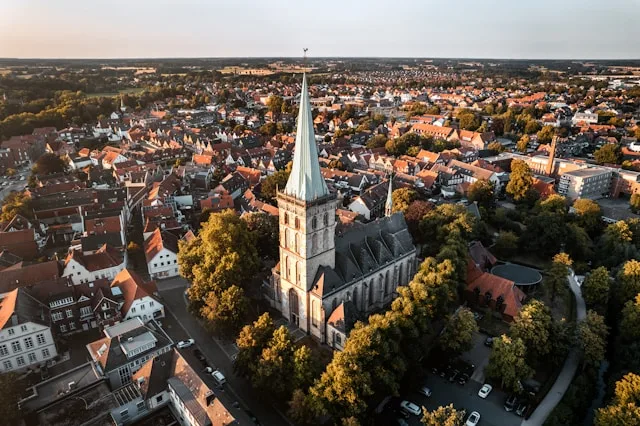
Münster's digital economy crossed the €2 billion revenue threshold across the Münsterland region by the end of 2024. The city supports roughly 2,000 digital economy entities. Two universities feed over 1,100 computer science, digital media, and information systems graduates into the local market every year. From the outside, this looks like a talent market that works.
It does not. The Agentur für Arbeit Münsterland counted 2,400 unfilled IT and creative sector vacancies as of November 2024, with an average vacancy duration of 143 days. Senior cloud architecture searches in industrial IT run six to nine months. Executive digital roles take four to seven months to fill, and 85 to 90 per cent of the candidates qualified for them are not looking. The pipeline exists. The problem is that it produces the wrong output for the roles this market needs most.
What follows is an analysis of the force reshaping Münster's digital services sector: a qualitative skills mismatch that no volume of graduates can resolve. The article examines where the gaps sit, why they persist despite apparent supply, what the compensation environment looks like in 2026, and what hiring leaders in this market must do differently to reach the candidates who will not come to them on their own.
A Digital Economy Built on Mittelstand Demand, Not Venture Scale
Münster's digital sector is often described alongside Berlin, Hamburg, and Munich in surveys of German tech activity. The comparison flatters the city in some respects and misleads in others. Münster's technology and digital services market is structurally different from Germany's venture-funded hubs. Understanding that difference is the first step to understanding why hiring here is harder than the numbers suggest.
Only 12 per cent of the city's digital entities employ more than 50 people. The market is composed overwhelmingly of boutiques, specialist consultancies, and service agencies. The revenue base is driven by Mittelstand digitisation: industrial IoT for agricultural machinery, ERP integration for logistics companies, and compliance software for supply chain regulation. E-commerce activity is service-oriented. Münster firms build platforms and logistics software for retailers headquartered elsewhere. They do not own the platforms themselves.
Venture Capital and the Scale-Up Ceiling
This structural reality matters because it defines the ceiling on the kinds of roles the city generates. Münster-based start-ups raised approximately €45 to €55 million in disclosed venture funding in 2024. Nearly all of it went to seed and Series A rounds. Only three companies in the region currently qualify as scale-ups by standard definitions: Westphalia DataLab in predictive analytics for agriculture, Tikee in e-commerce analytics, and AHEAD150 in digital health compliance software.
The KfW Venture Capital Studie 2024 estimated roughly €15 million in locally available Series A-plus capital, compared to €2.1 billion in Berlin. That gap is not closing. The consequence, already visible and accelerating into 2026, is talent arbitrage. Successful founding teams relocate headquarters to Hamburg or Berlin after their first institutional round. Back-office functions stay in Münster. Leadership leaves.
The Anchor Employers Holding the Ecosystem Together
What stabilises the market is a handful of anchor employers. Atruvia AG, the banking IT services provider formerly known as Fiducia IT, employs approximately 800 people in Münster. adesso SE runs a branch of around 450, focused on enterprise software and SAP consulting. CHECK24 maintains a Münster office of roughly 200 staff working on insurance and energy comparison platforms. These employers provide steady demand for mid-level and senior technical talent, but they also compete directly with each other and with remote employers for the same limited pool.
The Kreativquartier Münster, a 45,000-square-metre creative industry cluster, houses around 150 agencies, VR studios, and design consultancies. The Digital Hub Münster, operated by Wirtschaftsförderung Münsterland, anchors industrial IoT and smart agriculture start-ups. These institutions create density. They do not, by themselves, create the senior leadership talent this market needs.
The question is not whether Münster has a digital economy. It plainly does. The question is whether the economy it has can generate or retain the leaders required to run it at the next level.
The Graduate Pipeline Paradox: Volume Without Fit
The University of Münster and FH Münster collectively produce over 1,100 graduates annually in computer science, digital media, and information systems. FH Münster alone has 3,200 students in relevant departments. For a city of 320,000, this is a substantial pipeline by any measure.
Yet 34 per cent of Münster computer science graduates relocate to Berlin, Munich, or Hamburg within three years of graduation, according to HIS-Institut data with WWU-specific breakdowns. The graduates who leave are disproportionately the ones the ecosystem cannot afford to lose: the ones with ambition for product-led companies, B2B SaaS experience, or growth marketing roles that simply do not exist in sufficient quantity in Münster.
The graduates who remain fill junior development and project management roles, where unemployment sits at a manageable 3.5 to 4.2 per cent. The pipeline produces entry-level supply. It does not produce the senior cloud architects, the SAP S/4HANA migration leads, or the creative directors that local employers spend six to nine months searching for.
This is the core analytical observation of this article, and it reframes the entire discussion about Münster's talent challenges: the shortage in this market is qualitative, not quantitative. Münster does not lack people. It lacks the specific people whose skills sit at the intersection of deep technical experience and commercial leadership in a Mittelstand context. You cannot solve a qualitative shortage by increasing the volume of a mismatched supply. More graduates will not fix a market that needs senior architects, not junior developers.
Where Searches Stall: Three Patterns That Define This Market
The aggregate vacancy figure of 2,400 unfilled IT and creative roles tells part of the story. The pattern data tells the rest.
Cloud Architecture in Industrial IT: The Invisible Candidate Pool
Software houses serving Münsterland's agricultural machinery sector face six to nine month vacancy periods for Azure and AWS Solution Architects with industrial IoT experience. A typical mid-sized firm of 40 to 60 employees advertises these roles at €85,000 to €95,000 and receives fewer than five qualified applications per quarter. Of the candidates who do reach a shortlist, 80 per cent ultimately reject offers in favour of remote positions with Hamburg or Munich-based employers paying materially more.
An estimated 75 to 80 per cent of senior software architects in this market are passive, according to LinkedIn Talent Insights data for the Münster IT function. Their average tenure in current roles is 4.2 years. These professionals are not browsing job boards. They are not attending recruitment events. A conventional search process, built around advertising and inbound applications, will not reach them.
Creative Director Poaching: A Market Eating Itself
Münster's digital agencies report aggressive lateral hiring at the senior creative level. The typical pattern involves candidates with eight or more years of experience being recruited by competitor agencies or in-house brand teams with 15 to 20 per cent salary premiums and remote work guarantees. One established agency reportedly lost three senior UX leads within six months to Hamburg-based e-commerce firms offering €20,000-plus relocation packages, according to aggregated data from BVDW's Agenturpersonalstudie 2024.
Creative directors and heads of UX are 60 to 65 per cent passive. They are typically reached through portfolio review and direct outreach, not job postings. The agencies losing this talent are, in most cases, unable to match the combination of salary and flexibility that external competitors offer.
SAP S/4HANA Migration: The Search That Gets Abandoned
Industrial IT consultancies staffing S/4HANA implementation teams face search abandonment rates of 30 per cent after six months. When a search fails at this scale, the result is not just a vacancy. It is a delayed client project, a missed revenue target, and often a forced subcontracting arrangement with offshore implementation partners. This pattern, reported by the German-Speaking SAP User Group (DSAG) across the NRW industrial belt, directly connects hiring failure to commercial outcomes.
Every one of these patterns shares a common feature. The candidates exist. They are employed. They are not looking. And the search methods most Münster employers use are designed to find candidates who are.
Compensation: Moderate on the Surface, Splitting Underneath
The headline salary data for Münster's digital sector looks reasonable. General IT salary growth moderated to 2.8 per cent in 2024, down from 5.1 per cent in 2022, broadly tracking national inflation adjustments. Münster pays approximately 8 to 12 per cent below Munich for equivalent technical roles, and 5 to 7 per cent above rural NRW locations. For a city with Münster's cost of living, the aggregate picture appears competitive.
The aggregate picture is misleading. The compensation market in this city is splitting in two.
The Executive Tier Is Accelerating Away
VP Engineering and CDO compensation in Münster increased 12 to 15 per cent year-on-year through 2024. A VP Engineering or CTO in an SME context now commands €130,000 to €165,000 base, with total compensation reaching €150,000 to €200,000 including variable pay and equity. Scale-up CTOs with venture backing may exceed €180,000 with equity stakes. Chief Digital Officers hired into Mittelstand companies typically arrive from Hamburg or Cologne with relocation premiums, earning €140,000 to €175,000 in total compensation.
These increases are not being driven by local market dynamics. They are being driven by competition from remote-first employers based in Berlin, Munich, and Hamburg, who offer 20 to 30 per cent salary premiums over local Münster rates for fully remote positions. A Münster-based VP Engineering is not being benchmarked against Münster salaries. That VP is being benchmarked against every employer in Germany willing to hire remotely.
The Internal Equity Problem No One Talks About
The result is a growing internal equity challenge for local employers. A senior individual contributor earning €95,000 watches their new VP arrive at €170,000. The gap between these bands widened by a third in two years. Compressed salary structures, the norm in Münster's SME-heavy ecosystem, are becoming untenable.
For hiring leaders, this means that compensation benchmarking against local market data will consistently underprice executive roles. If your offer is competitive within Münster, it is uncompetitive against the remote offers your candidate is simultaneously evaluating. The negotiation dynamics at senior level in this market now require national, not regional, reference points.
The Competitor Geography: Where Münster's Talent Goes
Münster does not lose talent to one competitor. It loses talent to four, each pulling from a different angle.
Hamburg, 90 minutes by train, offers an 18 to 25 per cent compensation premium for equivalent creative and tech roles. Its established agency ecosystem, including firms like Ogilvy and Jung von Matt, and its larger fintech community make it a natural destination for Münster's creative directors and senior engineers. Housing costs are 40 to 60 per cent higher, partially offsetting the salary advantage, but the draw remains strong.
Cologne, 60 minutes away, commands a 5 to 10 per cent premium for creative roles and rough equivalence for technical ones. Its status as a media capital through RTL and WDR, combined with a larger creative community, makes it attractive for the same UX and design leaders Münster's agencies are trying to retain.
Berlin and Munich compete differently. They recruit Münster talent for fully remote positions, eliminating the relocation friction entirely. A senior developer who stays in their Münster flat but works for a Berlin employer at a 25 per cent premium has the best of both worlds. The employer never appears in Münster vacancy statistics. The talent never appears in Münster's active candidate pool. It simply becomes invisible to local recruiters.
Even Dortmund, offering slightly lower salaries, competes for mid-level developers through a larger industrial base and more stable corporate IT positions.
The competitive field around this market means that passive candidate identification is not optional. It is the only viable method for reaching senior talent that has already been absorbed, either by local anchors or by remote competitors who never needed to open a Münster office. Understanding how direct headhunting reaches candidates that job advertising cannot is a prerequisite for any serious search in this geography.
The Constraints That Will Not Lift in 2026
Several forces shaping this market are not cyclical. They are embedded in Münster's economic structure. Hiring leaders planning searches here must account for them.
Real Estate and Infrastructure Limits
Commercial real estate vacancy in Münster's tech corridors, the Hafen district and Gievenbeck, sits below 2 per cent. A growing firm in this market cannot simply lease additional space. Fibre optic coverage remains incomplete in peripheral business parks. Energy costs for data centre operations run €0.35 to €0.42 per kilowatt hour at industrial rates, making local AI training infrastructure uneconomic compared to Nordic alternatives.
These are not conditions that improve in a single year. They constrain the kinds of companies that can physically grow in Münster, and by extension, the kinds of roles that will be created here.
Mittelstand Payment Pressures
Software houses serving agricultural machinery clients face delayed payments linked to the 2024 to 2025 agricultural recession. According to Bitkom's IT-Mittelstand-Studie 2024, 28 per cent of Münster software houses reported payment delays from industrial clients. A firm managing cash flow pressures from its client base is not well positioned to offer the signing bonuses and relocation packages required to attract executive talent from Hamburg.
Regulatory Compliance as a Fixed Cost
GDPR enforcement and the Supply Chain Due Diligence Act (LkSG) create annual compliance burdens of €40,000 to €80,000 for SMEs. For an agency with fewer than 50 employees, this is not trivial. It absorbs budget that might otherwise fund a senior hire. At the same time, it creates sustained demand for regulatory technology consultants and compliance software specialists, adding another category of scarce talent to the market.
The 2026 outlook, projected at 4 to 6 per cent CAGR by Prognos AG, reflects moderate organic growth rather than explosive expansion. Industrial AI integration will drive embedded software and IoT platform spending up 8 to 9 per cent annually. Regulatory technology demand will remain steady. But the same constraint that limited 2024 and 2025 will limit 2026: the talent required to deliver on that demand does not exist in sufficient quantity within this geography.
What This Means for Hiring Leaders in Münster's Digital Sector
The conventional hiring approach in Münster follows a predictable sequence. A role opens. It is posted on StepStone, Xing, and perhaps LinkedIn. Applications trickle in. The shortlist is thin. The strongest candidate takes a remote offer from Berlin. The search restarts.
This approach fails in Münster not because of poor execution but because of a structural mismatch between method and market. When 75 to 80 per cent of senior architects are passive, and 85 to 90 per cent of executive digital leaders are not actively looking, a process that depends on inbound applications is fishing in the wrong water.
The Münster market requires a different method at senior level. It requires talent mapping that identifies who holds the specific skills required, where they are currently employed, what would need to be true for them to consider a move, and whether the role on offer can credibly meet that threshold. It requires speed, because the window between a passive candidate's interest and their acceptance of a competing offer is measured in days, not weeks.
KiTalent's approach to markets like Münster is built around this reality. AI-powered talent mapping identifies the specific professionals who hold the intersection of technical depth and commercial leadership that this market demands. Interview-ready candidates are delivered within 7 to 10 days, not 7 to 10 weeks. The pay-per-interview model means clients invest only when they meet qualified candidates. And a 96 per cent one-year retention rate reflects the quality of match rather than the speed of fill.
For organisations in Münster's digital sector competing for cloud architects, SAP migration leads, creative directors, or executive technology leaders, the candidates you need are employed, passive, and evaluating offers from competitors who will never post a job in your city. Reaching them requires a method designed for exactly this kind of market. Start a conversation with our executive search team about how we approach senior digital and technology hiring in markets like this one.
Frequently Asked Questions
What are the hardest digital and IT roles to fill in Münster in 2026?
Cloud solution architects with industrial IoT experience, SAP S/4HANA migration specialists, and senior creative directors are the three most difficult categories. Cloud architecture searches in industrial IT contexts typically run six to nine months. SAP migration searches face a 30 per cent abandonment rate after six months. Creative directors at the eight-year-plus experience level are actively targeted by Hamburg and Berlin employers offering 15 to 25 per cent salary premiums over Münster rates. Executive digital roles, including VP Engineering, CTO, and CDO positions, average four to seven months to fill.
What do senior software engineers and tech leaders earn in Münster?
Senior software architects and lead developers with ten or more years of experience earn €85,000 to €105,000 base salary in Münster, with total compensation reaching €95,000 to €115,000 including bonuses. VP Engineering and CTO roles in SME contexts command €130,000 to €165,000 base, with total packages of €150,000 to €200,000. Chief Digital Officers hired into Mittelstand companies typically earn €140,000 to €175,000. These figures sit 8 to 12 per cent below Munich equivalents but 5 to 7 per cent above rural NRW locations.
Why do Münster tech companies struggle to retain senior digital talent?
Münster faces competition from four directions: Hamburg with 18 to 25 per cent salary premiums, Cologne with proximity and media sector appeal, and Berlin and Munich recruiting remotely at 20 to 30 per cent above local rates. Approximately 34 per cent of Münster computer science graduates relocate to these cities within three years. The city's limited venture capital base, estimated at €15 million in locally available Series A-plus capital, means successful start-ups often relocate leadership to better-funded hubs after their initial raise.
How should companies in Münster recruit passive senior technology candidates?
Between 75 and 90 per cent of senior technical and executive digital talent in Münster is passive, meaning they are employed and not actively seeking new roles. Job postings and inbound applications reach only a fraction of the qualified market. Effective hiring at this level requires direct headhunting and AI-enhanced talent identification that maps the specific professionals holding the skills a role demands, assesses their openness to approaches, and engages them before competitors do. KiTalent's methodology delivers interview-ready candidates within 7 to 10 days using exactly this approach.
What is driving demand for digital services in Münster and Münsterland in 2026?
Three forces sustain demand. First, industrial AI integration through the agricultural and logistics machinery sector is driving embedded software and IoT platform spending up 8 to 9 per cent annually. Second, regulatory technology demand from GDPR enforcement and Supply Chain Due Diligence Act compliance keeps agency workloads steady. Third, ongoing Mittelstand digitisation across ERP systems, e-commerce infrastructure, and customer service platforms generates consistent project flow. Growth is projected at 4 to 6 per cent CAGR, constrained primarily by talent availability rather than client demand.
What is Münster's digital and creative industry cluster?
The Kreativquartier Münster is a 45,000-square-metre creative industry cluster housing approximately 150 agencies, VR studios, and design consultancies. The Digital Hub Münster, a public-private incubator operated by Wirtschaftsförderung Münsterland, focuses on industrial IoT and smart agriculture start-ups and hosts around 180 active start-up teams. Together with anchor employers including Atruvia AG, adesso SE, and CHECK24, these institutions form the core of a digital ecosystem that generated €1.8 to €2.1 billion in revenue across the Münsterland region in 2024. The ecosystem is mature and SME-dominated rather than venture-funded and scale-up-driven.