Mesaieed's Petrochemical Cluster Is Investing Billions. The Talent Pipeline Has Not Kept Pace.
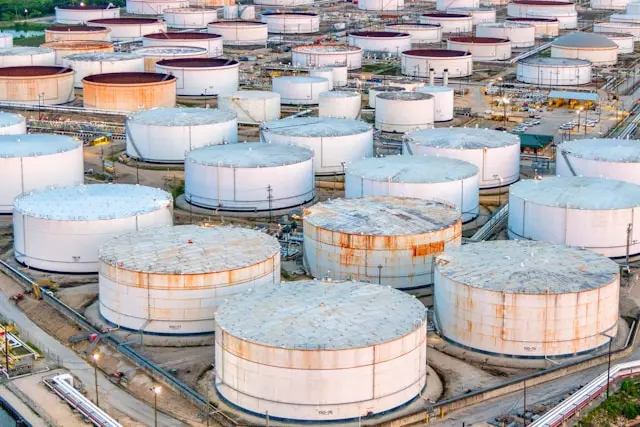
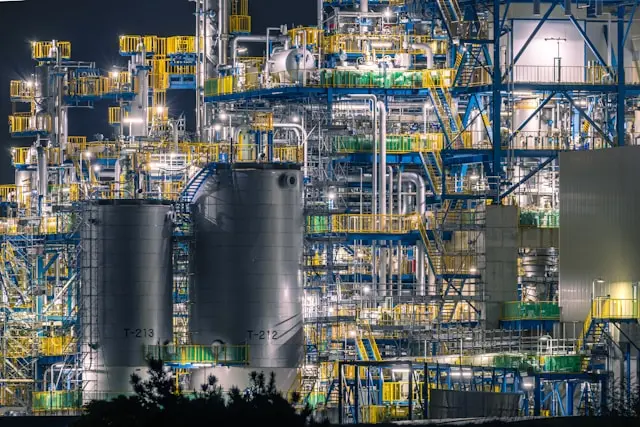
Qatar's Mesaieed Industrial City produces more urea from a single site than any other location on Earth. QAFCO's six ammonia and six urea trains generate approximately 5.8 million tonnes of urea annually, while QAPCO's polymer complex adds 800,000 tonnes of LDPE to the cluster's output. These facilities sit within a 40-square-kilometre industrial zone connected by pipeline to the North Field, the world's largest non-associated gas field, and served by a deep-water port handling over 30 million tonnes of exports per year. The physical infrastructure is world-class. The human infrastructure is not.
The talent challenge facing Mesaieed's petrochemical operators in 2026 is not a generic hiring difficulty. It is a specific mismatch between what the cluster needs and what the available workforce can deliver. Senior process safety engineers, CCUS technologists, digital transformation specialists, and experienced plant directors are in acute shortage. Job postings for chemical engineers with a decade or more of experience rose 34% year-on-year through late 2024, while time-to-fill for those roles extended to 68 days, compared to 42 for general engineering positions. Process Safety Manager roles across the cluster routinely remain open for six to nine months.
What follows is a ground-level analysis of why this gap exists, what is driving it wider, and what it means for organisations trying to build and retain the leadership teams that Mesaieed's next phase of investment demands. The forces at work here are not limited to compensation or location. They involve regulatory pressure from two directions simultaneously, a regional talent war that Mesaieed is currently losing, and a structural tension between national workforce policy and the specialised experience the sector actually requires.
The World's Largest Single-Site Producer Faces a Workforce It Cannot Scale
Mesaieed Industrial City is not simply large. It is concentrated. Over 120 industrial facilities occupy a footprint smaller than many European airports, producing roughly 70% of Qatar's total petrochemicals output within a five-kilometre radius. The cluster model delivers extraordinary operational efficiency. Shared utilities from the 1,025 MW Mesaieed Power Company, subsidised feedstock at approximately $1.50 to $2.50 per MMBtu, and direct port access create a cost base that few global competitors can match.
That cost advantage, however, has not translated into a talent advantage. The workforce across the Mesaieed petrochemical cluster currently stands at approximately 12,000 direct employees and 8,000 contracted service personnel during standard operating periods. The 2026 outlook adds further pressure. A major turnaround cycle scheduled for Q2 and Q3 at QAPCO's LDPE facilities will require an influx of 2,500 to 3,000 specialised contract engineers and construction personnel, according to the Gulf Petrochemicals and Chemicals Association's maintenance outlook. Total labour demand is projected to increase 8 to 12% year-on-year.
No new greenfield petrochemical capacity is scheduled for startup in Mesaieed during 2026. Instead, capital is flowing into debottlenecking existing QAFCO trains, adding roughly 200,000 tonnes of urea equivalent capacity, and into digitalisation infrastructure. The workforce expansion is not being driven by new plants. It is being driven by the complexity of maintaining, optimising, and decarbonising existing ones. This distinction matters because it changes the profile of the worker required. A new plant needs construction labour at scale. An optimisation programme needs senior specialists who do not exist in sufficient numbers anywhere in the GCC.
The implication for hiring leaders is that Mesaieed's talent demand is shifting upward in seniority at exactly the moment when regional competition for that seniority level is most intense.
Two Regulatory Forces Are Squeezing the Same Workforce from Opposite Directions
Qatarization Targets and the Experience Gap
Qatar's Qatarization policy, codified in Ministerial Decision No. 15 of 2021, mandates minimum Qatari national representation of 60% in administrative roles and 30% in technical roles by 2025, rising to 80% and 50% respectively by 2030. These are not aspirational targets. Non-compliance results in suspension of new work permit issuance and operational restrictions.
The current reality falls short. Administrative functions have reached 52% Qatarization. Technical engineering roles sit at 28%. Senior specialist positions are at 15%. The gap is not caused by a lack of Qatari graduates entering the workforce. The Qatar Ministry of Labour's 2023 annual report actually documents an oversupply of Qatari chemical engineering graduates. The gap is caused by the fact that senior operations roles in ammonia and polymer production require 10 to 15 years of process-specific experience that recent graduates, by definition, do not possess.
This is the first half of the regulatory squeeze. To meet Qatarization targets, employers must accelerate the career development of national graduates into senior technical roles. But the roles themselves cannot be simplified. A HAZOP leader on an ammonia train needs deep experience with the specific failure modes of that process. No policy mandate can compress that timeline.
The EU Carbon Border Adjustment Mechanism
The second regulatory force operates from the opposite direction. The European Commission's Carbon Border Adjustment Mechanism transitioned from reporting requirements to full financial liability in January 2026. For Mesaieed's urea and ammonia exports to Europe, Qatar's second-largest fertiliser market after India, this means additional costs estimated at €60 to €80 per tonne unless carbon capture and storage certification is achieved.
QAFCO is already piloting CO₂ capture technology at its ammonia trains, targeting 1.2 million tonnes per annum of blue ammonia capacity by 2027. The technology exists. The people to operate, certify, and optimise it are another matter. CCUS deployment requires carbon accounting specialists, lifecycle assessment professionals, and process engineers who understand both traditional ammonia synthesis and the carbon capture bolt-on. These are not separate disciplines any more. They are converging into a single role profile that barely existed five years ago.
The consequence is that Mesaieed's operators need to fill roles created by decarbonisation mandates while simultaneously developing a national workforce for roles created by Qatarization mandates. Both timelines are accelerating. Neither has a sufficient talent supply. And the two objectives often compete for the same budget, the same management attention, and in some cases, the same headcount slots.
The Regional Talent War Mesaieed Is Currently Losing
Mesaieed does not compete for petrochemical talent in isolation. It operates within a GCC market where Saudi Arabia's Jubail Industrial City and the UAE's Ruwais complex are pursuing their own expansions with larger budgets and, in several measurable dimensions, more attractive offers.
Saudi Arabia currently offers compensation premiums of 20 to 30% for equivalent senior engineering roles. But the Saudi advantage extends beyond pay. Saudi Aramco's Jafurah unconventional gas developments and SABIC's Jubail expansion projects offer larger-scale project scopes that provide stronger career trajectories for technical specialists. For a Plant Director with 15 years of polyethylene or ammonia experience, moving to a larger, more complex operation is a career acceleration that no retention bonus can fully offset.
The UAE competes on a different axis. Abu Dhabi's Borouge complex and the Ruwais derivatives park offer permanent residency pathways through the Golden Visa programme, more flexible family visa policies, and a more diversified economy that provides spousal employment opportunities. According to Mercer's 2024 GCC Talent Mobility Survey, these lifestyle factors were cited in exit interviews by 40% of departing expatriate engineers from Qatar in 2023.
Industries Qatar acknowledged the impact in its 2023 annual report, noting an abnormal attrition rate of 18% among senior technical staff attributed to regional competition. The historical average was 6 to 8%.
The poaching pattern is consistent and directional. Recruitment consultants report that Mesaieed-based Plant Directors with 15 or more years of relevant experience are regularly targeted by Saudi competitors offering premiums of 25 to 35% above Mesaieed market rates. This is not opportunistic movement. It is systematic extraction of the most experienced layer of the workforce at a premium that Mesaieed's employers have not yet matched.
The talent flowing out is the talent Mesaieed can least afford to lose. Replacing a Plant Director with a decade and a half of ammonia-specific experience is not a six-month recruitment exercise. For organisations relying on traditional job advertising, it may not be achievable at all. Approximately 85% of qualified candidates for senior technical roles in Mesaieed are already employed and not actively seeking new positions. The ratio of active to passive candidates at Plant Manager level is estimated at 1:9.
Compensation Tells Part of the Story. Expatriate Package Design Tells the Rest.
Base Salary and Variable Pay
Compensation for senior petrochemical roles in Mesaieed is competitive by global standards but trails the GCC's most aggressive bidders. A Senior Process Engineer with 15 or more years of experience commands QAR 35,000 to 50,000 per month in base salary. Digital Transformation Managers, a newer and scarcer profile, earn QAR 42,000 to 58,000 monthly, with total annual packages reaching QAR 720,000 to 900,000 including bonuses.
At executive level, the numbers escalate. Operations Managers at plant level earn QAR 65,000 to 85,000 monthly with annual performance bonuses of 20 to 30% and long-term incentive plans comprising 15 to 25% of total compensation for publicly listed employers. VP Manufacturing and Technical Director roles command QAR 100,000 to 150,000 per month in base salary alone, translating to USD 330,000 to 495,000 annually before benefits. HSSE Directors, whose value has increased sharply with the carbon compliance agenda, earn QAR 85,000 to 120,000 monthly.
These figures are substantial. They are also insufficient when a Saudi competitor offers 25 to 35% more for the same experience profile. The gap is not something Mesaieed employers can close through base salary alone without fundamentally altering their cost structures.
The Expatriate Package as a Retention Tool
The structure of compensation in Mesaieed matters as much as the amount. Traditional full expatriate packages include company-provided housing, transport allowances of QAR 3,000 to 5,000 monthly, and education allowances of QAR 5,000 to 8,000 per child. These benefits can add 40 to 50% to base salary costs.
Since 2022, there has been a shift toward "local plus" packages for regional hires, replacing benefits with cash allowances. This trend remains less common at executive levels, where the full expatriate package functions as both a recruitment tool and a retention mechanism. An executive who has enrolled children in a company-funded school and settled into a company-provided villa faces meaningful switching costs when considering a move, even at a premium.
The firms that understand this use package design strategically. The firms that compete on base salary alone are the firms losing the talent war described above. When an organisation with the sophistication to map the candidate's total life situation, not just their pay expectations, can structure a package that makes leaving genuinely costly rather than merely inconvenient, retention improves. This is not a compensation insight. It is a search methodology insight. You cannot design a retention-optimised package without first understanding what the candidate values, and you cannot understand what the candidate values without having conducted the kind of deep, relationship-based executive search that most job boards do not support.
The Original Tension: Capital Deployed Faster Than Human Capital Could Follow
This is the analytical core of Mesaieed's situation in 2026, and it is not stated in any single data point.
Industries Qatar and QatarEnergy have announced cumulative capital expenditure of QAR 12 billion through 2026 for debottlenecking, efficiency improvements, and CCUS integration. The North Field East expansion will increase Qatar's LNG production capacity from 77 to 110 million tonnes per annum, securing feedstock for decades. The port handles 40% of Qatar's seaborne industrial exports. The power infrastructure delivers over a gigawatt of capacity. Physical capital is not the constraint.
At the same time, global market analysis from CRU Group projects oversupply of 8 to 10 million tonnes in the global urea market by 2026, driven by new capacity in Russia and Brunei. Conventional grey ammonia and urea face declining demand growth as importing nations adopt green fertiliser mandates. Mesaieed's current investment cycle may be optimising assets for a market window that is narrowing.
The resolution to this tension is blue ammonia. If QAFCO can achieve cost-competitive blue ammonia production at scale, the market window reopens. The 1.2 million tonne per annum target for 2027 is the strategy's hinge point. But blue ammonia production requires a workforce that combines traditional ammonia process expertise with carbon capture technology, lifecycle carbon accounting, and regulatory certification for new export markets in Asia. That workforce does not currently exist at scale in any single geography, let alone within Mesaieed's 40-square-kilometre footprint.
Capital was deployed ahead of the human capital required to operate what the capital built. This is not a failure of planning. It is a structural feature of capital-intensive industries where equipment lead times are measured in years but workforce development timelines are measured in decades. The QAR 12 billion is committed. The question is whether the 200 to 300 senior specialists needed to make that investment productive can be found, recruited, and retained before the market window they are meant to exploit begins to close.
Why Traditional Hiring Methods Reach 10% of the Viable Candidate Pool
The passive candidate data for Mesaieed's senior technical market is unusually stark. For Senior Process Engineers and Operations Directors, approximately 85% of qualified candidates are currently employed and not actively applying. At Plant Manager level, the ratio of active to passive candidates is 1:9.
This means that a job posting on a major recruitment platform, regardless of how well written or how competitively compensated, is visible to approximately one in ten of the people who could actually fill the role. The other nine are working. They are not browsing job boards. They are not updating their CVs. They are solving problems at SABIC in Jubail, at Borouge in Ruwais, or at facilities in Southeast Asia that they have no immediate reason to leave.
Reaching those candidates requires a fundamentally different approach. It requires identifying them by name, understanding their current situation, their career motivations, and their personal constraints, and then approaching them with a proposition specific enough to warrant a conversation. This is not mass outreach. It is targeted executive search, and it is the only methodology that accesses the full talent pool rather than the visible fraction of it.
The time penalty for using the wrong method is severe. A Process Safety Manager search that relies on inbound applications runs six to nine months in this market. A search that maps the passive candidate pool from the outset and approaches qualified individuals directly can compress that timeline considerably. In a market where every month of vacancy increases operational risk and delays the CCUS integration that the entire business strategy depends on, the method of search is not an administrative detail. It is a strategic variable.
What This Means for Hiring Leaders Operating in Mesaieed
The organisations hiring in Mesaieed's petrochemical cluster in 2026 face a specific and compounding set of challenges. Qatarization targets require accelerated development of national talent into senior technical roles. EU CBAM compliance requires an entirely new skill set in carbon management. Regional competitors are extracting experienced staff at premiums of 25 to 35%. And the candidates who could resolve all three challenges are overwhelmingly passive, employed, and invisible to standard recruitment channels.
None of these challenges will resolve through higher compensation alone. The compensation data is clear: Mesaieed pays well by global standards. The issue is that compensation is only one dimension of a decision that, for a senior expatriate engineer, involves schooling, spousal employment, career trajectory, residency stability, and lifestyle. The organisations that win these hires are the ones that understand the full decision matrix and structure their approach accordingly.
KiTalent works with petrochemical and industrial manufacturers across the GCC to identify and engage the senior technical and executive talent that traditional recruitment methods do not reach. Using AI-enhanced talent mapping and direct headhunting, KiTalent delivers interview-ready candidates within 7 to 10 days, with a pay-per-interview model that eliminates upfront retainer risk. For organisations building leadership teams in markets where 85% of the candidates they need are not visible on any platform, this approach is not optional. It is the only approach that works at the required speed and depth.
For hiring leaders building or strengthening senior technical and operational leadership teams in Mesaieed's petrochemical cluster, where every month of vacancy compounds both operational risk and regulatory exposure, speak with our industrial sector executive search team about how we approach this market and the candidates within it.
Frequently Asked Questions
What are the hardest petrochemical roles to fill in Mesaieed Industrial City in 2026?
Process Safety Engineers, CCUS Technologists, Digital Transformation Leads, and Senior Operations Managers with ammonia or polymer-specific experience represent the most acute shortages. Job postings for chemical engineers with 10 or more years of experience rose 34% year-on-year through late 2024, while time-to-fill extended to 68 days. Process Safety Manager roles routinely remain open for six to nine months. The shortage is driven by a combination of Qatarization requirements, EU CBAM compliance demands creating new role profiles, and regional competitors extracting experienced staff at premiums of 25 to 35% above Mesaieed rates.
What do senior petrochemical executives earn in Mesaieed, Qatar?
Compensation varies substantially by seniority. Senior Process Engineers with 15 or more years of experience earn QAR 35,000 to 50,000 monthly in base salary. Plant-level Operations Managers earn QAR 65,000 to 85,000 monthly with 20 to 30% annual bonuses. VP Manufacturing and Technical Director roles command QAR 100,000 to 150,000 monthly, translating to USD 330,000 to 495,000 annually before benefits. Full expatriate packages including housing, education, and transport allowances add 40 to 50% to base salary costs.
How does Qatarization affect petrochemical hiring in Mesaieed?
Qatarization mandates require 30% Qatari representation in technical roles by 2025, rising to 50% by 2030. Current technical Qatarization stands at 28%, with senior specialist roles at only 15%. Qatar produces sufficient chemical engineering graduates, but senior operations roles require 10 to 15 years of process-specific experience that graduates cannot yet provide. This creates a dual hiring challenge: employers must recruit experienced expatriates for immediate needs while building a long-term pipeline of national talent through accelerated development programmes.
Why is it so difficult to recruit passive candidates for Qatar petrochemical roles?
Approximately 85% of qualified candidates for senior technical roles in Mesaieed are already employed and not actively seeking new positions. At Plant Manager level, the ratio of active to passive candidates is estimated at 1:9. This means job board advertising reaches roughly 10% of the viable talent pool. Successful hires at this level require direct headhunting approaches that identify, engage, and attract candidates who are not visible through conventional recruitment channels. KiTalent's AI-enhanced talent mapping is specifically designed to access this hidden majority of qualified leaders.
How does the EU CBAM affect Mesaieed's fertiliser producers?
The EU Carbon Border Adjustment Mechanism began imposing full financial liability on Qatari urea and ammonia exports to Europe in January 2026. Initial estimates suggest additional costs of €60 to €80 per tonne of urea unless carbon capture and storage certification is achieved. QAFCO is targeting 1.2 million tonnes per annum of blue ammonia capacity by 2027 in response. This regulatory shift is creating entirely new executive hiring requirements in carbon accounting, lifecycle assessment, and CCUS process engineering.
What makes Mesaieed different from Jubail or Ruwais for petrochemical careers?
Mesaieed offers subsidised feedstock costs, world-scale production facilities, and proximity to the North Field. However, Saudi Arabia's Jubail currently offers 20 to 30% compensation premiums and larger project scopes through developments like Jafurah and SABIC's crude-to-chemicals investments. The UAE's Ruwais competes on lifestyle: Golden Visa residency pathways, flexible family visa policies, and a diversified economy supporting spousal employment. Forty percent of departing expatriate engineers from Qatar cited UAE lifestyle factors in exit interviews in 2023, highlighting that compensation is only one dimension of the talent competition.