Mesaieed's Refinery Has Invested Billions in Upgrades. The Engineers to Run Them Are Not There.
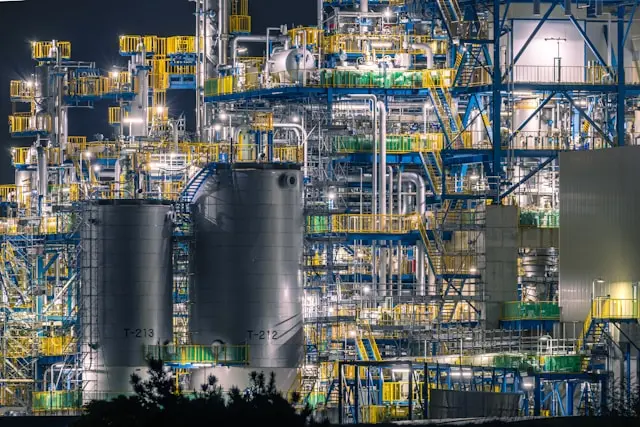
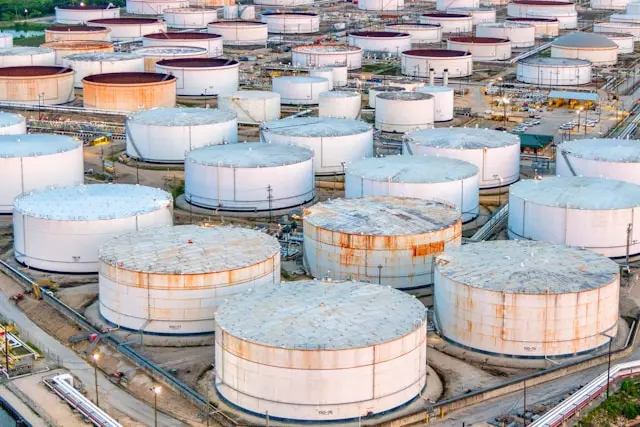
Mesaieed Industrial City processes over 130,000 barrels per day of crude and condensate, fractionates 2.3 billion standard cubic feet of associated gas daily, and exports 6.5 million tonnes per annum of refined products and petrochemical derivatives. Seventy-eight per cent of that output is destined for Asian markets. By any measure, this is one of the Gulf's most consequential downstream clusters. It is also one of the hardest places in the world to hire the people who keep it running.
The tension at the core of this market is not about feedstock or throughput. Mesaieed benefits from stable offshore gas flows and has utility headroom to spare. The constraint is human. Carbon capture front-end engineering, North Field Expansion debottlenecking studies, and a major FCC turnaround scheduled for Q2 2026 all require specialists who are nearly impossible to source through conventional recruitment. Senior Process Safety Engineers with hydrocracking experience routinely sit vacant for eight to eleven months. Advanced Process Control Engineers are being poached by Saudi megaprojects at premiums of 25 to 35 per cent above base salary. Fewer than 200 certified HF alkylation operators exist in the entire region.
What follows is a ground-level analysis of Mesaieed's downstream talent market: the forces reshaping it, the roles where shortages are most acute, the compensation benchmarks that define it, and what organisations operating in this cluster need to understand before they attempt their next critical hire.
The Operational Picture in 2026: Capital Moving Faster Than Human Capital Can Follow
Through 2025, Mesaieed's downstream cluster stabilised at post-turnaround rates following the completion of the Diesel Hydrodesulfurization Unit and associated amine regeneration upgrades. The refinery processed approximately 133,000 to 137,000 barrels per day, representing 91 to 94 per cent of nameplate capacity. Constraints came from scheduled maintenance cycles and NGL fractionation balancing, not from feedstock.
The infrastructure supporting this output is materially underutilised. The Mesaieed Industrial City utility grid provides 1,200 MW of captive power at 82 per cent capacity and 150,000 cubic metres per day of desalinated water at 76 per cent. That headroom is deliberate. It anticipates the next phase of investment, which is now arriving.
Phase 1 of the North Field Expansion is scheduled to deliver incremental NGL volumes to Mesaieed by mid-2026, potentially raising ethane availability by 12 to 15 per cent. QatarEnergy has simultaneously tendered FEED contracts for a 1.5 million tonne per annum carbon capture and storage facility, targeting 2027 operation. And the planned 45-day FCC turnaround in Q2 2026 will create temporary demand for 400 to 600 specialised contractor personnel. Capital is committed. Engineering packages are in motion. The workforce required to execute them is not in place, and conventional recruitment methods have not been able to assemble it.
The Three Roles That Define the Shortage
Process Safety Engineers: The Eight-Month Vacancy
The most visible sign of Mesaieed's talent constraint is the time it takes to fill a Senior Process Safety Management Engineer with refinery hydrocracking experience. According to recruitment data from Hays Middle East, these roles frequently remain open for eight to eleven months. Employers eventually accept candidates from adjacent sectors, typically chemicals rather than refining, and invest in six-month upskilling programmes to close the competency gap.
This is not a volume problem. It is a specificity problem. The Mesaieed Refinery requires Layer of Protection Analysis and Safety Integrity Level verification expertise calibrated to hydroprocessing units. Candidates with general PSM credentials from petrochemical plants lack the reactor-specific experience. Candidates with the right experience are employed, satisfied, and not looking. Unemployment among professionals with ten or more years of downstream PSM experience sits below two per cent in Qatar. Average tenure exceeds 7.5 years.
The hidden pool of passive candidates who could fill these roles exists, but it cannot be reached through job postings. Industry estimates suggest 80 to 85 per cent of placements for PSM and APC roles occur through executive search and direct headhunting rather than advertised vacancies. Active applicants are frequently career-switchers or early-tenure professionals who lack the hydroprocessing or HF alkylation experience the roles require.
APC Engineers: The Regional Poaching War
Advanced Process Control Engineers with experience on Aspen DMC3 or Honeywell Profit Suite in refinery contexts face a different dynamic. They are not merely scarce. They are actively targeted.
According to Petroplan's Global Workforce Report, APC Engineers in Mesaieed are subject to direct approaches from Saudi Aramco's Jazan Refinery and the SATORP complex, with retention premiums of 25 to 35 per cent above base salary now standard to prevent defection during commissioning phases. This is not a hypothetical risk. It is a structural feature of the market. Every time a Gulf megaproject enters commissioning, the pull on Mesaieed's APC talent intensifies.
The cost of losing a senior hire in this context extends well beyond replacement recruitment fees. An APC Engineer leaving mid-optimisation on a hydroprocessing unit can delay yield improvements worth millions in margin over a single quarter.
Carbon Capture Specialists: The Skill That Does Not Yet Exist in Sufficient Numbers
The third shortage is the newest and potentially the most consequential. Post-combustion carbon capture integration on fired heaters is an emerging discipline with fewer than five years of market maturity in the Gulf. QatarEnergy's CCS FEED contracts require process design engineers who understand both refinery fired heater operations and amine-based capture chemistry. This combination barely exists as a career path. Most professionals with relevant experience are concentrated in a handful of Norwegian and Canadian pilot projects.
This is not a hiring problem in the traditional sense. You cannot recruit experience that has not yet been created in sufficient quantity. The CCS facility targeting 2027 operation needs its core engineering team assembling now. The pipeline for that team is thin globally and nearly non-existent within the Gulf region.
Compensation Benchmarks: What the Market Actually Pays
Mesaieed's compensation structure reflects both the tax-free Gulf model and the scarcity premiums that downstream specialists command. Understanding these benchmarks is essential for any organisation approaching this market, whether to hire or to retain.
At the senior specialist and manager level, a Senior Process Engineer with hydroprocessing expertise commands QAR 35,000 to 50,000 per month in base salary, equivalent to roughly $9,600 to $13,700. Housing allowances of QAR 6,000 to 8,000 and education benefits sit on top. A Lead Process Safety Engineer earns QAR 40,000 to 55,000 monthly, carrying a 15 to 20 per cent premium above standard process engineering rates. Operations Managers at shift superintendent level earn QAR 28,000 to 42,000 monthly, according to regional salary benchmarking data.
At the executive tier, the numbers shift considerably. VP Technical and Refinery Manager roles command QAR 85,000 to 120,000 per month in base salary, with performance bonuses of 40 to 60 per cent. Total annual cash compensation for these roles typically ranges from QAR 1.4 to 2.0 million. VP Operations packages reach QAR 75,000 to 100,000 monthly with long-term incentive plans tied to QatarEnergy's operational KPIs. Chief HSE Officers in the refining and chemicals domain earn QAR 90,000 to 110,000 per month, though these roles are often subject to Qatarization mandates that limit expatriate availability.
These figures are competitive within Qatar. They are not competitive enough to reliably win against every regional alternative. Jubail Industrial City offers comparable tax-free compensation with a higher volume of megaproject activity. According to MEED's Projects Tracker, SATORP Phase II and the Amiral complex provide stronger career trajectory velocity for process engineers, making Jubail a more attractive destination for ambitious mid-career professionals even at identical pay. The negotiation dynamics at this level are complex and highly individual.
The Qatarization Paradox: 52 Per Cent Overall, 18 Per Cent Where It Matters
Here is the original analytical claim that the data supports but that no single source states directly: QatarEnergy's headline Qatarization achievement conceals a widening gap in exactly the roles that determine whether the next phase of investment can be executed.
Public statistics indicate QatarEnergy achieved 52 per cent Qatari national employment in 2023, exceeding strategic targets. This is a genuine accomplishment. It also obscures the problem. In specialised hydroprocessing, APC, and process safety roles, Qatari representation sits below 20 per cent. The 50 per cent technical role target for 2030 requires training investments of QAR 400,000 to 600,000 per national hire to reach competency equivalence, according to Qatar Development Bank's Skills Gap Analysis.
The nationalization policy is successfully filling administrative, commercial, and managerial positions. It is not producing hydrocracking reactor specialists, HF alkylation certified operators, or carbon capture process designers at the rate the 2026 and 2027 project timeline demands. This is not a criticism of the policy. It is a mathematical observation. The pipeline of Qatari chemical engineering graduates from Qatar University is constrained further by the fact that only 23 per cent enter hydrocarbon processing immediately upon graduation. The majority prefer LNG operations or financial sector roles.
The consequence for executive hiring in this industrial sector is a dual search requirement. Organisations need expatriate specialists who can deliver on near-term project milestones and Qatari nationals who can be developed into those roles over a five to seven year horizon. Finding both simultaneously, through the same process, is what most conventional recruitment methods fail to achieve.
The Competitive Geometry: Three Cities Pulling From the Same Pool
Mesaieed does not exist in isolation. It competes for downstream talent with Jubail, Ruwais, and increasingly Basra. The dynamics of that competition explain why searches stall even when compensation is strong.
Jubail: Career Velocity as a Recruiting Weapon
Saudi Aramco's Jubail Industrial City currently features more active megaproject commissioning work than any other Gulf downstream cluster. For a process engineer in their mid-thirties evaluating a career move, Jubail offers something Mesaieed currently cannot: a sequence of large, high-profile projects that accelerate promotion timelines. The pay is comparable. The lifestyle is similar. The professional trajectory is faster. This makes Jubail the preferred destination for the most ambitious candidates, particularly those whose careers are still in an ascent phase.
Ruwais: The Lifestyle Differential
ADNOC's Ruwais complex has taken a different approach. According to ADNOC's Human Capital Report, the Abu Dhabi operator implemented more aggressive flexible-working policies post-pandemic, including hybrid office and site arrangements for non-operational roles. Mesaieed's operational-critical positions cannot offer the same flexibility. A shift superintendent must be on site. A process safety engineer must be in the control room during hazard reviews. The lifestyle differential draws mid-level technical talent seeking a different balance, particularly those with families who value proximity to Abu Dhabi's amenities.
Basra: The Risk Premium Market
Iraq's Basra region offers 40 to 60 per cent salary premiums for refinery operations roles. According to Crescent Petroleum's HR benchmarking data, this creates a bifurcated market. Risk-tolerant professionals migrate toward Basra for the financial premium. Risk-averse professionals stay in Qatar or the UAE. The net effect on Mesaieed is that a specific segment of the candidate pool, those motivated primarily by compensation, is drawn away by Basra's premiums. Those who remain prioritise stability, but they are also the least likely to move from a secure position to another secure position. They are deeply passive candidates who require direct headhunting approaches to reach.
The combined effect is that Mesaieed's recruitable universe is smaller than the total population of qualified professionals in the Gulf region suggests. Career-seekers go to Jubail. Lifestyle-seekers go to Ruwais. Risk-tolerant earners go to Basra. Mesaieed must recruit from the segment that values stability and long-term tenure. That segment does not respond to job advertisements.
The CBAM Trap: A Billion-Dollar Upgrade That Did Not Solve the Trade Barrier Problem
The second analytical tension in this market deserves attention because it shapes the urgency of the CCS hiring challenge. Mesaieed's recently completed Diesel Hydrodesulfurization project represented approximately $1.2 billion in capital investment. It enabled Euro 5 diesel production and materially reduced local sulphur emissions. By any environmental measure, it was a success.
It did not, however, address process emissions. The refinery's carbon intensity remains approximately 34 to 36 kg CO2 per barrel of oil equivalent, higher than benchmark European refineries, partly because Mesaieed's desalination energy requirements add to the carbon footprint. With the EU Carbon Border Adjustment Mechanism entering definitive application in 2026, Mesaieed's diesel and naphtha exports to European buyers face an implicit cost of €20 to 30 per tonne unless the planned CCS facility accelerates.
This means the CCS project is not a future aspiration. It is an urgent commercial necessity. And the engineers who will design, commission, and operate it are the same engineers who are in short supply globally and nearly absent from the Gulf's existing talent pool. The capital for the project is approved. The technology talent required to execute it combines process engineering, carbon chemistry, and digital monitoring skills that have matured together only in a handful of projects worldwide.
Every month of delay in assembling the CCS engineering team extends the period during which Mesaieed's European-bound exports carry a competitive disadvantage. This is not a workforce planning issue. It is a trade competitiveness issue with a direct line to the organisation's revenue.
What This Means for Hiring Leaders in Mesaieed
The convergence of NFE feedstock growth, CCS engineering requirements, FCC turnaround staffing, and Qatarization compliance creates a hiring environment where four distinct workforce challenges arrive simultaneously. The 2026 project calendar does not allow sequential resolution. These must be addressed in parallel.
The conventional approach in Gulf downstream recruitment follows a predictable sequence: post the role on energy sector job boards, engage two or three recruitment agencies, wait for applications, screen against a specification, shortlist, interview, offer. In Mesaieed's current market, this approach reaches at most 15 to 20 per cent of viable candidates. The remaining 80 per cent are employed, passive, and require direct identification and approach. They will not see a job posting. They are not registered with recruitment agencies. They must be found, assessed, and engaged individually.
The FCC turnaround alone demands 400 to 600 contractor specialists within a compressed window. The CCS FEED team must be assembled months before construction begins. The executive talent pipeline for VP Technical and Chief HSE roles requires proactive succession mapping rather than reactive search.
For organisations competing for downstream refining and process safety leadership in one of the Gulf's most constrained talent markets, where the most qualified candidates are passive, the regional competition is intensifying, and the project timeline is fixed, speak with our executive search team about how KiTalent approaches this specific challenge. With a 96 per cent one-year retention rate across 1,450 executive placements and a pay-per-interview model that eliminates upfront retainer risk, KiTalent delivers interview-ready candidates within 7 to 10 days by reaching the professionals that job boards and conventional agencies cannot access.
Frequently Asked Questions
What are the hardest technical roles to fill in Mesaieed's refinery and petrochemical cluster?
Senior Process Safety Engineers with hydrocracking experience, Advanced Process Control Engineers familiar with Aspen DMC3 or Honeywell Profit Suite in refinery settings, and carbon capture process designers represent the most acute shortages. PSM roles with reactor-specific expertise typically remain vacant for eight to eleven months. The candidate pool for HF alkylation certified operators numbers fewer than 200 across the entire Gulf region. These roles require direct headhunting methods because the vast majority of qualified professionals are passively employed and not visible on job boards.
How does Mesaieed's compensation for process engineers compare to Jubail and Ruwais?
Base salaries are broadly comparable across the three Gulf downstream clusters for equivalent seniority levels. A Senior Process Engineer in Mesaieed earns QAR 35,000 to 50,000 monthly plus housing and education allowances. The differentiation lies outside compensation. Jubail offers stronger career trajectory through higher megaproject volume. Ruwais offers lifestyle flexibility through hybrid working arrangements. Mesaieed's retention advantage centres on operational stability and long-term tenure, but this means the professionals it attracts are the least likely to respond to conventional recruitment approaches.
What is the impact of Qatarization on executive search in Qatar's downstream sector?
QatarEnergy's 50 per cent Qatari national employment target for technical roles by 2030 creates a dual hiring requirement. Organisations must source expatriate specialists for near-term execution and simultaneously develop national talent over five to seven year horizons. Current Qatari representation in specialised process engineering sits at approximately 18 per cent, with training investments of QAR 400,000 to 600,000 per national hire required to reach competency equivalence. This means search strategies must identify both experienced international candidates and high-potential Qatari professionals in parallel.
Why is the EU Carbon Border Adjustment Mechanism relevant to Mesaieed's hiring plans?
The CBAM entering definitive application in 2026 imposes implicit costs of €20 to 30 per tonne on Mesaieed's diesel and naphtha exports to Europe due to the refinery's carbon intensity of 34 to 36 kg CO2 per barrel. This makes QatarEnergy's planned 1.5 million tonne per annum CCS facility commercially urgent rather than aspirational. Assembling the CCS engineering team requires carbon capture process designers with post-combustion capture experience on fired heaters, a discipline with fewer than five years of maturity in the Gulf.
How does KiTalent approach executive search in the Gulf's downstream oil and gas market?
KiTalent uses AI-enhanced talent mapping to identify and engage the 80 to 85 per cent of qualified downstream professionals who are passive candidates. Rather than relying on job advertising or agency databases, KiTalent's methodology directly identifies professionals with specific technical credentials, such as hydroprocessing reactor experience or SIL verification expertise, and presents interview-ready candidates within 7 to 10 days. The pay-per-interview model means clients invest only when meeting qualified candidates, eliminating retainer risk on searches where the talent pool is exceptionally narrow.
What makes hiring for Mesaieed's industrial city different from other Gulf downstream locations?
Mesaieed's talent market is shaped by three simultaneous pressures: feedstock growth from the North Field Expansion, decarbonisation capital allocation for CCS, and a constrained pipeline of Qatari national engineers entering hydrocarbon processing. The competitive geometry with Jubail, Ruwais, and Basra means each cluster attracts a different candidate profile based on career ambition, lifestyle preference, or risk tolerance. Mesaieed's recruitable universe is the stability-seeking segment, which is also the most passive and hardest to engage through conventional recruitment methods.