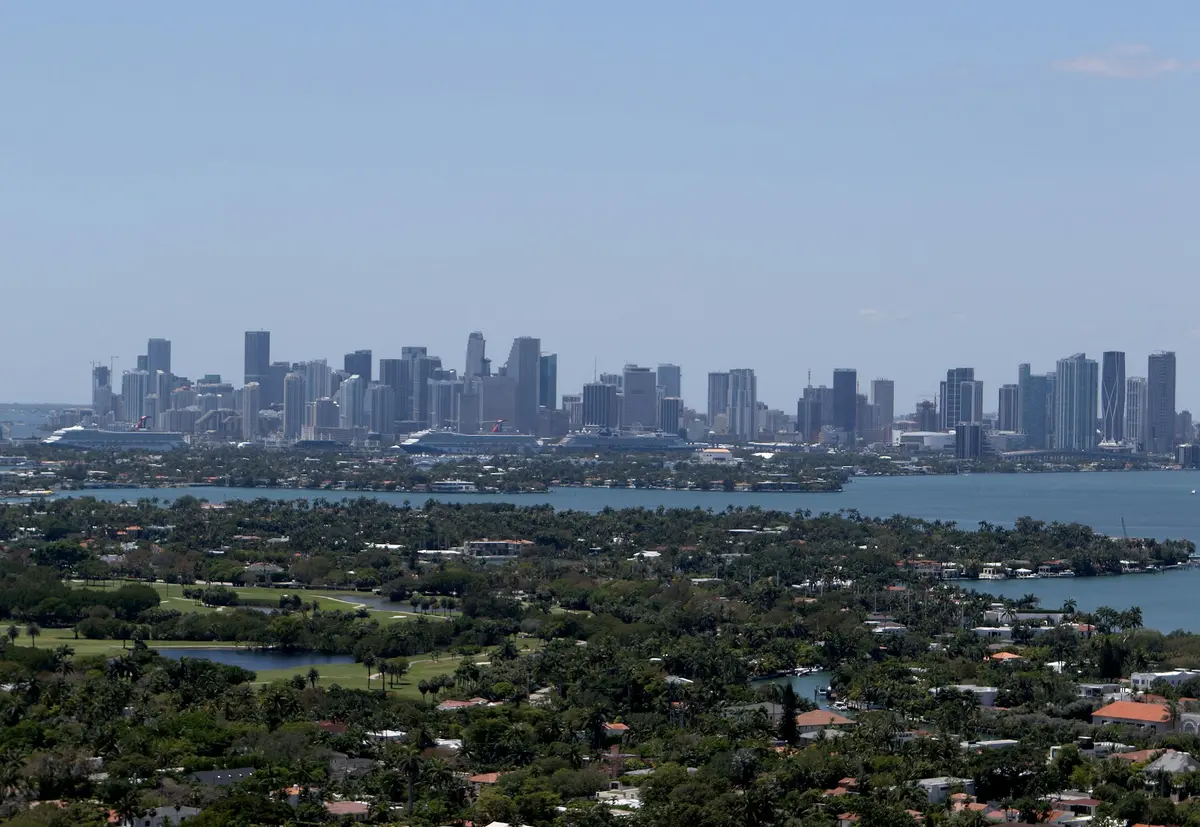
Miami Is Building Hotels Faster Than It Can Find Leaders to Run Them
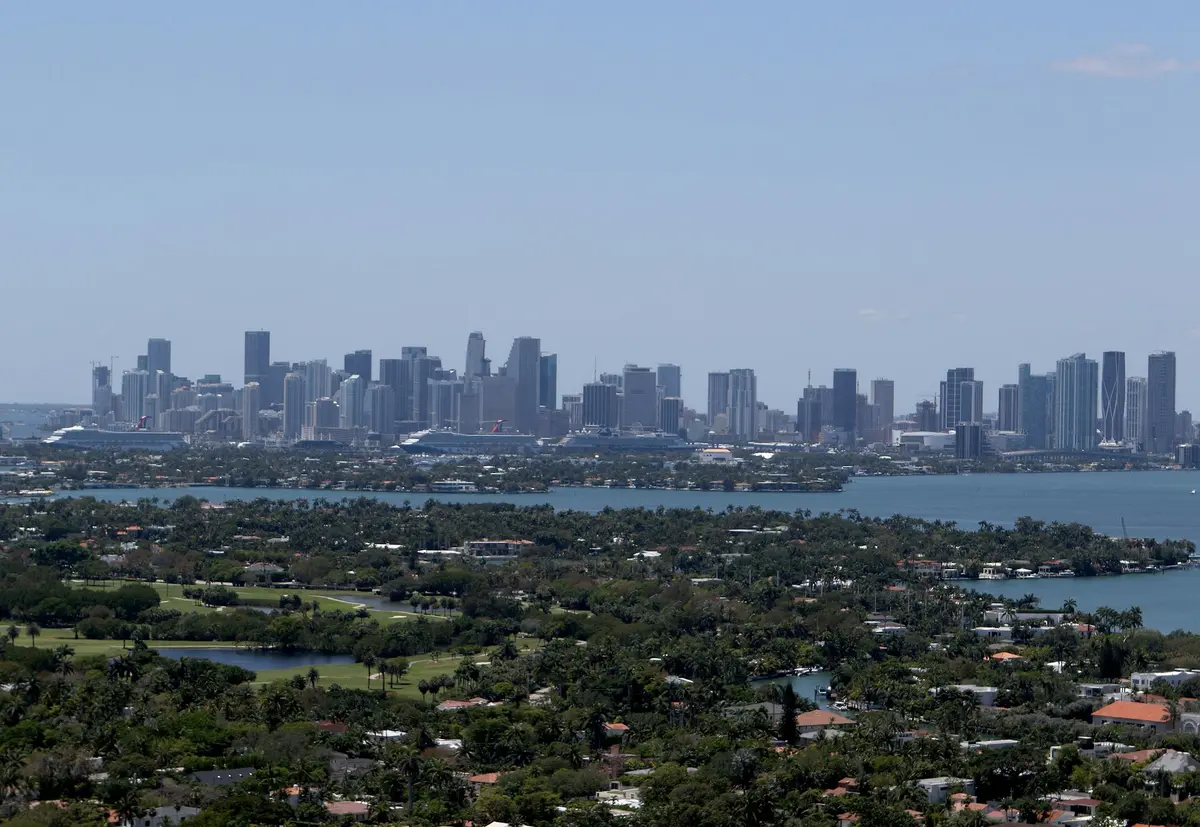
Miami-Dade County entered 2026 with more than 18,000 hotel rooms in its development pipeline and a projected shortfall of 12,000 qualified hospitality workers by year end. The luxury segment accounts for 42% of that new supply. The workers capable of running those properties at the service levels luxury brands demand are not materialising at anything close to the rate the construction cranes suggest.
This is not a generic labour shortage story. Miami's hospitality sector sits at the intersection of five forces that make its executive hiring challenge distinct from any comparable US market: a cruise port processing over seven million passengers annually, a Latin American capital flow that funds development independently of domestic hotel economics, a climate insurance crisis that is already pausing projects, a housing affordability gap that pushes the workforce into neighbouring counties, and an immigration policy environment that has contracted the available labour pool by double digits. Each of these forces shapes who is available, who will relocate, and what it costs to move them.
What follows is a ground-level analysis of where Miami's hospitality hiring gaps are most acute, what is producing them, and what organisations expanding into or operating within this market need to understand before they commit to their next executive search.
The Market Arithmetic That Does Not Add Up
Miami's hotel performance metrics tell one story. Its labour market tells another. Through Q3 2024, the market recorded an Average Daily Rate of $243.18 and Revenue Per Available Room of $180.45, placing it behind only New York and San Francisco among US markets. Occupancy averaged 74.2%. By any revenue measure, Miami remains one of the strongest hospitality markets in the country.
The development pipeline reflects that confidence. According to Lodging Econometrics, 18,200 rooms were in progress entering 2025, a 12% inventory expansion. Approximately 4,200 of those rooms are scheduled for delivery in 2026 alone, including the 264-room Mandarin Oriental on Brickell Key and the 216-room The Standard on Miami Beach. CBRE Hotels Research projects this will increase total market inventory by roughly 6.5%.
Now set that against the labour data. The Greater Miami and the Beaches Hotel Association projects a shortfall of 12,000 qualified workers by the end of 2026, concentrated in management, culinary arts, and specialised guest services. Sixty-eight per cent of existing properties already report understaffing in critical guest-facing positions despite offering wages 22% above 2019 levels.
The capital is moving faster than the talent can follow. Miami is not short of investor confidence. It is short of the people required to convert that confidence into guest experience. Every room that opens without the leadership team to run it at brand standard is a room that degrades the market's positioning rather than strengthening it.
A Development Cycle Detached From Its Own Workforce
The 2026 delivery schedule assumes each new property will be able to recruit a General Manager, a Director of Revenue Management, an Executive Chef, a Director of Food and Beverage, and a full complement of department heads. For luxury properties, each of those searches now takes materially longer than it did before the pandemic. Average time-to-fill for management positions in Miami-Dade's hospitality sector has stretched to 87 days, up from 54 days in 2019. For General Manager roles at luxury properties, the timeline is considerably longer.
The implication is arithmetically straightforward. If the market is delivering 4,200 rooms across approximately 15 to 20 new properties in 2026, and each property requires a minimum of five to eight senior leaders, the market needs between 75 and 160 executive-level hires in a single year. The existing qualified candidate pool cannot absorb that demand.
Inside the Three Roles Miami Cannot Fill
Not all shortages are equal. Three executive categories stand out as acute, each driven by a different set of forces.
Luxury General Managers: 14 Candidates Per 100 Open Positions
Demand for luxury General Managers in Miami has increased 340% over the 2019 baseline. HVS Executive Search estimates just 14 qualified candidates exist for every 100 open positions at the ultra-luxury tier. This ratio is not a recruiting problem. It is a supply problem. The pipeline of operators capable of managing properties with $50 million to $150 million in revenue responsibility, full P&L oversight, and the community relations skills specific to Miami-Dade's regulatory environment is structurally thin.
The passive candidate ratio compounds the difficulty. For GM and C-suite hospitality roles, 85 to 90% of qualified professionals are not actively looking. They hold tenures of four to seven years at established properties like the Fontainebleau, Acqualina, or The Biltmore. They do not post CVs. The ratio of active to passive candidates for luxury GM roles is approximately 1:9.
As reported by the Miami Herald in December 2023, The Setai on Miami Beach maintained an open General Manager position for approximately nine months before filling it with an external candidate from a Four Seasons property in Dubai. During the vacancy, the Regional Vice President assumed interim operational oversight, limiting expansion capacity at sister properties. That is what a nine-month search costs at the operational level.
Executive Chefs: A Retention Crisis Masquerading as a Hiring Problem
Average tenure for executive chefs in Miami's fine dining segment has fallen to 2.3 years, down from 4.1 years before the pandemic. Sixty-eight per cent of properties report "significant difficulty" filling the role. But the data points to something more specific than a generic shortage. Top culinary talent in Miami operates within tight-knit networks centred on the South Florida chapter of the James Beard Foundation and private chef collectives. Searches for Executive Chef positions at Michelin-recognised or James Beard-nominated establishments typically require six to nine months and depend on culinary agent representation rather than public postings.
This is an 80% passive candidate market. The chefs who can run a flagship property's multiple dining outlets are not on job boards. They are represented, networked, and insulated from conventional recruiting. The hidden majority of high-performing candidates in any specialist market are invisible to organisations relying on inbound applications. In Miami's culinary world, that invisibility is nearly absolute.
According to the South Florida Business Journal, Faena Hotel Miami Beach recruited a Director of Food and Beverage from the Four Seasons Hotel Miami in Q2 2024, offering a reported compensation premium of 25 to 30% above market rate plus equity participation in Faena's expansion projects. The move triggered retaliatory compensation adjustments at Four Seasons to retain remaining senior culinary staff. This pattern of offer, counteroffer, and escalation is exactly the dynamic that destabilises retention strategies across an entire market segment.
Sustainability Directors: A Role That Barely Exists Yet
The most striking shortage is in a role that most Miami hotel groups have only recently created. Sustainability Director positions have emerged in response to both regulatory pressure and guest expectations, but only 12 qualified candidates have been identified locally against 35 open positions at major hotel groups. The sustainability certification premium (LEED AP O+M or equivalent) commands 15 to 20% above base for engineering and facilities management executives.
This is not a shortage that compensation alone can solve. The candidate pool does not yet exist at the scale the market requires. You cannot recruit experience that has not been formed.
The Forces Compressing Miami's Talent Pool
Miami's hospitality hiring challenge would be difficult if it were only about demand outstripping supply. What makes it distinct is that several external forces are simultaneously compressing the supply side in ways that wage increases cannot fully offset.
Housing Affordability Is Displacing the Workforce
The median home price in Miami-Dade reached $580,000 by Q4 2024. Affording that requires an annual income of approximately $145,000. Median hospitality worker wages sit at $38,400. Even at the management level, where salaries range from $120,000 to $175,000, homeownership in the county is out of reach for most professionals below the VP tier.
The result is geographic displacement. Sixty-seven per cent of hospitality workers commute from Broward or Monroe counties. According to Florida International University's Metropolitan Center, this commuter pattern increases turnover and absenteeism, both of which hit hardest at properties requiring consistent senior leadership presence. For a luxury hotel where the General Manager's visibility and availability are part of the brand promise, employing a leadership team that lives an hour away is a service quality risk, not just a logistics problem.
Immigration Policy Has Contracted the Labour Pipeline
Approximately 42% of Miami's hospitality workforce holds foreign-born status, well above the national average. Florida's SB 1718, enacted in 2023, introduced penalties for employing undocumented workers and has reportedly reduced the available labour pool for back-of-house positions by 12 to 15% in Miami-Dade, according to analysis by the Florida Policy Institute, though the precise figure remains politically contested.
Restrictions on H-2B seasonal worker visas compound the effect. Miami's peak staffing periods, the winter cruise season and the Art Basel week in December, coincide with the highest demand for temporary labour. Delays in employment authorisation processing create seasonal staffing crises that cascade upward. When line-level positions go unfilled, managers absorb those duties. When managers are absorbed in operations, executive-level leaders lose strategic bandwidth. The shortage at the bottom of the pyramid destabilises the top.
Climate Insurance Is Pausing Development
Property insurance premiums for coastal hospitality assets in Miami-Dade increased 45 to 60% between 2022 and 2024, according to the Florida Office of Insurance Regulation. Several proposed hotel developments in South Beach have paused construction pending flood mitigation infrastructure improvements. The Southeast Florida Regional Climate Change Compact projects 6 to 10 inches of sea-level rise by 2030, affecting low-lying properties in Miami Beach and Key Biscayne.
For executive hiring, the insurance cost spiral introduces a secondary filter. Candidates evaluating GM roles at coastal properties are increasingly asking about capital expenditure plans for flood resilience. A property that cannot answer that question convincingly will lose candidates to competitors that can. The cost of a wrong hire at the executive level is already material. The cost of losing a strong candidate over an unanswered infrastructure question is invisible but equally real.
Where Miami Loses Talent and Where It Wins It Back
Miami's hospitality executive market does not exist in isolation. It competes for talent against three distinct geographies, each pulling on a different segment of the leadership pipeline.
Orlando offers comparable base salaries at 5 to 8% below Miami's rates but with housing costs 34% lower. The theme park ecosystem provides more predictable schedules and stronger benefits packages, drawing mid-level managers away from Miami's 24/7 resort culture. More critically, Marriott's and Hilton's regional offices in Orlando create corporate career trajectories that Miami's property-heavy market cannot match. For a Revenue Management Director weighing their next move, Orlando offers a path to corporate strategy roles. Miami offers another hotel.
New York maintains a 20 to 35% compensation premium for corporate hospitality functions: development, asset management, brand management. According to the Cornell School of Hotel Administration's alumni placement survey, Miami loses approximately 30% of its senior revenue management and development talent to New York annually. Florida's lack of state income tax partially offsets the premium, but New York's access to capital markets and networking infrastructure for hospitality real estate remains a powerful draw.
The Caribbean and Latin American resort markets compete most aggressively for General Managers. The Cayman Islands, Bahamas, and Mexico's Riviera Maya offer tax-free or low-tax structures, employer-provided housing, and base salaries 20 to 25% above Miami equivalents. These markets, however, offer limited upward mobility. The result is a revolving door where executives leave Miami for three to five years and then return for career advancement. Smart organisations in Miami build talent pipelines that account for this cycle rather than treating each departure as a permanent loss.
The competitive intelligence is actionable. For mid-level operational talent, Miami's primary threat is Orlando and the retention battle must be fought on lifestyle and career trajectory, not compensation alone. For corporate strategy roles, the fight is with New York and requires a story about scope and autonomy that a hotel-level role in Miami can tell more convincingly than a cubicle in Midtown. For General Managers, the Caribbean offers a temporary alternative, and the winning strategy is to be the market those executives return to.
Compensation Reality: What It Actually Costs to Hire
Any organisation entering a search in Miami's hospitality market without current compensation data is operating blind. The premiums have shifted materially since 2019, and the structure of packages has changed as much as the numbers.
A General Manager at a flagship luxury property with 500 or more rooms now commands a base salary of $220,000 to $310,000, with total compensation including incentives reaching $320,000 to $480,000. A first-time GM stepping up from a complex Director of Operations role starts at $145,000 to $175,000 base, with total compensation of $195,000 to $240,000. The gap between the two tiers reflects the premium the market places on proven P&L ownership at scale.
Vice Presidents of Operations overseeing five or more full-service or luxury properties earn base salaries of $275,000 to $350,000, with total packages reaching $400,000 to $600,000 plus equity participation in the management company. This level of compensation now competes directly with senior roles in banking and wealth management, reflecting how far hospitality executive pay has moved in markets where supply is most constrained.
Revenue Management Directors at the regional cluster level earn $180,000 to $225,000 base, with total compensation of $240,000 to $310,000. Candidates holding HSMAI CRME certification command an 8 to 12% premium. Those qualified in advanced analytics platforms like IDeaS or Duetto receive three to five recruiter enquiries weekly regardless of whether they are looking. This is a 70% passive candidate market. Reaching the candidates who are not actively searching is not optional in this segment. It is the entire search.
Bilingual Spanish-English proficiency adds a 12 to 18% salary premium for guest-facing executive roles. In a market where international visitation from Brazil, Colombia, and Argentina is projected to recover to 2019 levels by Q2 2026, this premium is likely to widen. The candidates who combine luxury hospitality experience, revenue management sophistication, and genuine bilingual capability represent the most constrained intersection in the market.
For hiring leaders benchmarking packages, current market compensation intelligence is not a luxury. An offer built on 2023 data will be 15 to 25% below what a qualified passive candidate expects. That gap does not produce a negotiation. It produces a declined call.
The Original Tension: Capital Has Outrun Human Capital
The analytical thread running through all of this data leads to a single conclusion that the research does not state directly but that the numbers demand.
Miami's hospitality sector has a capital allocation problem disguised as a labour shortage. The investment flowing into physical expansion, 18,200 rooms in the pipeline, $1.2 billion in port terminal development, a $620 million convention centre renovation, presumes a labour market that does not exist. The developers, port authorities, and brand operators making these capital commitments are pricing in demand growth (3.1% overnight visitor growth projected for 2026, international visitation returning to 2019 levels) while failing to price in the workforce required to service that demand at the quality level the investment assumes.
This is not a temporary gap that will close with wage inflation. Wages are already 22% above 2019 levels and the shortage has worsened. The structural forces, housing displacement, immigration contraction, insurance-driven development pauses, climate risk filtering, are not cyclical. They are embedded. Every dollar invested in a new property without a corresponding investment in the executive talent pipeline to run it is a dollar at risk of underperformance.
The organisations that recognise this asymmetry are the ones securing leaders six to twelve months before a property opens, building relationships with passive candidates in competing markets, and treating executive search as a strategic investment rather than a procurement exercise triggered by a vacancy. The organisations that do not recognise it will open properties with interim leadership, degraded service, and brand damage that takes years to reverse.
What a Search Strategy for This Market Actually Requires
The conventional hospitality hiring playbook, post on Hcareers or Hosco, wait for applications, interview the best of what arrives, reaches at most 10 to 15% of viable candidates for director-level roles in Miami. For General Manager and VP-level positions, it reaches fewer than one in ten. The rest are passive, represented, or networked within circles that job advertising does not penetrate.
An effective search in this market requires three things. First, precise talent mapping that identifies where the 14 qualified candidates per 100 open luxury GM positions actually are, which properties they lead, what their contract timelines look like, and what proposition would cause them to engage in a conversation. Second, the ability to approach passive candidates through channels they trust, not cold InMails but warm introductions through the industry networks centred on events like the Americas Lodging Investment Summit. Third, speed. At 87 days average time-to-fill for management positions and rising, every week of delay narrows the pool. Candidates in this market receive multiple approaches. The search that moves fastest with the most credible proposition wins.
KiTalent delivers interview-ready executive candidates within 7 to 10 days through AI-enhanced direct headhunting methodology built for precisely this kind of constrained market. The pay-per-interview model means clients invest only when they meet qualified candidates, eliminating the retainer risk that makes traditional retained search costly when timelines extend. With a 96% one-year retention rate across 1,450 completed executive placements, the model is built for markets where getting the hire wrong costs more than the search itself.
For organisations competing for hospitality leadership in a market where the development pipeline has outpaced the talent pipeline by a factor that no amount of wage inflation has closed, start a conversation with our executive search team about how we approach Miami's hospitality market differently.
Frequently Asked Questions
What is the average time to fill a hospitality management role in Miami?
As of late 2024, the average time-to-fill for hospitality management positions in Miami-Dade County was 87 days, up from 54 days in 2019. For luxury General Manager roles, the timeline is considerably longer. The Setai on Miami Beach, for example, maintained an open GM position for approximately nine months in 2023 before filling it with an international candidate. These timelines reflect a market where 85 to 90% of qualified candidates are passive and cannot be reached through conventional job postings. Firms that rely on inbound applications face the longest delays.
What does a luxury hotel General Manager earn in Miami in 2026?
A General Manager at a flagship luxury property with 500 or more rooms in Miami earns a base salary of $220,000 to $310,000, with total compensation including bonuses and incentives reaching $320,000 to $480,000. A first-time GM stepping up from a Director of Operations role can expect $145,000 to $175,000 base, with total compensation of $195,000 to $240,000. Bilingual Spanish-English proficiency adds 12 to 18% to guest-facing executive compensation. Accurate salary benchmarking is essential for any organisation entering a search in this market.
Why is Miami losing hospitality executives to other markets?
Miami loses talent to three competing geographies for different reasons. Orlando attracts mid-level operational managers with 34% lower housing costs and more predictable schedules. New York draws corporate strategy talent with 20 to 35% compensation premiums and clearer C-suite career paths. Caribbean resort markets recruit General Managers with tax-free structures, employer-provided housing, and base salaries 20 to 25% above Miami rates. Each competitor requires a distinct retention strategy. Understanding which roles are most at risk is the starting point.
How does Miami's housing crisis affect hospitality hiring?
Miami-Dade's median home price of $580,000 requires an annual income of approximately $145,000 to afford. Median hospitality worker wages are $38,400, and even management salaries rarely clear the homeownership threshold below VP level. The result is that 67% of hospitality workers commute from Broward or Monroe counties, increasing turnover, absenteeism, and the difficulty of retaining senior leaders who value proximity to their properties. For luxury hotels where GM visibility is part of the brand promise, this geographic displacement is a direct service quality risk.
What hospitality roles are hardest to fill in Miami right now?
Three categories stand out. Luxury General Managers face a 340% demand increase over 2019 with only 14 qualified candidates per 100 open positions. Executive Chefs in fine dining have seen average tenure fall to 2.3 years, with 68% of properties reporting significant difficulty filling the role. Sustainability Directors represent an emerging category where only 12 qualified local candidates exist against 35 open positions. Each requires a different executive search approach built around passive candidate identification and direct sourcing.
How does KiTalent approach hospitality executive search in Miami?
KiTalent uses AI-enhanced direct headhunting to identify and engage passive hospitality executives who are not visible on job boards or active in application processes. In a market where 85 to 90% of qualified General Managers and senior leaders are passive, this approach reaches the candidates that conventional methods miss. KiTalent delivers interview-ready candidates within 7 to 10 days on a pay-per-interview basis with no upfront retainer. The firm has completed over 1,450 executive placements with a 96% one-year retention rate. To discuss a current or upcoming hospitality search, contact the team directly.