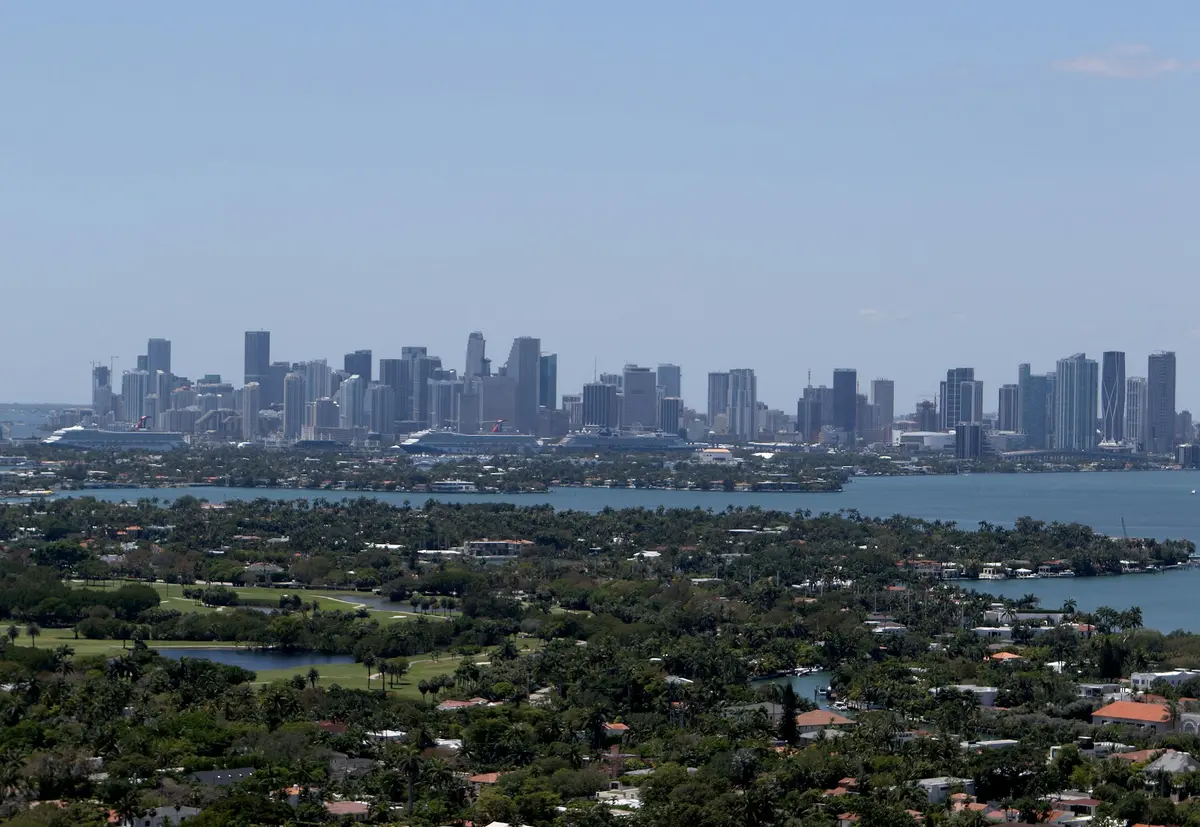
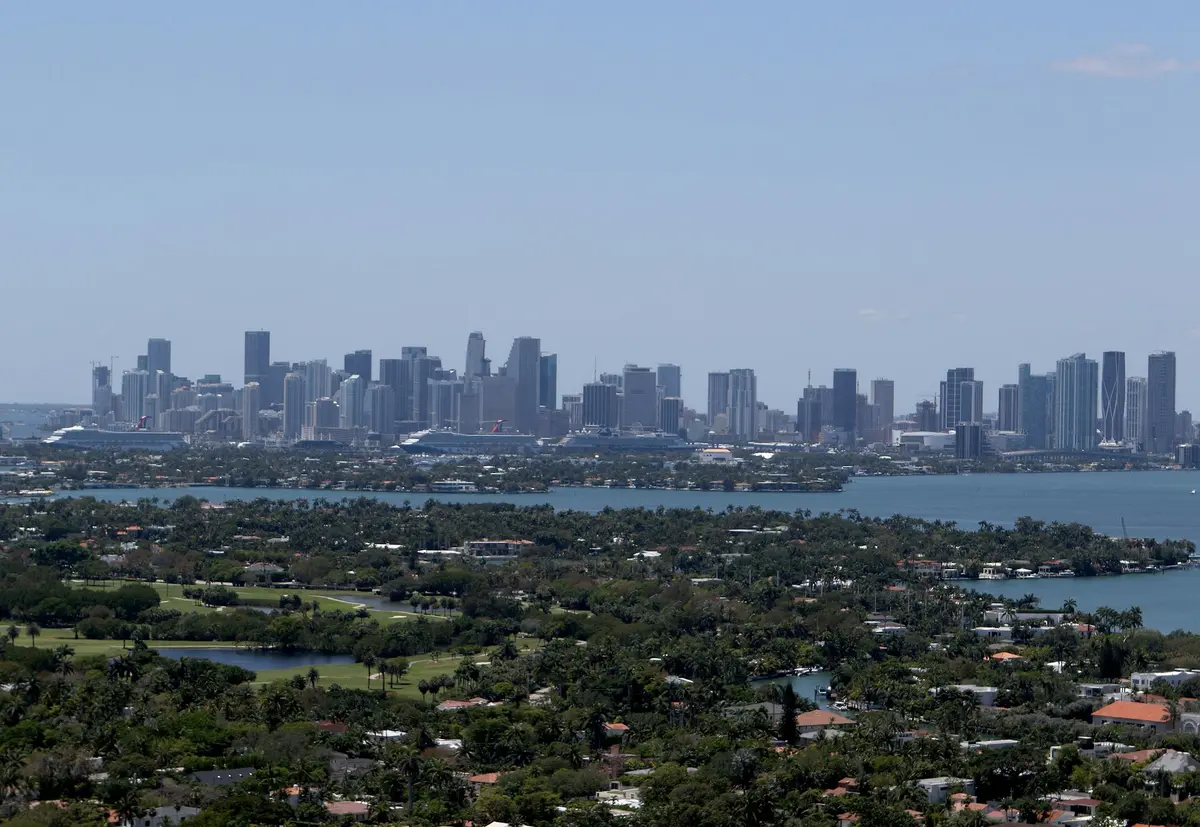
Miami's Trade Gateway Is Growing Faster Than Its Workforce Can Follow: The Talent Bottleneck Capping the Western Hemisphere's Busiest Trade Corridor

PortMiami completed a $1.1 billion capital improvement programme in 2024, enabling simultaneous docking of two mega-vessels. Miami International Airport added new cargo aprons as part of a $7 billion expansion. Container throughput rose 4.2% year-over-year. Cruise passengers topped 7.3 million. Every measure of physical capacity points upward. And yet the binding constraint on Miami's trade and logistics sector is not berths, runways, or warehouse square footage. It is people.
The gap is specific and measurable. Licensed customs brokers in Miami-Dade number roughly 1,400 against a requirement of 1,800. Aviation cargo operations managers take 94 days to place, more than double the national average of 42 days. Trilingual supply chain analysts, the professionals who actually move goods between the United States and Latin America, meet qualification thresholds at barely one-fifth the rate of applicants. Miami's infrastructure investment has run ahead of its human capital, and the result is a trade corridor operating below its own built capacity.
What follows is an analysis of the forces driving this divergence, the roles where the pressure is most acute, who the major employers competing for this talent are, and what organisations hiring into this market need to understand before they launch their next search. The investment story is well known. The workforce story is not, and it is the one that determines whether $8 billion in infrastructure spending delivers its intended return.
Record Infrastructure, Constrained Throughput: The Paradox Defining Miami's Trade Sector in 2026
Miami's status as the Western Hemisphere's primary trade gateway to Latin America rests on two anchors. PortMiami handled approximately 2.3 million TEUs in Fiscal Year 2024, maintaining its position as Florida's largest container port and the ninth-largest in the United States by trade value. MIA processed 2.78 million tons of international freight the same year, leading all U.S. airports in international cargo volume for the fourteenth consecutive year. The Miami Customs District recorded $118.2 billion in two-way trade through October 2024, with Brazil, Colombia, and Chile as top partners.
These figures have continued climbing into 2026. The Beacon Council projected Miami Customs District trade value reaching $125 to $130 billion by year-end, and logistics and warehousing employment in the Miami MSA was forecast to grow 6.8% through 2026, outpacing national averages. PortMiami's $250 million South Florida Logistics Center and expanded on-dock rail through the Florida East Coast Railway intermodal facility are designed to increase container capacity by another 15%. MIA's South Terminal Expansion is expected to add 300,000 tons of annual air cargo capacity by late this year.
The physical infrastructure, in other words, is not the problem. The problem is that U.S. Customs and Border Protection officer vacancies at PortMiami and MIA reached 22% in 2024, according to the U.S. Government Accountability Office, causing cargo examination delays averaging 4.2 days versus 1.8 days at Los Angeles/Long Beach. The port can dock the vessel. The airport can land the freight. But the people required to clear, classify, route, and comply with the regulatory framework that governs Latin American trade are in critically short supply.
This is the paradox that hiring leaders in Miami's trade corridor must now confront. Capital has moved faster than human capital could follow.
The Customs Broker Deficit: A Licensing Bottleneck With No Quick Fix
Why the Gap Exists
Only 11,400 licensed customs brokers operate across the entire United States. Miami-Dade requires approximately 1,800 to meet current trade volumes. Local licensure stands at roughly 1,400 active practitioners. That 22% shortfall is not a recruitment problem in any conventional sense. It is a licensing bottleneck.
The U.S. Customs Broker License Examination has a historical pass rate that restricts the pipeline at its source. The exam tests mastery of the Harmonized Tariff Schedule, CBP regulations, trade law, and classification methodology. Candidates cannot acquire this credential through training programmes alone. They need years of hands-on experience with real entry filings, penalty mitigation, and ruling requests before they can pass the exam and practise independently. The result is that when a senior broker retires or relocates, the replacement timeline is measured in years, not months.
What This Means for Hiring
An estimated 85% of qualified senior customs brokers in Miami are passive candidates, according to the Florida Customs Brokers & Forwarders Association's 2024 compensation survey and LinkedIn Talent Insights data. Average tenure in current roles exceeds 5.2 years. Voluntary turnover runs at just 8% annually. These professionals are not browsing job boards. They are not attending career fairs. The only way to reach them is through direct identification and approach.
The scarcity is compounded by a language requirement that is nearly unique to this market. Sixty-eight percent of posted logistics analyst roles in Miami require trilingual capabilities in English, Spanish, and Portuguese. Only 22% of applicants meet both the language and technical qualifications. A licensed broker who also speaks Portuguese and understands Brazil's Siscomex system is not merely scarce. That person operates in a candidate pool so narrow that traditional search methods cannot reliably reach it.
Livingston International's Miami operations centre illustrates the depth of this challenge. According to the South Florida Business Journal, the firm maintained an open posting for a Senior Manager of Customs Brokerage covering Latin America for 11 months during 2023 and 2024. The position required both a customs broker licence and Portuguese fluency. After three external search failures, the role was filled through internal promotion. The external market simply could not produce a candidate who met both requirements within an acceptable timeframe.
Where the Talent Competition Actually Sits: Atlanta, Houston, and Panama City
Miami's trade and logistics professionals do not compete within a closed local market. They sit inside a regional talent system that extends to Atlanta, Houston, and increasingly to Panama City. Understanding where candidates are being pulled, and why, is essential for any organisation building a compensation and retention strategy in this corridor.
Atlanta's Corporate Career Depth
Hartsfield-Jackson Atlanta International Airport ranks second to MIA in Latin American cargo, but Atlanta offers logistics professionals an 18 to 22% lower cost of living with comparable base salaries. A Senior Logistics Manager earns $95,000 to $115,000 in Atlanta versus $102,000 to $125,000 in Miami. The effective purchasing power gap is wider than the nominal salary difference suggests.
More consequential than compensation alone is the career trajectory advantage. Atlanta's concentration of Coca-Cola, Home Depot, and UPS headquarters creates deep corporate logistics career paths that Miami's fragmented forwarder ecosystem cannot match. A mid-career supply chain professional in Miami looking at their next ten years sees a series of lateral moves between forwarding firms. The same professional in Atlanta sees a path from divisional logistics into corporate strategy at a Fortune 50 employer. This structural difference in career depth pulls talent northward at the director and VP level.
Houston's Compensation Premium
Houston competes for Latin American energy and industrial trade talent at a different price point entirely. VP of Supply Chain roles in Houston command $245,000 to $310,000 versus $195,000 to $250,000 in Miami, according to Michael Page's 2024 Supply Chain Salary Report. Texas has no state income tax. For a Miami-based executive with a family considering a move, the combination of higher gross pay and lower effective tax rate can represent a $60,000 to $80,000 annual improvement in household economics. Industry sources cited in Air Cargo World reported that DHL Express paid a 35% compensation premium to recruit a Director of Cargo Operations from a competitor's Miami facility in the second quarter of 2024, offering a $275,000 base salary. That premium reflects the market price of retaining senior talent against Houston-level offers.
Panama City's Structural Pull
The emergence of Panama City as a regional headquarters alternative creates a different kind of pressure. The Hub of the Americas strategy and Panama Pacifico Special Economic Zone attract Miami-based Latin American trade specialists with tax incentives and lower operational costs. This is not a compensation competition. It is a structural relocation of regional headquarters functions, and it removes from Miami's talent pool exactly the senior professionals with cross-border regulatory expertise who are hardest to replace.
The combined effect is a market where the best talent is pulled in three directions simultaneously. Organisations that benchmark their offers against Miami market data alone are competing with a compensation structure they cannot see.
The Cruise Line Paradox: New Ships, Same Talent Pool
The cruise sector's expansion plans are among the most aggressive in Miami's trade ecosystem. Carnival Corporation maintains 3,500 shoreside staff in South Florida. Royal Caribbean Group employs 2,800 at its PortMiami Innovation Campus. Norwegian Cruise Line Holdings expanded its logistics operations team by 18% in 2024. Twelve new vessels are scheduled to homeport in Miami through 2026, including Royal Caribbean's Icon-class and Carnival's Excel-class ships. PortMiami anticipates 8.2 million passengers this year.
Every new vessel requires provisioning logistics, procurement coordination, compliance oversight, and supply chain management at the shoreside level. The physical berths exist. The vessels are under construction or already delivered. But cruise line logistics compensation has lagged air cargo and pharmaceutical logistics by 15 to 20% at the VP level, and passive candidate rates for cruise-specific procurement roles exceed 90%.
This is where the original analytical claim of this article becomes clearest. The investment in physical capacity, in berths and terminals and new vessels, has not reduced the workforce requirement. It has replaced one kind of workforce demand with another that the market cannot yet supply at scale. The cruise lines need provisioning directors, cold chain specialists, and procurement executives who understand just-in-time maritime supply chains. These professionals do not emerge from a training programme. They are developed over a decade of hands-on operations. Capital has created capacity that human capital cannot yet fill.
The likely consequence is that cruise lines will consolidate procurement functions outside Miami despite maintaining physical headquarters in the city. This is already visible in the pattern of remote work concessions being made for hard-to-fill compliance and operations roles. A mid-sized freight forwarder described as following a typical pattern by the Florida Customs Brokers & Forwarders Association implemented fully remote arrangements for a Trade Compliance Manager specialising in FDA-regulated pharmaceutical imports, despite a company-wide hybrid policy, to retain the candidate against three competing offers from Atlanta-based firms. Aggregate data shows 40% of Miami logistics firms now offer remote options for compliance roles, up from 12% before the pandemic.
If compensation does not rise to meet the air cargo and pharmaceutical benchmarks, and if remote concessions become standard, the talent that runs Miami's cruise logistics will increasingly sit elsewhere while the ships remain docked at PortMiami.
Compensation Realities Across Miami's Trade and Logistics Functions
Understanding what roles pay in this market is essential for calibrating both hiring offers and retention strategies. The data below draws from Robert Half's 2025 Salary Guide with Miami-specific adjustments, Michael Page's Latin America Trade Compensation Report, and the FCBF Compensation Survey.
Customs Brokerage and Trade Compliance
A Senior Customs Broker or Trade Compliance Manager with 15 to 20 years of experience and an active licence commands $105,000 to $135,000 in base salary. At the VP of Global Trade Compliance level, base compensation reaches $195,000 to $250,000, with 25 to 40% bonus potential at multinational firms. The Miami adjustment factor runs approximately 1.08 times the national average, reflecting both the concentration of trade activity and the scarcity of licensed professionals.
Supply Chain and Logistics Operations
Senior Supply Chain Managers with a Latin America focus earn $128,000 to $155,000. VP-level supply chain and logistics roles reach $210,000 to $285,000 in base salary, with publicly traded cruise lines adding equity components to total packages.
Air Cargo and Port Operations
Air Cargo Operations Managers earn $98,000 to $125,000. Directors of Port Operations or Terminal Management command $165,000 to $205,000, with maritime-specific certifications driving the upper range.
Freight Forwarding and Third-Party Logistics
Enterprise Account Directors earn $115,000 to $145,000 in base salary, with total compensation reaching $160,000 to $210,000 including commission. Managing Directors covering the Latin America region sit at $240,000 to $320,000 in base compensation, with the premium reserved for professionals holding dual U.S. and Latin American jurisdiction experience.
Technical competencies command 15 to 25% salary premiums above these ranges. Harmonized Tariff Schedule classification expertise, specifically Chapter 98 FTZ entries and pharmaceutical classifications, is the single highest-premium skill. Cold Chain Management certification under IATA CEIV Pharma standards, trade compliance software fluency in SAP GTS or Oracle Global Trade Management, and Portuguese or Mandarin language capability each add incremental premium.
The compensation data reveals a market that is repricing around scarcity. These figures are not ceiling numbers. They are what it costs to attract a candidate today. Organisations offering below these bands are not saving money. They are extending their search timelines and losing candidates to firms that have already adjusted.
Regulatory and Structural Headwinds That Compound the Hiring Challenge
Miami's trade sector operates under regulatory and economic constraints that amplify the talent shortage rather than operating independently of it.
CBP Staffing and Cargo Delays
The 22% CBP officer vacancy rate at PortMiami and MIA is not merely a government staffing problem. It directly constrains throughput for every private employer in the trade corridor. Cargo examination delays averaging 4.2 days versus 1.8 days at West Coast ports mean that forwarders, brokers, and importers need larger operations teams to manage the administrative burden of slower clearance cycles. The shortage of government personnel creates additional demand for private-sector compliance and operations staff, compounding the talent pressure at every level.
Real Estate Cost Compression
Industrial warehouse rent in Miami-Dade reached $12.84 per square foot in the third quarter of 2024, a 340% increase from 2019, according to CBRE's South Florida Industrial Market Report. This compresses margins for freight forwarders and third-party logistics providers, limiting the compensation increases they can offer to attract scarce talent. The irony is precise: the same growth that makes Miami's trade sector attractive to investors makes it increasingly difficult for the employers within that sector to afford the workforce they need.
Climate Infrastructure Costs
Sea-level rise projections indicate six to ten inches of additional water level rise by 2030, threatening PortMiami's cargo terminals and requiring adaptive infrastructure spending estimated at $1.5 billion. These capital requirements will absorb resources that might otherwise fund workforce development, relocation packages, or compensation increases. The climate adaptation timeline and the talent shortage timeline are running in parallel, competing for the same finite budget.
Trade Policy Uncertainty
Proposed changes to the de minimis exemption under Section 321 for shipments under $800 would disproportionately impact Miami's e-commerce air cargo sector, which handles 35% of U.S.-bound low-value express shipments from Latin America. The expiration of certain Andean Trade Preference Act provisions in 2025 created regulatory uncertainty for textile and flower importers. MIA handles 91% of U.S. flower imports. Any disruption to the regulatory framework governing that trade flow directly affects the demand for, and the economics of, the customs brokerage and compliance professionals who manage it.
Education Pipeline Insufficiency
Florida International University's Chapman Graduate School of Business produces 280 supply chain graduates annually, meeting only 40% of Miami's entry-level demand. H-1B visa denials for specialised Latin American trade analysts increased 18% in 2024, further restricting access to bilingual technical talent. The pipeline is too narrow at the entry level and too constrained by immigration policy at the experienced hire level. Neither problem has a short-term solution, which means the talent shortage is embedded in the market's structure for the foreseeable future.
These headwinds do not operate in isolation. They reinforce each other. Higher real estate costs compress margins. Compressed margins limit compensation. Limited compensation pushes talent toward Atlanta and Houston. Talent departures extend search timelines. Extended timelines create operational gaps. Operational gaps reduce throughput. Reduced throughput undermines the return on $8 billion in infrastructure investment. The cycle is self-reinforcing, and the only point of intervention that produces results within a hiring cycle's timeframe is the search process itself.
What This Market Requires From an Executive Search Process
The characteristics of Miami's trade and logistics talent market create specific requirements for how senior hiring must be conducted. This is not a market where posting a role and waiting produces results. The data makes this unambiguous.
Eighty-five percent of senior customs brokers are passive. Ninety-two percent of VP and Director-level Latin America trade compliance professionals are passive. Port Operations Directors operate at what the Association for Supply Chain Management describes as 100% passive candidate status during normal economic conditions. The estimated pool of qualified Port Operations Directors across the entire Southeast United States numbers approximately 120 individuals.
A search in this market must begin with identification of the specific individuals who hold the credentials, language capabilities, and jurisdictional experience the role requires. It must then engage those individuals directly, outside of job boards and application portals, with a proposition calibrated to what actually moves a passive candidate: not just compensation, but career trajectory, organisational credibility, and role scope.
The cost of getting this wrong is not abstract. A 94-day vacancy for an Aviation Cargo Operations Manager role, against a national average of 42 days, represents 52 additional days of suboptimal cargo operations during a period when MIA's new capacity is coming online. A customs brokerage search that runs 11 months and ends with an internal promotion means the organisation never accessed the external market at all. A senior hire who leaves within a year because the offer was not benchmarked against Houston or Atlanta restarts the entire cycle.
KiTalent delivers interview-ready executive candidates within 7 to 10 days through AI-enhanced talent mapping that identifies the passive professionals conventional searches never reach. In a market where 85 to 100% of qualified candidates are not actively looking, the difference between a method that reaches those individuals and one that does not is the difference between filling a role and watching it sit open for a year. KiTalent's 96% one-year retention rate reflects what happens when the matching process accounts for the full picture: compensation, career fit, cultural alignment, and the specific professional motivations that govern a passive candidate's decision to move.
For organisations hiring senior leaders in trade, logistics, and supply chain functions across Miami's Latin American trade corridor, where the candidates who can fill these roles are known, employed, and not looking, start a conversation with our executive search team about how we approach this market differently.
Frequently Asked Questions
What are the hardest logistics roles to fill in Miami in 2026?
Licensed U.S. Customs Brokers with trilingual capabilities (English, Spanish, Portuguese) represent the most acute shortage. Miami-Dade has approximately 1,400 active practitioners against a requirement of 1,800. Aviation Cargo Operations Managers take 94 days to fill versus 42 days nationally. VP and Director-level Latin America Trade Compliance roles operate at 92% passive candidate rates, meaning fewer than one in ten qualified professionals is actively seeking a new position. Port Operations Directors are effectively unavailable through conventional recruitment channels, with an estimated 120 qualified individuals across the entire Southeast United States.
How does Miami logistics compensation compare to Houston and Atlanta?
Miami pays competitively at mid-level but trails Houston materially at the executive tier. A VP of Supply Chain earns $210,000 to $285,000 in Miami versus $245,000 to $310,000 in Houston, where no state income tax further widens the effective gap. Atlanta offers 18 to 22% lower cost of living with comparable base salaries for Senior Logistics Manager roles ($95,000 to $115,000 versus $102,000 to $125,000 in Miami). Organisations hiring in Miami must benchmark against these competing markets, not against local averages alone.
Why do traditional recruitment methods fail for Miami trade and logistics roles?
The defining characteristic of Miami's senior trade talent is passivity. Eighty-five percent of qualified senior customs brokers are not actively looking. Ninety-two percent of VP-level trade compliance professionals are recruited through network referrals, not job boards. The combination of licensing requirements, language demands, and jurisdictional expertise creates candidate pools so narrow that job advertising reaches only a fraction of viable candidates. Executive search firms using direct headhunting and AI-powered talent mapping are the primary method for accessing this talent.
What impact does the customs broker shortage have on Miami's trade operations?
The shortage directly constrains throughput. With CBP officer vacancies at 22% creating cargo examination delays of 4.2 days (versus 1.8 at West Coast ports), private-sector brokers carry a heavier administrative burden. Fewer brokers processing higher trade volumes means longer clearance cycles, increased compliance risk, and higher per-transaction costs. For importers and exporters, the practical consequence is that Miami's physical port and airport capacity exceeds what the available workforce can process.
What is PortMiami's growth outlook for 2026 and beyond?
PortMiami's $250 million South Florida Logistics Center and expanded on-dock rail capacity are projected to increase container throughput by 15%. Cruise operations anticipate 8.2 million passengers as new Icon-class and Excel-class vessels homeport in Miami. MIA's South Terminal Expansion targets 300,000 tons of additional annual air cargo capacity. The Beacon Council projects trade district value reaching $125 to $130 billion. The infrastructure trajectory is clear. The open question is whether the talent pipeline can keep pace with the physical capacity being built.
How can companies attract passive logistics talent in Miami?
Reaching passive candidates in this market requires three elements. First, direct identification through talent mapping rather than job advertising. Second, a compensation proposition benchmarked against Houston and Atlanta, not just local Miami data. Third, a search process fast enough to present and close candidates before competing offers intervene. KiTalent's pay-per-interview model and 7 to 10 day candidate delivery timeline are designed for exactly this kind of market, where speed and precision determine whether a search succeeds or stalls.