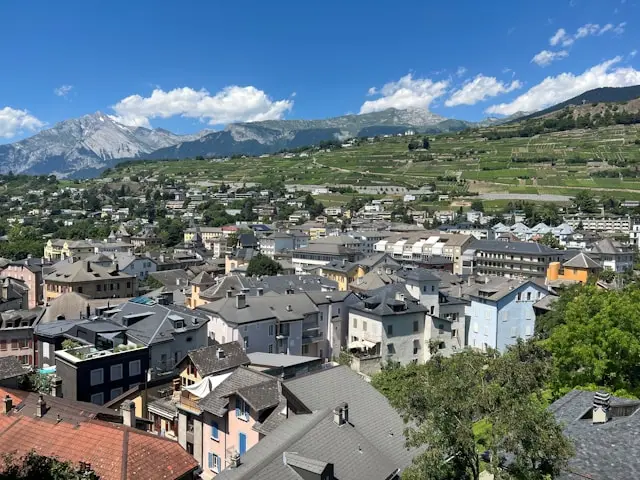
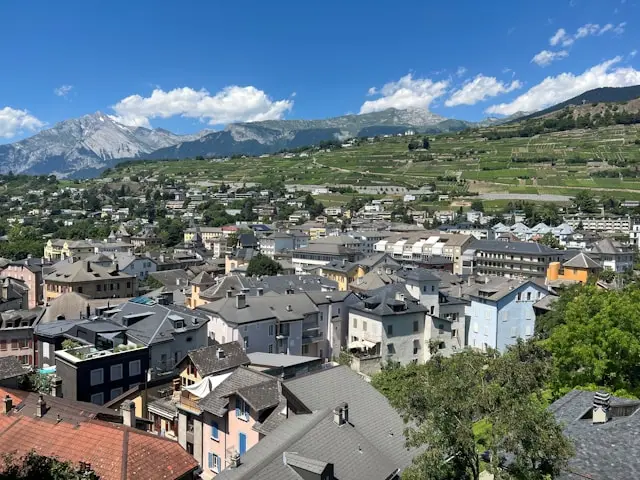
Sion's Construction Boom Has a Workforce It Cannot Sustain: The Demographic Crisis Behind CHF 1.6 Billion in Alpine Infrastructure

Sion sits at the centre of the largest infrastructure investment cycle the canton of Valais has seen in a generation. A CHF 400 million hospital replacement is in structural phase. Alpine tunnel safety upgrades stretch along the A9 corridor. High-altitude solar installations are breaking ground above the 4 Vallées network. The pipeline exceeds CHF 1.6 billion in committed and planned projects. Capital is not the constraint.
The constraint is people. Construction sector unemployment in the canton stands at 1.1%, which is not a labour market. It is a statistical artifact of frictional movement between employers. The vacancy rate reached 4.2% in late 2024, well above the Swiss national average of 2.8%. Senior geotechnical engineers take an average of 8.4 months to hire. And 38% of the canton's skilled construction workforce is over 50, with net retirements projected to exceed new entrants by 2027. The investment is real. The workforce to deliver it is shrinking.
What follows is a ground-level analysis of the forces reshaping Sion's construction and infrastructure market, the specific roles and skills that are hardest to secure, and what hiring leaders responsible for alpine infrastructure delivery need to understand before their next search.
The Investment Pipeline That Outran Its Labour Supply
The scale of active and committed infrastructure in the Sion basin tells one story. The labour data tells another. The tension between the two defines the market in 2026.
The Nouvel Hôpital du Valais alone employs a consortium including Implenia SA and CIC SA on a CHF 400 million build now in structural phase. The A9 motorway expansion requires specialised geotechnical expertise for alpine tunnel safety upgrades between Sion and Sierre. Romande Energie's Solar Mont-Noble project (12 MWp) is under construction, with additional high-alpine installations on the Les Collons plateau moving through permitting. Each of these projects requires the same finite pool of alpine-experienced professionals.
The canton's Energy Strategy 2050 adds a second layer of demand. Valais hosts roughly 25% of Switzerland's installed hydropower capacity. Many of these plants date to the 1960s, with an average age of 45 years. The federal Hydropower Modernisation Roadmap calls for accelerated retrofitting across the fleet. Grid stabilisation projects for solar intermittency are layering on top. The Valais Construction Federation projects 3% nominal growth in sector turnover for 2026.
Yet the labour force to execute this work is not growing. It is contracting. Only 12% of the canton's skilled construction tradespeople are under 30. The sector faces a projected net loss of 800 skilled workers by 2030 through retirement alone. HES-SO Valais-Wallis, the canton's primary engineering school and the only French-speaking Swiss institution offering specialised civil engineering and energy systems programmes, produces approximately 80 graduates per year in relevant disciplines. That output does not replace even the annual retirement flow, let alone service net growth in demand.
This is the core analytical claim of this article, and it is not stated in any single data source: the investment cycle and the demographic cycle in Sion are moving in opposite directions at accelerating speed. Capital deployment has outpaced human capital formation for years, and the gap is now structural. The firms that recognised this three years ago and began building talent pipelines are the firms that will deliver the next decade's projects. The firms that are still posting vacancies and waiting are already behind.
Three Roles Where the Market Has Effectively Stopped Producing Candidates
Not all shortages are equal. Some roles attract fewer applications than they once did. Others have reached a state where the talent market has functionally ceased to produce new entrants at the rate required. In the Sion basin, three categories sit in this second, more severe condition.
Senior Geotechnical Engineers with Alpine Specialisation
The average vacancy duration for a senior geotechnical role in the canton is 8.4 months, according to Michael Page Switzerland's 2024 engineering and construction salary guide. The Syndicat des entrepreneurs de la construction Valais reports that for every 10 such roles advertised in the canton, only three receive qualified applications. The passive candidate ratio is estimated at 85% to 90%. Average tenure among incumbents exceeds eight years at their current employer.
This is not a shortage that more advertising can solve. The skills required are narrow and non-transferable from adjacent disciplines. Rock mechanics, avalanche protection engineering, and tunnel boring machine operation are learned through years of project exposure in alpine environments. A civil engineer from the Mittelland with excellent credentials but no alpine project history is not a substitute. The market recognises this: bilingual (French/German) candidates with alpine tunneling experience command a 10% to 12% premium above the already elevated standard range.
Hydropower Operations Managers
Valais hydropower is a specialisation that produces almost no visible candidates on any job platform. According to the Union Suisse des Producteurs d'Électricité (USPE), the passive ratio for experienced hydropower operations managers exceeds 90%. Incumbents typically hold their positions until retirement. The role requires a combination of electrotechnical expertise, regulatory fluency with Swiss federal energy law, and operational knowledge of ageing plant infrastructure that simply cannot be acquired quickly.
The cross-border dynamic compounds the problem. French utilities operating in the Rhône-Alpes region, according to the USPE's 2024 workforce survey, routinely recruit specialised hydropower operations engineers with five or more years of experience from Valais employers. Sion-based firms typically must offer a 15% to 20% compensation premium above standard Swiss Valais scales to retain talent against French offers that include housing subsidies near Chambéry. Senior specialists now command base salaries approaching CHF 125,000 to CHF 135,000.
BIM/VDC Managers with Alpine Project Experience
Digital construction coordination in difficult terrain requires a specific combination of software mastery (Autodesk Revit, Civil 3D) and field-level understanding of alpine logistics constraints. The estimated passive ratio is 75% to 80%. Active candidates in this category typically have fewer than three years of experience. The skills are highly transferable to international markets, which means Sion competes not only with Lausanne and Zurich but with construction digitisation programmes across Europe for the same professionals.
In each of these three categories, traditional recruitment methods reach a fraction of the viable candidate pool. Job postings attract the least experienced segment. The candidates who would actually succeed in these roles are employed, performing well, and not looking. Reaching them requires a fundamentally different approach, one built on direct identification and engagement of passive talent rather than advertising and waiting.
The Demographic Compression Reshaping Valais Construction
The workforce age profile of the Valais construction sector is not a background trend. It is the single most consequential force acting on the market. Understanding its mechanics is essential for any hiring strategy in the canton.
Thirty-eight percent of the canton's skilled construction tradespeople are over 50. Twelve percent are under 30. These two figures describe a workforce shaped like an inverted pyramid, with a broad retirement cohort sitting above a narrow entry cohort. The federal statistical office's labour force survey data, the most recent cantonal breakdown available from 2023, shows this profile to be among the most age-skewed in any Swiss construction market.
The projected net loss of 800 skilled workers by 2030 means the sector will shrink by roughly 19% of the Sion agglomeration's current construction workforce of approximately 4,200 in the space of six years. That figure accounts for retirement alone. It does not account for attrition to higher-paying markets in Lausanne, Geneva, or Zurich, where equivalent roles pay 10% to 20% more.
The training pipeline cannot close this gap. Eighty graduates per year from HES-SO Valais-Wallis in relevant engineering disciplines, even if every single one remained in the canton, would replace only a fraction of the outflow. The vocational training system faces the same bottleneck: the canton's Energy Strategy 2050 mandates for building energy retrofits to Minergie-P standards are increasing demand for specialised construction skills, but training capacity at HES-SO and the vocational schools is not scaling proportionally.
This creates a market dynamic that senior hiring leaders must recognise. The cost of a failed or delayed executive hire in this context is not simply the cost of re-running a search. It is the cost of a CHF 100 million infrastructure project that cannot advance because the person who should be managing it does not exist in the available talent pool. The demographic compression makes every senior hire more consequential, because the bench behind them is thinner than it has ever been.
Compensation Realities: What Sion Must Pay and Why It Is Not Enough
Compensation in Sion's construction sector sits in a specific position: high enough to be competitive within the Valais market, but insufficient to match what the same professionals can earn in Lausanne, Geneva, or Zurich without a deliberate premium strategy.
Construction and Civil Engineering
At the senior specialist and manager level, including roles such as Senior Project Manager and Lead Geotechnical Engineer, base salaries range from CHF 95,000 to CHF 125,000. Total compensation including bonus reaches CHF 105,000 to CHF 140,000. The bilingual alpine-experience premium pushes the effective cost 10% to 12% above these ranges for the candidates who are actually qualified.
At the executive level, including roles such as Directeur de Région, Directeur Technique, and Construction Director, base salaries range from CHF 150,000 to CHF 200,000. Total compensation reaches CHF 170,000 to CHF 240,000. Senior executives managing CHF 100 million-plus alpine infrastructure projects may command the upper quartile, particularly at multinational firms.
Renewable Energy Engineering
Senior specialists in grid integration and hydropower plant management earn base salaries of CHF 90,000 to CHF 120,000, with total compensation of CHF 100,000 to CHF 135,000. A 5% to 8% premium applies over standard building construction roles due to the electrotechnical and regulatory expertise required.
At the executive level, Directors of Energy Projects and VP-level leaders managing mixed renewable portfolios (hydro, solar, storage) command base salaries of CHF 140,000 to CHF 180,000, with total compensation of CHF 160,000 to CHF 220,000. Those managing alpine-environment portfolios sit at the top of this range.
The Competitor Premium Problem
The core challenge is not the absolute level of Sion compensation. It is the relative gap. Lausanne and Geneva offer a 10% to 15% premium for equivalent roles. Zurich and northern Switzerland offer 15% to 20% above Sion. A senior engineer weighing a move to Sion from Zurich faces a material salary reduction.
Sion employers counter with a cost-of-living argument that has genuine substance: housing costs in Sion are approximately 25% lower than Geneva, according to Wüest Partner's real estate market analysis. For mid-career professionals with families, the net economic position in Sion can be comparable or superior to a higher gross salary in the Lake Geneva region. But this argument requires a sophisticated total-reward conversation that most hiring processes are not designed to deliver. It requires the kind of detailed compensation benchmarking that turns a headline salary gap into a genuine comparison of economic outcomes.
The cross-border dimension adds a further layer. French employers recruiting Valais hydropower specialists offer lower gross salaries but combine them with housing subsidies and a dramatically lower cost of living near Chambéry. The proposition is different in kind, not just in degree, and it pulls at the specific mid-level technical population that Sion can least afford to lose.
The Permitting Paradox: Hiring for Projects That May Not Break Ground
One of the least-discussed risks in Sion's construction talent market is the mismatch between hiring timelines and permitting timelines. The data reveals a pattern that should concern any leader building a workforce for the energy transition.
Federal permitting data shows that 40% of alpine solar projects in Valais face delays exceeding 24 months due to environmental impact assessments and appeals under Swiss federal spatial planning law. Alpine construction projects in the Sion hinterland face permitting cycles of 24 to 48 months. The Federal Office for the Environment's permitting duration statistics confirm this as a systemic condition, not an outlier.
Yet advertised vacancies for solar and retrofitting engineers increased 34% year-over-year in 2024. Employers are hiring for projects that may not break ground for two to four years. This creates a specific risk: professionals recruited into roles that are delayed by permitting may become restless, seek alternative positions, or have their skills decay before the project begins. The cost of recruiting a specialist, holding them through a two-year permitting delay, and then having them leave six months before construction starts is substantial. But the alternative, waiting until permits are secured and then trying to hire in a market with 1.1% unemployment, is worse.
The firms managing this paradox effectively are the ones treating talent pipeline development as a continuous strategic function rather than a project-by-project procurement exercise. They are engaging candidates early, maintaining relationships through permitting uncertainty, and building bench strength that can absorb the irregular employment cycles that alpine permitting creates. The firms that hire reactively, posting a vacancy only when a project is confirmed, are consistently late to a market that has no spare capacity.
This connects to a broader point about construction costs: alpine zone construction in the Sion hinterland already runs 30% to 40% above Swiss Mittelland averages due to limited access roads, avalanche protection requirements, and shortened construction seasons. Labour shortages compound these costs further. Every month a critical role remains unfilled adds not just the direct cost of the vacancy but the indirect cost of delayed construction in one of Switzerland's most expensive operating environments.
What Hiring Leaders Must Do Differently in This Market
The structural conditions in Sion's construction and energy sector are not temporary. They are the product of demographic forces, geographic constraints, and investment cycles that will persist through the remainder of this decade. The conventional approach to construction hiring, posting a role, screening applications, making an offer, reaches at most 10% to 15% of the viable candidate pool for the roles that matter most.
The February 2024 federal popular initiative to limit immigration introduces an additional constraint. Approximately 22% of the Valais construction workforce holds non-Swiss EU/EFTA passports, according to SECO's foreign labour force statistics. Any restriction on this pipeline would deepen shortages that are already severe. Employers cannot assume that cross-border recruitment will remain as frictionless as it has been.
Three shifts in approach are required.
First, the search method must match the candidate profile. When 85% to 90% of senior geotechnical engineers are passive and the average tenure at their current employer exceeds eight years, a job posting is not a search strategy. It is a signal to the 10% of candidates who are already looking, the segment least likely to include the strongest performers. Reaching candidates who are not actively seeking new positions requires direct identification, credible engagement, and a proposition built around what makes the role and the project genuinely distinctive.
Second, the total reward conversation must be specific and honest. A candidate considering a move from Zurich or Geneva to Sion will see a lower headline number. The case for Sion rests on housing cost differentials, alpine project quality, and lifestyle factors that are real but require articulation. Firms that lead with salary alone will lose every negotiation against Lake Geneva employers. Firms that build a case around the full economic and professional picture can win selectively.
Third, the timeline must compress. An 8.4-month average vacancy duration for a senior geotechnical engineer is not a benchmark to meet. It is a benchmark to beat. In a market where project timelines are measured in construction seasons and permitting windows, every month of unfilled leadership capacity translates directly into delivery risk. KiTalent delivers interview-ready executive candidates within 7 to 10 days, with access to the passive candidate pool that conventional methods cannot reach. In a market this constrained, the speed of the search process is itself a competitive advantage.
For organisations building leadership teams to deliver alpine infrastructure, energy transition projects, or residential development in the Sion basin, where the candidates you need are already employed, unlikely to respond to a posting, and being actively recruited by competitors across three countries, start a conversation with our executive search team about how we approach this market. KiTalent's pay-per-interview model means no upfront retainer. You pay when you meet qualified candidates. With a 96% one-year retention rate across 1,450+ executive placements, the candidates we deliver stay.
Frequently Asked Questions
What is the average salary for a senior construction project manager in Sion, Switzerland?
Senior construction project managers in the Sion and Valais market earn base salaries of CHF 95,000 to CHF 125,000, with total compensation reaching CHF 105,000 to CHF 140,000 including bonus. Bilingual French/German candidates with alpine tunneling experience command a further 10% to 12% premium. Executive-level construction directors managing large alpine infrastructure projects earn total compensation of CHF 170,000 to CHF 240,000. These figures reflect the broader Western Switzerland market with adjustments for the Valais economic basin, where compensation sits 10% to 20% below equivalent roles in Zurich or Geneva.
Why is it so difficult to hire geotechnical engineers in Valais?
The difficulty stems from three converging factors. First, alpine geotechnical expertise requires years of project-specific experience in rock mechanics, tunneling, and avalanche protection that cannot be acquired through classroom training alone. Second, unemployment among these specialists is below 0.5%, meaning nearly all qualified candidates are currently employed. Third, an estimated 85% to 90% are passive, not actively looking for roles. Vacancy durations average 8.4 months. Conventional job postings reach only the smallest and often least experienced segment of the market. Effective hiring requires direct headhunting approaches that identify and engage employed specialists.
How does Sion compete with Zurich and Geneva for construction talent?
Sion cannot match Zurich or Geneva on gross compensation, where equivalent roles pay 10% to 20% more. Instead, Sion employers compete on three fronts: housing costs approximately 25% lower than Geneva, access to technically distinctive alpine projects unavailable in urban markets, and quality-of-life factors associated with a smaller mountain city. The most effective employers build total reward packages that make these differentials explicit, converting a headline salary gap into a net economic comparison that often favours Sion for mid-career professionals with families. Accurate salary benchmarking is essential to making this case credibly.
What renewable energy roles are in highest demand in the Sion region?
Electrical engineers specialising in grid integration for solar and hydropower are in highest demand, with vacancies up 34% year-over-year as of 2024. Hydropower operations managers represent the most extreme shortage, with a passive candidate ratio exceeding 90% and incumbents typically remaining in roles until retirement. Grid stabilisation specialists managing battery storage integration for decentralised alpine solar production are an emerging category. The canton's target of 800 GWh per year from solar by 2035 and the accelerated retrofitting of 1960s-era hydropower plants are driving sustained demand across all three categories.
How does alpine terrain affect construction hiring timelines in Valais?
Alpine terrain affects hiring in two direct ways. First, construction costs run 30% to 40% above Swiss Mittelland averages, meaning delays caused by unfilled roles are financially more severe per day. Second, shortened construction seasons compress the window within which work can proceed, making any vacancy during the active season disproportionately costly. Federal environmental permitting adds a third layer: 40% of alpine solar projects in Valais face delays exceeding 24 months. Firms that hire only after permits are secured find themselves competing in an extremely tight market with no spare capacity. Proactive talent pipeline development is the only reliable mitigation.
Can an executive search firm help with construction and energy hiring in a small Swiss market like Sion?
Yes, and the smaller and more specialised the market, the greater the advantage of direct search over advertising. In Sion's construction sector, where unemployment is 1.1% and the majority of qualified candidates are passive, job postings reach a fraction of the available talent. KiTalent uses AI-enhanced talent mapping to identify qualified professionals across Switzerland and cross-border markets, delivering interview-ready candidates within 7 to 10 days. The pay-per-interview model means organisations pay only when they meet candidates who match the brief, eliminating the financial risk of retained search in an uncertain permitting environment.