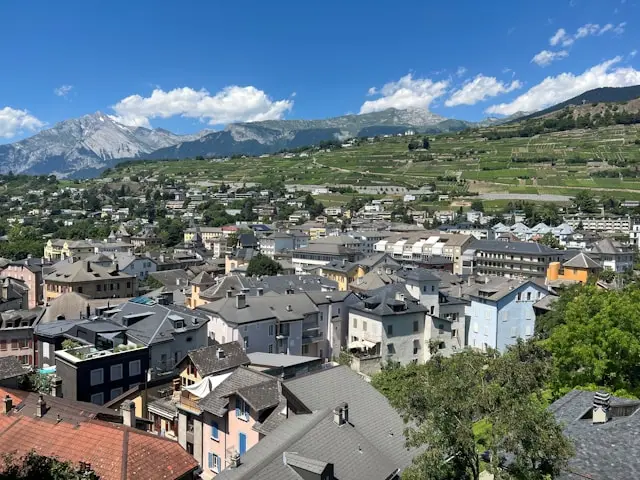
Sion's Hospitality Paradox: 4.8% Unemployment, 9.8% Vacancy Rate, and the Hiring Gap No Training Programme Can Close
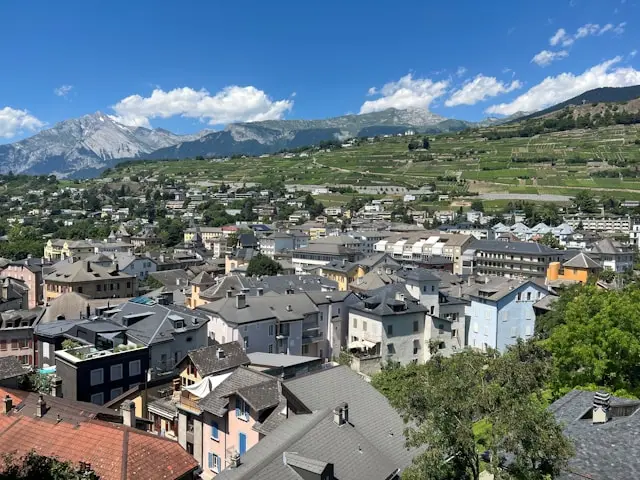
Valais recorded 3.2 million overnight stays in 2023, with average daily rates in Sion's four-star hotel segment climbing 12% above pre-pandemic levels. Capital is flowing in. Hôtel des Vignes completed a CHF 8 million renovation in 2024. A new 150-room premium conference facility is in the pipeline. The airport expansion plan targeting 120,000 annual passengers is working its way through environmental review. On paper, this market is expanding.
Underneath those investment figures sits a contradiction that defines Sion's hospitality market in 2026. The canton of Valais maintains a structural unemployment rate of 4.8%, more than double the Swiss national average of 2.1%. Yet the hospitality sector reports 1,800 unfilled positions and a vacancy rate of 9.8%, nearly twice the national figure. People are out of work. Roles are going unfilled. Both statements are true simultaneously, and they describe entirely different populations.
What follows is a structured analysis of the forces shaping Sion's position as the administrative heart of Valais tourism, the specific roles that remain hardest to fill, the compensation dynamics that drive talent toward Geneva and the French Alps, and what organisations hiring senior hospitality and aviation leadership in this market need to understand before they begin a search.
The Market Sion Actually Is: Administrative Hub, Not International Gateway
The most common misunderstanding about Sion's role in Valais tourism is the assumption that it functions as a primary international gateway. It does not. Sion Airport handled approximately 25,000 to 30,000 passengers annually in recent years. Geneva International processed over 15 million in the same period. The runway at Sion is 1,800 metres. It cannot accommodate the low-cost carrier operations that define genuine gateway airports like Innsbruck or Salzburg. Mass tourism reaches the Valais ski resorts through Geneva, 90 minutes by car, or through Zurich.
What Sion does instead is something more specific and, for hiring leaders, more analytically useful. It serves as the corporate and administrative centre for several of the canton's largest tourism operators. Téléverbier SA, which manages the lift infrastructure for the 4 Vallées ski domain, keeps its headquarters at Place de la Gare in Sion. CMA, which operates the Crans-Montana resort lifts, maintains administrative offices in the city. Air Glaciers SA runs its headquarters and maintenance base at Sion Airport.
This distinction matters because it reshapes which roles are actually located in Sion and which are located in the mountain resorts. The majority of direct tourism employment, including ski instructors, mountain restaurant staff, and front-line hospitality workers, is concentrated in Verbier, Crans-Montana, Zermatt, and Saas-Fee. Sion's 2,800 direct tourism-related positions are predominantly administrative, technical, and upscale hospitality. They include aircraft maintenance engineers, mountain rescue coordinators, revenue management specialists, and hotel leadership serving the business and weekend leisure markets.
For any organisation hiring senior talent in this market, the implication is immediate. The candidate pool is not the broad hospitality workforce of the Valais canton. It is a narrow subset of technically qualified, often trilingual professionals concentrated in a city of modest size, competing for housing they increasingly cannot afford.
The Skills Mismatch That Unemployment Figures Disguise
The tension at the centre of Sion's labour market is not a shortage in the absolute sense. It is a mismatch so severe that the two sides of the equation barely overlap.
Cantonal Unemployment: The Wrong Profile in the Wrong Place
Valais maintains 4.8% unemployment against a Swiss average of 2.1%, according to SECO's regional labour market statistics. That concentration falls disproportionately in the 50-plus age cohort and among non-French-speaking residents. These are not the candidates the hospitality sector needs. The 1,800 unfilled hospitality positions require trilingual capability in French, English, and German. They require specific certifications: IFMGA mountain guide credentials, Swiss culinary certificates (CFC), IFR helicopter ratings, proficiency in revenue management platforms like Duetto or RMS Cloud.
The assumption that local unemployment reservoirs can solve tourism labour shortages through retraining is not supported by the evidence. A 55-year-old German-speaking former construction worker in the Rhône Valley cannot be retrained into an IFMGA-certified mountain guide. The certification alone takes two years, followed by military or equivalent experience requirements. The pipeline produces only 12 to 15 new certifications annually across the entire Valais region, against a pool of 180 active guides with an average age of 48.
The Retirement Wave Nobody Planned For
Sion's administrative and technical roles face a specific demographic pressure that the mountain resorts do not share in the same way. The 55-to-65 age cohort in reservation systems management, aviation logistics, and revenue management is approaching retirement in a market where no local institution produces replacements at sufficient volume. HES-SO Valais/Wallis provides the primary pipeline for hospitality management talent, but its graduates face the same gravitational pull as every other qualified professional in the region. Geneva offers 15 to 20% salary premiums for equivalent roles. Zurich offers deeper career ecosystems in travel technology. The graduates who stay in Sion are the exception.
The projected shortage of 400 to 500 qualified hospitality workers across the canton by summer 2026 is not evenly distributed. It is concentrated at the intersection of seniority and specialisation, which is precisely where the hidden majority of qualified candidates are not actively looking for new roles.
Three Roles That Define the Crisis
Across Sion's hospitality and aviation sectors, three role categories illustrate the depth of the problem.
IFR-Rated Helicopter Pilots
According to reporting in Le Nouvelliste and the Swiss Helicopter Association's labour market bulletin, Air Glaciers SA maintained an open position for an EC135/AS350 helicopter pilot with IFR rating from March 2024 into the 2024/2025 winter season. That is more than ten months for a single critical role. The company reportedly offered relocation packages including housing allowances of CHF 2,000 to 2,500 monthly and sign-on bonuses of CHF 15,000, targeting candidates at competitor bases in Chamonix and Courchevel.
This is not a compensation problem in isolation. The candidate pool is structurally constrained. IFR-rated mountain helicopter pilots require a combination of instrument flight certification, alpine terrain experience, and rescue coordination capability that narrows the global pool to a few hundred individuals. Ninety percent of qualified candidates are passive, according to the Swiss Mountain Guide Association's labour market assessment. They move only through direct solicitation.
Executive Chefs with Fine Dining Credentials
According to industry reporting via Tribune de Genève, Hôtel des Vignes recruited an Executive Chef from the Crans Ambassador Hotel in Crans-Montana during Q2 2024, reportedly at a compensation premium of 18 to 22% above local market rates. The Crans Ambassador subsequently operated without a permanent executive chef for four months, relying on interim management to cover the gap.
This single example captures two dynamics. First, the cost of losing a senior hire to a competitor extends far beyond the salary differential. Four months without an executive chef in a fine dining operation means reputational damage, menu inconsistency, and staff instability in the brigade. Second, the Sion market is not attracting external talent. It is redistributing existing talent within the canton, which means every win for one employer is a direct loss for another.
Executive chefs with Swiss culinary certification and international fine dining experience represent a 75% passive candidate market. The remaining 25% who are actively available are typically freelancers or professionals whose previous establishments have closed. The quality gap between the two pools is substantial.
Revenue Management Specialists
The digital transformation of hotel distribution has created demand for revenue managers who combine bilingual or trilingual capability with advanced analytics skills and proficiency in platforms like IDS/SynXis or Duetto. In larger markets like Geneva or Zurich, this is a dedicated specialist role. In Sion's smaller hotel inventory, these positions are hybrid, combining revenue management with general management duties. That hybridisation reduces their attractiveness to specialists who can earn more in a pure-play revenue role in a larger city.
The result is a structural mismatch between what the role requires and what the market offers. A revenue manager earning CHF 85,000 to 105,000 in Sion could earn CHF 100,000 to 125,000 in Geneva in a role focused exclusively on yield optimisation. The Sion role demands more, pays less, and sits in a housing market where a 3.5-room apartment costs CHF 1,850 per month against a seasonal hospitality salary of CHF 4,000 to 4,500.
This is the point at which compensation analysis alone stops being useful. The problem is not the salary. The problem is the total proposition.
Compensation: Where Valais Sits and Why the Gap Is Widening
Sion's hospitality compensation tracks at 85 to 90% of Geneva and Zurich equivalents, according to Hotelleriesuisse's salary survey. On its face, this seems manageable. Valais offers lower housing costs than Geneva, shorter commutes, and proximity to the mountains that constitute the region's primary lifestyle draw.
The reality is more complicated. Sion's housing costs have risen 14% since 2021, according to the Wüest Partner Swiss Real Estate Offer Index. The rental vacancy rate is 0.3%, which is critically low by any standard. For a General Manager of a four-to-five-star independent hotel earning CHF 140,000 to 185,000 base plus a 20 to 30% performance bonus, Sion remains viable. For a mid-level revenue manager or sous chef, the arithmetic breaks down.
The compensation table across Sion's key leadership roles reveals the market's structure clearly. A Director of Operations at a three-to-four-star property earns CHF 95,000 to 115,000 base plus bonus. A Director of Flight Operations at Air Glaciers level commands CHF 160,000 to 200,000 plus flight pay. A Commercial Director overseeing multiple properties earns CHF 130,000 to 160,000 plus incentive. These are competitive figures within the Swiss alpine context. But they compete directly with Geneva, where the same roles command 15 to 20% premiums, and with the French Alps, where housing provision for staff is more commonly included as standard.
The compensation gap is not closing. As Geneva's luxury hotel market continues to expand and Zurich's travel technology ecosystem deepens, the premium those cities can offer for specialised hospitality talent grows. Sion's counter-offer, lifestyle and mountain access, works for a specific candidate profile. It does not work universally, and it does not work at all for candidates who cannot find housing.
The Structural Constraints That Investment Cannot Solve
The original synthesis this data supports is one that most stakeholders in the Valais tourism economy have not yet confronted directly. Sion's binding constraint on tourism growth is not transport infrastructure. It is not airport capacity. It is not hotel inventory. It is the inability to house and retain the workforce required to service the visitors who are already arriving.
The airport expansion plan, Project Sion Airport 2030, aims to triple passenger capacity to 120,000 annually. Environmental impact assessment delays mean no operational increase before 2027 at the earliest. But even if the expansion were delivered tomorrow, the question remains: who staffs the additional hotel rooms, restaurants, and transfer services that 120,000 passengers require?
Housing as the True Bottleneck
The 0.3% rental vacancy rate in Sion is not a temporary condition. It is a structural feature exacerbated by the Lex Koller restrictions on second home ownership in tourist zones, which have shifted investment toward rental models and tightened the long-term housing stock available for workers. Seasonal hospitality staff earning CHF 4,000 to 4,500 monthly cannot compete for apartments at CHF 1,850.
In the French Alps, according to research from Atout France and the Observatory of Mountain Economies, employer-provided housing (logement de fonction) is a standard feature of mid-level hospitality contracts. This practice draws seasonal staff away from Sion even when Swiss salaries are 20 to 25% higher, because net disposable income after housing is often comparable.
The Cross-Border Commuter Effect
A pattern documented in Federal Statistical Office cross-border worker statistics and the Swiss Mountain Guide Association's demographic survey reveals a talent dynamic unique to Sion's geography. Experienced French mountain guides and ski instructors increasingly commute from Annecy and Chambéry to work in Valais, maintaining French tax residency while earning Swiss salaries.
This arrangement benefits the individual worker substantially. It reduces Sion's captive talent pool. These professionals are available for daily operations but are not resident, not integrated into the local professional community, and not available for the administrative and leadership roles that Sion specifically needs filled. The commuter pattern solves a front-line staffing problem at the mountain resorts while leaving the corporate and technical roles in Sion untouched.
The transport constraint compounds this further. The A9 motorway through the Rhône Valley is projected to reach saturation during peak winter Saturdays by 2026, according to FEDRO traffic forecasts. Transfer times from Geneva could exceed 2.5 hours, degrading both the destination's accessibility for visitors and the viability of cross-border commuting for workers.
What This Means for Hiring Leaders in Valais Tourism
The organisations that fill leadership roles successfully in Sion share a specific set of characteristics. They recognise that this market is predominantly passive. The General Manager of a four-to-five-star independent hotel in the Swiss Alps is 85% likely to be currently employed and not looking. The IFMGA-certified mountain guide with helicopter winch certification is 90% passive. The executive chef with GaultMillau recognition is 75% passive. Job postings reach the 10 to 25% of the market that is actively looking. They miss everyone else.
This reality demands a fundamentally different approach to executive search in the hospitality and luxury sector. Posting a General Manager role on Hoteljob.ch or Hôtellerie Gastronomie Zeitung and waiting for applications is a method optimised for a market that does not exist in Sion. The candidates who would transform a property's performance are running properties elsewhere. They are not browsing job boards. They must be identified through systematic talent mapping and approached directly.
The search timeline matters acutely in a seasonal market. A General Manager search that begins in September for a December start has, in practice, eight weeks to identify, approach, assess, and close a candidate before the winter season renders a vacancy catastrophic. Traditional search processes that take twelve to sixteen weeks are structurally incompatible with alpine hospitality's operating rhythm.
The linguistic requirement adds a further filter. French is essential for Valais operations. English is essential for international guests. German is essential for the Swiss domestic market. Trilingual capability at senior management level narrows the viable candidate pool by an order of magnitude compared to a monolingual market.
Reaching the Candidates This Market Needs
For organisations operating in Sion and the wider Valais hospitality market, the strategic question is not whether qualified candidates exist. They do. One hundred and eighty IFMGA-certified guides work in the region. Dozens of qualified General Managers run independent alpine hotels across Switzerland and the French Alps. Executive chefs with the right credentials are leading brigades in Crans-Montana, Gstaad, Megève, and Courchevel.
The question is how to reach them, assess them, and present them with a proposition compelling enough to move.
KiTalent delivers interview-ready executive candidates within 7 to 10 days through AI-enhanced direct headhunting methodology that reaches the passive majority conventional approaches miss. The pay-per-interview model means organisations only invest when they are meeting qualified candidates, not before. A 96% one-year retention rate reflects the quality of the matching process, built on genuine market intelligence rather than database recycling.
For hospitality and tourism organisations in Sion facing a market where the best candidates are employed, not looking, and reachable only through direct approach, open a conversation with our executive search team about how we identify and secure leadership talent in alpine hospitality markets. In a sector where a four-month executive chef vacancy or a ten-month pilot search carries measurable operational damage, the speed and precision of the search method is not a luxury. It is the difference between a season that works and one that does not.
Frequently Asked Questions
What is the average salary for a hotel General Manager in Sion, Switzerland?
A General Manager of a four-to-five-star hotel in the Sion and Valais region earns CHF 140,000 to 185,000 base salary plus a 20 to 30% performance bonus. This tracks at approximately 85 to 90% of Geneva equivalents, where the same role commands CHF 170,000 to 220,000. The Valais figure reflects the region's smaller property sizes and lower cost of living compared to Geneva, though rising housing costs in Sion have eroded this differential since 2021. Senior roles in aviation tourism services, such as Director of Flight Operations, command CHF 160,000 to 200,000 plus flight pay.
Why is it so hard to hire hospitality staff in Valais despite high unemployment?
Valais maintains 4.8% unemployment against a Swiss average of 2.1%, but the unemployed population does not match hospitality vacancy requirements. The 1,800 unfilled hospitality positions demand trilingual capability in French, English, and German, plus specific professional certifications. Unemployment is concentrated in the 50-plus age cohort and among non-French-speaking residents. This is a skills and linguistic mismatch, not an absolute labour shortage. Retraining programmes cannot bridge the gap for roles requiring multi-year certification pipelines such as IFMGA mountain guiding or IFR helicopter ratings.
How does Sion Airport affect tourism hiring in Valais?
Sion Airport handles 25,000 to 30,000 passengers annually, a fraction of Geneva's 15 million. Runway limitations and noise restrictions prevent scheduled low-cost carrier operations. The airport functions primarily as a private aviation hub and seasonal charter point for UK winter tourists. The proposed expansion to 120,000 passengers faces environmental delays until at least 2027. For hiring leaders, this means Sion is not a mass tourism gateway. Its hospitality employment centres on corporate services, technical aviation roles, and upscale weekend leisure rather than high-volume resort staffing.
What roles are hardest to fill in Sion's hospitality and tourism sector?
Three categories represent the most acute shortages. IFR-rated helicopter pilots for mountain aviation, where a single role at Air Glaciers was reportedly open for more than ten months. Executive chefs with Swiss culinary certification and fine dining credentials, where 75% of qualified candidates are passive and not actively seeking. Revenue management specialists with trilingual capability and analytics platform proficiency, where Sion's hybrid role structure reduces attractiveness compared to pure-play positions in Geneva or Zurich. KiTalent's executive search methodology is designed to reach these passive candidate pools through direct identification.
How does housing affordability affect hospitality recruitment in Sion?
Sion's rental vacancy rate is 0.3%, critically low by Swiss standards. A 3.5-room apartment costs CHF 1,850 monthly. Seasonal hospitality staff earn CHF 4,000 to 4,500 per month, making market-rate housing unaffordable. This creates a structural labour supply constraint that wage increases alone cannot solve. French alpine resorts counter this by providing employer housing as standard in seasonal contracts. The housing bottleneck is arguably the single largest barrier to scaling Sion's tourism workforce, outweighing transport capacity and airport limitations.
What is the passive candidate ratio for senior hospitality roles in Switzerland?
For General Manager roles at four-to-five-star independent hotels, approximately 85% of qualified candidates are passive, meaning currently employed and not actively applying to postings. For IFMGA-certified mountain guides with helicopter winch certification, the figure reaches 90%. Executive chefs in fine dining sit at roughly 75% passive. These ratios mean that conventional job board recruitment reaches at most 15 to 25% of the viable candidate pool. Filling senior hospitality roles in Sion requires direct approach through specialist search networks rather than advertising.