Sion's Wine and Agri-Food Sector in 2026: The Terroir Contradiction That Is Paralysing Workforce Strategy
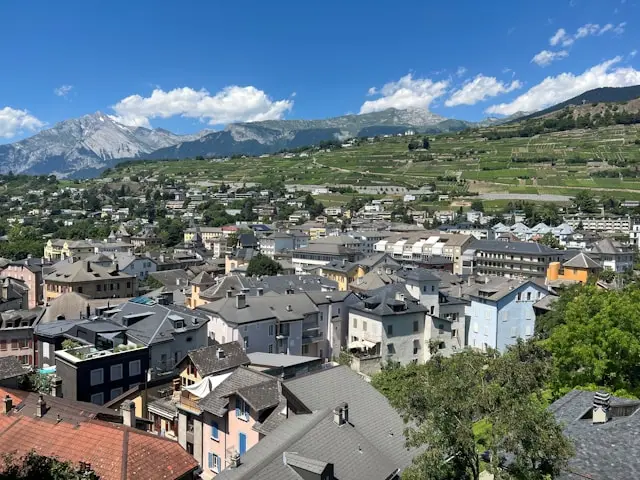
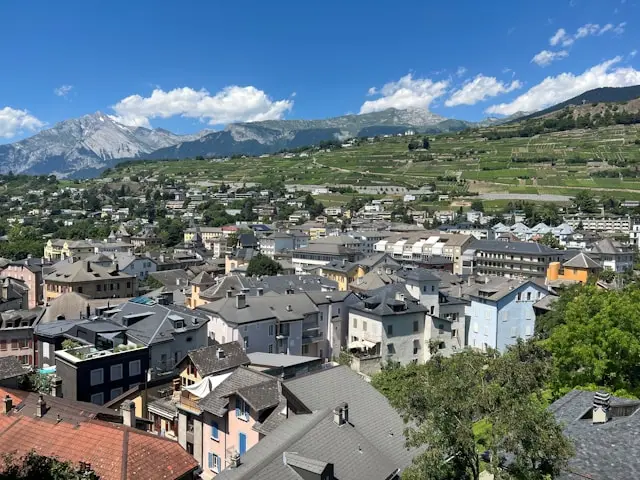
Sion's viticultural basin produced approximately 18.5 million litres in 2024, down 12% from the previous year after a punishing late spring frost. Production is now recovering toward a projected 20 to 21 million litres, but the numbers mask a structural problem that no single growing season can resolve. The 1,850 hectares of AOC-classified vineyard surrounding the city sit on terrain where 65% of slopes exceed a 30% gradient. That topography does not merely limit mechanisation. It locks the entire sector into a labour dependency that is deepening at exactly the moment the labour supply is thinning.
The tension running through Sion's agri-food economy is not a conventional shortage story. It is a strategic contradiction. The Côtes de Sion AOC is pursuing elevation to Premier Cru equivalent status under revised Swiss Wine Market Organisation rules, a move that mandates hand-harvesting on classified plots and caps yields at 65 hectolitres per hectare. The marketing message emphasises ancestral slope viticulture and hand-crafted authenticity. Yet the sector's operational survival depends on mechanisation and automation wherever topography permits. The workforce plan required to deliver on the brand promise is the opposite of the workforce plan required to keep the economics viable.
What follows is a ground-level analysis of the forces reshaping Sion's wine and specialty food sector, the talent gaps these forces have created, and what leaders responsible for hiring in this market need to understand before they commit to a search strategy.
A Small Basin With an Outsized Economic Footprint
The Sion basin's wine and specialty food sector is compact by global standards but economically dense. Forty-two active wineries, three cooperative cellars, and 14 specialty food processors operate within the city's economic catchment. Specialty food processing alone, concentrated along the Conthey-Vétroz industrial axis, generated CHF 340 million in turnover through 2024. Dried meat and Raclette du Valais AOC cheese aging account for 58% of that volume.
Direct employment stands at 2,100 full-time equivalents in the basin: 1,400 in viticulture, 700 in specialty food processing. During the September-October harvest window, seasonal multipliers push the figure to 3,800 FTEs. These are not abstract labour market statistics. They represent a sector where a single unfilled technical role can delay a reserve wine release, stall a cheese cave expansion, or leave an entire harvest shift without supervision.
The anchor institutions shaping demand
The largest single employer in the basin is Agroscope's Centre de Recherches in Conthey, the federal agricultural research institute five kilometres from Sion's centre. Its 185 full-time staff specialise in viticulture genetics and plant pathology. Agroscope hosts the National Grapevine Collection and the Swiss reference laboratory for grapevine viruses, and it maintains 12 active public-private partnerships with local wineries. It is both the basin's largest employer and its primary source of innovation.
Cave des Côtes de Sion, the cooperative cellar processing 2.8 million litres annually, employs 24 permanent staff and 85 seasonal workers. Carnotzet du Valais, the dried meat processor based in Sion's industrial zone, employs 110 FTEs. These are not large organisations by corporate standards. They are the ceiling in a market defined by SMEs. That ceiling matters enormously when senior professionals evaluate career trajectory, because it means the path from mid-career specialist to executive is short and the path beyond executive is a dead end unless you leave the region entirely.
Cluster infrastructure and private investment
The Nutrition Valais cluster links 34 agri-food SMEs with HES-SO Valais-Wallis for product development. It facilitated CHF 1.8 million in collaborative R&D in 2024. Private investment between 2022 and 2024 reached CHF 28 million in cellar infrastructure, driven primarily by AOC premiumisation strategy targeting export markets rather than by tourism alone. In 2024 specifically, CHF 4.2 million went into climate adaptation: drought-resistant rootstock trials at Agroscope Conthey and micro-irrigation systems deployed by Domaine des Îles and Cave des Côtes de Sion.
A further CHF 12 million in specialty food processing capacity expansion is anticipated by mid-2026, driven by export demand to Asia-Pacific. The capital is flowing. The question is whether the talent required to operate the facilities that capital is building will follow it.
The Contradiction at the Heart of Workforce Planning
This is the original analytical insight that emerges from Sion's data, and it is not one the sector has resolved: the brand strategy and the operational strategy are pulling the workforce plan in opposite directions.
The Côtes de Sion AOC's pursuit of Premier Cru equivalent classification under revised Swiss Wine Market Organisation rules requires stricter yield limits and mandatory hand-harvesting on classified plots. The IVV's brand guidelines explicitly emphasise "hand-crafted" and "ancestral slope viticulture" in export marketing materials. This is not decoration. It is a pricing strategy. The premium that justifies CHF 28 million in cellar infrastructure investment rests on the consumer's belief that these wines are produced by human hands on steep, difficult terrain.
Simultaneously, at least two mid-sized Sion-area domaines restructured operations in 2024 to adopt nocturnal mechanical harvesting on accessible plots. Each estate invested CHF 45,000 to CHF 60,000 in LED tractor lighting arrays and night-shift supervisors. This was not an efficiency play. It was a labour scarcity response. The estates could not find enough harvest workers to pick during daylight hours.
The sector must automate to survive economically while marketing messages must deny automation to maintain price premiums.
For hiring leaders, this contradiction has a direct operational consequence. It means the workforce cannot simply shift toward fewer, more technically skilled machine operators. The classified plots still require hand-harvesting. The marketing still requires a story about human craft. But the humans required to deliver that craft are increasingly unavailable. The result is a bifurcated labour model where both halves are short-staffed: the mechanised operations need technicians with drone and GIS certifications that barely exist in the Valais talent pool, while the hand-harvesting operations need seasonal workers who cannot be housed because Sion has near-zero rental vacancy.
Where the Talent Gaps Are Sharpest
Unemployment among the sector's core occupations tells the story in a single figure. Viticulture technicians and oenologists experience 1.2% unemployment in the Sion basin, compared to a 2.1% cantonal average. SECO data recorded 340 open positions in viticulture and specialty food as of the fourth quarter of 2024, a 28% increase from the same quarter a year earlier. This is a market where demand is growing materially faster than supply.
Four role categories are in acute shortage.
Precision viticulture technicians
The skill profile the sector needs most urgently sits at the intersection of traditional viticulture and digital agriculture. Precision viticulture technicians work with Viti-Geomatics platforms: soil mapping, yield monitoring via NDVI sensors, and hydraulic modelling for deficit irrigation. These skills are critical because Agroscope models indicate a 15% increase in irrigation demand by 2026 due to altered Rhône valley precipitation patterns. The professionals who can operate these systems are being recruited away from Sion with salary premiums of 18 to 25% by competitors in the Lausanne and Vaud wine region.
Senior oenologists with export compliance expertise
The typical duration for a Chef de Cave search in the Sion basin runs seven to nine months, compared to three to four months for equivalent seniority in the broader food processing sector. An estimated 85% of qualified senior oenologists with ten or more years of experience are passive candidates with average tenure exceeding eight years at their current estate. They are not reading job boards. They are not attending industry career events. Active candidates in this category are typically relocating partners or professionals exiting the industry entirely.
The regulatory dimension compounds the difficulty. The roles that matter most require not just winemaking expertise but deep knowledge of Swiss Wine Market Organisation regulations, EU organic equivalence standards, and FDA registration protocols for specialty food exports. This combination of technical skill and regulatory fluency barely exists as a talent category in the Valais.
Agri-food quality assurance and AOC compliance managers
Ninety per cent of placements in AOC compliance and regulatory affairs occur through direct headhunting rather than job board applications, according to Hays Switzerland's agri-food hiring analysis. The pool is tiny, the knowledge is highly specialised, and the candidates are already employed in roles where their expertise is equally scarce. A conventional recruitment process that posts a vacancy and waits for applications will reach, at best, the 10% of this market that happens to be actively looking. The other 90% must be found differently.
Multilingual hospitality directors for wine tourism
Sion's Old Town Wine Route recorded 47,000 enotourism visits in 2024, up 22% from its launch year. CHF 18 million in wine-tourism infrastructure has been approved for 2025 and 2026, projecting 25% visitor growth. The hospitality leadership required to run these operations at a premium level needs fluency in French, German, English, and ideally Mandarin, combined with cellar management knowledge, high-margin tasting room design experience, and direct-to-consumer e-commerce logistics capability. This profile is vanishingly rare in a market the size of Sion.
The Competitor Markets Draining Sion's Talent Pool
Sion does not lose talent to a single competitor. It loses talent in three directions, each pulling a different segment of the workforce.
Lausanne and the broader Vaud wine region, anchored by the HES-SO Changins campus, offer salaries 12 to 18% higher for equivalent roles and materially superior research infrastructure. For a mid-career oenologist or agri-tech researcher, Lausanne offers something Sion structurally cannot: a career path into multinational agri-business through firms like Firmenich and Givaudan. Sion's SME-dominated market has no equivalent escalator.
The Geneva-Vevey corridor, home to Nestlé's global headquarters, draws agri-food executives and food scientists with salary premiums of 40 to 60% and global mobility paths. A specialty food production manager earning CHF 92,000 to CHF 115,000 in Sion can see a Director of Agri-Food Innovation role in Vevey paying CHF 165,000 to CHF 210,000. The gap is not incremental. It is transformational for a household budget.
At the entry level, the French Rhône Valley competes differently. Housing costs in the Lyon and Valence corridor run 35% below Sion's, and the estates are far larger. Gross salaries are 20% lower, but for early-career professionals weighing lifestyle against earnings, the calculation is not straightforward. The result is that Sion struggles to attract young talent willing to accept Swiss cost of living on entry-level agricultural wages.
Compounding all three competitive drains is a practical barrier: Sion's relatively low international school density compared to Geneva or Lausanne, and its limited French-German bilingual schooling options, create friction for mobile EU executive families considering relocation. This is not a soft factor. For a senior oenologist with school-age children, it can be the deciding variable.
Structural Constraints That No Hiring Strategy Alone Can Solve
Several of the forces constraining Sion's talent market operate outside the control of any individual employer or search process. Understanding them is essential for any organisation planning a senior hire in this basin, because they define what is realistic.
Water, weather, and the economics of climate adaptation
The Rhône Valley's rain shadow effect creates acute water scarcity. In 2024, the Canton imposed irrigation restrictions from July through August, reducing yields by 8 to 12% for non-irrigated Sion basin vineyards. Agroscope's climate models project that traditional varieties such as Petite Arvine may become unviable on south-facing slopes by 2040. The professionals who understand climate adaptation management, from drought-resistant canopy systems to biocontrol applications like pheromone mating disruption for Lobesia botrana, are in demand across every wine-producing region in Europe. Sion is competing for them against regions with deeper pockets and fewer topographic constraints.
Immigration quotas and the seasonal labour ceiling
Switzerland's immigration policy limits non-EU/EFTA seasonal workers to 4,500 canton-wide permits annually. In 2024, Valais exhausted its allocation by May, months before harvest. Sion-area wineries were forced to reject harvest labour requests. This is not a problem that better recruitment advertising solves. It is a hard regulatory ceiling on labour supply that cannot be addressed through conventional talent acquisition methods.
Land loss and urbanisation pressure
Twenty-three hectares of vineyard were converted to residential and commercial use between 2019 and 2024 as Sion's urban expansion (Zone d'Agrandissement Sion-Ouest) encroached on Class 1 agricultural land. Federal agricultural policy AP 27+, covering 2026 to 2029, projects an 8% real-terms decrease in direct payments to viticulture, according to the Federal Office for Agriculture's forward projections. Shrinking land, shrinking subsidies, and an immovable topographic constraint: these forces combine to make every hectare more valuable and every worker on that hectare harder to replace.
What This Means for Executive Hiring in the Sion Basin
The compensation structure in this market reflects its constraints but does not solve them. A Senior Oenologist or Chef de Cave commands CHF 98,000 to CHF 128,000 in base salary, with production bonuses on top. A Viticulture Technical Manager with precision agriculture expertise earns CHF 105,000 to CHF 135,000. At the executive level, a Winery or Cooperative Director with P&L responsibility commands CHF 150,000 to CHF 195,000, with cooperative profit-sharing schemes adding 15 to 30%.
These are competitive figures within the Swiss agricultural sector. They are not competitive against the Lausanne biotech corridor, the Vevey food multinational cluster, or Geneva's executive market. The gap is not something that an individual employer can close by offering 5% more than the local median. It requires a fundamentally different value proposition: one built on terroir lifestyle, professional autonomy in a small organisation, and access to Agroscope's research ecosystem.
The problem is that this value proposition only works on candidates who already know it exists.
A passive oenologist with 15 years at an estate in Lavaux will not see a Sion opportunity on any job board. They will not attend a recruitment fair. They will not respond to a generic LinkedIn approach. They will respond to a precisely targeted conversation that demonstrates understanding of their career, their motivations, and the specific opportunity that Sion offers, including what it cannot offer. Eighty-five per cent of qualified senior oenologists are passive. Ninety per cent of AOC compliance placements occur through direct sourcing rather than applications. The arithmetic is clear: the conventional search model is structurally incapable of reaching the candidates this market needs.
For organisations competing for senior viticulture, oenology, and agri-food leadership in a market this specialised, where the risk of a failed hire carries outsized consequences for production timelines and AOC compliance, KiTalent's approach delivers interview-ready executive candidates within 7 to 10 days through AI-powered talent mapping that identifies the passive professionals no job posting will reach. With a 96% one-year retention rate across 1,450 executive placements, the methodology is built for markets where the margin for error is thin and the cost of a vacant seat is measured in missed vintages.
To discuss a current or planned search in Sion's wine and agri-food sector, start a conversation with our executive search team about how we approach this market.
The 2026 Outlook: Capital Is Moving, Talent Is Not
The capital trajectory for Sion's agri-food basin is clear and positive. CHF 12 million in specialty food processing expansion is underway, targeting Asia-Pacific export demand. The Côtes de Sion AOC's premiumisation strategy is designed to capture higher margins per bottle. Tourism infrastructure investment continues at pace. By every financial metric, the sector is growing.
The talent trajectory tells a different story. Immigration quotas are a hard ceiling. Competitor regions offer salaries Sion cannot match. The topography prevents the mechanisation that could reduce labour dependency. The Premier Cru classification path intensifies hand-harvesting requirements at precisely the moment demographic pressures peak.
The organisations that will succeed in this environment are those that understand the difference between posting a vacancy and running a search. In a market where 85% of qualified candidates are not looking, where 90% of compliance placements happen through direct approach, and where the typical senior oenologist search runs seven to nine months under conventional methods, the method matters as much as the offer. In many cases, it matters more.
The winners in this market will not be the organisations that pay the most. They will be the organisations that find the right candidates first, engage them with a proposition built on what Sion uniquely offers, and close before a competitor in Lausanne or Vevey knows the candidate was available. Speed, specificity, and deep understanding of executive hiring in specialised food and beverage markets are the only reliable advantages.
Frequently Asked Questions
What is the average salary for a senior oenologist in Sion, Switzerland?
A Senior Oenologist or Chef de Cave in the Sion basin commands a base salary of CHF 98,000 to CHF 128,000, with production bonuses increasing total compensation further. Viticulture Technical Managers with precision agriculture expertise earn CHF 105,000 to CHF 135,000. At the executive level, a Winery or Cooperative Director with full P&L responsibility earns CHF 150,000 to CHF 195,000 in base salary. Cooperative structures often add 15 to 30% through profit-sharing schemes. These figures are competitive within Swiss agriculture but lag Lausanne and Geneva equivalents by 12 to 60% depending on role and sector.
Why is it so difficult to hire viticulture specialists in the Valais?
Three forces converge. First, 85% of qualified senior oenologists are passive candidates with tenure exceeding eight years, meaning they do not respond to job postings. Second, competitor regions in Lausanne and Geneva offer 12 to 60% salary premiums with stronger career trajectories into multinational agri-business. Third, Sion's topography locks the sector into labour-intensive practices: 65% of surrounding vineyards sit on slopes exceeding 30% gradient, preventing mechanisation. These structural barriers mean that conventional recruitment methods reach a fraction of the viable candidate pool, extending senior searches to seven to nine months.
How large is Sion's wine and agri-food sector?
The Sion basin directly employs 2,100 full-time equivalents across viticulture and specialty food processing, expanding to 3,800 during the September-October harvest. Forty-two active wineries, three cooperative cellars, and 14 specialty food processors operate within the catchment. Specialty food processing generates CHF 340 million in annual turnover. The viticultural zone accounts for 46% of cantonal wine output. Private investment in cellar infrastructure reached CHF 28 million between 2022 and 2024, with a further CHF 12 million in food processing capacity expansion underway.
What executive roles are hardest to fill in Sion's agri-food sector?
Four categories face the most acute shortages. Precision viticulture technicians with GIS and drone certifications are being recruited away at 18 to 25% salary premiums. Senior oenologists with export compliance expertise take seven to nine months to place. AOC compliance and regulatory affairs managers see 90% of placements completed through headhunting rather than applications. Multilingual hospitality directors for wine tourism require a rare combination of cellar knowledge, language fluency, and e-commerce capability. KiTalent's talent mapping methodology identifies these candidates through AI-powered direct search.
What are the main risks facing Sion's wine production sector in 2026?
Water scarcity is the most immediate operational risk: Agroscope models project a 15% increase in irrigation demand by 2026. Federal agricultural direct payments are projected to decrease by 8% in real terms under Agricultural Policy AP 27+. Immigration quotas for seasonal workers were exhausted by May in 2024, creating a hard ceiling on harvest labour. Urban expansion has converted 23 hectares of vineyard to residential use since 2019. Finally, the Côtes de Sion AOC's premiumisation requirements mandate hand-harvesting on classified plots, intensifying labour demand at the worst possible moment.
How can wine producers in Sion compete for executive talent against Lausanne and Geneva?
Compensation alone will not close the gap. Sion's competitive proposition rests on terroir lifestyle, the professional autonomy that small organisations offer, and direct access to Agroscope's research ecosystem. The challenge is that this proposition only works on candidates who already understand it. Reaching passive professionals who would value these factors requires direct executive search that targets individuals based on career profile and motivation, not job board visibility. The most effective approach combines precise talent identification with a tailored engagement strategy built around what Sion uniquely offers.