Frosinone's Logistics Automation Push Is Outpacing the Talent Pipeline That Should Support It
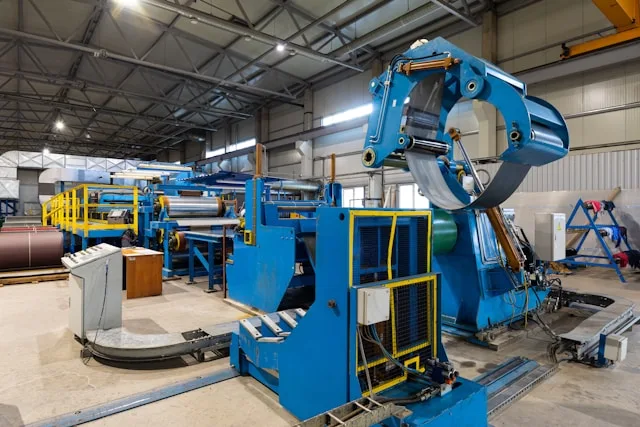
Frosinone's logistics sector added automated storage and retrieval systems at nearly twice the rate in 2024 as it did in 2023. The province now hosts roughly 8,400 to 9,100 workers in direct logistics and warehousing roles, growing at 4.1% annually against a national average of 2.9%. Yet the profiles required to operate, maintain, and optimise those new systems barely exist in the local labour market. Unemployment among WMS specialists and automation technicians sits below 2%.
This is not a story about a sector struggling to grow. It is a story about a sector where capital investment has moved faster than human capital could follow. One in three local warehousing operators plans to have automated retrieval systems running by the end of 2026. The technicians, engineers, and digitally fluent operations managers needed to make that investment perform are being recruited from a pool so shallow that searches routinely stall for 90 to 120 days. The A1 corridor location that once gave Frosinone its competitive edge is now congested enough that firms are exploring less connected provinces with lower land costs. And the demographic cliff among long-haul truck drivers, with 41% of the current workforce over 55, is compressing the timeline for every hiring decision.
What follows is a ground-level analysis of the forces reshaping Frosinone's logistics and freight sector, the specific talent gaps that are most acute, and what senior hiring leaders need to understand before committing to searches in this market. The central argument is direct: Frosinone's automation investment has not reduced its workforce problem. It has replaced one category of scarce worker with another that is even harder to find.
The A1 Corridor Advantage Is Eroding Faster Than Most Operators Realise
Frosinone's position on the A1 Autostrada del Sole, at the junction with the A2 Autostrada del Mediterraneo, has been the foundational selling point for the province's logistics cluster since the Interporto di Frosinone opened in 1995. The facility offers 450,000 square metres of logistics platforms with direct motorway access. On paper, it remains an ideal gateway for Central to Southern Italian distribution.
The operational reality has diverged from the theory. According to data from Autostrade per l'Italia, chronic congestion on the Frosinone to Cassino stretch and at Rome ring road intersections has increased average transit times by 18% since 2022. The A1's Naples to Rome section now handles average daily traffic of 85,000 vehicles. Peak-hour speeds drop below 40 kilometres per hour. For a sector where delivery predictability determines contract retention, this erosion is not a minor inconvenience. It is a competitive threat.
Road freight still accounts for 87% of goods moved through the province. Rail freight utilisation at the Interporto remains below 35% of capacity, constrained by limited dedicated freight services on the Rome to Cassino rail line. The Naples to Rome rail freight bypass, originally scheduled for 2024, has been pushed to 2028 according to the Ministero delle Infrastrutture e dei Trasporti. Road dependency is not a transitional phase. It is a structural condition that will persist for at least another two years.
Land costs and the southern shift
The congestion problem is compounding a second pressure point. Logistics land absorption in the province reached 12.3 hectares in 2024, up from 8.1 hectares in 2021. Class A logistics space now costs €45 to €60 per square metre, a 22% increase year over year, according to CBRE Italy's Industrial and Logistics MarketView. Environmental restrictions under the Piano Paesaggistico della Regione Lazio further limit greenfield expansion to existing industrial polygons, blocking development in the Ciociaria valley's agricultural zones.
The result is a geographic rebalancing within the province itself. New warehousing development is concentrating along the Sora to Ferentino axis in the "Frosinone South" industrial zone, where land remains available and A1 congestion on the southern segment is marginally lower. For hiring leaders, this matters because it disperses the workforce across a wider commuting radius and makes location-specific retention harder.
Firms in less connected provinces such as Abruzzo and Molise are beginning to absorb logistics activity that would previously have defaulted to the A1 corridor. The assumption that A1 adjacency automatically confers logistics superiority is weakening with every percentage point of transit time degradation. Senior leaders evaluating site selection or expansion now face a calculation where infrastructure cost is rising while infrastructure performance is declining.
Inside the Automation Surge and Its Unintended Talent Consequences
The headline figure is striking: 34% of local warehousing operators plan to implement automated storage and retrieval systems by the fourth quarter of 2026, up from 18% in 2023, according to Anima Confindustria's Industria 4.0 nel Lazio report. This is not speculative interest. It represents committed capital expenditure driven by e-commerce fulfillment demand, which is forecast to grow 8 to 10% annually through 2026 in Central Italy according to Assologistica.
The investment thesis is sound in isolation. Automated retrieval systems reduce picking errors, compress cycle times, and lower per-unit fulfilment costs. The problem is not the technology. It is the assumption embedded in the business case: that the human capital required to operate these systems will be available when the systems go live.
The research data tells a different story. Unemployment among WMS administrators and automation technicians in the Frosinone catchment area sits below 2%. Sixty percent of qualified technical specialists are passive candidates who are employed and not actively searching. The remaining 40% who are receptive to recruitment still require inbound approaches rather than responding to job postings. In practical terms, a mid-sized 3PL installing an AS/RS system in Q3 2026 cannot post a job advertisement for a maintenance technician and expect to fill the role through applications. The candidate does not exist in the active market.
This is the core analytical tension in Frosinone's logistics sector as of 2026. The investment in automation has not reduced the workforce. It has replaced one kind of worker with another that does not yet exist in sufficient numbers. Capital moved faster than human capital could follow. A warehouse that replaces 15 manual pickers with an automated system still needs two to three WMS specialists, a maintenance technician, and an operations manager with ERP fluency. Those four or five roles are harder to fill than the 15 they replaced, and the cost of leaving them unfilled is higher because the capital equipment sits idle without them.
For organisations planning automation rollouts in this market, the hidden cost of a delayed or failed hire is not an abstract concern. It is the difference between a system generating returns in Q4 and a system generating depreciation.
Three Role Categories Where Searches Consistently Stall
The talent shortage in Frosinone's logistics sector is not evenly distributed. Three specific categories account for the vast majority of prolonged vacancies and search failures.
Long-haul truck drivers: a demographic cliff with no safety net
Demand for qualified long-haul drivers holding a Patente C+E outstrips supply at a ratio of 3.2 to 1 in the province, according to Excelsior InfoCamere data. Local transport firms typically experience four to six month fill times for qualified long-haul positions. Sixty-eight percent of firms report "great difficulty" in recruitment, per Confcommercio Lazio's freight transport survey.
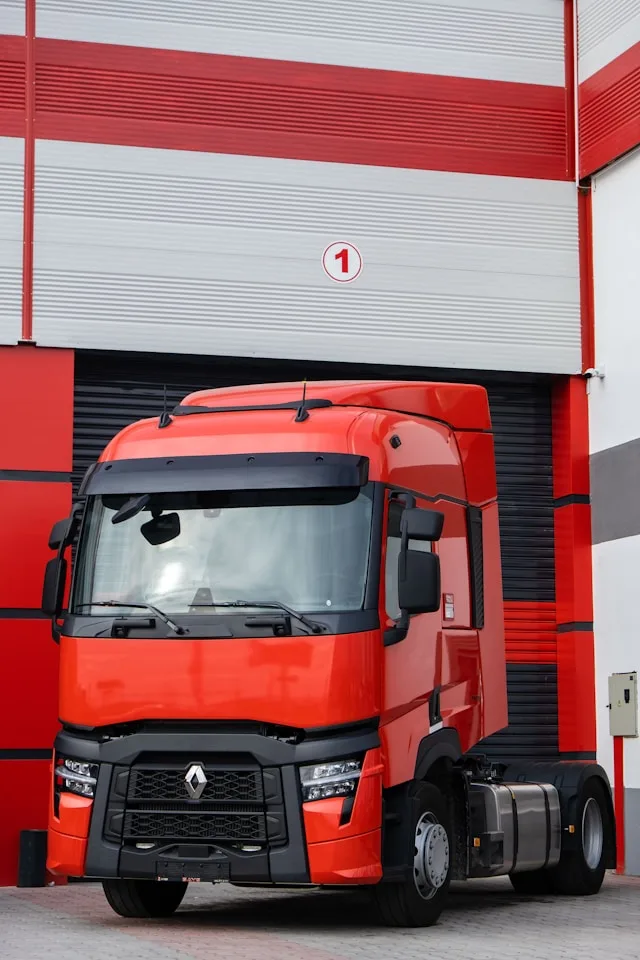
The shortage is not cyclical. It is demographic. Forty-one percent of current drivers in the province are over 55. Fewer than 8% of new CDL holders enter the long-haul segment, citing working conditions as the primary deterrent. The pipeline of replacement drivers is not thin. It is nearly absent. A senior long-haul specialist search in this market typically runs four to six months longer than a comparable operations role in the same geography. By the time a firm completes the search, the capacity gap has already cost contracts.
The EU Mobility Package, Regulation 2020/1054, adds regulatory pressure on top of demographic pressure. Increased costs for cabotage operations and driver posting disproportionately affect the mid-sized trucking firms with 20 to 50 vehicles that dominate Frosinone's market. These firms cannot absorb cost increases as easily as multinational carriers, which narrows their ability to offer competitive terms to candidates already comparing offers from larger operators.
Warehouse operations managers with digital fluency
The second acute gap sits at the intersection of physical operations and digital systems. Frosinone's warehousing employers need managers who combine traditional inventory management experience with ERP and WMS proficiency in platforms like SAP EWM, Oracle WMS, and Blue Yonder. This hybrid profile is scarce nationally. In a provincial market, it is exceptionally rare.
Recruitment patterns indicate that firms typically pay 15 to 20% salary premiums to attract managers from competitors in Rome or Campania. Average tenure in role has dropped to 2.3 years from 4.1 years in 2019, according to Michael Page Italy's Salary Guide. The compression of tenure signals a market where retention has become as difficult as recruitment. Firms invest in onboarding and upskilling only to see managers move within two years, often to Rome-based headquarters roles that offer career progression pathways unavailable locally.
For a Warehouse Operations Manager, base compensation in the province runs €48,000 to €65,000 with a 10 to 15% annual bonus. Candidates with bilingual English and Italian capability command an additional 8 to 12% premium. These figures sit well below the €60,000 to €78,000 range available for equivalent roles in Rome, though Frosinone's cost of living runs 35 to 40% lower than the capital. The net purchasing power argument is real, but it requires a candidate willing to trade career trajectory for financial efficiency. Not all are.
Supply chain planners and analysts
The third category is quieter but equally persistent. Mid-sized 3PLs with 100 to 300 employees in the province typically maintain two to three open analyst positions continuously throughout the fiscal year. Search processes stall for 90 to 120 days on average before a hire is made, according to ManpowerGroup's Talent Shortage Survey for Italy. Candidates frequently reject offers citing lack of career progression pathways compared to Northern Italian hubs.
This rejection pattern reveals something important about Frosinone's competitive position. The problem is not only compensation. It is trajectory. A supply chain analyst in Milan or Bologna sees a clear path from analyst to senior planner to supply chain director within a large international distribution network. The same analyst in Frosinone sees a smaller firm, fewer upward moves, and a ceiling that arrives sooner. Solving this requires employers to either build genuine progression pathways or accept that they will need to recruit externally for every step up the ladder. Both approaches demand a more sophisticated talent pipeline strategy than most mid-market operators currently maintain.
The Geographic Talent Drain Is Not a Single Current but Three
Frosinone does not lose talent in one direction. It loses talent in three directions simultaneously, each pulling different profiles at different career stages.
Rome, 60 kilometres north, draws mid-career professionals between 30 and 40 who seek corporate headquarters roles. The capital offers 18 to 25% salary premiums for equivalent logistics positions, according to Unioncamere Lazio. A warehouse manager earning €55,000 in Frosinone can move to Rome for €65,000 to €78,000. The 35 to 40% higher cost of living offsets part of that gain, but the career ceiling in Rome is materially higher. For professionals weighing a five-year career plan, the arithmetic favours Rome.
Milan and Bologna present the more damaging competition. The Northern logistics triangle offers 30 to 40% compensation premiums and access to international distribution networks. According to Assologistica, Northern hubs actively target senior Frosinone talent with relocation packages. A Logistics Director earning €100,000 total compensation in Frosinone can realistically expect €130,000 to €140,000 in Milan. The differential at the executive level is large enough to overcome relocation friction, particularly for professionals without deep family ties to the region.
Naples competes at the other end of the spectrum, offering lower salaries but higher volume of entry-level positions. Junior warehouse operatives looking for immediate employment rather than long-term prospects drift south, where opportunities are more numerous even if less well compensated. The net effect: Frosinone loses its most experienced talent northward and its youngest talent southward. The middle of the workforce thins on both ends.
This three-directional drain explains why the passive candidate ratio is so pronounced at senior levels. Approximately 75 to 80% of qualified Supply Chain Directors and senior planners in the Frosinone catchment area are employed and not actively applying to postings. Average tenure in their current role exceeds five years. These are professionals who have chosen to stay, often for family or quality-of-life reasons, and they will not move for a job advertisement. They will move for a direct approach that presents a compelling proposition they cannot find on any job board.
What Logistics Director Compensation Actually Looks Like in This Market
Compensation data for Frosinone's logistics sector reveals a market segmented sharply by seniority and digital capability.
At the senior specialist and manager level, a Warehouse Operations Manager with five to ten years of experience commands €48,000 to €65,000 in base salary. The annual bonus typically ranges from 10 to 15%. Required competencies include WMS administration across SAP and Blue Yonder platforms, Lean Six Sigma methodology, team leadership over headcounts of 20 or more, and working knowledge of Italian labour law under the CCNL Logistica collective agreement. Bilingual English and Italian fluency adds 8 to 12% to base compensation.
At the executive level, a Logistics Director or Direttore della Logistica e Trasporti earns €85,000 to €125,000 in base salary. Performance bonuses of 20 to 30% plus long-term incentives bring total cash compensation for VP-level supply chain leaders at major 3PLs in Central Italy to a range of €110,000 to €140,000. The critical competencies at this level include P&L management, multimodal network design, regulatory compliance across ADR and customs frameworks, and digital transformation leadership in an industrial context.
The compensation gap between Frosinone and Rome is material but not catastrophic at the manager level. A 20% premium in Rome against 37% higher living costs produces rough parity in purchasing power. At the director level, the gap widens. A Logistics Director in Milan can earn 30 to 40% more than a peer in Frosinone, and at that income level, cost of living differentials no longer close the gap. The result is a market where mid-level retention is achievable through quality-of-life arguments but executive retention requires deliberate counter-strategies that go beyond base salary.
Understanding these compensation dynamics requires current market benchmarking rather than reliance on last year's salary guides. The 22% increase in logistics land costs signals a market repricing across the value chain, and compensation is following.
Why Conventional Search Methods Fail in This Specific Market
The passive candidate data for Frosinone's logistics sector explains why job postings and inbound applications consistently underperform as hiring methods.
At the executive and senior managerial tier, 75 to 80% of qualified candidates are not looking. They are employed. They are stable. Their average tenure exceeds five years. A job posting on a major platform reaches, at best, the 20 to 25% of the market that is actively considering a move. The remaining 75 to 80% must be identified, approached, and engaged through direct methods. This is not a marginal improvement over advertising. It is a fundamentally different search methodology applied to a fundamentally different candidate population.
At the technical specialist level, the dynamic is slightly different but equally challenging. Sixty percent of WMS administrators and automation technicians are passive. They show high receptivity to inbound recruitment when approached but low active application rates. The typical failure mode of executive recruiting in this segment is not that the right candidate rejects the offer. It is that the right candidate never sees the opportunity because the search process was designed around active applicants.
At the operational and driver level, the market inverts. Seventy percent of job seekers are active monthly. But the pool is too shallow to meet demand. This creates a "high churn, low fill" dynamic where activity is high but outcomes are poor. A firm receives applications, interviews candidates, makes offers, and still cannot fill the role because the qualified volume is insufficient regardless of method.
The practical implication for hiring leaders is that each tier of the Frosinone logistics talent market requires a different approach. The same method will not work for a Logistics Director search and a driver recruitment campaign. At the senior level, the method that reaches the 75 to 80% who are not applying is direct headhunting supported by talent mapping that identifies where the right candidates currently sit, what would need to change for them to move, and what proposition would be compelling enough to start that conversation.
What This Means for Organisations Hiring in Frosinone's Logistics Sector
The convergence of infrastructure pressure, automation investment, demographic decline among drivers, and geographic talent drain creates a market where conventional hiring timelines are unreliable and conventional methods reach a fraction of the viable candidate pool.
The firms that will fill their most critical roles in 2026 are not the firms with the largest recruitment budgets. They are the firms that understand two things. First, the candidates they need are overwhelmingly not looking. At senior levels, four out of five qualified professionals must be found through direct approaches rather than job postings. Second, the automation investment that should reduce workforce dependency is currently creating new talent gaps that are harder to fill than the ones it was designed to close.
KiTalent works with logistics and industrial organisations facing exactly this combination of pressures. With a methodology built around AI-enhanced direct headhunting that reaches passive candidates invisible to conventional search, KiTalent delivers interview-ready executive candidates within 7 to 10 days. The pay-per-interview model means organisations only invest when they meet qualified candidates. A 96% one-year retention rate across 1,450 completed executive placements reflects a process designed to find candidates who stay, not just candidates who accept.
For organisations competing for logistics leadership, WMS specialists, and supply chain directors in a market where the strongest candidates are never on a job board, speak with our executive search team about how we approach hiring in Frosinone and Central Italy's logistics corridor.
Frequently Asked Questions
What logistics roles are hardest to fill in Frosinone in 2026?
Three categories are most acute. Long-haul truck drivers with Patente C+E face a 3.2 to 1 demand-to-supply ratio, with fill times of four to six months. Warehouse Operations Managers with WMS and ERP proficiency command 15 to 20% salary premiums and change roles every 2.3 years on average. Supply chain analysts see searches stall for 90 to 120 days at mid-sized 3PLs. The driver shortage is demographic, with 41% of current drivers over 55 and fewer than 8% of new licence holders entering long-haul. Executive search in the industrial and manufacturing sector requires methods designed for these constraints.
What does a Logistics Director earn in Frosinone?
A Logistics Director in Frosinone earns €85,000 to €125,000 in base salary, with performance bonuses of 20 to 30% and long-term incentives. Total cash compensation for VP-level supply chain leaders at major Central Italian 3PLs ranges from €110,000 to €140,000. This sits 30 to 40% below equivalent roles in Milan or Bologna. Bilingual English and Italian candidates and those with multimodal network design experience sit at the upper end of the range.
Why is logistics automation creating talent shortages in Frosinone?
Thirty-four percent of local warehousing operators plan to implement automated storage and retrieval systems by the end of 2026, up from 18% in 2023. These systems suppress demand for manual pickers but create acute need for WMS specialists, maintenance technicians, and digitally fluent operations managers. Unemployment among these technical profiles sits below 2% in the province. The capital investment runs ahead of the human capital pipeline, which means systems risk sitting underutilised without the right hires.
How does Frosinone's logistics market compare to Rome for hiring?
Rome offers 18 to 25% salary premiums for equivalent logistics roles but imposes 35 to 40% higher cost of living. At the manager level, net purchasing power is roughly comparable. At the director level, the gap widens because Northern hubs like Milan offer 30 to 40% premiums that cost-of-living adjustments cannot offset. Frosinone loses mid-career professionals to Rome and senior leaders to Milan, while junior operatives drift toward Naples. This three-directional drain leaves the local passive candidate pool concentrated among settled professionals who must be approached through direct headhunting methods.
What percentage of senior logistics candidates in Frosinone are passive?
Approximately 75 to 80% of qualified Supply Chain Directors and senior planners in the Frosinone catchment area are employed and not actively applying to job postings. Average tenure in current roles exceeds five years. At the technical specialist level, 60% are passive but show high receptivity when approached directly. This means conventional job advertising reaches at most one in four qualified senior candidates. Engaging the other three requires talent mapping and targeted identification of where the right professionals currently work and what would compel them to move.
How quickly can KiTalent deliver logistics executive candidates in Central Italy?
KiTalent delivers interview-ready executive candidates within 7 to 10 days through AI-enhanced direct search methodology. The approach combines talent mapping across passive candidate pools with real-time market intelligence, reaching the 75 to 80% of senior professionals who never appear on job boards. A 96% one-year retention rate across over 1,450 executive placements reflects a focus on candidate quality and fit rather than volume. The pay-per-interview model means clients only pay when they meet qualified candidates.