Monterrey's Industrial Investment Surge Has Outpaced the Workforce That Should Run It
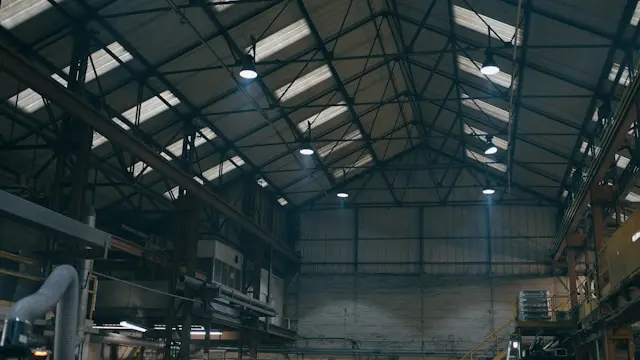
Ternium commissioned a $1.4 billion hot rolling mill in Pesquería in mid-2024. It was the largest steel investment anywhere in Latin America that year. Full commercial production was delayed by three months because the company could not find enough people to operate it.
That single example captures a dynamic now playing out across every materials subsector in Monterrey's metropolitan area. Steel is expanding. Cement is defending. Chemicals are pivoting toward circular economy production. All three need specialists, plant leaders, and skilled tradespeople who do not exist in sufficient numbers. CONCAMIN reported 45,000 unfilled technical positions in Nuevo León manufacturing as of the third quarter of 2024, with the gap widening at 8% annually. The average age of a certified industrial welder in the city is 47. The retirement cliff is not theoretical. It has already begun.
What follows is a ground-level analysis of the forces pulling Monterrey's materials sector in opposite directions: record capital flowing into facilities that cannot be staffed, a water crisis limiting the sector's physical capacity, and a talent market where 85% of the people you need are not looking for work. This article examines where the gaps are most severe, what they mean for compensation, and what organisations hiring in this market need to understand before launching a search.
The Bifurcated Investment Cycle: Steel Expands While Cement Retreats
Monterrey's industrial sector is not moving as a single bloc. It is splitting into three distinct investment trajectories, each with different talent implications.
Steel is in full expansion mode. Ternium's Pesquería complex added 2.5 million tons of annual hot-rolled capacity in 2024. A further $300 million investment in galvanising lines for automotive-grade steel is planned through late 2026. The facility is now the newest integrated steel mill in North America. Deacero continues to serve the global tyre cord market from its Monterrey and Celaya mills. The Pesquería-Salinas Victoria corridor has become a dense steel-automotive supplier ecosystem, with Gestamp, Nemak, and Frisa all operating within the same logistics catchment.
Cement tells the opposite story. Cemex, headquartered in San Pedro Garza García, has deferred $200 million in kiln upgrades pending water security guarantees from CONAGUA. The Cerritos plant operated under 15% production curtailments through 2022 to 2024 due to the Nuevo León water crisis. The company shifted to importing clinker to maintain export commitments to Texas and Central America. This is not a growth pause. It is a strategic retreat forced by physics.
Chemicals sit between the two. Alpek's integrated PTA/PET complex saw 12% volume growth in 2024, driven by nearshoring packaging demand. Margins compressed under natural gas prices averaging $3.80/MMBtu against a historical average of $2.90. The company's 2026 strategy centres on recycled PET capacity to satisfy EU Carbon Border Adjustment Mechanism requirements. Growth is modest but directionally positive.
For hiring leaders, the bifurcation matters because it creates three different talent markets operating in the same city. Steel employers are competing aggressively for metallurgical and process engineers. Cement employers are retaining defensively while deferring expansion hiring. Chemical employers are searching for a new profile entirely: engineers who understand circular economy processes, carbon accounting, and EU regulatory compliance layered onto traditional petrochemical operations. One city, three markets, three distinct hiring problems.
Why Capital Moved Faster Than Human Capital Could Follow
The original synthesis of this article is this: Monterrey's nearshoring investment wave did not create a talent shortage. It exposed a structural deficit that was already decades in the making, then accelerated its consequences faster than the education system, the demographic pipeline, or the compensation architecture could respond.
Consider the mathematics. Tecnológico de Monterrey graduates approximately 120 chemical engineers with petrochemical specialisations each year. Industry demand exceeds 400 annually, according to the National Chemical Industry Association (ANIQ). That three-to-one deficit is not a 2024 phenomenon. It has persisted for years. What changed is that Ternium's Pesquería commissioning, Tesla's adjacent Gigafactory announcement, and the broader nearshoring wave all arrived simultaneously, converting a manageable deficit into an acute crisis.
The skilled trades situation is worse. CONCAMIN's data shows the deficit widening at 8% per year while vocational training graduation rates remain flat. The retirement cliff is not an abstraction. The average certified welder in Monterrey is 47 years old. Within a decade, a material proportion of the experienced trade workforce will have left.
Capital investment can be accelerated with a board decision and a financing arrangement. Workforce development cannot. A metallurgical engineer with the ten-plus years of tandem mill experience that Ternium needed for its hot rolling commissioning takes a minimum of 14 years to produce from university enrolment to qualified candidate. A certified welder meeting ASME/API X-ray quality standards takes five to seven years. No amount of compensation can compress those timelines.
The consequence is that Monterrey's cost advantage, the very basis of its attractiveness to nearshoring capital, is being eroded by the wage inflation that capital inflow causes. Certified welder wages rose 22% year-over-year in 2024. That erosion will continue until either the talent pipeline catches up, which will take years, or employers automate faster, which creates a different talent problem entirely.
Three Constraints Squeezing Monterrey's Materials Sector Simultaneously
Water Scarcity Is a Production Ceiling, Not a Temporary Inconvenience
The Cerro Prieto dam, Monterrey's primary water source, stood at 38% capacity in December 2024. Industrial users face "red flag" restrictions prohibiting new water concessions. Any expansion now requires 100% recycled or reused water certification. Nuevo León's industrial water allocation dropped to 12% of total state consumption, down from 18% in 2021.
For cement and steel, water is not an incidental input. It is integral to cooling, dust suppression, and process chemistry. Cemex's production curtailments are a direct consequence. The tension between the company's strategic position as an export hub to the US construction market, a high-margin role, and the physical impossibility of increasing water extraction is unresolved. Either a regulatory crackdown will force further production cuts, or waterless cement production technology will need to scale in ways it has not yet demonstrated.
The talent implication is specific. Employers now need environmental engineers, water recycling specialists, and sustainability officers with heavy industry experience. These are roles that barely existed in the sector five years ago.
Energy Costs Are Rising and May Rise Further
Industrial electricity tariffs in Monterrey's CFE rate zone reached $1.45 MXN/kWh in 2024, up from $1.34 the previous year. That 8.3% increase compounds a deeper problem: Monterrey's industrial sector already pays 18% above the national average due to transmission congestion in the northeast region, according to the Comisión Reguladora de Energía.
Natural gas is more volatile still. Pipeline constraints from Texas created spot price spikes above $15/MMBtu during the first quarter of 2024, against an already elevated average of $3.80. For steel, a $1/MMBtu increase translates to $8 to $12 per ton of additional production cost.
The proposed constitutional reform to Mexico's electricity sector, if enacted, would eliminate self-supply permits that currently allow Cemex, Ternium, and Alpek to purchase power from private generators at $0.08 to $0.09 per kWh. Forced onto CFE tariffs at $0.10 to $0.12, their energy cost base would jump by 20 to 40%. This regulatory risk has direct implications for executive hiring in industrial and manufacturing sectors. Employers need energy procurement strategists and regulatory affairs leaders who can manage exposure across multiple scenarios.
Environmental Permitting Has Become a 210-Day Bottleneck
SEMARNAT's transition to its new digital platform created a backlog of 340 pending environmental impact assessments for heavy industry in Nuevo León as of October 2024. Average approval times extended from 90 days to 210. For a steel expansion that requires SEMARNAT approval before construction begins, that is seven months of dead capital.
The permitting delay is not only a financial cost. It is a talent retention risk. Senior project engineers assigned to expansion programmes that stall for regulatory reasons leave. They do not wait seven months for a permit to clear. They accept offers from employers whose projects are already approved.
The Compensation Architecture Is Being Rewritten
Monterrey's materials sector historically maintained a stable, internally consistent compensation structure. That structure is breaking apart under four simultaneous pressures: nearshoring demand, cross-border competition, digital talent poaching, and skilled trades inflation.
Engineering and Executive Pay Bands
A Plant Engineering Manager with 8 to 12 years of experience now commands $1.8 to $2.4 million MXN annually ($108,000 to $144,000 USD) in base compensation, with a 20 to 30% bonus. A Vice President of Manufacturing with multi-site P&L responsibility and 18-plus years of experience earns $4.5 to $7.2 million MXN ($270,000 to $430,000 USD) base, plus 40 to 60% in performance bonuses and long-term incentives, according to Mercer and Korn Ferry surveys.
Metallurgical engineers specialising in advanced high-strength steel for automotive applications carry a 25 to 35% scarcity premium above standard mechanical engineering salaries. Chemical process engineers with PTA/petrochemical experience and EU CBAM compliance knowledge command $1.4 to $1.9 million MXN.
The most revealing data point is at the trades level. Certified welders meeting ASME/API standards now earn $420,000 to $600,000 MXN annually, a 22% increase in a single year. Industrial electricians qualified for high-voltage work above 13.8kV earn $480,000 to $720,000 MXN. These are not executive salaries, but the rate of increase is faster than at any other level, reflecting the acuteness of the supply deficit.
The Cross-Border Premium Is Pulling Senior Talent Out
Houston offers bilingual Mexican chemical engineers with petrochemical experience a 250 to 300% salary premium. Pittsburgh and Gary, Indiana are actively recruiting Monterrey's metallurgical talent for electric arc furnace modernisation projects, offering $120,000 to $150,000 USD against a local equivalent of $90,000.
These are not hypothetical alternatives. LinkedIn's talent migration data for 2024 shows measurable flows from Monterrey to US energy and steel employers. The flow does not require relocation in every case. Remote work arrangements for engineering consulting, design review, and process optimisation mean that a senior chemical engineer can work for a Houston employer from a Monterrey apartment and earn Houston-adjacent compensation.
For Monterrey employers, this means the relevant salary benchmark is no longer local. It is continental. An offer that looks competitive within Nuevo León may be irrelevant when the candidate's alternative is a US-based remote contract paying three times as much.
The Digital Talent Collision That Nobody Predicted
According to Reuters, Cemex's Operations Digital Transformation division experienced an exodus of Senior Data Scientists specialising in manufacturing IoT to Amazon Web Services Mexico and Microsoft's newly opened Monterrey cloud region in 2024. Cemex responded by introducing 18-month salary vesting retention bonuses for AI and ML engineers in industrial applications.
This is a mechanism borrowed from Silicon Valley, deployed in a cement company. That alone signals the severity of the problem.
The broader dynamic is that Monterrey's materials conglomerates now compete for a subset of talent against technology employers who entered the city specifically because of its engineering workforce. Microsoft's Azure cloud region and the expanding AWS presence in northern Mexico were attracted partly by the same technical talent pool that Cemex, Ternium, and Alpek depend on. The technology firms are not replacing materials employers. They are extracting the digitally skilled layer from within them.
This creates a two-tier workforce problem. The traditional operational roles remain filled, though with increasing difficulty. The digital roles, the data scientists, the IoT architects, the automation engineers who bridge operational technology and information technology, are becoming unfillable through conventional channels. The counteroffer dynamics are brutal. When a cloud hyperscaler offers a 60% raise and fully remote work, an 18-month golden handcuff is a defensive measure, not a solution.
For organisations seeking senior talent across AI and technology functions within industrial settings, this is perhaps the sharpest edge of Monterrey's hiring crisis. The candidates who understand both physical plant operations and digital systems are extraordinarily rare. They are passive by definition. Their current employers know exactly how valuable they are.
What This Market Demands From a Search Strategy
The passive candidate ratios in Monterrey's materials sector tell the story. Senior Plant Directors and VP Manufacturing candidates are 85 to 90% passive, with an average tenure of 6.2 years. Specialised metallurgical and chemical engineers with ten or more years of experience are 80% passive. Control systems engineers working with DCS and SCADA platforms are under 15% active.
A conventional search, posting a role on OCC Mundial or LinkedIn and waiting for applications, reaches only the active fraction. In senior plant management, that means visibility to perhaps one in ten qualified candidates. The other nine must be identified through systematic talent mapping of competitor organisations, supplier networks, and the boomerang hiring patterns that characterise this market. Alpek and Cemex regularly rehire former employees who left for competitors, typically at 20 to 30% premiums after two to three year absences.
The geographic dimensions of a competent search must now extend beyond Monterrey itself. Querétaro's aerospace and advanced manufacturing hub offers comparable salaries with no water rationing, and has already drawn senior talent from Alpek and Cemex for Bombardier and Safran operations. Mexico City retains its 15 to 20% compensation premium for C-suite corporate functions. US steel and energy employers are competing from across the border through remote arrangements and relocation packages.
A search for a VP of Manufacturing or a Head of Process Engineering in this market cannot be confined to candidates currently working in Monterrey. It requires international reach into Brazil's steel sector, Germany's chemical engineering talent pool, and the US Midwest's metallurgical community. Ternium's own experience proves this. When the hot rolling mill commissioning stalled, the company brought in German and Brazilian expatriates at premiums exceeding 40% above local salary bands.
The implication is clear. The search methodology must match the market's reality: highly passive candidates, cross-border competition, and a speed requirement driven by the cost of unfilled positions. Ternium's three-month delay at Pesquería, against a $1.4 billion capital investment, illustrates the cost of a slow search in terms that no CFO can ignore.
How KiTalent Approaches Monterrey's Industrial Hiring Challenge
KiTalent delivers interview-ready executive candidates within 7 to 10 days, using AI-enhanced direct headhunting that targets the 85% of senior industrial leaders who never appear on a job board. The firm's pay-per-interview model means clients invest only when they meet qualified candidates, eliminating the retainer risk that accompanies traditional retained search in a market where timelines are this unpredictable.
In a market defined by passive candidates, cross-border salary competition, and a 68-day average fill time for plant engineering roles, the difference between a search that reaches the full candidate universe and one that only sees active applicants is the difference between hiring the right leader and settling for whoever is available.
With a 96% one-year retention rate across 1,450-plus completed placements and an average client relationship exceeding eight years, KiTalent understands that the cost of a poor executive hire in heavy industry is not merely financial. It is measured in commissioning delays, production shortfalls, and the regulatory exposure that follows from leadership gaps in safety-critical operations.
For organisations competing for metallurgical engineers, plant directors, or digital manufacturing leaders in Monterrey's constrained talent market, speak with our executive search team about how we identify and deliver the candidates this market requires.
Frequently Asked Questions
What are the hardest industrial roles to fill in Monterrey in 2026?
Hot rolling process engineers with tandem mill experience, DCS operators with petrochemical backgrounds, and certified welders meeting ASME/API X-ray quality standards are the most difficult positions to fill. Days-to-fill for plant engineer roles average 68 days in Nuevo León versus 42 nationally. For DCS operators, typical fill times reach 90 to 120 days. The deficit in certified industrial technicians across Nuevo León stands at 45,000 positions and widens by 8% annually. These shortages are systemic, driven by insufficient vocational graduation rates and an ageing trades workforce.
What do senior manufacturing executives earn in Monterrey?
A Plant Engineering Manager with 8 to 12 years of experience earns $1.8 to $2.4 million MXN in base salary, with 20 to 30% bonus potential. Vice Presidents of Manufacturing with multi-site P&L responsibility earn $4.5 to $7.2 million MXN base, plus 40 to 60% performance bonuses and long-term incentives. Metallurgical engineers specialising in automotive-grade advanced high-strength steel carry a 25 to 35% scarcity premium above standard compensation bands. These figures reflect 2024 survey data and have been trending upward through 2025 and into 2026.
How does Monterrey's water crisis affect industrial hiring?
The Cerro Prieto dam stood at 38% capacity in late 2024, and industrial water allocation dropped to 12% of state consumption from 18% in 2021. This has curtailed cement production, deferred capital projects, and created entirely new roles. Employers now require environmental engineers, water recycling specialists, and sustainability officers with heavy industry experience. Cemex deferred $200 million in kiln upgrades pending water security guarantees. The crisis also makes Querétaro more attractive for new plant siting, increasing talent competition between the two cities.
Why is a headhunter necessary for industrial hiring in Monterrey?
Senior plant management candidates in Monterrey are 85 to 90% passive, meaning they are employed and not applying to posted roles. Control systems engineers are less than 15% active. A job posting on OCC Mundial or LinkedIn reaches only the visible minority. KiTalent's AI-enhanced direct headhunting methodology identifies passive candidates across competitor organisations and international markets, delivering interview-ready shortlists within 7 to 10 days. In a market where unfilled senior roles carry costs measured in delayed production and regulatory risk, speed and reach determine outcomes.
How does US cross-border competition affect Monterrey's talent market?
Houston offers bilingual Mexican chemical engineers 250 to 300% salary premiums. Pittsburgh and Gary actively recruit Monterrey's metallurgical talent for electric arc furnace modernisation at $120,000 to $150,000 USD against $90,000 local equivalents. Remote work arrangements now allow senior engineers to earn near-US compensation without relocating. This means Monterrey employers must benchmark against continental, not local, salary levels. The relevant comparison for a senior process engineer is no longer Querétaro. It is Texas.
What is the outlook for Monterrey's steel sector through 2026?
Steel remains expansionary. Ternium plans $300 million in additional galvanising line investment through late 2026 to serve automotive-grade demand, particularly for EV body panels requiring advanced high-strength steel. However, potential 25% US tariffs on Mexican steel under Section 232 expansion discussions threaten the export model. Sixty-five percent of Monterrey's steel production ships to US automotive Tier 1 suppliers. Leaders in this sector need USMCA trade compliance expertise alongside traditional metallurgical knowledge, a combination that further narrows the already thin executive candidate pool.