Nagoya Port's ¥18 Billion Automation Gamble Is Creating a Talent Market That Does Not Yet Exist
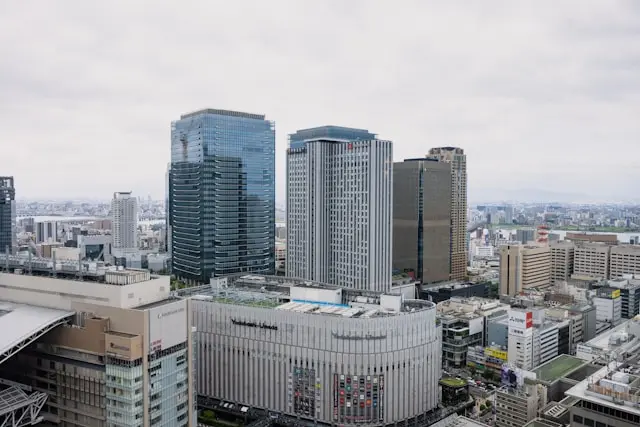
Japan's largest port by cargo volume is spending ¥18 billion to automate its way out of a workforce crisis. The Smart Logistics project at Garden Pier, now partially operational in 2026, was designed to offset the truck driver shortage and demographic decline squeezing the Chubu region's logistics capacity. It will eliminate 12 to 15 per cent of manual container handling roles. It will also create demand for 200 to 250 maritime automation engineers and IT infrastructure specialists in a region where fewer than a handful of qualified candidates are actively looking for work.
This is the central tension defining Nagoya's logistics labour market in 2026. Capital has moved faster than human capital can follow. The port's investment in automated guided vehicles and AI-driven cargo matching systems presumes a workforce that combines deep port operations knowledge with software engineering capability. That workforce barely exists in Japan, let alone within commuting distance of Nagoya. The professionals who come closest to qualifying are 85 per cent passive, embedded in roles they have no intention of leaving unless approached with a proposition they cannot find elsewhere.
What follows is an analysis of the forces reshaping Nagoya's logistics sector, the employers driving that change, and what senior leaders need to understand before they make their next hiring or retention decision in this market. The picture that emerges is not a straightforward shortage story. It is a structural mismatch between the logistics workforce Nagoya built over two decades of ICE vehicle dominance and the workforce it now needs for an era of automation, EV battery handling, and digital trade compliance.
The Port That Outgrew Its Workforce
The Port of Nagoya handled approximately 193 million tonnes of cargo in 2023, maintaining its position as Japan's largest port by total cargo volume for the 22nd consecutive year. Container throughput reached approximately 2.68 million TEU, ranking third nationally behind Tokyo and Yokohama but leading in industrial cargo diversity. Through 2024, total throughput was projected to reach 198 to 201 million tonnes, a modest increase driven by weak-yen-boosted automotive exports.
These are numbers that describe a port still growing. They are also numbers that mask an operational reality that has deteriorated sharply since April 2024.
The enforcement of the "2024 Problem" regulations, capping truck driver overtime at 960 hours annually, removed 15 to 20 per cent of available drayage capacity from Nagoya's logistics and freight forwarding market almost overnight. The Ministry of Land, Infrastructure, Transport and Tourism estimated the Chubu region faced a 14 per cent shortfall in trucking capacity for port drayage as of early 2025. Container yard dwell times increased by an average of 1.8 days. Volume continued to rise. The workforce available to move that volume did not.
Logistics and transportation accounts for approximately 9.8 per cent of private-sector employment in Aichi Prefecture, compared to 7.2 per cent nationally. That concentration makes the region disproportionately exposed to any contraction in logistics labour supply. And the contraction is not temporary. By 2026, industry associations project that 28 per cent of the current logistics workforce in the Chubu region is eligible for retirement. The Japan Institute of Logistics Systems forecasts a net shortage of 8,500 qualified operators, drivers, and warehouse managers unless automation and foreign recruitment accelerate at rates neither has yet achieved.
The port is not shrinking. The workforce is.
Where Automation Solves the Problem and Where It Creates a New One
The Smart Logistics project is Nagoya Port Authority's answer to this arithmetic. The ¥18 billion initiative includes automated guided vehicles at Garden Pier, AI-driven cargo matching to optimise truck scheduling, and integration with the port community system to reduce manual documentation handling. Partial operations launched in the second quarter of 2026.
What Automation Eliminates
The 12 to 15 per cent reduction in manual container handling roles targets the lowest-skill, highest-turnover segment of the port workforce. Entry-level logistics coordinators, who already exhibit 18 to 24 month average tenure, and routine yard operations staff are the primary positions affected. These are roles the port was already struggling to fill. Eliminating them through automation is rational.
What Automation Demands
The roles automation creates are entirely different. Maritime automation engineers must combine knowledge of port terminal operations with proficiency in AGV fleet management, sensor systems, and industrial IoT platforms. IT infrastructure specialists must integrate port community systems with carrier EDI platforms and, increasingly, blockchain-based trade documentation. These are hybrid profiles. They require someone who understands why a container yard operates the way it does and can simultaneously write the software that changes how it operates.
The Japan Institute of Logistics Systems projects a regional deficit of 400 to 500 digital logistics specialists by 2026. The passive candidate ratio for maritime automation engineers exceeds 85 per cent. The typical search for such a profile requires not a job posting but direct identification of candidates embedded in roles they are not planning to leave.
This is the pattern that defines Nagoya's logistics talent market in 2026. The investment in automation has not reduced the workforce. It has replaced one kind of worker with another that does not yet exist in sufficient numbers.
Three Shortages Running Simultaneously
The Nagoya logistics labour market exhibits acute shortages in three distinct categories. Each has different drivers, different candidate dynamics, and different implications for hiring strategy.
Heavy Vehicle Drivers and the Overtime Ceiling
The driver shortage is the most visible and the most structurally intractable. The 2024 overtime regulations did not create the shortage. They revealed how completely the sector had relied on extended hours to compensate for insufficient headcount. Operators who managed volume peaks through 80-hour weeks can no longer do so. The capacity gap is permanent unless filled by additional drivers who do not exist.
NX Group (Nippon Express), the dominant regional logistics employer with approximately 4,200 staff in Aichi Prefecture, disclosed in its 2024 Integrated Report that driver recruitment targets for the Chubu region were missed by 34 per cent in FY2023. The company reported extending its typical recruitment cycle for experienced heavy vehicle drivers from 45 days to 110 days. The shortage is most acute in container drayage and automotive parts line-haul operations, precisely the functions the port depends on most.
Experienced drivers with clean safety records and heavy vehicle licenses remain predominantly passive despite the shortage. They command signing bonuses of ¥500,000 to ¥1,000,000. The pool of active candidates is insufficient and, critically, concentrated among drivers leaving the profession due to the very working conditions that created the shortage.
Bilingual Trade Compliance Managers
The second shortage is quieter but equally consequential. Demand for professionals capable of managing Japan-EU and Japan-ASEAN customs regulations, carbon border adjustment mechanisms, and digital trade documentation has outpaced supply in Nagoya. The market for Trade Compliance Managers with Japanese-English bilingual capability, AEO certification, and knowledge of EV battery transport regulations is extraordinarily thin.
According to Hays Japan's Logistics Hiring Trends Report, a pattern typical in the Nagoya market involves mid-sized European forwarders stalling office expansions after multi-month searches yield only two or three qualified candidates, who then decline offers citing superior remote-work flexibility from competitors. The Tokyo market offers hybrid arrangements in approximately 65 per cent of senior logistics roles. Nagoya offers hybrid flexibility in only 35 per cent. For a bilingual compliance specialist who can work from anywhere, the calculation is straightforward. That flexibility gap compounds the difficulty of every search targeting passive candidates in this specialisation.
Fewer than 200 professionals in the Chubu region hold AEO Senior Specialist status. Active applications for these roles are essentially zero. Hiring requires four to six month executive search cycles conducted through direct outreach, not job advertising.
Maritime Automation and Digital Logistics Engineers
The third shortage is the newest and the one most directly created by the Smart Port initiative. It compounds with the first two because it requires candidates who sit at the intersection of port operations knowledge and software engineering. The talent pipeline for this intersection does not exist as a defined career path in Japan. The professionals closest to qualifying have built hybrid expertise accidentally, through careers that happened to combine logistics and technology. They are not looking. They must be found.
The compensation required to attract these profiles reflects their scarcity. Chief Digital Officer and Head of Logistics Innovation roles now command ¥20 million to ¥35 million, according to Korn Ferry's Industrial Market Compensation Report. That range sits well above traditional logistics management pay and signals just how far the market has stretched to compete for talent it cannot produce organically.
The EV Transition Is Rewriting Nagoya's Competitive Advantage
Nagoya's logistics infrastructure was built for Toyota. The port processes approximately 1.42 million completed vehicles annually, handling roughly 30 per cent of Japan's total vehicle exports by volume. The Kinjo and Tobishima automobile terminals, the dense concentration of Toyota Group Tier 1 and Tier 2 suppliers across Aichi and Mie prefectures, the lean logistics expertise embedded in every major employer: all of it was optimised for internal combustion engine supply chains.
The EV transition threatens this advantage in ways that are not yet fully reflected in hiring patterns.
EVs have fewer components than ICE vehicles. This reduces parts logistics complexity and the freight volumes that anchor port activity. China's control of battery supply chains may shift export flows away from Japanese ports entirely. The Japan Automobile Manufacturers Association forecasts automotive exports from Nagoya to remain flat or decline 2 to 3 per cent in volume through 2026 as domestic EV production increases and local manufacturing expands in target markets.
Toyota Tsusho Corporation and its logistics affiliates are already restructuring ro-ro terminal operations to accommodate EV battery transport requirements. The Port of Nagoya Authority invested ¥4.2 billion in hazardous materials handling infrastructure at Tobishima Pier in 2024 for lithium-ion battery exports. IMDG Code certification for dangerous goods handling has become effectively mandatory for anyone working in automotive logistics at the port.
Yet compensation premiums and hiring demand remain concentrated in traditional ICE supply chain roles rather than the battery logistics specialisms that will define the 2030 market. According to Robert Walters Japan's 2024 Logistics Market Update, European EV battery logistics specialists have been offering packages 25 to 35 per cent above market to attract experienced operations managers with hazardous materials certifications away from Toyota Tsusho Logistics and Mitsui-Soko. The poaching flows in one direction: from traditional Japanese logistics employers toward emerging EV supply chain entrants.
Nagoya's historical advantage in automotive logistics does not automatically transfer to the EV era. The institutional knowledge is different. The handling standards are different. The digital systems are different. And the employers driving the transition are, in many cases, not Japanese.
Compensation in a Market Pulled in Two Directions
Nagoya logistics compensation reflects a market where industrial-era employers and emerging EV and automation entrants compete for overlapping talent pools at very different price points. Understanding where the premiums sit is essential for any organisation benchmarking offers against the real competitive environment.
At the senior specialist and manager level, a Senior Operations Manager in freight forwarding earns ¥9.5 million to ¥13.5 million in Nagoya. A bilingual Trade Compliance Manager commands ¥11 million to ¥15 million. An Automotive Logistics Project Manager with OEM-facing experience sits at ¥10 million to ¥14 million. All of these carry an 18 to 25 per cent premium when the same role is based in Tokyo.
At the executive level, Branch Managers at major forwarders earn ¥18 million to ¥28 million with variable bonus potential of three to six months' salary. VP Supply Chain roles at trading houses such as Toyota Tsusho and Sojitz range from ¥25 million to ¥40 million, extending to ¥50 million for EV battery supply chain specialists. That top-end figure represents a recognition that scarcity sets the price, not market convention.
The compensation gap between Nagoya and Tokyo is not the only dynamic hiring leaders must account for. Singapore represents a genuine competitor for VP-level supply chain talent. Japanese logistics professionals with English fluency and EV battery expertise are increasingly recruited to Singapore-based regional roles at 40 to 60 per cent salary premiums net of tax. Japan's top marginal rate of 45 per cent against Singapore's 24 per cent makes this comparison particularly painful for Nagoya employers trying to retain their most internationally capable leaders.
For firms relying on compensation alone to attract and retain senior logistics talent, the maths does not work. The proposition required to move a passive candidate at this level must include role scope, career trajectory, and a credible narrative about the organisation's direction. A higher number on the offer letter is necessary but not sufficient.
The Geographic Trap: Why Nagoya's Advantages Are Also Its Constraints
Nagoya offers meaningful quality-of-life advantages over Tokyo. Housing costs are approximately 40 per cent lower for comparable residential space. Commuting times are shorter. For mid-career professionals with families, these factors create genuine retention pull.
But they also constrain the inbound talent pipeline. Only 35 per cent of senior logistics roles in Nagoya offer hybrid work flexibility, compared to 65 per cent in Tokyo. A bilingual supply chain specialist with options in both markets faces a choice between a higher salary with greater flexibility in Tokyo and a lower salary with a longer office-attendance requirement in Nagoya. The housing cost advantage partially offsets the compensation gap. The flexibility gap has no offset.
This dynamic is most damaging for the roles where Nagoya is already thinnest. Trade compliance managers, digital logistics engineers, and maritime automation specialists are precisely the professionals most likely to have options outside Nagoya. They are also the professionals most likely to value remote or hybrid flexibility. The port's physical operations require on-site presence for many functions. But the compliance, planning, and technology roles that sit adjacent to those operations do not always require five days a week on the pier.
Employers in this market who have not examined their flexibility policies against the actual competitive set for their most critical roles are likely losing candidates before the first conversation. The search does not stall at the offer stage. It stalls at the approach stage, when a headhunter identifies a qualified candidate who declines to engage because the working model does not meet their baseline.
The tightening of Japan's foreign technical intern training programme adds another constraint. Aichi Prefecture relied on approximately 18,000 Vietnamese and Indonesian technical interns in logistics roles as of 2023. New skill-based visa transitions are contracting this pipeline. The primary relief valve for warehouse and trucking labour shortages is closing at the same time as the domestic workforce shrinks.
Aichi Prefecture's working-age population is projected to decline 12 per cent by 2035. No wage increase compensates for a population that is not there.
What This Market Requires From Hiring Leaders
The convergence of automation investment, EV supply chain disruption, overtime regulation, and demographic decline has created a logistics labour market in Nagoya that conventional hiring methods cannot reach effectively. The candidates who matter most in this market are not applying for jobs. Senior automotive logistics managers at Toyota Group affiliates carry average tenures of 8 to 12 years and exhibit 70 to 90 per cent passive candidate ratios. Trade compliance directors with AEO certification are functionally invisible to job boards. Maritime automation engineers exist in numbers measured in dozens, not hundreds.
Posting a role and waiting for inbound applications reaches, at best, the 15 to 30 per cent of this market that is actively looking. The other 70 to 85 per cent must be identified through systematic talent mapping, approached individually, and presented with a proposition specific enough to justify the disruption of leaving a secure role in a market where job security carries cultural weight that compensation alone cannot override.
The cost of getting this wrong is not abstract. A senior operations role left open for 110 days, as NX Group's own data describes, represents months of reduced throughput capacity at a port already operating under regulatory constraints. A failed executive search for a Chief Digital Officer delays the automation programme that the port's entire 2026 operational strategy depends on. The damage compounds because each unfilled role increases the load on surrounding positions, accelerating the attrition that created the vacancy in the first place.
KiTalent works with organisations facing exactly these conditions: markets where the strongest candidates are passive, where the talent pool is measured in hundreds rather than thousands, and where the cost of delay is operational, not merely administrative. With a 96 per cent one-year retention rate across 1,450 executive placements and a pay-per-interview model that aligns commercial incentives with outcomes, the firm's approach to executive search in industrial and manufacturing sectors is built for the constraints this market imposes.
For organisations competing for logistics leadership in Nagoya's automation-era port environment, where the candidates who can integrate AGV systems with port operations are not visible on any job board and a six-month vacancy in trade compliance means regulatory exposure with every shipment, speak with our executive search team about how we approach this market.
Frequently Asked Questions
What is the biggest challenge in logistics hiring in Nagoya in 2026?
The biggest challenge is not a single shortage but the convergence of three simultaneous gaps: heavy vehicle drivers constrained by overtime regulations, bilingual trade compliance managers who are nearly absent from the active candidate market, and maritime automation engineers required by the Smart Port initiative who combine port operations expertise with software engineering skills. With 28 per cent of the Chubu region's logistics workforce eligible for retirement and fewer than 35 per cent of senior roles offering hybrid flexibility, the market cannot attract or retain talent through conventional methods. Firms that rely on job postings alone reach less than 30 per cent of the qualified candidate pool for these roles.
How has the 2024 driver overtime regulation affected Nagoya Port operations?
The enforcement of the 960-hour annual overtime cap for truck drivers in April 2024 reduced available drayage capacity by 15 to 20 per cent across the Chubu region. Container yard dwell times at the Port of Nagoya increased by an average of 1.8 days. NX Group reported missing its Chubu driver recruitment targets by 34 per cent in FY2023, with the typical recruitment cycle for experienced heavy vehicle drivers extending from 45 days to 110 days. The capacity lost cannot be recovered through longer hours. It requires additional drivers who are not available or automation that is still being implemented.
What do senior logistics roles pay in Nagoya compared to Tokyo?
Senior Operations Managers in freight forwarding earn ¥9.5 million to ¥13.5 million in Nagoya. Bilingual Trade Compliance Managers command ¥11 million to ¥15 million. At executive level, VP Supply Chain roles at trading houses range from ¥25 million to ¥40 million, reaching ¥50 million for EV battery supply chain specialists. Tokyo carries a consistent 18 to 25 per cent premium across these roles. However, Nagoya's housing costs are approximately 40 per cent lower than Tokyo's, partially offsetting the compensation gap for candidates willing to trade salary for quality of life.
Why is the EV transition affecting logistics hiring in Nagoya?
Nagoya's logistics infrastructure was optimised for internal combustion engine vehicle exports. The EV transition requires different handling standards, hazardous materials certification for lithium-ion battery transport, and digital systems that do not align with existing lean logistics processes. European EV battery specialists are offering 25 to 35 per cent premiums above market to attract operations managers with hazmat certifications from established Japanese employers. Meanwhile, automotive export volumes are forecast to remain flat or decline 2 to 3 per cent through 2026. The workforce Nagoya built for ICE logistics is not the workforce the EV era requires.
How does KiTalent approach executive search in Nagoya's logistics market?
KiTalent uses AI-powered talent mapping to identify passive candidates who are not visible through job advertising. In markets like Nagoya, where 70 to 90 per cent of senior logistics professionals are passive and the qualified candidate pool for specialisms like maritime automation or trade compliance is measured in dozens, direct identification and individual outreach are the only methods that reach viable candidates. The firm delivers interview-ready candidates within 7 to 10 days and operates a pay-per-interview model, meaning clients pay only when they meet qualified executives.
What aerospace logistics growth is expected in Nagoya?
Aerospace logistics centred on Mitsubishi Heavy Industries' Nagoya Aerospace Systems Works is projected to grow at 8 per cent annually, creating demand for specialised project cargo handlers and heavy-lift logistics coordinators. This growth partially offsets the flattening of automotive export volumes and diversifies the port's cargo base. For hiring leaders, the implication is a new category of specialist talent competing for the same bilingual, certification-holding professionals that automotive and maritime employers already cannot find in sufficient numbers.