Nitra's Automotive Suppliers Are Spending Millions on Automation. The Technicians to Run It Do Not Exist in Sufficient Numbers.
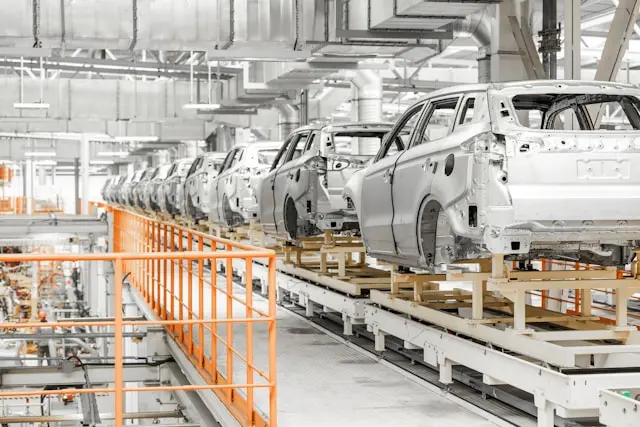
Nitra's automotive supplier cluster entered 2026 with a contradiction at its core. The 28 to 32 Tier 1 suppliers surrounding Jaguar Land Rover's assembly plant have committed tens of millions of euros to robotic welding cells, automated paint lines, and integrated PLC-controlled assembly systems. The goal was to offset a tightening labour market. The result is a deeper dependency on a category of worker that barely exists in the region.
This is not the familiar story of a manufacturing hub struggling to fill production lines. The production operator pipeline, while imperfect, still functions. The crisis sits one level higher: the automation maintenance technicians, CNC programmers, and quality engineers who keep advanced manufacturing systems running. These roles show vacancy-to-candidate ratios of 8:1. They stay open for 90 days or more. And they cannot be filled by the same methods that once staffed a factory floor.
What follows is an analysis of the structural shift underway in Nitra's automotive manufacturing cluster, who it is affecting, and what organisations supplying one of Europe's most demanding OEMs need to do to keep their operations ahead of it.
The Cluster That Built Itself Around a Single OEM
Nitra's position in European automotive manufacturing is unusual. Most Central European automotive clusters grew organically over decades, building outward from a base of metalworking or engineering tradition. Nitra's cluster assembled rapidly after JLR Slovakia opened its final assembly plant, producing the Land Rover Defender and Discovery at a facility running at 85 to 90 percent capacity utilisation. The plant employs approximately 2,800 to 3,000 direct workers and generates 60,000 to 70,000 vehicles annually.
The supplier ecosystem that followed is now substantial. Brose Slovakia operates a 1,200-person door and seat systems facility. Plastic Omnium Slovakia runs an 800-person bumper module and painted exterior parts operation at the Valaliky Industrial Park. Yanfeng produces cockpit modules and door panels with 600 employees. ZKW manufactures headlamp systems. Lear Corporation maintains seating and electrical distribution operations. Together, the direct Tier 1 supplier base employs an estimated 4,500 to 5,000 workers, according to SARIO's assessment of Slovakia's automotive sector.
When Tier 2 suppliers and logistics providers are included, total automotive employment in the Nitra Self-Governing Region reaches an estimated 12,000 to 14,000 people. For a region with an unemployment rate of 4.2 percent as of late 2024, that concentration creates a talent market operating at or near structural full employment.
The dependency on a single anchor OEM shapes everything. Supplier investment decisions, workforce planning, and even the vocational training curriculum in local schools all orient toward JLR's production requirements. This is a strength when volumes are stable. It becomes a vulnerability when the anchor OEM's strategic direction changes.
Why Automation Has Made the Labour Shortage Worse, Not Better
The conventional logic is straightforward. When you cannot find enough workers, you automate. Brose Slovakia invested €12 million in robotic welding cells for its door system production. The collective capital expenditure across Nitra's Tier 1 suppliers for automation and EV platform retooling is projected at €50 to €100 million, according to the ZAP outlook for Slovakia's automotive sector.
The Disappearing Manual Operator
That investment is achieving part of its goal. Demand for manual assembly operators is projected to decline 8 to 10 percent through 2026 as automated systems replace repetitive tasks. Net employment across the supplier sector is expected to remain roughly flat, with automation offsetting volume growth.
The Technician Gap No One Planned For
But the same data set tells a second story. Demand for automation technicians and process engineers is rising 15 to 18 percent over the same period, according to Trexima's regional labour market forecasts. The region needs workers who can programme Siemens S7 and Rockwell Allen-Bradley PLCs, troubleshoot KUKA and ABB robotic arms, and maintain automated assembly lines that run 24 hours. These are not workers who can be trained in a six-week programme. They require years of applied experience with specific industrial control systems.
The ratio of vacancies to qualified candidates for automation maintenance technicians in the Nitra region stands at approximately 8:1. Roughly 70 to 80 percent of qualified candidates in this segment are employed and not actively looking. Response rates to conventional job advertisements for these roles run below 5 percent.
This is the paradox that defines Nitra's manufacturing talent market in 2026. Capital moved faster than human capital could follow. The suppliers invested in automation to solve a headcount problem and created a skills problem that is harder to address.
The Roles That Cannot Be Filled by Conventional Means
Three role categories in Nitra's automotive supplier cluster have moved beyond the reach of standard recruitment methods. Each one illustrates a different dimension of the talent constraint.
CNC Machinists and Toolmakers
Vacancy duration for CNC machinists and toolmakers in the Nitra region averages 78 days, compared to 45 days nationally. The skills required are specific: 5-axis CNC programming, proficiency in CAM software such as Mastercam or HyperMill, and tolerance management to ±0.01mm for plastic injection mould maintenance. Progressive die design, injection mould repair, and hot runner systems expertise add further specialisation.
Unemployment in the senior toolmaker segment is below 1 percent. Average tenure exceeds eight years. These are professionals who move only for substantial incentives. According to reporting in Hospodárske noviny, Lear Corporation's Nitra operations recruited a senior toolmaking team of three specialists from a competitor in the Trnava region in mid-2024, offering relocation packages and 25 percent salary premiums to secure expertise for new seat frame production lines.
The practice of poaching entire teams is a symptom, not a strategy. It solves one employer's problem by creating an identical problem at another facility 80 kilometres away.
Quality Engineers with IATF 16949 Competence
Senior quality positions show average time-to-fill of 94 days. The requirement is not simply quality management experience. It is IATF 16949 lead auditor competence combined with fluency in SPC, APQP implementation, and the ability to interface with JLR's own quality assurance systems. The candidate pool is small. Quality directors show passive candidate ratios above 85 percent, with individuals typically moving only for promotion into plant director trajectories.
For organisations that need to fill these roles, the cost of a failed or delayed senior hire is measured directly in production line stoppages and customer audit failures.
Automation Maintenance Technicians
This is the fastest-growing shortage and the most consequential. Every robotic welding cell, every automated paint booth, every PLC-controlled assembly line requires maintenance professionals who understand the specific hardware and software in use. The qualifications are exact: PLC programming for Siemens and Rockwell platforms, robotic troubleshooting for KUKA and ABB systems, and preventive maintenance protocols for continuous production environments.
The active candidate pool for these roles consists predominantly of individuals who lack specific automotive sector experience. The qualified candidates are already employed. They are embedded in production teams at facilities where their absence would cause immediate operational disruption. Moving them requires more than a salary offer. It requires a proposition that addresses career progression, technical challenge, and working conditions simultaneously.
Compensation in a Landlocked Talent Market
Nitra's compensation challenge is not that wages are low. It is that they sit in a narrow band between what suppliers can afford and what competing regions offer, with the gap widening at the exact seniority levels where the shortages are most acute.
At the senior specialist and manager level, Production and Operations Managers command €55,000 to €75,000 annually. Quality Managers at Tier 1 suppliers earn €50,000 to €70,000. Maintenance Managers with an automation focus sit at €48,000 to €65,000. These figures are drawn from salary survey data across Michael Page, Mercer, and Hays Slovakia for the 2024 reporting period.
At the executive level, the ranges shift considerably. A Plant Director at a Tier 1 supplier with 500 or more employees earns €120,000 to €180,000 annually plus 20 to 40 percent bonus potential, based on Central European automotive benchmarks from Pedersen and Partners. Operations Directors with multi-site responsibility command €100,000 to €150,000. Technical Directors overseeing R&D and process engineering earn €90,000 to €130,000.
Executive packages in Nitra track 15 to 25 percent below Bratislava levels for equivalent roles. The cost of living differential is only 10 to 12 percent. The gap is real and it compounds at every seniority step.
This creates a specific dynamic for executive hiring across the industrial and manufacturing sector in Central Europe. A quality director who could earn 25 percent more in Bratislava and commute from Nitra in 60 to 90 minutes on the R1 expressway has a simple calculation to make. Many are making it. The Bratislava region, anchored by Volkswagen Slovakia and its MEB electric vehicle platform, offers both higher wages and the career signal of working on electrification technology.
The competition extends beyond Slovakia's borders. Czech automotive wages average 15 percent higher than Slovak equivalents, and Czech-speaking engineers from the Nitra region frequently relocate for roles in digital manufacturing and Industry 4.0 environments. Western Hungary, anchored by Audi in Győr and Mercedes in Kecskemét, offers net wage advantages of 25 to 40 percent for skilled toolmakers and automation engineers.
The Electrification Question Hanging Over Every Investment Decision
JLR has committed publicly to becoming an all-electric luxury brand by 2030. The Nitra plant continues to produce the Defender and Discovery, which remain primarily internal combustion or mild-hybrid architectures. This is not a contradiction today. It is a question about tomorrow.
For the Tier 1 supplier cluster, the ambiguity is consequential. A plastic injection moulder investing in tooling for current bumper designs must decide whether to optimise for the platform generating revenue now or invest in lightweight composite and aluminium capabilities that an electric Defender might require. A metal fabricator tooling up for current door system architectures must weigh the same calculation. The collective retooling estimate of €50 to €100 million across the supplier base assumes a transition path, but the timeline and the specific platform requirements remain uncertain.
This uncertainty directly affects talent strategy. Suppliers need process engineers who understand both conventional and EV-specific manufacturing. They need technical directors who can manage the transition from legacy to next-generation production without disrupting current output. They need quality engineers who can validate new materials and processes while maintaining IATF 16949 certification for existing lines.
The skills that ran Nitra's automotive cluster in 2022 are not the skills this market needs in 2028. The transition has already started, but the talent to manage it has not arrived in sufficient numbers.
The Structural Forces Compressing the Talent Pool
Several forces are converging to make Nitra's automotive talent market tighter than headline unemployment figures suggest.
Demographic decline and the education gap
Slovakia's working-age population is projected to decrease 0.8 percent annually through 2030, according to Eurostat projections. Nitra lacks the deep technical university presence of Bratislava, which has the Slovak University of Technology, or Žilina, which has the University of Žilina with its strong automotive engineering faculty. The region relies on secondary vocational schools for its talent pipeline. The dual education system, coordinated through partnerships between the Nitra Self-Governing Region and automotive employers, produces capable graduates. But the output volume cannot match the absorption rate of a supplier cluster employing over 12,000 people.
Regulatory burden creating new headcount requirements
The EU Corporate Sustainability Reporting Directive requires Tier 1 suppliers with more than 250 employees to implement double materiality assessments by the 2025 financial year. This creates demand for compliance professionals who did not exist in the automotive supplier workforce two years ago. Euro 7 emissions standards, anticipated for 2025 to 2026 implementation, require R&D investment in powertrain component durability. These regulatory requirements do not replace existing roles. They add new ones, competing for the same limited pool of technically literate professionals.
Energy cost exposure
Automotive suppliers in the region face electricity costs 40 percent above 2021 baselines despite government price caps. Plastic injection moulders are particularly exposed to polymer price volatility for PP and ABS resins. These costs do not directly affect hiring, but they compress the margins from which suppliers fund wage premiums and retention packages. A supplier operating on thinner margins has less room to compete in a salary negotiation with a candidate holding multiple offers.
Infrastructure limitations persist
The 2023 completion of R1 expressway sections improved connectivity between Nitra and Ružomberok. But the D1 motorway segment between Nitra and Bratislava remains a bottleneck, with average truck transit times of 90 to 120 minutes during peak periods versus 45 minutes off-peak. The D1 western bypass expansion is scheduled for completion in Q4 2026, which should reduce transit times by an estimated 25 minutes. Until then, the commute calculation that allows Bratislava employers to poach Nitra talent remains weighted in Bratislava's favour.
What This Market Requires from a Hiring Strategy
Nitra's automotive supplier talent market cannot be addressed through job postings, recruitment advertising, or database searches. The data is unambiguous on this point. For the roles that matter most, the candidates are employed, passive, and unreachable through conventional channels.
Senior toolmakers show response rates to advertisements below 5 percent. Automation engineers are 70 to 80 percent passive. Quality directors are 85 percent or more passive. These are not approximations. They are documented behavioural patterns from candidate analysis covering this specific market.
The methodology that works in this environment is direct headhunting that identifies and approaches specific individuals within the competitor talent pool. It requires mapping who works where, what they specialise in, and what proposition would move them. It requires understanding that a CNC toolmaker with eight years at Brose has a different set of motivations than a quality engineer at Plastic Omnium considering a move to Bratislava. It requires speed, because in a market where the same candidates appear on every competitor's radar, the firm that reaches them first and presents a credible proposition wins.
KiTalent delivers interview-ready candidates within 7 to 10 days through AI-powered talent mapping that identifies the professionals conventional methods miss. In a market like Nitra, where the entire addressable talent pool for critical roles might number in the dozens rather than the hundreds, that precision matters more than volume. The firm's 96 percent one-year retention rate reflects an approach built on matching the right candidate to the right role, not flooding a pipeline with applications.
For Tier 1 automotive suppliers in the Nitra region competing for automation technicians, quality engineers, and plant leadership in a market where every qualified candidate is already employed and every competitor is looking at the same names, start a conversation with KiTalent's industrial sector team about how direct search reaches the candidates no job posting will.
Frequently Asked Questions
What is the average time to fill a senior quality engineer role in Nitra's automotive sector?
Senior quality engineering positions requiring IATF 16949 lead auditor competence show an average time-to-fill of 94 days in the Nitra region. This reflects both the scarcity of qualified candidates and the high passive candidate ratio, which exceeds 85 percent at director level. These professionals typically move only for clear promotion opportunities or plant leadership trajectories. Conventional recruitment advertising is largely ineffective for this segment, making executive search the primary method for reaching qualified individuals.
How does Nitra's automotive talent market compare to Bratislava?
Bratislava offers 20 to 30 percent wage premiums for equivalent engineering and technician roles, anchored by Volkswagen Slovakia's electrification investments. The cost of living differential between the two cities is only 10 to 12 percent, meaning the wage gap represents a real income advantage for Bratislava. With the R1 expressway making commuting feasible in 60 to 90 minutes, Nitra-based professionals frequently take roles in the Bratislava region without relocating, creating a persistent talent drain on Nitra's supplier cluster.
What salary does a Plant Director earn at a Tier 1 automotive supplier in Nitra?
Plant Directors at Tier 1 automotive suppliers in the Nitra region with 500 or more employees earn €120,000 to €180,000 annually, plus 20 to 40 percent bonus potential. These figures reflect Central European automotive benchmarks and sit 15 to 25 percent below equivalent roles in Bratislava. Operations Directors with multi-site responsibility earn €100,000 to €150,000, while Technical Directors overseeing R&D and process engineering command €90,000 to €130,000. Compensation benchmarking is essential before structuring an offer in this market.
Why is automation making hiring harder in Nitra's automotive cluster?
Nitra's suppliers have invested heavily in robotics and automated systems to offset a shrinking manual labour pool. However, this investment has increased demand for automation maintenance technicians, PLC programmers, and process engineers by 15 to 18 percent, while reducing manual assembly operator demand by only 8 to 10 percent. The vacancy-to-candidate ratio for automation technicians stands at 8:1. The automation solved a volume problem and created a skills problem that is harder to fill.
What are the biggest risks to Nitra's automotive sector through 2026?
Four risks dominate. First, Slovakia's working-age population is declining 0.8 percent annually, compressing the available talent pool. Second, JLR's commitment to full electrification by 2030 creates uncertainty for suppliers investing in current platform tooling. Third, energy costs remain 40 percent above 2021 levels, squeezing supplier margins. Fourth, cross-border competition from Czech Republic and Hungarian automotive clusters continues to pull skilled workers away from the Nitra region with material wage advantages.
How can automotive suppliers in Nitra hire passive candidates effectively?
With passive candidate ratios ranging from 70 to over 85 percent for critical technical and leadership roles, direct headhunting is the only reliable method for reaching qualified professionals. This requires identifying specific individuals within competitor organisations, understanding their career motivations, and presenting a tailored proposition. KiTalent's AI-enhanced talent mapping delivers interview-ready candidates within 7 to 10 days, reaching the specialists who will never respond to a job advertisement.