Odense's Offshore Wind Billions Are Building Factories the Workforce Cannot Fill
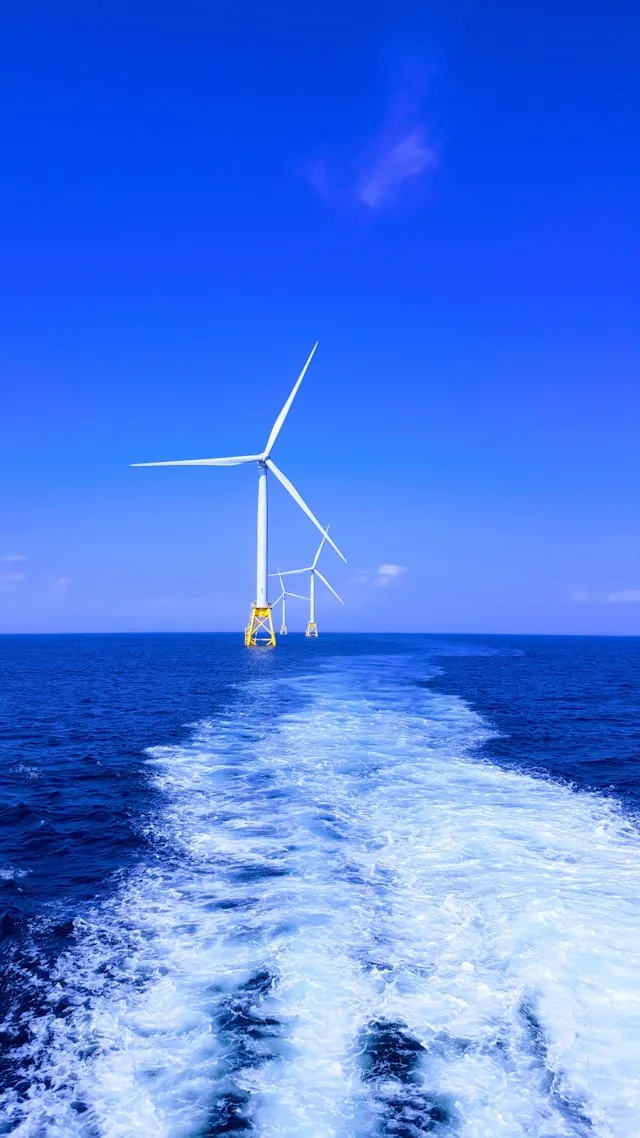
Odense has staked its industrial future on offshore wind. The numbers behind that bet are substantial. The Port of Odense handled 1.2 million tonnes of offshore wind components in 2024, up 23% from the prior year. Siemens Energy has committed DKK 2 billion to expand nacelle production at Lindø. Bladt Industries holds a 14-month order backlog for jacket foundations. Across the 85 companies occupying the former Odense Steel Shipyard site, industrial vacancy rates sit below 5%. The physical infrastructure is full and getting fuller.
The workforce required to operate that infrastructure is a different story. The Confederation of Danish Industry forecasts a national deficit of 2,400 certified welders and 1,800 industrial technicians by 2026. Odense competes for that shrinking pool against Esbjerg, Hamburg, Bremerhaven, and a Norwegian offshore oil sector that pays 35 to 45% more for equivalent technicians. Senior welding inspector roles at Lindø-based fabricators remain open for 90 to 120 days, nearly triple the national industrial average. The ratio of active to passive candidates for senior technical roles sits at roughly 1:9. The people this sector needs are employed, satisfied, and not looking.
What follows is an analysis of the forces pulling Odense's offshore wind sector in opposite directions: capital moving faster than human capital can follow, physical capacity expanding into a labour market that cannot support it, and a technological transition that may render today's infrastructure investments partially obsolete before they are fully staffed. For hiring leaders responsible for filling the roles that keep Lindø's production lines running, understanding these dynamics is not optional. It is the difference between planning a workforce strategy and hoping for one.
The Conversion That Created Odense's Wind Cluster and Its Constraints
The story of Odense's offshore wind sector begins with a closure. When the Odense Steel Shipyard shut its gates in 2012, it left behind 4.5 million square metres of industrial waterfront, 1,050 metres of deep-water quay, and a workforce trained for a shipbuilding industry that no longer existed in Denmark. The subsequent conversion into Lindø Industrial Park repositioned this infrastructure for offshore wind manufacturing. It was a deliberate reinvention, not a natural evolution.
That distinction matters because the conversion has created constraints that persist into 2026. The deep-water quay, configured for heavy-lift offshore components with a depth of 15 to 17.5 metres and lift capacity up to 1,200 tonnes, is optimised for fixed-bottom foundations: monopiles, jacket structures, and transition pieces. According to the Syddansk Vækstforum's 2024 infrastructure analysis, converting this quayside to support floating wind units would require DKK 500 million or more in land reclamation and modification, with environmental permitting timelines stretching three to four years.
From Shipbuilding Workforce to Wind Workforce
The physical conversion from shipyard to wind park was expensive and slow. The human capital conversion has been harder. Shipyard welders, fitters, and marine engineers possessed adjacent skills but not identical ones. Offshore wind fabrication demands ISO 9606-1 and EN 1090 certifications, fatigue analysis competency to DNV standards, and familiarity with high-strength steel grades like S690QL that were not standard in commercial shipbuilding. The workforce that remained in Odense after the shipyard closure required retraining. Many did not wait for it. They relocated to Esbjerg, moved into other sectors, or retired.
The result is a cluster that inherited world-class physical assets but could not inherit the workforce to match. Employment in the Lindø cluster reached approximately 4,200 full-time equivalents by late 2024, up from 3,600 in 2022. That growth, reported by Danmarks Statistik, represents 6.8% of Odense municipality's industrial employment. It is also approaching the ceiling of what local labour markets can supply without a fundamental change in how talent is sourced.
The Lindø Offshore Renewables Centre anchors the cluster's R&D capability. LORC operates nacelle test stands rated to 25 MW and blade testing infrastructure, collaborating with the University of Southern Denmark's engineering programmes. But LORC is a testing and innovation hub, not a fabrication facility. It creates knowledge. It does not create welders. And it is welders, along with HV electrical engineers, offshore project managers, and marine warranty surveyors, that this market needs most urgently.
DKK 3.5 Billion in Expansion, Zero Increase in Graduate Supply
The analytical tension at the centre of this market is stark. Siemens Energy and Bladt Industries have collectively committed approximately DKK 3.5 billion to facility expansion at Lindø for the 2025 to 2026 period. Siemens Energy's expansion alone targets a 40% increase in nacelle output capacity, aimed at servicing Baltic Sea and UK offshore zones. The Danish Energy Agency projects 4.5 GW of new offshore wind capacity requiring foundation installation between mid-2026 and late 2027, with Odense positioned as a primary logistics hub.
Against this demand, technical college graduation rates in relevant trades across Denmark have remained flat or declined 5% annually since 2020. The Confederation of Danish Industry's Kompetencebarometer 2024 projects a national deficit of 2,400 certified welders and 1,800 industrial technicians by 2026. These are not national figures that Odense can ignore because its local market is somehow different. Odense draws from the same national pool.
This is the insight that the headline investment figures obscure. Capital deployment and labour market reality are operating on fundamentally different timescales. A DKK 2 billion facility expansion can be designed, permitted, and constructed within three years. The certified Level III welding inspectors required to staff the quality assurance functions of that facility take eight to twelve years to develop from apprenticeship to full certification. The fabrication halls will be ready. The question is whether anyone will be qualified to work in them.
The Utilisation Gap
The data suggests a structural disconnect where physical capacity expansion proceeds while human capital constraints mean actual utilisation may plateau below 75% of engineered capacity. Bladt Industries made this explicit in its 2024 annual filing, citing "production limitations due to labor availability" despite holding a 14-month order backlog. The orders exist. The quay space exists. The workers do not.
This is not a temporary hiring spike that the market will resolve through normal competition. It is a systemic gap between the speed of industrial investment and the speed of workforce formation. Organisations planning to expand at Lindø or contract with Lindø-based fabricators need to factor this gap into their project timelines, not as a risk to monitor but as a near-certain constraint on delivery.
Where the Shortages Are Most Acute
The shortages in Odense's offshore wind cluster are not evenly distributed. They concentrate in four categories identified by Wind Denmark's 2024 competency mapping: certified offshore welders with ISO 9606-1 and EN 1090 qualifications, HV electrical engineers rated 33kV and above, offshore installation project managers, and marine warranty surveyors.
Certified Welders: The Foundational Bottleneck
The welding shortage is the most consequential because it sits at the base of the production chain. Without qualified welders, jacket foundations, transition pieces, and tower sections cannot be fabricated regardless of how much quay space or order backlog exists. The specific skill in demand is MAG welding of high-strength steel, particularly S690QL, to execution class EXC4 under EN 1090. This is not general-purpose welding. It requires years of supervised practice, formal certification, and ongoing requalification testing.
Among entry-level welding positions, the market functions normally. Applications arrive. Positions fill. The crisis sits at Level II and Level III certification, where 75% of specialists are passive according to estimates from Dansk Metal. These are professionals embedded in current employers, earning well, and not scanning job boards. Senior welding inspector roles at Lindø typically remain open 90 to 120 days, compared to a 45-day national average for industrial roles. That gap of 45 to 75 additional days per hire, multiplied across dozens of open positions, translates directly into production delays.
Siemens Energy's response illustrates how deep the problem runs. According to its 2024 Sustainability Report, reported by Fyens Stiftstidende, the company restructured its QA/QC department at Lindø to incorporate remote inspection technologies specifically because local recruitment of Level III welding inspectors could not keep pace with production ramp-up timelines. The company created hybrid remote and on-site roles to work around a labour constraint it could not solve through conventional hiring.
HV Engineers and Project Managers
The electrical engineering and project management shortages are compounded by the sector's growth trajectory. The Danish Energy Agency's pipeline of 4.5 GW in new North Sea and Baltic Sea installations between 2026 and 2027 will require HV electrical engineers for 33kV-plus systems integration and SCADA configuration. These professionals are also sought by grid operators, by the broader European offshore wind buildout, and by competing Danish hubs.
Offshore installation project managers with PMP certification and ten or more years of relevant experience command base salaries of DKK 850,000 to 1,050,000 and total compensation reaching DKK 1,200,000. At the VP Operations level for manufacturing and heavy fabrication, total compensation ranges from DKK 1,800,000 to 2,400,000 including long-term incentives, according to OMX Copenhagen executive compensation disclosures and Mercer's 2024 Nordic Executive Remuneration Report. These figures are competitive within Denmark but face direct pressure from Hamburg, where 15 to 20% compensation premiums draw senior engineering talent toward multinational career paths.
Three Markets Competing for One Talent Pool
Odense does not operate in isolation. It competes against Esbjerg, Hamburg and Bremerhaven, and Stavanger for the same finite pool of offshore wind specialists. Each competitor offers a different value proposition, and the dynamics of that competition shape every senior hire.
Esbjerg is the established Danish offshore wind capital. It pays 8 to 12% higher base salaries for equivalent project management roles. But Esbjerg's housing costs run approximately 40% above Odense levels, according to Boligsiden price statistics. This creates a partial equilibrium: the salary premium is partially absorbed by living costs, making Odense's net proposition closer than headline compensation suggests. For candidates with families, Odense's quality-of-life advantage and lower cost of entry can be decisive.
Hamburg represents a different kind of threat. It attracts senior engineers with the promise of multinational career trajectories, broader industry exposure, and compensation premiums of 15 to 20%. For a Lead Structural Engineer in Odense weighing their next move, Hamburg offers a step up in both compensation and professional scope. Odense counters with shorter commutes, a more integrated community, and the argument that Lindø's concentrated cluster provides exposure to the full production chain in a way that Hamburg's distributed supply base cannot.
Stavanger is the wildcard. When oil prices strengthen, Norway's offshore sector pulls experienced Danish technicians across the Skagerrak with wages 35 to 45% above Danish levels, according to Statistics Norway. These departures hit the most experienced tier of the workforce hardest, because the professionals with transferable offshore certifications are exactly the ones Odense can least afford to lose. The competition is not just for new hires. It is for retention of the people already in post.
The combined effect of these competitive pressures means that the conventional approach to executive and specialist recruitment in this market reaches only a fraction of the viable candidate pool. The 1:9 ratio of active to passive candidates for senior technical roles, confirmed by Mercer's 2024 Nordic Talent Trends survey, means that job board advertising and standard recruitment channels access roughly 10% of the market. The other 90% must be identified through direct approaches and talent mapping that go beyond published vacancies.
The Tax Ceiling and Immigration Bottleneck
Two structural features of the Danish system constrain Odense's ability to solve its talent shortages through compensation or international recruitment.
The first is the topskat, Denmark's tax ceiling. Effective marginal tax rates reach 52 to 55% above approximately DKK 600,000, according to Skatteministeriet. For senior specialists already earning above this threshold, a DKK 100,000 salary increase delivers a net benefit of DKK 45,000 to 48,000. The diminishing return on compensation increases limits how effectively Odense employers can use pay to attract or retain talent compared to lower-tax jurisdictions. When Hamburg or Dubai can offer the same gross increase with a far lower marginal tax rate, the math becomes unfavourable regardless of Odense's quality-of-life advantages.
This dynamic has a specific consequence for the poaching behaviour reported across the Lindø cluster. Bladt Industries and Semco Maritime have engaged in direct talent recruitment from each other and from Esbjerg-based competitors, with signing bonuses for senior project managers reaching DKK 150,000 to 200,000 above standard packages, confirmed by regional recruitment consultants cited in DI reports. These bonuses represent a workaround for the tax ceiling: a one-time payment that delivers a larger net benefit than an equivalent annual salary increase. But signing bonuses are a retention liability, not a retention tool. They attract movement without building loyalty.
The second constraint is immigration policy. Denmark's pay limit scheme sets a minimum salary threshold of DKK 465,000 for non-EU specialist recruitment. While this threshold permits senior hires, it is insufficiently flexible for mid-level specialists, the Level II certified welders and HV technicians who form the backbone of production. The result is forced reliance on EU talent pools that are themselves depleted, as Germany, the Netherlands, and France compete for the same workers under the same demographic pressures.
The combined effect is a market where employers cannot effectively buy their way out of shortages through compensation, and cannot recruit their way out through immigration. The strategies that work in this environment require a different approach entirely: identifying passive candidates already within the EU talent pool, reaching them before competitors do, and presenting a proposition that extends beyond base salary to role scope, career trajectory, and professional development.
The Fixed-Bottom Bet and the Floating Wind Question
There is a second tension in this data that most hiring leaders are not yet accounting for. Everything Odense has built and is building is optimised for fixed-bottom offshore wind: monopiles, jacket foundations, transition pieces loaded onto vessels from deep-water quays. The current order backlog, the Siemens Energy expansion, the Bladt Industries production halls are all configured for components that sit on the seabed.
The 2030-plus pipeline tells a different story. According to the Syddansk Vækstforum's 2024 infrastructure analysis, floating wind represents approximately 60% of the North Sea offshore wind pipeline beyond 2030. Floating wind requires fundamentally different quayside configurations: wider berthing, different crane specifications, dynamic cable handling infrastructure. Lindø's current 1,050 metres of quay, optimised for fixed-bottom component handling, would need DKK 500 million or more in modification to support floating wind logistics. Environmental permitting for that modification extends three to four years.
This creates a potential asset-stranding risk that is not reflected in current hiring plans. The talent being recruited today for fixed-bottom fabrication and assembly may face a different set of skill requirements within five to eight years. Fatigue analysis for floating structures differs from fixed-bottom analysis. Dynamic mooring systems require different engineering competencies than static foundations. The SCADA integration for floating turbines involves different sensor configurations and data architectures.
For senior leaders assessing investment in this market, the implication is that workforce planning cannot be based solely on today's order book. The people hired in 2026 need to be developable toward the technology mix of 2032. This means hiring for adaptability and engineering fundamentals, not just current certifications. Organisations that build teams exclusively around fixed-bottom expertise may find themselves repeating the shipyard-to-wind conversion challenge: excellent professionals trained for infrastructure that the market has moved beyond.
What This Means for Hiring Leaders in 2026
The gap between Odense's industrial ambition and its workforce reality is not closing. It is widening. Capital has moved faster than human capital can follow, and the mechanisms available to close that gap are each constrained in specific ways: compensation is blunted by the tax ceiling, international recruitment is narrowed by immigration policy, and the local graduate pipeline has not expanded to match facility expansion.
This is the market in which hiring leaders must now operate. The organisations that will fill their most critical roles are not the ones offering the highest salaries. They are the ones reaching candidates that competitors have not yet identified. In a market where 90% of the viable candidate pool for senior technical roles is passive, the difference between a successful search and a failed one is method, not budget.
KiTalent works with organisations across the industrial and manufacturing sector to identify and engage precisely this kind of candidate. Using AI-enhanced talent identification, KiTalent maps passive candidate pools across competing geographies, delivers interview-ready candidates within 7 to 10 days, and operates on a pay-per-interview model that eliminates the upfront retainer risk of traditional retained search. Across 1,450 executive placements globally, the firm maintains a 96% one-year retention rate, a metric that matters especially in a market where signing bonuses create movement without commitment.
For organisations hiring offshore wind leadership at Lindø, whether that is a VP Operations for heavy fabrication, a Lead Structural Engineer for foundation design, or a senior project manager for Baltic Sea installations, the conventional search process consistently fails to reach the candidates who matter most. A role open for 120 days is not just an HR inconvenience. It is a production delay on a project with contractual penalties.
Open a conversation with KiTalent's industrial search team about how to reach the offshore wind specialists this market cannot surface through conventional channels.
Frequently Asked Questions
What is the average salary for an offshore wind project manager in Odense?
Senior offshore project managers in Odense with ten or more years of experience and PMP certification earn base salaries of DKK 850,000 to 1,050,000, with total compensation including bonuses reaching DKK 950,000 to 1,200,000. At VP Operations level in heavy fabrication, total compensation ranges from DKK 1,800,000 to 2,400,000 including long-term incentives. These figures are competitive within Denmark but sit 15 to 20% below equivalent roles in Hamburg, where multinational employers offer broader career trajectories alongside higher pay. Odense partially offsets this through lower housing costs and shorter commuting times. Employers making offers in this salary benchmarking environment must account for the tax ceiling's impact on net compensation above DKK 600,000.
Why is it so hard to hire certified welders for offshore wind in Denmark?
Denmark faces a projected national deficit of 2,400 certified welders by 2026, according to the Confederation of Danish Industry. The specific shortage is at Level II and Level III certification under EN 1090 EXC4 standards, which require years of supervised practice and ongoing requalification. Approximately 75% of specialists at this level are passive candidates who are not actively seeking new roles. Technical college graduation rates in welding have declined roughly 5% annually since 2020, while demand has increased sharply. Competition from Norway's oil sector, which pays 35 to 45% above Danish wages, further depletes the experienced pool.
How does Odense compare to Esbjerg for offshore wind careers?
Esbjerg offers 8 to 12% higher base salaries for equivalent project management roles and carries stronger name recognition as Denmark's historical offshore energy hub. However, Esbjerg's housing costs run approximately 40% above Odense levels, narrowing the net compensation gap considerably. Odense offers access to the concentrated Lindø Industrial Park cluster, where 85 companies operate across the full offshore wind supply chain. For professionals seeking exposure to the complete production cycle rather than a single employer's operations, Odense provides a breadth of career options within a single industrial ecosystem.
What are the biggest risks facing Odense's offshore wind sector?
The primary risks are labour scarcity constraining production utilisation below engineered capacity, grid connection queues extending to 2032 that may create order gaps in 2027 to 2028, and a potential technological mismatch between current fixed-bottom infrastructure and the floating wind installations that dominate post-2030 project pipelines. EU Carbon Border Adjustment Mechanism implementation in 2026 adds 6 to 8% to imported steel costs. Steel price volatility, which saw 18% fluctuations in 2024, creates ongoing margin pressure for fabricators. KiTalent helps organisations plan for these dynamics through proactive talent pipeline development that accounts for both current production needs and future technology transitions.
How can companies recruit passive offshore wind engineers in Denmark?
With only 1.2% unemployment among Danish engineers with offshore wind specialisation and average tenure exceeding 4.5 years, the candidate pool is overwhelmingly passive. Job board advertising reaches roughly 10% of viable candidates. Effective recruitment requires direct identification and engagement of employed specialists through structured headhunting approaches and AI-powered candidate mapping. KiTalent delivers interview-ready candidates within 7 to 10 days by mapping passive talent across Denmark, Germany, the Netherlands, and Norway, presenting candidates with roles before competitors identify them.
What is Lindø Industrial Park and why does it matter for offshore wind?
Lindø Industrial Park occupies the 4.5 million square metre site of the former Odense Steel Shipyard, which closed in 2012. It now hosts 85 companies, with 40% directly serving offshore wind markets. The Port of Odense operates 1,050 metres of deep-water quay with depths of 15 to 17.5 metres, handling monopiles, jacket foundations, and nacelles with lift capacity up to 1,200 tonnes. Siemens Energy operates its SG 14-236 DD nacelle assembly facility there, while Bladt Industries fabricates jacket foundations and offshore substations. The Lindø Offshore Renewables Centre provides testing infrastructure rated to 25 MW, anchoring the cluster's R&D capability alongside the University of Southern Denmark.