Paphos Marine Tourism: The Six-Month Contract That Costs This Sector Its Best People
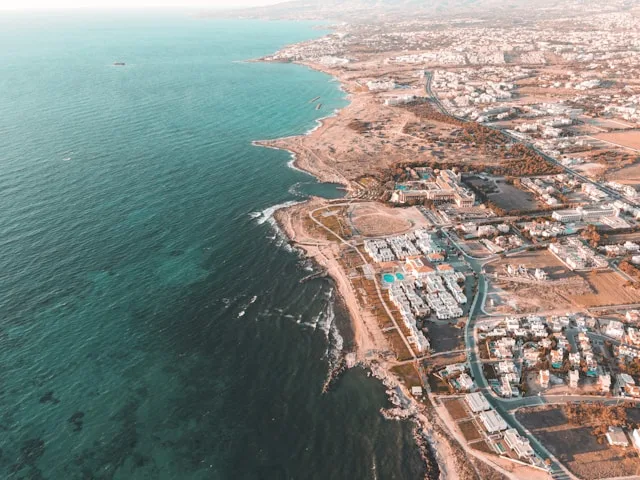
Paphos district generated between €18 million and €22 million in marine and coastal tourism revenue in 2024. Cruise calls rose to 42 in 2025, up from 38 the year before, and projections for 2026 point to 55 or 60 calls as MSC Cruises and Celestyal Cruises expand their Eastern Mediterranean itineraries. Job postings for marine tourism roles in the district climbed 22% year-on-year in early 2025. By every demand metric, this is a sector accelerating.
Yet the professionals required to operate this sector are leaving. Skilled skippers and marine engineers typically migrate from Paphos to Limassol after two or three seasons to secure permanent contracts. Seasonal dive instructors relocate to the Red Sea or the Caribbean during Cyprus's winter off-season. The average time to fill a certified commercial skipper vacancy in Paphos runs 94 days, more than double the 45-day average for general hospitality roles. The sector is growing, but the workforce powering it is draining toward competitors that offer something Paphos largely does not: year-round employment.
This is not a conventional talent shortage story. It is a story about a sector that demands three-to-five years of international certification investment from its professionals and then offers them a six-month contract. What follows is an analysis of why this contradiction persists, what it costs Paphos operators, and what hiring leaders in marine and coastal tourism across Cyprus must understand before their next search.
A Harbour at Capacity, a Marina That Does Not Exist
The physical infrastructure defines the ceiling. Paphos Harbour at Kato Paphos is a mixed-use facility managed by the Cyprus Ports Authority, offering roughly 200 to 250 berths for vessels under 20 metres. During peak season from June through August, berth occupancy for commercial tourist vessels exceeds 90%, according to CPA operational data from the second quarter of 2024. Vessels over 35 metres bypass Paphos entirely, heading for Limassol Marina or Ayia Napa Marina.
The long-planned Paphos Marina project, initially tendered for 1,000 berths including superyacht capacity, remains stalled. Environmental licensing disputes and legal challenges have kept it on paper, according to Cyprus Mail reporting from January 2025. This is not a temporary delay. No new commercial berth licences have been issued at Paphos Harbour since 2022. The CPA operates a closed waiting list. Fleet expansion is physically impossible under current conditions.
This infrastructure deficit eliminates Paphos from the high-margin superyacht provisioning market entirely. Provisioning, repair, and crew services for superyachts represent a revenue category that Limassol captures with its 1,000-berth marina. Paphos operators are confined to low-margin mass tourism day trips, Blue Lagoon excursions, and seasonal watersports. The harbour-front regeneration plans submitted by Paphos Municipality under EU Recovery and Resilience Facility funding include improved passenger terminals and upgraded commercial berths, but marina infrastructure is explicitly excluded from Phase 1.
The nearest operational marina sits 35 kilometres north at Latchi Harbour in Polis Chrysochous, offering 200 berths and serving as the primary embarkation point for Akamas Peninsula excursions. This fragments the district's marine tourism geography. An operator based in Kato Paphos and a competitor based in Latchi are technically in the same district but operate in different labour catchments, competing for the same thin pool of certified professionals across a commute that discourages daily transit.
The infrastructure constraint is not just limiting revenue. It is actively shaping who will and will not work here.
The Operator Profile: Small, Family-Owned, Seasonally Exposed
Understanding why hiring is difficult in this market requires understanding who is doing the hiring. The Paphos marine tourism sector is not dominated by large employers with HR departments and structured recruitment processes. It is a cluster of small, family-owned operations.
Boat Charter and Fishing
The charter fleet comprises 35 to 40 licensed day-trip operators, predominantly family-owned SMEs running vessels of 8 to 15 metres, according to the Cyprus Tourism Organisation Licensing Registry. Alongside them, 65 registered small-scale fishing vessels operate from Paphos Harbour, down from 85 in 2019 due to regulatory constraints and labour shortages. These are businesses where the owner is often the skipper, the bookkeeper, and the maintenance crew. Recruitment, when it happens, is informal: word of mouth, personal networks, WhatsApp groups.
Diving and Experiential Tourism
Eight active PADI or SSI certified dive centres operate in the district, including Cydive Paphos and Viking Divers, serving approximately 12,000 certified dives annually. Latchi Watersports Centre is the district's largest marine tourism employer, with 35 permanent staff expanding to 85 during peak season. Cydive employs 12 permanent instructors and 20 seasonal staff. These are the sector's anchor employers. Most other operations are smaller.
The largest single employer in the district's marine sector, Latchi Watersports Centre, peaks at 85 people. The entire sector employs 800 to 1,000 during peak season and contracts to 250 to 300 permanent positions through the winter. This ratio tells the story. Roughly 70% of the workforce is seasonal. For any professional weighing whether to build a career in Paphos marine tourism, the arithmetic is immediate: six months of employment, six months of finding something else.
This seasonal contraction is where the hidden cost of a poor hiring decision compounds. An operator who loses a qualified skipper after one season has not just lost a crew member. They have lost the local area knowledge, the client relationships, and the certification investment that took years to accumulate. Replacing that person takes 94 days on average. If the departure happens in March, the replacement may not arrive until June. A third of the season is gone.
The Certification Paradox: Five Years of Training for Six Months of Work
Here is the original analytical claim that sits at the centre of this market's dysfunction.
The sector's compensation model is not merely inadequate. It is structurally incompatible with its own certification requirements. A professional who invests three to five years obtaining an RYA Yachtmaster Offshore qualification, STCW Basic Safety Training, and the local area knowledge required to operate commercially in Cypriot waters is then offered a seasonal contract worth €32,000 to €45,000 for eight months. The year-round equivalent, at €45,000 to €58,000, is available only to a small number of operations willing to carry payroll through the winter when revenue is zero. Standard labour market theory predicts that a skill premium of this magnitude should command year-round retention. In Paphos, it does not. The skill premium exists in the hiring requirement but vanishes in the employment offer.
This is not irrational. It is the predictable outcome of a sector where the employer base lacks the scale and cash-flow stability to amortise high-skill labour costs over twelve months. A family-owned charter operator running two vessels cannot justify paying a qualified skipper €50,000 for twelve months when the boats are dry-docked for five of them. The cost structure makes seasonal employment the only viable model for most operators. But the certification structure makes seasonal employment unacceptable for most qualified professionals. The two systems are pulling in opposite directions, and neither will yield.
The diving sector offers a concrete illustration. Only six active PADI Course Directors are resident in the Paphos district, according to the PADI Pro Check Database as of early 2025. All six are either centre owners or under exclusive long-term contract. Recruiting for a new dive centre opening through advertisement alone is functionally impossible. One diving school operator in the district restructured its operations in 2024 to retain a PADI Course Director, offering year-round administrative employment during winter months despite generating no diving revenue, according to the Cyprus Diving Centres Association's industry report. That operator understood the cost of losing that person. Most operators cannot afford to make the same calculation.
Where the Talent Goes: Limassol, Ayia Napa, and Beyond
Paphos is not losing marine professionals to other industries. It is losing them to other geographies within the same industry. The migration patterns are well documented and directional.
The Limassol Premium
Limassol offers 40% to 60% higher compensation for equivalent skipper and engineering roles, with senior positions commanding €55,000 to €75,000 annually, according to the Cyprus Marine and Maritime Institute's 2024 salary survey. Limassol Marina's 1,000-berth capacity, including superyacht facilities, provides year-round operational demand and a career trajectory that Paphos cannot match. A senior marine engineer earning €38,000 to €52,000 on a seasonal Paphos contract can move to a permanent Limassol role at a material premium. The calculation is not close.
The Ayia Napa Draw
Ayia Napa Marina, which opened in 2023 with 220 berths, and the established Paralimni tourism infrastructure offer comparable seasonal wages to Paphos but a longer operational season running from April through November versus Paphos's May through October. The newer vessel fleets attract younger instructors and crew who prefer modern equipment. For an early-career professional choosing between two seasonal markets, the one with an extra month of income wins.
International Migration
Malta and the Greek islands of Rhodes and Crete compete for the same professional pool, offering non-domicile tax regimes and larger fleet scales. Paphos retains a cost-of-living advantage, running approximately 15% below Malta according to Eurostat's 2024 Cost of Living Index. But cost of living is a retention factor, not a recruitment factor. A PADI Staff Instructor in Paphos who finishes the season in October can pick up winter work in Sharm el-Sheikh or the Maldives. The international dive industry operates as a global labour market where professionals follow the seasons. Paphos is one stop on a circuit, not a destination.
The net effect is a talent market where Paphos is consistently a training ground and a feeder, not a destination employer. Professionals arrive early in their careers, gain qualifications and experience, and leave for markets that offer permanence and higher pay. This pattern is sustainable for the industry at large. It is not sustainable for individual operators trying to build consistent service quality year after year.
The Passive Candidate Reality in a Micro-Market
The executive and senior specialist talent required to run marine operations in Paphos is overwhelmingly passive. This is not a market where posting a vacancy produces qualified applicants.
Master Mariners holding MCA Master 200GT or higher certification have an unemployment rate below 3% in Cyprus. According to the Cyprus Marine and Maritime Institute's labour market intelligence, 85% of placements in this category occur through direct headhunting or internal referral. Marine Surveyors specialising in yacht and small craft are either self-employed or retained by insurance firms. Zero active unemployment exists in this population. The six resident PADI Course Directors are all employed and contractually committed.
At the executive tier, the picture is equally constrained. Fleet Director and Marine Operations Director roles command €65,000 to €85,000 annually and require MCA Master 200GT or higher, ISM Code compliance experience, and Greek/English bilingualism. According to a 2025 industry briefing from maritime recruitment agencies operating in Cyprus, 70% of placements at this level occur through executive search rather than public advertisement. The advertised vacancy attracts few qualified applicants because the qualified professionals are already employed and not looking.
For a small operator with no retained search capability, this means the most critical roles are the least accessible. A charter operations manager search conducted through a job portal reaches the 30% of the market that happens to be looking. The 70% who would be qualified and potentially interested never see it. In a market where the total population of qualified candidates may number in the low dozens, missing 70% of them is the difference between filling the role and operating a season short-handed.
This is where conventional hiring methods fail most visibly. The entry-level market for deckhands and seasonal watersports assistants shows high application-to-vacancy ratios. Active candidates exist in volume at the bottom of the skills pyramid. At the top, where certifications take years and experience is measured in seasons, the market is locked.
Regulatory Pressure and the Demographic Cliff
The operational constraints facing Paphos marine tourism are not limited to infrastructure and compensation. Regulatory and demographic pressures are compounding the hiring challenge from multiple directions.
Environmental Restrictions Reshaping Operations
The 2024 implementation of the Natura 2000 management plan for the Akamas Peninsula restricts anchoring and motorised watercraft zones. For charter operators, this limits expansion areas. The Akamas Marine Protected Area designation, while creating new demand for nature tourism experiences like turtle-watching and marine archaeology diving, simultaneously constrains where and how vessels can operate. Operators must now hire crew with environmental compliance training in addition to maritime certifications. The skill requirement expands while the operating territory contracts.
EU cabotage regulations further restrict fleet expansion by preventing non-EU flagged vessels from operating domestic charters. Operators seeking to import used vessels from third countries face regulatory barriers that limit the supply side of the fleet equation. Post-Brexit complications have added another layer. The loss of automatic recognition for UK MCA certificates for new entrants after 2023 has reduced the eligible labour pool for UK-flagged charter vessels operating from Cyprus.
The Aging Workforce Problem
Forty-five percent of licensed fishing vessel captains in Paphos are over 55, according to the Department of Fisheries' 2024 fleet demographics data. Youth entrants are insufficient to replace retirements. This is not a gradual transition. It is a demographic cliff that will remove nearly half the experienced captains within a decade. The fishing fleet has already contracted from 85 vessels to 65 since 2019. The trajectory points toward further consolidation.
Meanwhile, insurance premiums for small charter operators rose 18% in 2024, driven by increasing frequency of summer heatwaves affecting passenger comfort and winter storm surges elevating vessel maintenance costs. The rising cost base squeezes margins that are already thin, leaving even less room for the year-round contracts that would retain skilled professionals.
What 2026 Demands of Hiring Leaders in This Sector
The 2026 outlook for Paphos marine tourism contains a fundamental mismatch between demand trajectory and talent capacity. Cruise calls are projected to reach 55 to 60. Marine nature tourism, encompassing sea kayaking, marine archaeology diving, and turtle-watching excursions, is expected to grow 15% following the Akamas Marine Protected Area management plan implementation. Harbour-front regeneration is funded and planned. The demand side of the equation is moving.
The supply side is not. Berth capacity is frozen. The marina project remains legally stalled. Seasonal employment models persist. The talent migration pattern toward Limassol, Ayia Napa, and international markets continues. Operators entering the 2026 season face the same structural imbalance as 2025, but with higher demand and no additional capacity.
For hiring leaders in this market, the implications are specific.
First, any search for a senior certified professional in this district must treat the candidate pool as passive by default. The conventional method of posting a role and waiting for applications will reach entry-level candidates but will systematically miss the Master Mariners, Course Directors, and Marine Operations Directors who constitute the critical hires. Direct identification and approach is not a premium service in this market. It is the only method that works at the senior level.
Second, the compensation conversation must address the seasonal question explicitly. A candidate weighing a Paphos offer against a Limassol permanent role is not comparing salaries. They are comparing employment models. The operator who can structure a year-round proposition, even one that involves administrative or maintenance duties during winter months, has a decisive advantage. The operator who cannot must compete on other dimensions of the offer: equity participation, housing, certification sponsorship, or schedule flexibility.
Third, the timeline matters more here than in most markets. A 94-day average time to fill for skipper roles means that recruitment for the 2026 season must begin no later than January to have crew in place by May. Operators who begin searching in March will find the available professionals already committed.
For organisations navigating senior hiring in marine and coastal tourism operations where the talent pool is small, passive, and geographically mobile, KiTalent delivers interview-ready candidates within 7 to 10 days through AI-enhanced talent mapping that identifies professionals who are not visible on any job board. With a 96% one-year retention rate across 1,450 executive placements, and a pay-per-interview model that eliminates upfront retainer risk, the approach is built for markets exactly like this one: small candidate populations, high certification requirements, and zero tolerance for a slow search.
If your organisation is competing for certified marine operations leadership in the Eastern Mediterranean, where six PADI Course Directors serve an entire district and 70% of senior placements occur through direct search, start a conversation with our executive search team about how we approach micro-markets with passive candidate dynamics.
Frequently Asked Questions
What marine tourism roles are hardest to fill in Paphos?
The most difficult vacancies are Master Mariners holding MCA Master 200GT or higher, PADI Course Directors, and senior marine engineers with diesel engine certification. These roles combine multi-year certification requirements with a candidate pool that is almost entirely employed and not actively searching. In Paphos district, only six PADI Course Directors are resident and all are under contract. The average time to fill a certified commercial skipper vacancy is 94 days. KiTalent's direct headhunting methodology is designed to reach these passive professionals through AI-enhanced candidate identification rather than job advertising.
What do marine operations professionals earn in Paphos compared to Limassol?
A Charter Operations Manager in Paphos earns €32,000 to €45,000 on a seasonal eight-month contract, or €45,000 to €58,000 for the rare year-round role. Limassol offers €55,000 to €75,000 for equivalent roles with permanent employment and access to superyacht infrastructure. Fleet Director and Marine Operations Director roles in Cyprus command €65,000 to €85,000 annually. The 40% to 60% premium in Limassol is the primary driver of talent migration from Paphos.
Why does Paphos not have a yacht marina?
The Paphos Marina project, initially tendered for 1,000 berths including superyacht capacity, remains stalled due to environmental licensing disputes and legal challenges. The existing Paphos Harbour offers approximately 200 to 250 berths for vessels under 20 metres, primarily serving fishing and day-trip charter boats. No new commercial berth licences have been issued since 2022. Without marina resolution, Paphos cannot enter the high-margin superyacht provisioning market.
How does seasonality affect marine recruitment in Cyprus?
Paphos marine tourism operates on a six-month season from May through October. Peak season employs 800 to 1,000 people across the district. Year-round permanent positions drop to 250 to 300. This 70% seasonal workforce reduction means highly certified professionals face extended periods without local employment, driving migration to year-round hubs. Operators who can structure winter employment packages gain a decisive retention advantage over those offering seasonal-only contracts.
What certifications are required for marine tourism roles in Paphos?
Commercial skippers require RYA Yachtmaster Offshore or equivalent MCA certification plus STCW Basic Safety Training. Senior roles require MCA Master 200GT or higher and ISM Code compliance experience. Dive instructors need PADI Course Director or SSI Instructor Trainer status for senior positions. Marine engineers must hold diesel engine certification, with MTU and Caterpillar specialisations in critical shortage. Greek and English bilingualism is expected for executive-level positions. These certification requirements create extended candidate development timelines that cannot be compressed.
How can small marine tourism operators compete for qualified staff?
Small operators cannot match Limassol's compensation premiums or year-round employment guarantees. Competitive strategies include offering winter administrative employment to retain key staff, sponsoring certification upgrades, providing accommodation as part of the package, and beginning recruitment no later than January for the May season start. For senior roles where 70% of placements occur through direct search, partnering with an executive search firm that can identify and approach passive candidates is often the only viable route to qualified hires.