Plzeň's Rolling Stock Sector Is Winning Contracts It May Not Have the Engineers to Deliver
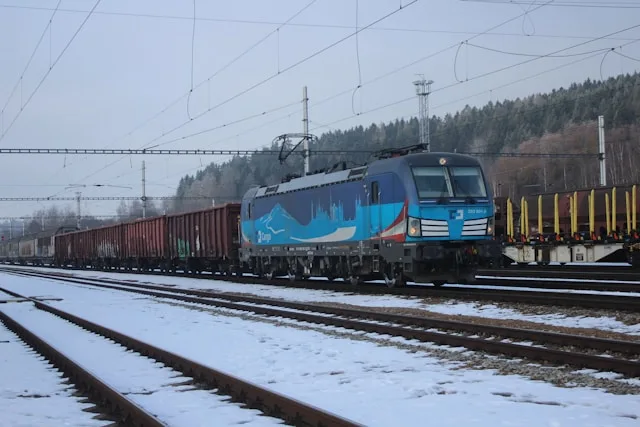
Škoda Transportation's Plzeň facilities produced 234 rail vehicles in 2023, with output projected to reach 260 to 280 units by the close of 2025. The order book includes metro trains for Riyadh, Stadtbahn vehicles for Cologne, and electric locomotives for České dráhy. Pre-qualifications for the Brussels Metro M7 contract and additional German light rail programmes point to sustained production through 2027 and 2028. By any measure of commercial performance, the cluster is thriving.
The problem sits behind the production numbers. Job postings for rail vehicle engineers in the Plzeň Region rose 34% year on year in Q3 2024. Average time to fill extended from 67 days in 2022 to 94 days by late 2024. One senior embedded software architect role sat open for nine consecutive months at the 95th percentile of regional compensation. The factory floor is busy. The pipeline of people who keep it busy is not replenishing at the rate these contracts demand.
What follows is an analysis of the forces reshaping Plzeň's rolling stock talent market in 2026: where the gaps are deepest, why the traditional recruitment pipeline is breaking down, what compensation dynamics are doing to retention, and what organisations competing for this talent need to understand before they commit to their next search. The data covers the full spectrum from vocational technician supply to executive director compensation, and the picture it reveals is a sector where commercial ambition has outrun the human capital required to fulfil it.
The Contract Boom and the Capability Squeeze
The Czech Railway Industry Association forecasts 6 to 8% revenue growth for the sector in 2026. EU Green Deal railway modernisation funds are accelerating German and Austrian tram fleet replacement cycles. Škoda Group has committed CZK 1.2 billion (approximately €48 million) to Plzeň facility modernisation between 2024 and 2026, targeting automated welding lines and digital twin testing capabilities that aim to reduce physical prototyping requirements by 30%.
Capital is flowing in. The investment is real. But every automated welding line requires a controls engineer to programme it. Every digital twin model requires an embedded systems specialist to validate it against physical behaviour. The modernisation programme is replacing one kind of labour with another that is scarcer and harder to find.
This is the core tension the research reveals, and it is the analytical spine of this article: Škoda's capital investment is not reducing the workforce. It is replacing one talent profile with another that does not yet exist in sufficient numbers. The CZK 1.2 billion in facility upgrades will create demand for precisely the roles the market is already unable to fill. Capital moved faster than human capital could follow.
The pattern is visible in the numbers. Projected net hiring for the Plzeň rolling stock cluster in 2026 stands at 400 to 600 technical positions. The demand concentrates in mechatronics, embedded systems engineering, and international project management for EU-funded contracts. These are not roles the existing talent pipeline was built to produce.
Where the Talent Gaps Are Deepest
Embedded Software Engineers: The Nine-Month Search
The most acute shortage sits in embedded software engineering for traction control systems. Škoda Transportation maintained an open position for a Senior Embedded Software Architect, requiring IEC 61508 functional safety certification and CANopen protocol expertise, from March 2024 through at least December 2024. The role offered compensation at the 95th percentile of the regional market. It remained unfilled for nine months.
The consequence was measurable. The function was contracted to external consultants at 2.3 times the cost of internal employment. That cost differential, sustained across a nine-month vacancy, represents a material drag on project margins for an employer already competing against Chinese manufacturers who undercut European bids by 20 to 30%.
An estimated 85 to 90% of qualified functional safety engineers in the Czech market are employed and not actively searching. Their average tenure at their current employer is 4.2 years. The active candidates who do apply often lack current IEC 61508 certification. A conventional job-board approach reaches, at best, the 10 to 15% of this market that happens to be in motion. The other 85% must be found differently.
Mechatronics Technicians: The Assembly Floor Bottleneck
Mechatronics technicians handle the assembly and integration work that turns manufactured components into functioning vehicles. The Plzeň Technical High School graduates approximately 60 mechatronics technicians annually, with 70% entering Škoda apprentice programmes directly. That pipeline produces roughly 42 Škoda-ready technicians per year against a cluster that needs hundreds.
The University of West Bohemia's Faculty of Mechanical Engineering produces about 180 railway-specialised engineers annually. The combined output of these two institutions cannot keep pace with the 400 to 600 new technical positions projected for 2026 alone. And this is before accounting for attrition.
International Certification Engineers: The Invisible Bottleneck
EU rail vehicle authorisation under the Fourth Railway Package requires 18 to 24 month certification timelines for new vehicle types. The European Union Agency for Railways bottleneck has extended approval timelines by 30% since 2022. Every new vehicle platform Škoda develops for an export contract requires engineers who understand EU Technical Specifications for Interoperability.
The ACRI employer survey found that 78% of cluster employers cite this role as "impossible to fill through standard recruitment channels." Searches regularly stall beyond 120 days. The difficulty is compounded by a narrow global talent pool: these engineers must understand both the technical standards and the bureaucratic processes of cross-border rail certification. Few universities teach this combination. Fewer professionals practise it.
The certification timeline itself creates a cascading workforce problem. A delayed certification does not just push back a delivery date. It holds engineering teams in limbo, unable to redeploy to the next project, compressing the schedule for every subsequent contract in the backlog.
The Compensation Paradox: Paying More and Losing Anyway
Rolling stock compensation in Plzeň operates in a market where employers are simultaneously paying more than ever and losing talent faster than ever. The paradox resolves when you examine the geography.
At the senior specialist and manager level, total compensation for engineering directors ranges from CZK 1.8 million to CZK 2.4 million annually (€72,000 to €96,000). At VP and division leadership level, compensation reaches CZK 3.2 million to CZK 4.8 million (€128,000 to €192,000), with long-term incentive components. These are competitive figures by Czech standards.
They are not competitive by the standards of the markets competing for the same people.
Prague offers 25 to 35% salary premiums for equivalent mechatronics and software roles. Siemens Mobility, AŽD Praha, and Alstom's Czech operations all recruit from the same talent pool. According to industry reporting in E15.cz, Siemens Mobility recruited a Senior Mechatronics Project Manager from Škoda's Plzeň facility in Q2 2024 with a compensation package reportedly including a 35 to 40% salary premium and relocation assistance. The move prompted Škoda to implement retention bonuses of CZK 150,000 (€6,000) for senior mechatronics staff.
Dresden and Leipzig present an even steeper differential. German facilities of Alstom and Siemens actively recruit Czech engineering graduates from West Bohemia, offering gross salaries of €90,000 to €110,000 against the CZK 1.8 million to CZK 2.2 million (roughly €72,000 to €88,000) available in Plzeň. That represents a 60 to 80% premium, and the German Employment Agency's cross-border recruitment data confirms active targeting of this market. EU Blue Card fast-track visas reduce the friction further.
For executive leadership, the gap widens again. Munich and Vienna, home to European headquarters of Siemens Mobility and Alstom respectively, recruit Czech directors with packages of €180,000 to €250,000 or more. A division leader earning at the top of the Plzeň range, roughly €192,000, is still looking at a material step up by moving to a competitor's headquarters.
Plzeň retains one genuine advantage: housing costs sit 40% below Prague, and the established technical community provides a professional network that Prague's more diffuse market cannot match. But career trajectory limitations, specifically fewer multinational headquarters in the region, drive mid-career departures. The retention bonuses address the immediate symptom. They do not address the structural cause.
For any organisation weighing the true cost of a bad executive hire or prolonged vacancy at this level, the arithmetic is unforgiving. Nine months of consultant cover at 2.3 times the internal cost, multiplied across several critical roles, erodes the margin advantage that competitive Czech labour costs were supposed to provide.
The Demographic Cliff and the Pipeline That Cannot Keep Up
The Plzeň Region faces a 15% projected decline in the 18 to 30 age cohort by 2030. This is not a forecast that might be revised upward. The people who will be 18 to 30 in 2030 have already been born. The cohort is fixed.
Current vocational school capacity meets only 65% of employer demand for level 3 mechanical technicians. The Plzeň Technical High School's 60 annual mechatronics graduates, however well prepared, represent a trickle against the cluster's requirements. The University of West Bohemia's 180 railway-specialised engineers are absorbed almost entirely by the existing employer base before they reach the open market.
The supply problem compounds in two directions. At the entry level, fewer young people are entering the pipeline. At the senior level, the professionals who might supervise and train those young people are being recruited away to Prague, Dresden, and Munich. The result is a hollowing out of the middle: the experienced engineers who translate strategy into production are the exact population most vulnerable to poaching and least replaceable from the local talent base.
West Bohemia's mechanical engineering cluster recorded 8.2% year-on-year growth in high-value manufacturing employment in 2023, against a national average of 4.1%. The cluster is growing employment in a region where the working-age population is shrinking. These two lines will cross. The only question is when.
The Supplier Ecosystem Under Pressure
The rolling stock cluster in Plzeň is not a single factory. It is an ecosystem of 85 to 95 specialised SMEs within 50 kilometres of the city, producing precision machined components, electrical systems, and braking technologies. DAKO-CZ (pneumatic brakes) and other dedicated suppliers maintain production lines built around Škoda contracts.
This ecosystem is eroding. Between 2022 and 2024, 12% of SME metalworkers in the West Bohemian supplier base ceased operations or relocated to Poland and Lower Silesia for cost reasons. Electricity costs for heavy manufacturing in the Czech Republic remain 35% above 2019 baselines. Aluminium and copper price volatility directly affects 40% of component costs in electric locomotive production.
The consolidation creates a talent problem distinct from the one at the OEM level. When an SME closes or relocates, its skilled workforce disperses. Some move with the company. Some leave the sector entirely. Some are absorbed by larger employers. But the institutional knowledge embedded in a 25-person brake systems workshop, the kind of knowledge that allows a technician to diagnose a tolerance issue by sound, does not transfer through a job advert.
For Škoda and the remaining anchor employers, every supplier closure narrows the local sourcing options and increases dependence on the survivors. The survivors, in turn, face the same energy costs, the same demographic decline, and the same competitive pressure from Prague and Germany. The talent mapping required to understand this ecosystem goes well beyond tracking individual vacancies. It requires understanding which supplier capabilities are at risk of disappearing entirely.
What This Market Requires of a Hiring Strategy
The Plzeň rolling stock market in 2026 presents a hiring challenge that conventional methods cannot solve. The numbers make this plain. For senior functional safety engineers, 85 to 90% of qualified candidates are passive. For traction power electronics specialists, the passive-to-active ratio is 4:1. For executive engineering directors, the passive rate exceeds 95%. Searches relying on public postings and inbound applications will reach, at best, the thinnest slice of a small pool.
The professionals in this market receive unsolicited recruitment inquiries bi-weekly, according to LinkedIn Talent Insights data for the Czech mechanical and electrical engineering vertical. They are not unaware of their market value. They are not waiting for someone to find them. They are being found constantly and choosing not to move, because the proposition has not been right.
Reaching them requires a fundamentally different approach. A direct headhunting methodology built for passive markets, capable of identifying, engaging, and converting candidates who are not looking, is not a luxury in this sector. It is the only method that works. The 78% of cluster employers who report certification engineer roles as "impossible to fill through standard channels" are describing the consequences of using the wrong method for the market.
International reach matters as well. The talent pool for IEC 61508 functional safety engineers, for SiC converter designers, for multibody dynamics simulation specialists, is not confined to the Plzeň Region or even the Czech Republic. These are European roles requiring international executive search capabilities that span Dresden, Munich, Vienna, and beyond.
KiTalent's approach to this kind of market relies on AI-powered talent mapping to identify the passive 85% that job boards miss, combined with direct engagement that addresses the specific proposition each candidate needs. With interview-ready candidates delivered within 7 to 10 days and a 96% one-year retention rate for placed candidates, the method is built for exactly the conditions Plzeň's rolling stock sector presents: a market where the right people exist but are not visible, not active, and not moving unless the approach is precisely right.
For hiring leaders in Plzeň's transport engineering sector who are competing for embedded systems architects, mechatronics directors, or international certification engineers in a market where traditional recruiting methods consistently fail, speak with our executive search team about how we approach passive candidate markets in specialised manufacturing.
The Decisive Question for 2026 and Beyond
The Plzeň rolling stock cluster stands at an inflection point. The commercial trajectory is strong. The EU Green Deal is channelling investment into exactly the kind of railway modernisation that Škoda's facilities are built to deliver. The order book extends years into the future. The question is not whether the contracts will come. The question is whether the people required to fulfil them will be there.
Every data point in this analysis points toward the same conclusion: the sector's commercial success is generating talent demand that the existing supply infrastructure, educational, demographic, and geographic, cannot meet through organic growth alone. The CZK 1.2 billion in facility modernisation will intensify this pressure, not relieve it. The organisations that recognise this dynamic early, that invest in proactive talent identification rather than reactive vacancy filling, will be the ones that deliver on their contracts. The rest will watch their margins erode into consultant fees and retention bonuses while the order book they fought to build goes unfulfilled at full capacity.
Frequently Asked Questions
What are the hardest engineering roles to fill in Plzeň's rolling stock sector?
The three most difficult roles are embedded software engineers with IEC 61508 functional safety certification, mechatronics technicians for vehicle assembly and integration, and international certification engineers who understand EU Technical Specifications for Interoperability. Embedded systems roles have recorded vacancy durations exceeding nine months. Certification engineers are cited as impossible to fill through standard channels by 78% of cluster employers. These shortages reflect a market where 85 to 95% of qualified candidates are employed and not actively searching, making direct headhunting for passive candidates the only viable approach.
What do senior rolling stock engineers earn in Plzeň?
At senior specialist and manager level, total annual compensation for engineering directors ranges from CZK 1.8 million to CZK 2.4 million (€72,000 to €96,000). VP and division leadership roles command CZK 3.2 million to CZK 4.8 million (€128,000 to €192,000), often with long-term incentive components. International project managers at senior level earn CZK 1.4 million to CZK 1.9 million, with VP-level portfolio oversight roles reaching CZK 2.8 million to CZK 3.5 million. These figures increasingly reflect Prague-market salary pressure, as remote-work competition blurs the geographic boundary.
Why is Plzeň losing engineering talent to Prague and Germany?
Prague offers 25 to 35% salary premiums for equivalent mechatronics and software roles, along with international school infrastructure that Plzeň lacks. Dresden and Leipzig offer 60 to 80% gross salary premiums through Alstom and Siemens facilities that actively recruit Czech graduates via EU Blue Card fast-track visas. Plzeň's lower housing costs (40% below Prague) partially offset the differential, but career trajectory limitations drive mid-career departures. Fewer multinational headquarters means fewer senior roles, which pushes ambitious professionals outward.
How large is the rolling stock manufacturing cluster in Plzeň?
The rolling stock manufacturing cluster and its directly associated supplier ecosystem employ approximately 12,000 to 14,000 people in the Plzeň Region. Škoda Transportation alone accounts for roughly 5,500 direct employees, with sister entity Škoda Electric adding approximately 1,200. The supplier network includes 85 to 95 specialised SMEs within 50 kilometres producing precision machined components, electrical systems, and braking technologies. KiTalent's talent mapping capabilities cover the full depth of this ecosystem, from production-floor specialists to division-level leadership.
What is the outlook for rail vehicle manufacturing jobs in the Czech Republic in 2026?
The Czech Railway Industry Association forecasts 6 to 8% revenue growth for the sector in 2026. EU Green Deal railway modernisation funds and German and Austrian tram fleet replacement cycles are the primary drivers. Škoda Group's CZK 1.2 billion facility modernisation and pre-qualifications for Brussels Metro and German light rail projects sustain the demand picture through 2028. Projected net hiring for the Plzeň cluster in 2026 stands at 400 to 600 technical positions, concentrated in mechatronics, embedded systems, and international project management.
How can companies hire passive rolling stock engineers in the Czech Republic?
With 85 to 95% of senior specialists employed and not actively searching, and executive engineering directors at 95% or higher passive rates, standard job postings reach a negligible fraction of the qualified market. Effective hiring in this sector requires direct identification of passive candidates through AI-enhanced talent mapping and executive search, combined with a proposition tailored to each candidate's specific career and compensation requirements. KiTalent delivers interview-ready candidates within 7 to 10 days using this methodology, with a pay-per-interview model that eliminates upfront retainer risk.