Brindisi's Energy Hub Looks Like It Is Dying. The Talent Crisis Proves It Is Not.
The coal plant is supposed to close. The regulatory derogation is temporary. The public narrative says Brindisi's energy corridor is in managed decline. None of this explains why it takes 110 days to hire a CCGT control room operator in this market, or why decarbonization engineers are being recruited away with sign-on premiums exceeding 25% above standard banding.
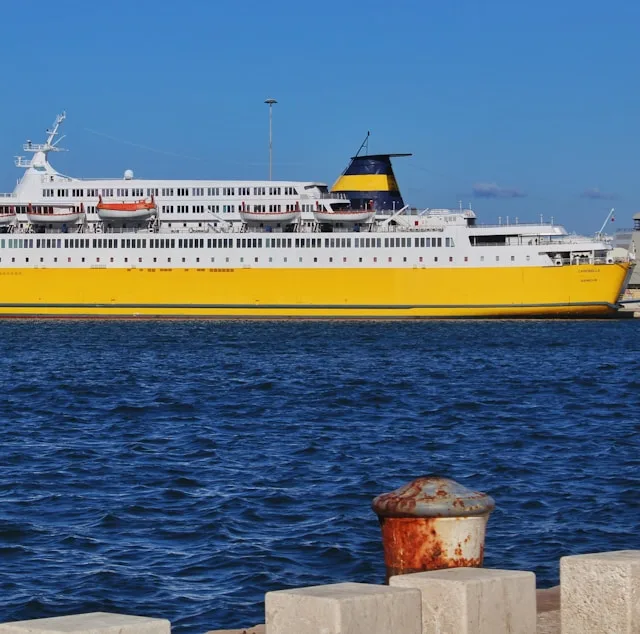
Brindisi's Porto Outer Harbour holds 1.8 million cubic metres of liquid bulk storage. Two thermal generation assets, representing a combined 2,200 MW, sit physically integrated with that terminal infrastructure. ENEL's Federico II coal plant and Edison's Brindisi Nord gas turbine facility together employ over 500 permanent staff and more than 1,500 contracted workers. The employment footprint is real. The infrastructure investment pipeline is real. What is not real is the assumption that a market marked for transition is a market where talent is available.
What follows is an analysis of the structural forces reshaping Brindisi's energy sector, the specific roles that are hardest to fill, the compensation dynamics that are driving candidates away from Southern Italy, and what hiring leaders responsible for this corridor's next phase need to understand before they commit to a search.
The Asset That Cannot Attract the People It Needs to Survive
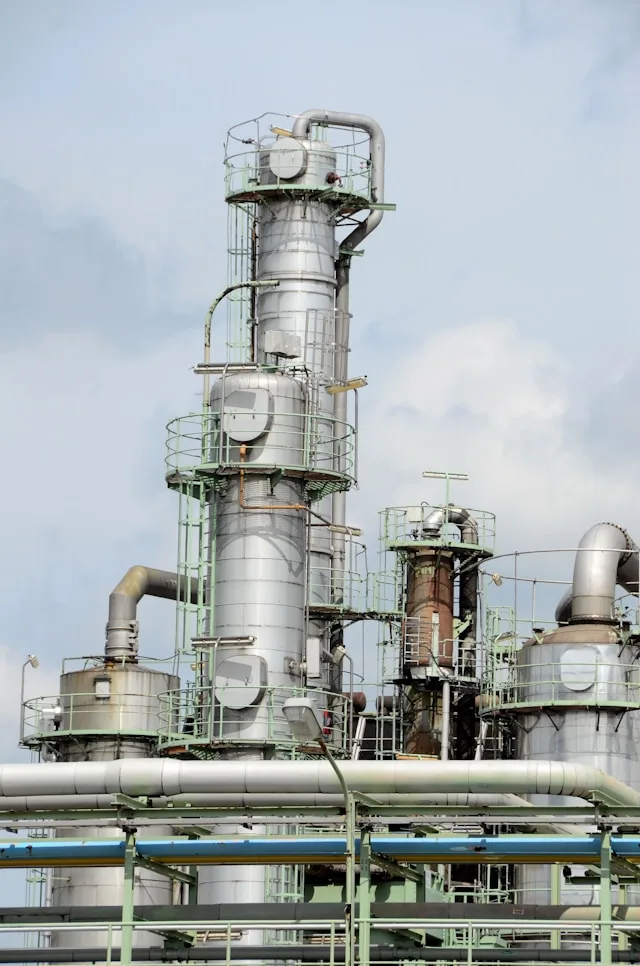
ENEL's Federico II plant in Cerano tells the story of Brindisi's talent paradox in miniature. The 1,320 MW coal-fired facility received a national security-of-supply derogation in late 2023, extending its combustion authorisation to 30 June 2027. The original phase-out date under Italy's National Integrated Energy and Climate Plan (PNIEC) was 2025. That date has passed. The plant is still running.
Operating Federico II safely during its extended life requires the same specialist engineers who would be needed to convert it. ENEL has allocated €220 million for the 2025 to 2027 period to evaluate repowering the site to a 400 MW open-cycle gas turbine with hydrogen readiness, alongside pilot projects for 30% hydrogen co-firing and carbon capture feasibility studies. Final investment decision remains pending grid connection agreements with Terna, Italy's national grid operator.
The workforce consequence is severe. Approximately 380 direct staff and 1,200 indirect workers depend on Federico II's continued operation. Yet the plant emits roughly 1,200 kg CO₂ per MWh, requiring annual EU ETS allowance purchases representing €45 to €60 million in compliance costs, according to ENEL's Q1 2024 results. The combination of regulatory uncertainty, emissions costs, and a public closure narrative has made Federico II the kind of asset that experienced engineers leave rather than join.
This is the paradox at the centre of Brindisi's energy sector: the market treats the asset as simultaneously moribund and operationally critical. New entrants see a plant with an expiry date and choose Milan, Bologna, or Taranto instead. Existing staff approaching retirement see no succession pipeline behind them. The plant cannot attract talent to close safely, let alone talent to convert ambitiously. Capital moved faster than human capital could follow. The €220 million allocation means nothing if the engineers required to execute the conversion do not exist in Brindisi and will not relocate to get there.
Inside the Terminal Cluster: Storage Capacity Meets Strategic Drift
The port's liquid bulk quadrant is operated by a consortium that includes ENI Rewind, Oiltanking Italia (part of the Marquard & Bahls group), and local logistics providers managing chemical and petroleum product flows. Storage capacity breaks down as follows: 60% dedicated to crude oil and middle distillates, 30% to chemicals including methanol and aromatics, and 10% to alternative fuels including bio-LNG.
Throughput reached 5.4 million tonnes in 2023, down 8% from the previous year, driven primarily by reduced coal import volumes for Federico II. The decline is not a sign of market collapse. It is a sign of strategic drift. The terminal infrastructure was built for a fossil fuel economy. The investment pipeline is now pointed at ammonia and methanol bunkering.
The Brindisi Green Hub Proposal
AdSP MAM, the port authority governing Brindisi's maritime infrastructure, forecasts that 40% of liquid bulk investment will shift to ammonia and methanol bunkering infrastructure by 2026. The flagship initiative is the Brindisi Green Hub project: a proposed 200 MW electrolyser coupled with 50,000 tonnes of ammonia storage, targeting export to Northern Europe. The project represents a fundamental reorientation of what the port does and, by extension, what kind of workforce it requires.
What This Means for the Existing Workforce
The Brindisi Green Hub does not eliminate the need for conventional terminal operators. Crude oil and chemical storage will continue to account for the majority of throughput for years. But it creates a parallel demand for professionals who understand ammonia handling, electrolyser operation, and Seveso III safety protocols for substances with very different risk profiles from petroleum products. The existing workforce does not have these skills. The incoming workforce does not yet exist in sufficient numbers to fill the roles the Green Hub will create.
Employment projections illustrate the tension. Direct employment across energy generation and terminal operations is projected to decline from 2,100 FTEs in 2024 to 1,800 FTEs by 2026 if Federico II closes without replacement. Offsetting growth of 400 FTEs in CCS and hydrogen infrastructure depends entirely on whether conversion proceeds. The gap between those two numbers is where the hiring risk sits. Organisations planning for the Green Hub and for Federico II's conversion need to recruit against a timeline that the regulatory environment has not yet confirmed.
The Compensation Gap That Southern Italy Cannot Close
Brindisi's energy employers face a compensation problem that is structural, not cyclical. Senior roles in this market pay 15 to 20% less than equivalent positions in Milan or Bologna, where ENEL and Edison maintain their headquarters and engineering centres. A senior plant manager overseeing CCGT or terminal operations in Brindisi earns a base salary between €85,000 and €110,000, with total compensation including performance bonuses reaching €95,000 to €130,000 according to Mercer Italy's 2024 Southern Region benchmarks.
At VP level, the gap widens. A VP Operations covering Southern Italy thermal assets earns a base of €140,000 to €180,000 and total compensation of €165,000 to €220,000 including long-term incentives. These figures are competitive within Southern Italy's industrial sector. They are not competitive against the offers that Milan and Bologna can extend to the same candidates.
The problem is compounded by a decarbonization premium that Brindisi employers are being forced to pay without having budgeted for it. CCS project directors command 20 to 25% above standard engineering manager compensation due to national scarcity. According to reporting in Il Sole 24 Ore, ENEL's repowering projects in Brindisi and nearby Taranto have engaged in direct recruitment of CCS project engineers from Snam's hydrogen division and the Augusta refinery, with sign-on premiums of 25 to 35% above standard ENEL banding. These premiums are a market signal: the supply of decarbonization specialists in Italy is so thin that employers must overbid their own pay structures to secure them.
For a mid-career process engineer in Milan earning €120,000, the question is straightforward. Move to Brindisi for a role that pays €95,000, at a plant that may close in 18 months, in a region where the cost of living is lower but the career trajectory is uncertain. The maths does not work. It has not worked for several hiring cycles, and there is no indication that it will begin working soon without a fundamental rethink of the compensation and career proposition attached to Brindisi's energy roles.
The Missing Middle: Why Brindisi's Workforce Cannot Train Its Own Replacement
The most underappreciated risk in Brindisi's energy corridor is not the shortage of junior engineers or senior executives. It is the absence of the generation between them.
ENEL's sustainability reporting shows a bimodal age distribution across its permanent workforce: 45% of ENEL and Edison permanent staff are over 50, carrying legacy expertise in coal and gas operations. Thirty percent are under 30, holding generalist engineering degrees but lacking operational experience. The cohort between 35 and 45 years old is thin to the point of structural weakness. Two decades of hiring freezes across Italian utilities created this gap. It cannot be filled retroactively.
The practical consequence is a knowledge transfer crisis. Complex maintenance procedures for aging turbomachinery, safety protocols developed through decades of incident response, and the tacit operational knowledge that keeps a 1,320 MW coal plant running safely during its extended derogation period: all of this resides disproportionately in the heads of workers approaching retirement. The under-30 cohort cannot absorb it fast enough. The 35-to-45 cohort that would normally serve as the bridge barely exists.
This generational void also explains why executive search in this market operates differently from conventional recruitment. Junior engineering roles attract active candidates because Puglia's regional graduate unemployment rate remains high for generalist disciplines. But the senior specialist and management roles that matter most to the transition are held by professionals with average tenure exceeding eight years at their current employers, operating in segments where unemployment sits below 2%. Approximately 75% of viable candidates for VP-level operations roles in the Brindisi hub are employed and not actively seeking new positions, according to Korn Ferry's 2024 Italy Talent Trends data.
The implication is clear. Advertised recruitment reaches the candidates who do not yet have the experience this market needs. The candidates who do have it are not looking, are well compensated where they are, and have no obvious career incentive to move to a market clouded by regulatory uncertainty. Finding them requires direct identification of passive senior talent rather than waiting for applications that will not arrive.
The Competitors Brindisi Is Losing To
Milan and Bologna: The Headquarters Pull
Milan and Bologna are not competing with Brindisi on the same terms. They offer corporate advancement trajectories that Brindisi's operational sites cannot match. A process engineer in Brindisi manages a plant. The same engineer in Milan manages a portfolio of projects across multiple sites, with visibility to group leadership and a path to director-level roles. The 25 to 35% compensation premium that Milan commands over Brindisi is only part of the calculation. The career premium is larger and harder to quantify.
This is why the talent pipeline for Southern Italy's energy corridor leaks at mid-career. Engineers join operational sites in Brindisi for their first or second role, gain hands-on experience, and then move north as soon as their expertise becomes portable. The site retains the training cost. Milan captures the productive years.
Taranto: The Direct Rival
Taranto's steelworks decarbonization project, managed through the ArcelorMittal and Invitalia partnership, is actively recruiting the same turbomachinery and high-temperature process engineers that Brindisi needs. According to reporting in La Repubblica Bari, Taranto offers relocation packages and retention bonuses that Brindisi operators have not been able to match. The overlap in candidate profiles is almost total: both markets need Seveso-qualified HSE managers, both need CCGT specialists, and both need professionals who understand large-scale industrial conversion from fossil to alternative fuel sources.
Taranto has one advantage Brindisi does not. Its transformation narrative is louder. The Ilva steelworks restructuring is a national story. Federal investment, media attention, and political commitment have all converged on Taranto's transition. Brindisi's energy corridor, by contrast, operates in relative obscurity. The quieter narrative means fewer candidates think of Brindisi when they consider where the interesting work is happening.
Augusta: The International Option
The Syracuse petrochemical hub in Sicily offers industrial profiles similar to Brindisi's but with marginally higher expatriate packages for international engineers. For a German or Dutch process safety specialist considering a Southern Italian assignment, Augusta's established petrochemical cluster and its connections to international energy companies present a more legible career story than Brindisi's still-forming transition identity.
The combined effect of these three competitive fronts is that Brindisi is not simply competing for scarce talent. It is competing for scarce talent against locations that offer better pay, clearer career paths, or stronger transformation narratives. Winning any individual search in this market requires a proposition that addresses all three deficits simultaneously.
What This Market Demands From a Hiring Strategy
The critical roles in Brindisi's energy hub fall into three tiers, each with distinct recruitment challenges.
At senior specialist and manager level, the market needs process safety engineers with Seveso III and ATEX qualifications for the ammonia and LNG storage infrastructure now being planned. It needs CCGT maintenance managers with Alstom or GE turbine overhaul expertise for Edison's Brindisi Nord facility. It needs carbon capture technologists capable of running pilot operations at Federico II. Unioncamere Puglia's Excelsior survey data shows vacancy fill rates of 23% for CCS-experienced process engineers and 31% for Seveso-qualified HSE managers across Puglia's industrial sector. These are not figures that improve with a better job advertisement. They reflect a supply constraint that no volume of applications can solve.
At executive level, three roles define the transition. A VP Operations covering Southern Italy's 2,200 MW thermal generation portfolio. A Country Head of Terminals and Logistics managing the AdSP interface and alternative fuels transition. And a Chief Transition Officer with a specific mandate to manage Federico II's conversion or decommissioning, reporting to group CEO level. These are roles where the candidate universe is not just small. It is knowable. The number of professionals in Italy with the right combination of thermal asset management experience and decarbonization project delivery capability can be counted in dozens, not hundreds.
Hiring cycles illustrate the scale of the problem. Control room operator positions at CCGT facilities in this market have seen average time-to-fill extend from 45 days in 2021 to 110 days through 2024, with senior positions reportedly remaining open for eight months or longer due to insufficient candidates holding TUV-certified turbomachinery credentials. That is not a recruitment process problem. That is a market intelligence problem. The candidates exist, but they are employed, passive, and working in facilities that have no interest in releasing them.
The conventional search playbook fails here for a specific reason. Brindisi's energy transition roles sit at an intersection that barely existed five years ago: professionals who understand both legacy thermal operations and next-generation decarbonization technology. Job boards surface candidates who have one or the other. Finding candidates who hold both requires direct identification and engagement methods that go beyond advertised recruitment.
The Regulatory Fog That Makes Every Search Harder
Every hiring challenge described above is compounded by a single structural factor: no one knows with certainty what Brindisi's energy hub will look like in 2028.
Federico II's gas conversion requires ministerial authorisation that has not been granted. Terna's grid development plan shows 18 to 24 months of connection queue delays for new renewable capacity in Southern Italy, threatening the economics of terminal electrification projects. Local opposition groups have secured judicial injunctions delaying terminal expansion permits on three occasions since 2022, citing PM10 and NO₂ exceedances documented by ARPA Puglia. This litigation risk increases the weighted average cost of capital for storage investments by an estimated 150 to 200 basis points.
For a candidate evaluating a move to Brindisi, the regulatory fog translates into a career risk calculation. Accept a role at a facility whose future depends on government approvals that may never arrive, grid connections that face two-year queues, and local opposition that has successfully delayed projects in court. Or stay in a current role that, while less exciting, carries no existential ambiguity.
This is why the cost of a failed or prolonged search in this market is not merely financial. Every month a critical role remains unfilled is a month closer to a hard regulatory deadline that will not move. The 2027 closure date for Federico II is not aspirational. It is statutory, absent further derogation. Organisations that cannot secure the engineering leadership to manage conversion by mid-2026 will find themselves managing decommissioning instead. That is a different outcome with different workforce requirements and considerably less strategic value.
The talent scarcity in Brindisi's energy hub is not a temporary friction that resolves as the market matures. It is embedded in the structure of the transition itself. The skills this market needs exist at the intersection of two domains that Italian industry separated for decades. Thermal operations and decarbonization engineering developed as parallel career tracks, not integrated ones. Brindisi now needs both in the same person, and the pipeline of professionals who straddle both disciplines is a fraction of the size that this market's investment ambitions require. The investment capital is allocated. The infrastructure plans are drawn. The authorisations are progressing, however slowly. The constraint is human capital, and it is the one variable that cannot be accelerated by ministerial decree.
For organisations hiring into Brindisi's energy transition, where 75% of the candidates who can fill the most critical roles are not visible on any job board and the cost of delay compounds against a fixed regulatory deadline, start a conversation with our executive search team about how KiTalent approaches this market. KiTalent delivers interview-ready executive candidates within 7 to 10 days through AI-enhanced identification of passive senior talent, with a 96% one-year retention rate for placed candidates. In a market where the margin between conversion and decommissioning depends on securing the right leader at the right time, the method of search determines the outcome.
Frequently Asked Questions
What are the most critical executive roles in Brindisi's energy sector in 2026?
The three highest-priority executive roles are VP Operations for Southern Italy's thermal generation portfolio covering 2,200 MW of capacity, Country Head of Terminals and Logistics managing the port authority interface and alternative fuels transition, and Chief Transition Officer responsible for Federico II's conversion or decommissioning. Each role requires a rare combination of legacy thermal asset expertise and decarbonization project delivery experience. The candidate universe for these positions in Italy numbers in the dozens, making direct headhunting the only viable search method for most hiring organisations.
Why is it so hard to hire energy engineers in Southern Italy despite high regional unemployment?
Puglia's overall unemployment rate stands at 8.9%, well above the national average of 6.9%. This creates a misleading impression of labour market availability. For the specialised roles Brindisi's energy hub requires, such as Seveso-qualified HSE managers and CCS-experienced process engineers, unemployment sits below 2% and vacancy fill rates are between 23% and 31%. Macroeconomic slack does not translate into microeconomic talent availability for energy transition specialists.
What does a senior energy executive earn in Brindisi compared to Milan?
A senior plant manager in Brindisi earns a base salary of €85,000 to €110,000 with total compensation reaching €130,000. The same role in Milan commands 25 to 35% more. At VP Operations level, total compensation in the Brindisi corridor ranges from €165,000 to €220,000 including long-term incentives. CCS project directors earn a further 20 to 25% premium above standard engineering manager bands due to national scarcity in decarbonization expertise.
What is happening with ENEL's Federico II coal plant in Brindisi?
Federico II, a 1,320 MW coal-fired plant, received a derogation extending operations to 30 June 2027 beyond the original 2025 phase-out. ENEL has allocated €220 million to evaluate repowering to a 400 MW gas turbine with hydrogen readiness, but final investment decision depends on grid connection agreements. The facility employs approximately 380 direct staff and 1,200 contractors. Its future hinges on ministerial authorisation that has not yet been granted.
How does KiTalent approach executive recruitment in niche energy markets like Brindisi?
KiTalent uses AI-enhanced talent mapping to identify and engage the passive candidates who dominate specialised energy markets. In Brindisi's energy hub, approximately 75% of viable senior candidates are employed and not actively seeking new roles. KiTalent's direct search methodology reaches these professionals within 7 to 10 days, delivering interview-ready candidates through a pay-per-interview model with no upfront retainer, supported by a 96% one-year retention rate across 1,450 completed executive placements.
What is the Brindisi Green Hub project?
The Brindisi Green Hub is a proposed initiative led by AdSP MAM, the port authority, to build a 200 MW electrolyser coupled with 50,000 tonnes of ammonia storage at the port, targeting ammonia and methanol export to Northern Europe. It represents a shift of 40% of liquid bulk investment toward alternative fuel bunkering infrastructure. The project will create demand for specialised roles in hydrogen and ammonia handling that currently have no established candidate pipeline in the region.