Brindisi Tourism in 2026: Why €45 Million in Port Investment Has Not Solved the Talent Problem

Brindisi's port is getting a new cruise terminal, shore power electrification, and the capacity to berth two ships simultaneously for the first time. The city's hotels are not getting the people they need to run them. This is the central contradiction shaping Brindisi's tourism and hospitality sector in 2026: capital is arriving faster than human capital, and the gap between the two is widening with every season.
The numbers expose the problem clearly. PNRR funding has committed €45 million to port modernisation. Cruise calls rose from 42 in 2022 to 85 programmed for 2025, with further growth projected into 2026. Yet 38% of hospitality management graduates from Brindisi's own technical institute emigrate to northern Italy or international markets within eighteen months of completing their training. Hotel occupancy in the urban core averages just 34% annually, and the seasonal employment swing between summer and winter strips out 2,400 full-time equivalent positions every year. Infrastructure is expanding. The workforce is contracting.
What follows is an analysis of the forces driving this divergence, what it means for employers competing for scarce hospitality and maritime operations talent, and why the organisations that treat Brindisi as a seasonal hiring problem rather than a systemic retention challenge will continue to lose the people they need most.
A Port Expanding Into a Talent Vacuum
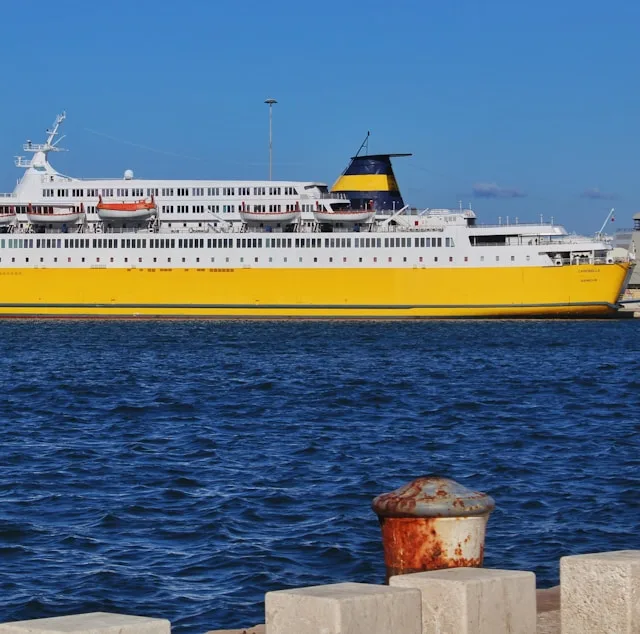
The completion of the Molo di Ponente B cruise terminal marks a genuine inflection point for Brindisi's maritime passenger operations. For the first time, the port will handle two cruise vessels simultaneously, lifting daily passenger capacity to 6,000. Grimaldi Group's deployment of Cruise Roma class vessels on the Brindisi-Patras route is projected to push ferry passenger movements toward 500,000 annually. MSC Cruises and Costa Crociere have introduced overnight stays on 12 itineraries, a deliberate test of whether Brindisi can absorb visitors who stay rather than transit.
These are material developments. But they land in a city with 1,850 hotel rooms, only 320 of which sit in the four-star and five-star categories. The two confirmed boutique hotel projects for 2026, Palazzo Granafei-Nervegna (45 rooms) and the former Naval Arsenal waterfront conversion (75 rooms under JHD Dunant Hospitality), represent a 6.5% increase in urban room stock. Against projected cruise growth of 25% or more, this is not enough.
The constraint is not primarily one of bricks and mortar. Coastal zone restrictions under Decreto Legislativo 194/2021 limit new construction within 300 metres of the high-water line. This protects existing properties but prevents any rapid capacity response. The real bottleneck, however, is operational. Every new hotel room requires staff. Every new cruise call requires multilingual coordinators, terminal managers, and shore excursion logistics professionals. These people are not available in sufficient numbers. And the ones who are qualified are overwhelmingly not looking.
Port Terminal Directors in this region are 90% or more passive, meaning they are employed, settled, and will not respond to a job advertisement. The pool of ferry operations managers with Greek-language proficiency and STCW certification numbers an estimated 45 qualified professionals across all of Southern Italy. One hundred per cent of them must be approached directly. The traditional methods of posting a role and waiting for applications reach a fraction of the talent that actually exists in markets like this.
The Seasonal Trap That Drives Talent Away
Brindisi's hotel occupancy ratio tells the structural story better than any single statistic. At 78% in July and August, the city's hotels are busy. At 18% in January and February, they are nearly empty. This 4.3:1 seasonal ratio exceeds the Italian national average of 2.8:1. It is not a fluctuation. It is the defining characteristic of Brindisi's hospitality labour market.
What Seasonality Does to the Workforce
The practical consequence is stark. Restaurant and hospitality employment peaked at 4,200 FTEs in August 2024 and contracted to 1,800 FTEs by January 2025, according to Unioncamere Puglia's Excelsior monitoring system. That means 2,400 hospitality workers either moved to other cities, took non-hospitality work, or were unemployed for months. For junior staff, this is the accepted rhythm of seasonal work. For experienced managers, revenue specialists, and multilingual coordinators, it is a reason to leave permanently.
The Emigration Pattern
IRES Puglia's research on the qualified labour market in the region documents the mechanism. Skilled hospitality workers facing the 78% summer-to-18% winter occupancy swing emigrate to Rome or Milan for year-round stability. The ITS Accademia del Mediterraneo, Brindisi's own technical hospitality institute, tracked its alumni and found that 38% relocated to northern Italy or abroad within eighteen months of graduating. The city is investing in training people who leave.
This is the point most employers in this market miss. The talent shortage is not caused by a lack of training infrastructure or insufficient interest in hospitality careers. It is caused by the economic structure of the market itself. No amount of recruitment advertising will fix a problem rooted in the inability to offer twelve-month employment at competitive rates. The organisations that retain talent in Brindisi are the ones that have found ways to offer year-round roles, either through diversified operations or by combining seasonal hospitality work with off-season functions. Those that have not face the same search failures repeatedly, losing candidates to the same northern Italian competitors every cycle.
Compensation: Competitive Enough to Hire, Too Low to Retain
Compensation in Brindisi's tourism and maritime operations sector is not dramatically below market for Southern Italy. But it sits in an uncomfortable middle range: sufficient to attract candidates who have no other options, insufficient to hold candidates who develop alternatives.
A Hotel General Manager for a four-star urban property in Brindisi earns €70,000 to €95,000. In the broader Salento luxury segment, centred on Lecce and Otranto, equivalent five-star roles reach €110,000. In Bari, 115 kilometres north, the same position pays 25% to 35% more, with the added stability of year-round conference business and a cruise passenger volume three times Brindisi's.
For maritime operations, the pattern is similar. A Terminal Operations Manager in Brindisi earns €52,000 to €68,000 plus port productivity bonuses. A Shipping Line Country Manager overseeing the Italy-Greece ferry corridor commands €95,000 to €130,000, but roles at this level are scarce. The real compensation competition for maritime talent comes from Athens and Piraeus, where Greece's maritime tax regimes deliver net salaries 15% to 20% higher, and from the scale of operations at ports like Mina Rashid in Dubai or Barcelona, where cruise terminal management executives earn a 40% to 60% premium over Brindisi equivalents.
The Revenue Manager Problem
The most telling compensation case is the hotel Revenue Manager. In Brindisi, this role pays €38,000 to €52,000, and properties increasingly offer remote or hybrid arrangements because they cannot otherwise attract candidates. The reason is straightforward. Revenue management and digital marketing roles now compete with remote positions paying Milan or Turin rates while permitting residence anywhere in Puglia. A Revenue Manager working remotely for a northern Italian hotel group earns a northern Italian salary without relocating. A Brindisi hotel offering a local rate for an on-site role simply cannot compete.
The result is documented. A pattern typical of mid-scale hotels in this market shows Revenue Manager positions remaining vacant for four to six months. In one reported instance, Hotel Orientale in Brindisi's centre advertised the role from March 2024 through September 2024 without a suitable hire, ultimately outsourcing the function to a remote consortium based in Milan. This is not an isolated case. It is the default outcome when a critical role sits in a compensation band that does not reflect the actual market rate required to move a qualified candidate.
The compensation data matters for any organisation planning to hire in this market. Understanding what roles actually cost, not what the budget assumes, is the difference between a successful search and a six-month vacancy. Market benchmarking at this level of specificity is not optional in a talent-scarce environment.
Where the Real Shortages Sit
Unioncamere Puglia's Excelsior system projected 1,240 new hires in tourism and hospitality for Brindisi province in 2025, against 890 available profiles. That is a 28% structural shortfall before any qualitative filtering.
The shortfall concentrates in four categories, each with distinct characteristics.
Maritime Operations Leadership
Port operations and maritime logistics management roles require a combination of maritime law knowledge, Greek and Albanian customs protocol expertise, and passenger terminal management certification. A search for a Passenger Terminal Operations Manager with STCW certification and Greek language proficiency typically runs 90 to 120 days, compared with 45 days for a generic logistics position. The candidate pool is almost entirely passive. Seventy-eight per cent of qualified professionals in this niche are employed and not actively searching, according to Puglia's professional competencies observatory. Filling these roles requires direct identification and approach of candidates at competing ports in Bari, Ancona, and Venice.
Multilingual Guest Experience Management
The ferry routes to Igoumenitsa and Patras create a specific language requirement that has no equivalent in most Italian hospitality markets. Guest Experience Managers who operate in Greek, English, and Italian are critical for ferry coordination and cruise reception. The trilingual requirement alone reduces the candidate pool by 65%. In 2024, according to industry reporting in Shipping Agent Magazine Italy, Grimaldi Lines' Brindisi operations recruited a Passenger Services Manager from competitor Ventouris Ferries, with a compensation premium of 18% to 22% above the standard scale, to secure the Greek-language operational expertise they needed. This is the reality of hiring in a market where the total national pool of qualified candidates can be counted in dozens rather than hundreds.
Executive Chefs for Large-Scale Operations
Ferry catering subcontractors such as Neptune Catering Services, which supplies Grimaldi vessels, and large beach club operations require executive chefs with high-volume catering experience. CNA Puglia's skills survey identified a shortage of 35 such profiles province-wide for the 2025 season. This is a talent pipeline challenge as much as an immediate hiring problem: the training pathway for this specialism is poorly developed in Southern Italy, and the seasonal nature of much of the work discourages investment in it.
Hotel Revenue and Digital Distribution Directors
As described in the compensation section, this role sits at the intersection of a skills mismatch and a location mismatch. The candidates who can do the job are working remotely for better-paying employers. The candidates who are locally available typically lack the OTA distribution and dynamic pricing expertise that four-star properties require. For every ten applications received for a Revenue Manager position in Brindisi, approximately 1.2 meet qualification standards. Of those, 0.3 are currently unemployed and actively searching. The passive-to-active ratio for this role runs at approximately 7:1.
The Broken Link Between Ferry Traffic and Hotel Revenue
One of the most important findings in recent market data challenges a foundational assumption about Brindisi's hospitality economy. Ferry passenger movements increased 14% between 2022 and 2024. Over the same period, urban hotel RevPAR in Brindisi city centre grew only 3.2%, underperforming the provincial average of 6.1%.
The implication is that the connection between ferry traffic and local hotel demand is weaker than commonly assumed. Eighty per cent of ferry passengers continue to Greece within four hours. Cruise passengers average 0.3 hotel nights per visit due to same-day turnarounds and the proximity of Brindisi Airport. The passengers are physically present in Brindisi, but they are not staying. They are not filling hotel rooms, not eating in city-centre restaurants at rates that sustain year-round employment, and not generating the overnight revenue that justifies permanent hospitality staffing levels.
Meanwhile, Brindisi Airport handled 2.8 million passengers in 2023, with 78% concentrated between June and September. But the airport's passenger volume exceeds the city centre's hotel capacity during peak weeks. The overflow goes to Carovigno, Ostuni, and the Valle d'Itria corridor, 40 kilometres north, where agriturismo properties like Masseria Brancati employ staff year-round. The hospitality revenue that Brindisi's infrastructure generates leaks to surrounding municipalities. The talent follows the revenue.
This is the analytical insight that reframes the entire market. Brindisi is not short of visitors. It is short of reasons for visitors to stay in Brindisi itself. And until the city's hospitality offer creates those reasons, through better accommodation, extended cruise itineraries with overnight stays, and a service quality that justifies premium rates, the talent challenge will remain systemic rather than cyclical. Capital investment in the port addresses half the equation. The other half requires employers to solve a human capital problem that infrastructure spending alone cannot reach.
Competitive Pressures From Every Direction
The talent retention challenge is compounded by the geography of competition. Brindisi does not only compete with other Southern Italian cities. It competes across three distinct talent markets, each targeting a different professional category.
Bari, 115 kilometres north, is completing its €200 million Porto 2000 expansion. When it reaches full operation, Bari will offer superior vessel turn times, deeper draft for larger ships, and a cruise passenger volume that already runs at three times Brindisi's level. For hospitality and maritime operations professionals weighing career options, Bari offers higher compensation, greater job security through year-round activity, and a more developed conference and business tourism sector. The cost of living differential of approximately 18% is offset by the compensation premium. Brindisi loses mid-career talent to Bari consistently.
For senior maritime professionals, particularly those with ferry operations experience on the Greece corridor, the competition comes from Athens and Piraeus. Greek operators such as Attica Group and ANEK offer not only higher net salaries under Greece's maritime tax regime but exposure to larger fleet operations and broader career development. Italian maritime labour regulations under the C.C.N.L. Marittimi impose rigid crew rotation and cost structures that push some operators toward Greek-flagged vessels, reducing local employment generation in the process. The regulatory environment itself becomes a talent export mechanism.
For under-35 multilingual professionals with cruise hospitality or terminal management ambitions, the competition is global. Dubai and Barcelona offer tax-advantaged or dramatically higher base compensation, continuous career development, and the year-round operational rhythm that Brindisi cannot match. This brain drain affects precisely the talent cohort that Brindisi's expanding cruise operations most urgently need.
The practical consequence for hiring executives is that any search for leadership-level talent in this market is an international search whether you intended it that way or not. The candidates you need may be in Bari, Athens, Barcelona, or Dubai. Reaching them requires a method that goes beyond local job advertising and into systematic identification, mapping, and direct engagement across borders.
What Hiring in This Market Actually Requires
The convergence of infrastructure expansion, talent scarcity, and competitive pressure creates a hiring environment where conventional recruitment methods consistently underperform. An employer posting a Port Terminal Director role on Italian job boards reaches, at best, the 10% of candidates who are actively searching. The 90% who are passive, employed, and not monitoring job listings will never see the posting.
For organisations hiring into Brindisi's hospitality and tourism sector at the leadership level, the search methodology matters as much as the compensation offer. A Revenue Manager search that runs six months is not merely inconvenient. It means six months of a General Manager absorbing a function they are not trained for, six months of suboptimal pricing decisions, and six months of revenue leakage that compounds through the peak season. The cost of a prolonged vacancy at this level is measured in operational degradation, not just recruiter fees.
The EU Emissions Trading System implementation for maritime transport in 2026 adds further complexity. Estimated cost increases of €8 to €12 per passenger ticket on the Greece route may suppress demand or shift volume to Bari. Operators already facing environmental compliance costs under IMO Carbon Intensity Indicator regulations are evaluating route competitiveness. These regulatory shifts will reshape workforce planning across the ferry sector. The organisations that have already secured their operational leadership are better positioned to adapt. Those still carrying vacancies are exposed.
KiTalent works with organisations facing exactly this pattern: a market where the qualified candidates are passive, the competition for them is international, and the cost of a slow search is measured in operational and strategic terms rather than mere inconvenience. Delivering interview-ready executive candidates within 7 to 10 days through AI-enhanced talent mapping reaches the professionals who are not visible on any job board. With a 96% one-year retention rate across 1,450 completed executive placements, and a pay-per-interview model that eliminates upfront retainer risk, the approach is built for markets where precision and speed both matter.
For organisations competing for hospitality leadership, maritime operations management, or revenue and distribution talent in Brindisi and the broader Puglia market, where 78% of the candidates you need are employed elsewhere and the seasonal economics of the market work against you, speak with our executive search team about how we approach this challenge.
Frequently Asked Questions
What is the average salary for a Hotel General Manager in Brindisi?
A General Manager for a four-star urban hotel in Brindisi earns between €70,000 and €95,000. Luxury five-star properties in the broader Salento area, centred on Lecce and Otranto, reach €110,000. Brindisi's rate caps lower than the provincial luxury segment due to rate limitations on urban properties. Bari offers 25% to 35% more for equivalent roles, with year-round conference business providing greater job stability. Understanding these differentials is essential when structuring an offer that will attract a candidate from a competing market, and compensation benchmarking for hospitality leadership roles should precede any search.
Why is it so hard to hire a Revenue Manager for hotels in Brindisi?
The difficulty is structural. Revenue management roles now compete with remote positions paying Milan or Turin rates while allowing candidates to live anywhere in Southern Italy. A Brindisi hotel offering €38,000 to €52,000 for an on-site role cannot match a northern Italian hotel group offering €55,000 or more for remote work. The passive-to-active ratio for qualified Revenue Managers in this market runs approximately 7:1, meaning only a small fraction of qualified candidates are actively searching. Traditional job advertising reaches a fraction of the available pool.
How many cruise passengers does Brindisi receive annually?
Brindisi received approximately 85,000 cruise passengers in 2023 across 68 ship calls. For 2025, 85 calls were programmed, with further growth expected as the new Molo di Ponente B terminal reaches completion in 2026, enabling two simultaneous vessel berths and a daily capacity of 6,000 passengers. However, Brindisi remains considerably smaller than Bari (320,000 passengers) and Taranto (150,000) within the same regional port system.
What talent shortages affect Brindisi's tourism sector most severely?
Four categories face the most acute shortages. Maritime operations managers with Greek-language proficiency and STCW certification, where the total Southern Italian pool is estimated at 45 professionals. Multilingual guest experience managers combining Greek, English, and Italian. Hotel revenue managers, who are being lost to remote positions at northern Italian pay rates. Executive chefs with large-scale catering experience for ferry and beach club operations. For the most senior roles, KiTalent's direct headhunting methodology is specifically designed to reach the passive professionals who will never respond to a job posting.
How does seasonality affect hiring in Brindisi's hospitality sector?
Brindisi's hotel occupancy swings from 78% in July and August to 18% in January and February, a 4.3:1 seasonal ratio exceeding the national average of 2.8:1. Hospitality employment drops from 4,200 FTEs in peak summer to 1,800 in January. This extreme seasonality drives skilled managers and specialists to relocate to cities offering year-round employment, with 38% of hospitality graduates from Brindisi's technical institute leaving the region within eighteen months of completing their studies.
What infrastructure changes are planned for Brindisi's port by 2026?
The PNRR-funded Brindisi Green Port initiative has committed €45 million to dredging and electrification, with shore power for cruise vessels targeted for completion by late 2026. The new Molo di Ponente B cruise terminal will double simultaneous vessel capacity. Grimaldi Group is deploying Cruise Roma class vessels on the Brindisi-Patras route. However, the 2026 EU Emissions Trading System for maritime transport will add an estimated €8 to €12 per passenger ticket on Greece routes, potentially affecting demand volumes.