Brindisi Port's Ro-Ro Boom Has Exposed a Talent Market That Regional Unemployment Cannot Fix
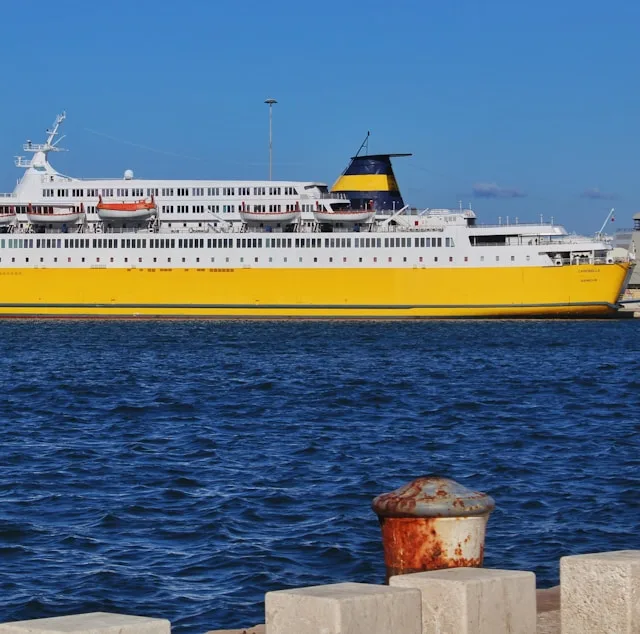
Brindisi handled more rolling freight in 2025 than at any point in the previous decade. The port's Ro-Ro ferry cluster, anchored by Grimaldi Group, Ventouris Ferries, and European Seaways, now processes approximately 78% of the port's non-liquid general cargo throughput, with new route expansions to Albania and Montenegro adding further volume. By every operational measure, this is a port whose core commercial function is accelerating.
The problem is not cargo. It is people. The Corps of Maritime Pilots for Brindisi has been operating at 80% establishment strength since mid-2023, with two vacancies unfilled for over eighteen months. Ro-Ro terminal managers are being poached between Brindisi, Taranto, and Bari at salary premiums that exceed Northern Italian norms for equivalent roles. Port operations specialists who can coordinate digital customs platforms, intermodal rail connections, and high-frequency ferry schedules are, in practical terms, not available on the open market. This is happening in a province where unemployment sits above 14%.
What follows is an analysis of why Brindisi's maritime and logistics sector produces acute talent scarcity inside one of Italy's softest labour markets, where the gaps are deepest, and what hiring leaders responsible for this corridor need to understand before they commit to a search in this market.
The Ro-Ro Anchor: What Brindisi's Port Actually Does
Brindisi's identity as a commercial port is often misunderstood from outside the Adriatic corridor. The port is not a container gateway. It is not competing with Gioia Tauro or even Taranto for deep-sea transhipment volumes. It is, first and foremost, a Ro-Ro ferry hub connecting Southern Italy to Greece, the Western Balkans, and the broader Eastern Mediterranean.
According to the Autorità di Sistema Portuale del Mare Adriatico Orientale (AdSP MAO), Ro-Ro freight units including trailers, trucks, and Mafi trailers accounted for roughly 78% of non-liquid general cargo throughput as of the most recent annual reporting period. Grimaldi Lines operates the primary Ro-Ro ramp at Calata Ancona in the Costa Morena basin, with four dedicated berths and 1,200 linear metres of quay capable of processing 1,200 freight units per day. Ventouris Ferries and A-Ships Management share facilities at Calata Risorgimento. European Seaways provides short-sea links to Corfu and, as of summer 2025, expanded services to Vlorë and Bar.
This creates a dense ecosystem of ship agencies, customs brokers, and road haulage contractors concentrated in the Darsena di Ponente and Costa Morena basins. It also creates a very specific talent profile. The skills that run this port are not generic supply chain competencies. They are specialisms in Ro-Ro stowage engineering, ferry loadmastering, and high-frequency vessel turnaround coordination. The talent market is shaped by that specificity.
The Container Terminal: Present but Marginal
The Terminal Container Brindisi (TCB) at Darsena Ponente, operated under concession by a Medlog/MSC-affiliated entity, tells a different story entirely. The terminal's installed capacity sits at an estimated 250,000 TEU annually. In 2023, it handled 48,000 TEU. Utilisation rates hovered between 20% and 25% through 2024 and 2025, according to AdSP MAO's operational planning documents.
The terminal functions primarily as a feeder and empty-depot facility. Major container lines prefer the intermodal rail connections available at Taranto Container Terminal or the Bari-based Medcenter facilities. Container throughput is expected to remain flat at 45,000 to 55,000 TEU annually unless a new feeder service agreement materialises. AdSP MAO has been negotiating with Ocean Network Express (ONE) and Hapag-Lloyd for Adriatic hub-and-spoke connections, according to Lloyd's List, but no confirmed service had been announced as of early 2026.
The concession itself expires in 2026. Delays in the EU-mandated competitive tendering process risk operational stagnation, a factor that compounds the hiring challenge for any terminal director or operations manager considering a move to Brindisi's container side. Who takes a senior role at a facility whose commercial future is structurally uncertain?
The Infrastructure Paradox: €142 Million Targeting the Wrong Bottleneck
Here is the analytical tension at the centre of Brindisi's port story. The National Recovery and Resilience Plan (PNRR) has allocated €142 million to AdSP MAO for Brindisi's "Port of the Future" initiative. This is real capital, arriving at a port that genuinely needs modernisation. But the investment profile and the traffic profile are misaligned in a way that has direct implications for executive hiring across the port's leadership roles.
The PNRR funds target shore-power infrastructure (cold ironing) for ferry berths, with completion scheduled for the second quarter of 2026. They target rail last-mile electrification and digitalisation of port gates, expected to lift rail modal share from 12% to 18%. They target the digital port community system (PortSingleWindow) and blockchain-based cargo tracking. These are measures typically associated with container gateway modernisation.
Yet the port's growth is concentrated in Ro-Ro ferry traffic, which requires less sophisticated terminal infrastructure but far greater road hinterland efficiency. The primary constraint on Ro-Ro growth is not port-side capacity. It is the SS16 Adriatica state highway, which carries heavy tourist traffic in summer and extends truck turnaround times by an average of 3.5 hours during peak season, according to ANFIA's 2024 transport analysis.
Rail: The Bottleneck That Defines the Talent Need
The Brindisi port railway connects to the Adriatic main line at Brindisi Centrale, but several quay branches lack electrification. This limits electric locomotive access. The result: only 12% of containerised cargo and 8% of Ro-Ro units exit the port by rail, compared to 35% at Taranto Container Terminal.
This single data point explains much of the talent challenge. The professionals who can manage intermodal road-rail-sea combinations for the Greece-Italy-Northern Europe corridor are the same professionals Taranto needs. They are the same professionals Bari needs. They are not the same professionals Puglia's technical institutes and maritime schools produce. The education system turns out generalist logistics operatives. The port demands internationally certified intermodal specialists. Capital has moved faster than human capital can follow.
The Talent Paradox: 14% Unemployment and Nobody to Hire
Puglia's unemployment rate stood at 14.2% in the third quarter of 2024, more than double the national average of 6.8%. Youth unemployment ran at 33.5%. These are numbers that suggest a loose labour market, one where employers should be able to fill roles easily and negotiate from strength.
The port sector tells the opposite story. The Corps of Maritime Pilots for Brindisi has operated with two vacancies since mid-2023, representing a 20% shortfall against establishment strength. The bottleneck is not compensation. It is the qualification threshold: ten years of bridge officer experience and local residency quotas. As Il Sole 24 Ore reported in late 2023, the Adriatic-wide shortage of qualified maritime pilots has made every recruitment round a zero-sum competition between ports.
For Port Operations Managers, the dynamic is different but equally constrained. Industry sources note that Medcenter Container Terminal and Taranto Container Terminal engaged in competitive hiring of Ro-Ro terminal managers throughout 2023 and 2024, with packages exceeding €100,000 annually. These are salaries that exceed standard Puglia logistics compensation by 25-30%. Yet the pool of candidates with the right combination of terminal P&L experience, concession compliance knowledge, and AdSP MAO relationship management is vanishingly small.
The professionals holding these roles are predominantly passive candidates. According to ANPAL Servizi's analysis of the maritime transport labour market, specialists in port operations management, maritime pilotage, and Ro-Ro loadmastering have average tenure exceeding eight years and function-specific unemployment below 2%. They are not on job boards. They are not responding to advertisements. A conventional recruitment approach that relies on inbound applications reaches, at best, the margins of this candidate pool.
The Skills the Port Needs Next
The PNRR-funded digital transition adds another dimension to the scarcity. AdSP MAO's digital plan requires expertise in Port Community Systems, specifically the Italian PortSingleWindow platform and blockchain-based cargo tracking. These are not legacy maritime skills. They sit at the intersection of technology and logistics operations, and the professionals who hold them are being recruited by every modernising port authority in Italy simultaneously.
Ro-Ro stowage and lashing engineering, certified by the Italian Naval Registry (RINA), remains another persistent gap. This is a naval architecture specialism with a training pipeline measured in years, not months. The pool does not expand on the timeline of a single hiring cycle.
Compensation: Where Brindisi Sits in the Adriatic Corridor
Understanding the compensation dynamics in this market requires mapping Brindisi against its three talent competitors: Bari, Taranto, and Northern Italy.
Brindisi's senior specialist and manager-level compensation for port operations roles ranges from €55,000 to €75,000 for professionals with five to eight years of experience. At executive and terminal director level within multinational operators, the range extends to €95,000 to €130,000. Ro-Ro and ferry operations managers sit between €48,000 and €65,000 at manager level, rising to €85,000 to €110,000 for Port Captains and Agency Directors.
Maritime Pilots command €70,000 to €90,000 at Second Class level and €110,000 to €140,000 at First Class or Deputy Harbour Master level. These are public tariff-linked figures that move slowly and are largely non-negotiable, which is precisely why the pilot shortage is so difficult to address through compensation alone.
Bari, 50 kilometres north, typically commands a 10-15% salary premium over Brindisi for equivalent logistics manager roles. This reflects Bari's larger intermodal platform and more diversified cargo base. But the more consequential competitor is Taranto. Taranto Container Terminal, operated by Terminal Investment Limited (a TIL/MSC entity), offers packages tied to MSC Group standards with superior rail connectivity to Milan. The result, according to TCT's own reporting, is a consistent movement of mid-level managers away from Brindisi toward Taranto's terminal operations.
Northern Italy represents a different category of competition entirely. Milan and Verona attract senior executives with salaries 40-50% higher than Brindisi equivalents. Cost-of-living differentials partially offset this gap, but for a Terminal Director or Country Logistics Director weighing a career move, the calculation is not purely financial. It is about trajectory. The pan-European supply chain management roles available in Northern Italy simply do not exist in Brindisi. The article's earlier observation about capital outpacing human capital applies here too: the investment arriving in Brindisi is substantial, but the career infrastructure around that investment has not yet caught up.
The Original Tension: Investment Capital and Human Capital Are on Different Timelines
The most consequential insight in this market is not that there is a shortage. Shortages exist everywhere. The insight is that Brindisi's €142 million PNRR investment programme is creating demand for a category of professional that does not yet exist in sufficient numbers anywhere in Southern Italy, while the port's actual growth engine requires a different category of professional that the investment programme barely addresses.
Shore-power infrastructure requires environmental compliance engineers. Port digitalisation requires PCS specialists and blockchain integration managers. Rail electrification requires intermodal operations directors who can redesign freight flows. These are the roles the investment creates. But the port's commercial growth is in Ro-Ro ferry traffic, which needs loadmasters, stowage engineers, and haulage coordination managers. The two talent demands are not the same population. They do not share skills. They do not share career paths. They barely share a labour market.
This means any organisation planning to hire senior talent in Brindisi's port sector faces a bifurcated search challenge. The investment-driven roles require sourcing from a national or international pool of infrastructure and digital transformation specialists who have no existing connection to Brindisi. The operations-driven roles require sourcing from a tiny Adriatic corridor pool of passive maritime professionals whose average tenure makes them extremely difficult to move. Neither category responds to a conventional job posting approach.
Competitive Threats That Compound the Hiring Pressure
The talent challenge does not exist in isolation. Brindisi's port faces external competitive pressures that make every unfilled senior role more consequential.
Greek port modernisation is the most immediate threat. The port of Igoumenitsa completed a new Ro-Ro terminal in 2024. Patras is deepening its South Port. These upgrades reduce the Adriatic corridor's reliance on Italian transshipment, which means Brindisi cannot afford operational disruption or leadership gaps during the period when service quality and turnaround efficiency will determine which ports retain traffic and which lose it.
Taranto Container Terminal's rail shuttle service to Milan, offering 24-hour transit times to Busto Arsizio, continues to divert potential container traffic. The Adriatic Sea's status as a Sulphur Emission Control Area increases ferry operating costs by 8-12%, putting pressure on operators who may look to consolidate routes through fewer ports. Every one of these pressures increases the urgency of having the right leadership in place. A port that loses six months to an unfilled Terminal Director role during a period of route renegotiation is a port that may lose traffic permanently.
The cost of a wrong hire or a prolonged vacancy at this level is not measured in recruitment fees. It is measured in concession renewals, operator confidence, and route retention.
What This Means for Hiring Leaders in the Adriatic Corridor
The arithmetic of this market is unforgiving. The candidate pool for Brindisi's most critical port roles is small, passive, and being pursued simultaneously by Bari, Taranto, and in some cases Northern Italian employers offering materially higher compensation. The qualification thresholds for maritime pilots and RINA-certified stowage engineers cannot be accelerated. The digital transformation skills required by the PNRR programme are in national competition across every modernising Italian port.
A search in this market that relies on job postings and inbound applications will reach the warehouse operatives and truck drivers who are actively looking. It will not reach the Port Operations Manager with twelve years of Ro-Ro terminal experience, or the intermodal logistics director who could redesign Brindisi's rail modal share from 12% to 18%. Those professionals must be found through direct identification and headhunting, approached individually, and presented with a proposition that addresses not only compensation but career trajectory in a market where trajectory has historically been the weakest element of the offer.
KiTalent delivers interview-ready executive candidates within 7 to 10 days through AI-enhanced talent mapping that identifies and engages the passive specialists conventional methods miss entirely. In a market where the right Terminal Director or Intermodal Operations Manager may exist in a pool of fewer than thirty qualified professionals across the entire Adriatic corridor, the difference between a targeted direct approach and a published vacancy is the difference between filling the role and losing another six months.
For organisations hiring into Brindisi's port and logistics sector, where every critical role sits in a pool of passive candidates that no job board can reach and every month of vacancy carries competitive consequences, speak with our executive search team about how we approach this specific market.
Frequently Asked Questions
What types of roles are hardest to fill at Brindisi port?
Maritime Pilots (Pratici di Porto), Ro-Ro Terminal Operations Managers, and intermodal logistics directors are the most persistently scarce roles. Maritime Pilots require ten years of bridge officer experience and must meet local residency quotas, creating a qualification bottleneck that cannot be resolved through higher compensation alone. Ro-Ro operations managers with terminal P&L responsibility and concession compliance experience represent an extremely small pool across the Southern Adriatic, with unemployment in these specialisms running below 2%. Digital Port Community System specialists are an emerging scarcity category driven by PNRR-funded modernisation across Italian ports.
What do senior port and logistics roles pay in Brindisi?
Port Operations Managers with five to eight years of experience earn €55,000 to €75,000, rising to €95,000 to €130,000 at Terminal Director level within multinational operators. Ro-Ro and ferry operations managers earn €48,000 to €65,000 at manager level and €85,000 to €110,000 at Agency Director level. Maritime Pilots earn €70,000 to €140,000 depending on classification. Brindisi typically sits 10-15% below Bari for equivalent logistics management roles and 40-50% below Milan or Verona for senior executive positions in supply chain management.
Why is hiring difficult in Brindisi when Puglia has high unemployment?
Puglia's 14.2% unemployment rate reflects a structural mismatch. The regional education system produces generalist logistics operatives and warehouse staff, while the port sector demands internationally certified specialists in Ro-Ro stowage engineering, digital customs platforms, and intermodal operations management. The unemployed population and the vacant senior roles do not overlap in skills, qualifications, or experience. This paradox is common in Southern Italian port cities where general labour supply is abundant but specialised maritime talent is nationally scarce.
How does Brindisi port compete with Taranto and Bari for talent?
Brindisi competes primarily on role specificity and quality of life rather than compensation. Taranto offers MSC Group-standard packages and superior rail connectivity. Bari offers a larger intermodal platform and more diversified cargo, commanding a 10-15% salary premium. Brindisi's advantage is its concentrated Ro-Ro ferry cluster, which offers a distinctive operational challenge not replicated at either competitor port. However, mid-level manager attrition from Brindisi toward Taranto has been a consistent pattern, driven by both compensation and the perception of greater career progression at larger terminals.
How does KiTalent approach executive search in niche maritime markets?
KiTalent uses AI-powered talent mapping to identify passive candidates in highly specialised sectors where the viable pool may number fewer than thirty professionals across an entire region. In maritime and port logistics, where average tenure exceeds eight years and the most qualified candidates are not visible on any job board, direct headhunting is the only method that reaches the right people. KiTalent delivers interview-ready shortlists within 7 to 10 days, with a 96% one-year retention rate for placed candidates, ensuring that the search investment translates into a durable appointment.
What is driving investment in Brindisi port and how does it affect hiring?
The PNRR has allocated €142 million for Brindisi's port modernisation, targeting shore-power infrastructure, rail electrification, and digital gate systems. This investment creates demand for environmental compliance engineers, PCS integration specialists, and intermodal operations directors. These roles sit alongside the existing demand for Ro-Ro operations talent, meaning hiring leaders face a bifurcated challenge: sourcing digital transformation specialists from a national pool while simultaneously securing ferry operations leaders from a tiny Adriatic corridor talent market. Both categories require a targeted direct search methodology rather than conventional recruitment.