Rotterdam's €3.5 Billion Energy Transition Is Building Infrastructure Faster Than It Can Staff It
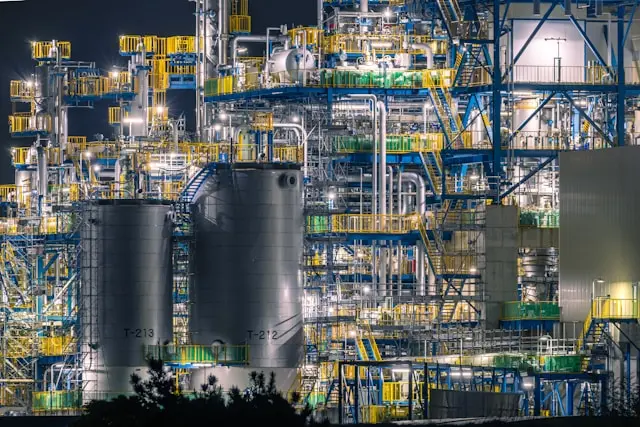
The Port of Rotterdam's industrial cluster is in the middle of the largest capital deployment in its modern history. Between 2024 and 2026, more than €3.5 billion has flowed into carbon capture pipelines, hydrogen backbone connections, advanced recycling plants and biofuel conversion units across Pernis, Botlek and Europoort. The physical infrastructure is arriving on schedule. The people trained to operate it are not.
This is not a conventional hiring shortage. Rotterdam's refining and petrochemical sector directly employs approximately 18,000 people across the Rijnmond region, with 54,000 more in supporting logistics and engineering services. Headcount in traditional refining is declining. BP Rotterdam plans a 40% reduction in conventional fuel processing capacity by late 2026. Shell has announced strategic reviews that could cut 15 to 20% of downstream chemicals headcount. The sector, read at headline level, looks like it is contracting. It is not. It is replacing one workforce with another that does not yet exist in sufficient numbers. Capital has moved faster than human capital could follow, and the consequences for every hiring decision in this cluster are now material.
What follows is a structured analysis of what is happening inside Rotterdam's refining and petrochemical sector: which roles are hardest to fill, why the talent pipeline cannot keep pace with the transition investment, what this means for compensation, and what organisations operating in this cluster need to understand before they make their next senior hire.
The Cluster: Scale, Structure and Why It Matters for Talent
Rotterdam's refining and petrochemical complex processes approximately 800,000 barrels per day of crude oil equivalent, representing 45% of Benelux refining capacity according to Concawe's 2024 statistical review. The cluster accounts for roughly 40% of the Netherlands' total chemical output and maintains 30 million cubic metres of liquid bulk storage capacity.
The three geographic centres each carry distinct employer profiles. Pernis hosts Shell's refinery, the largest in the Netherlands, with approximately 1,900 permanent staff and 1,000 rotating contractors across a 400,000 barrel-per-day refinery and chemical crackers producing aromatics and olefins. Europoort houses BP's refinery (approximately 700 employees), ExxonMobil's 192,000 barrel-per-day complex (approximately 1,100 personnel), and Gunvor's trading-linked operations. Botlek concentrates LyondellBasell's polypropylene, ethylene oxide and advanced recycling operations (roughly 700 staff) alongside speciality chemical producers.
On the storage and logistics side, Koninklijke Vopak operates seven Rotterdam terminals with 8.3 million cubic metres of capacity and approximately 1,000 staff. Oiltanking manages 1.2 million cubic metres with 150 local employees. LBC Tank Terminals contributes 800,000 cubic metres and 200 staff.
What makes this cluster unusual from a talent perspective is that it is not simply large. It is undergoing simultaneous, contradictory workforce movements. Traditional process operators and maintenance engineers face declining demand as conventional throughput falls. CCS integration engineers, hydrogen process specialists, circular chemistry designers and industrial cybersecurity professionals face demand that the labour market cannot satisfy. A senior hiring leader looking at aggregate employment data for the Rotterdam chemical sector would see a market in gentle decline. That impression is wrong. The market is splitting in two, and the half that is growing is the half where candidates barely exist.
What Porthos and the Hydrogen Backbone Mean for Hiring
The Porthos CCS project represents the single largest variable in Rotterdam's industrial talent equation. The consortium, connecting Pernis, Botlek and Maasvlakte to depleted North Sea gas fields via pipeline, anticipates capturing 2.5 million tonnes of CO₂ annually. Shell Pernis has committed to capturing 400,000 tonnes per year through the system. ExxonMobil's Rotterdam refinery participates as an anchor emitter. Total investment stands at €1.3 billion, and CO₂ injection operations are scheduled to commence in Q4 2026.
The Talent Implication of CCS at Scale
Operating a commercial-scale CCS system requires process engineers with specific expertise in amine-based capture, compression systems and CO₂ pipeline transport specification. These are not skills that transfer directly from conventional refining. A process engineer with 15 years of experience running a catalytic cracker possesses transferable fundamentals but lacks the specific capture chemistry and safety case knowledge that CCS operations demand.
The data reflects this. According to VNCI labour market monitoring, process engineering roles requiring carbon capture or hydrogen systems expertise remain unfilled for an average of seven to nine months. Conventional chemical engineering positions fill in three to four months. The gap is not marginal. It represents a fundamentally different recruitment challenge.
Simultaneously, the national hydrogen backbone network connecting Rotterdam to Chemelot and the German border will complete phase one construction by mid-2026, enabling hydrogen import flows from Norway and future ammonia cracking operations. This creates a second wave of specialist demand: electrolyser operations engineers, hydrogen storage and transport safety specialists, and process designers who understand green hydrogen integration into existing refinery configurations.
Regulatory Uncertainty Compounds the Problem
Here is where the analytical tension becomes acute. The physical infrastructure for Porthos is being built. The operational timeline is Q4 2026. But the underlying nitrogen deposition permits for the capture facilities remain contested under the Programmatische Aanpak Stikstof framework. The European Commission's state aid approval for the project's funding mechanism was delayed until late 2024. This creates a scenario where pipelines may be laid while legal operating permits for full capacity utilisation remain uncertain.
For talent pipeline planning, this uncertainty is corrosive. Organisations cannot hire CCS operations teams 18 months in advance if there is a non-trivial probability that operations will be delayed by permit challenges. But waiting until permits are secured means entering a talent market where every other Porthos participant is hiring simultaneously, competing for a candidate pool that is already insufficient. The firms that will staff these operations successfully are those making hiring commitments now, absorbing the regulatory risk into their workforce planning rather than waiting for certainty that may arrive too late.
The Workforce Replacement Nobody Is Discussing
Rotterdam's refining sector is not shrinking. It is undergoing a workforce substitution at a speed that has no precedent in this cluster's history. BP Rotterdam's planned 40% reduction in conventional fuel capacity, combined with Shell's downstream chemicals review and the broader decline in transport fuel demand, will reduce demand for traditional refining operators and maintenance staff. The International Energy Agency's 2024 Net Zero Roadmap update identifies three of Rotterdam's five refineries as facing conversion or closure decisions by 2030.
At the same time, LyondellBasell's Rotterdam Advanced Recycling plant commenced operations in late 2024 with capacity for 50,000 tonnes of plastic waste annually using its proprietary MoReTec pyrolysis technology. Shell's Pernis refinery commissioned an 820,000-tonne-per-year biofuels facility processing waste oils and residues. Vopak expanded biofuels storage capacity at Europoort by 300,000 cubic metres in 2024 to accommodate growing imports of used cooking oil and fatty acid methyl esters.
The people who run a pyrolysis unit are not the same people who run a crude distillation unit. The skills overlap is partial. Chemical recycling process design, waste feedstock quality management and bio-feedstock handling require distinct technical knowledge. The market created by transition investment is asking for a workforce that the educational pipeline has not been designed to produce. Rotterdam-region educational institutions graduate approximately 1,800 relevant technical professionals annually. The sector requires approximately 2,500 new technical professionals each year through 2030 to replace retirements and fill transition-created roles. The annual deficit of 700 professionals is not closing. It is compounding.
This is the original synthesis that the aggregate data obscures: the restructuring headlines in refining have created a false perception that qualified technical talent is becoming available. The opposite is true. The roles being eliminated are commodity positions with adequate supply. The roles being created require specialists who do not yet exist in sufficient numbers. Every restructuring announcement that suggests contraction is simultaneously an announcement that the remaining workforce must be more specialised, harder to find, and more expensive to attract than the one it replaces.
Compensation: What the Market Actually Pays and Why It Is Shifting
Compensation in Rotterdam's refining and petrochemical sector has always been structured around base salary, bonus and benefits packages that reflect the 24/7 operational nature of the work. What has changed is the premium attached to transition-specific expertise.
A senior process engineer with conventional refining experience commands €95,000 to €125,000 base salary with an 8 to 15% bonus. A maintenance manager specialising in rotating equipment earns €85,000 to €110,000 with a company car and pension contribution. Terminal operations managers sit at €90,000 to €115,000. These figures have been stable, adjusting modestly for inflation.
At the executive level, the picture shifts. A VP of Operations or plant director at a Rotterdam refinery earns €180,000 to €250,000 base with a 30 to 50% bonus and long-term incentive plans. A managing director of a tank terminal commands €160,000 to €220,000 with profit-sharing arrangements. These are established ranges in established roles.
The disruption sits in the transition roles. According to Russell Reynolds Associates, VP-level sustainability and energy transition positions now command €150,000 to €200,000 base, reflecting a 15 to 20% premium over traditional HSE director roles. This premium exists for one reason: the scarcity of candidates with CCS project leadership experience. There are not enough people who have built and operated commercial-scale carbon capture systems to fill the positions the market is creating. The premium is a direct function of that scarcity, and it will persist until either supply increases or demand stabilises. Neither condition is imminent.
For organisations building compensation packages for these roles, the market benchmarking challenge is that there is no stable reference point. These roles did not exist five years ago at this scale. Benchmarking against historical HSE director compensation understates the market by 15 to 20%. Benchmarking against German chemical corridor packages or, more dangerously, against Middle East offers creates expectations the Dutch tax environment cannot match.
The Geographic Talent Drain Hiring Leaders Underestimate
Rotterdam does not compete for industrial talent in isolation. Three geographic markets pull candidates away from the cluster, each using a different mechanism.
Antwerp's Fiscal Advantage
The Port of Antwerp-Bruges chemical triangle offers comparable roles with a structural compensation advantage. Belgium's expatriate tax status allows partial tax exemption on salaries, resulting in net compensation packages that frequently exceed Rotterdam equivalents by 10 to 15% for senior process engineers and terminal managers. For a Dutch national willing to commute or relocate 100 kilometres south, the arithmetic is straightforward. This cross-border drain is particularly acute for the senior technical and operational leadership profiles where the Rotterdam cluster is already short-staffed.
The German Stability Premium
BASF at Ludwigshafen, Covestro at Leverkusen and Evonik at Marl offer something Rotterdam's plant-based operations structurally cannot: hybrid work flexibility for non-shift roles, combined with stronger statutory job protection. Rotterdam's transition economy relies heavily on project-based contracts. A safety engineer or process designer weighing a permanent position at BASF against a three-year project contract at a Rotterdam CCS facility faces a risk-adjusted calculation that often favours Germany. The stability premium is not about money. It is about certainty, and the counteroffer dynamics at play in this market reflect that reality clearly.
The Middle East's Executive Drain
For VP-level executives and project directors, Saudi Aramco, SABIC and ADNOC offer tax-free compensation packages 40 to 60% above Benelux levels. According to Gulf Talent's 2024 Energy Sector Salary Survey, the Middle East market specifically targets Rotterdam's CCS and hydrogen specialists for its own blue hydrogen projects. A plant director earning €220,000 in Rotterdam is being approached with packages exceeding €350,000 tax-free. The proportion who accept may be small, but in a candidate pool where 89% are already passive, losing even a handful of VP-level operators to the Gulf creates a downstream vacancy chain that takes years to refill.
The Passive Candidate Reality and What It Means for Search Strategy
The talent market for senior technical and executive roles in Rotterdam's refining sector is overwhelmingly passive. This is not a soft observation. The data is specific.
CCS and hydrogen specialists exhibit near-zero active unemployment. Professionals with proven project experience in carbon capture are 95% passively employed, with average tenure exceeding 5.2 years. Recruiters report that only one in eight qualified candidates for CCS project manager roles responds to job advertisements. The remaining seven must be sourced through direct executive search.
Process safety and Seveso compliance engineers show 3.1% unemployment against 8.4% general engineering unemployment. These professionals receive an average of 2.3 recruiter approaches monthly. The market functions entirely on referral and search rather than applications.
Refinery operations leadership at the VP level demonstrates 89% passive candidate rates, with average job search duration of two to three weeks when transitioning. That figure is revealing. It means that when a plant director becomes available, they are placed almost immediately. The window to reach them is measured in days, not months.
For organisations relying on job postings, recruitment platforms or general-purpose agencies, this market is effectively invisible. The hidden 80% of passive talent is, in Rotterdam's refining sector, closer to 90%. VNCI data shows that 68% of chemical companies in the Rotterdam region report difficulty filling process automation vacancies. Techniek Nederland's labour market monitoring found that 74% of industrial automation vacancies in the petrochemical sector require over 120 days to fill. Forty percent of searches fail to yield suitable candidates within six months.
A hiring process that begins with a job posting and waits for inbound applications will, in this market, reach fewer than one in eight of the candidates qualified for the role. The organisations filling these positions are those using talent mapping and direct identification to find candidates before those candidates have decided to move. The traditional recruitment sequence of advertise, screen, shortlist and offer is structurally mismatched to a market where the best candidates are not looking.
The Regulatory Constraints Reshaping Every Workforce Plan
Two regulatory forces are compressing Rotterdam's industrial talent strategy from opposite directions.
The nitrogen crisis has blocked permits for 14 major industrial expansion projects in Rijnmond. The Council of State's 2019 ruling invalidated the PAS programme, and the Advisory Committee on Nitrogen's 2024 recommendations provide no near-term relief. For workforce planning, the consequence is that organisations cannot build new capacity. They can only optimise within existing permits. This means the talent requirement shifts from construction and commissioning engineers toward operational efficiency specialists and process intensification experts. It is a different kind of engineer, and the market has not adjusted its recruitment strategy to reflect that shift.
The EU Emissions Trading System, with carbon prices fluctuating between €60 and €80 per tonne, compresses refining margins directly. The Carbon Border Adjustment Mechanism, reaching full implementation in 2026, adds administrative complexity for importers of the circular feedstocks that Rotterdam's transition depends on. CBAM compliance requires professionals who understand both trade regulation and chemical supply chains, a combination that is rare. Every CBAM-affected importer in the cluster needs this capability. Almost none of them have it yet.
Layered on top of both constraints, the proposed EU restriction on PFAS threatens Chemours' Dordrecht operations, which supply fluoropolymers used for seals and linings across the refining cluster. A PFAS ban or restriction would not only affect Chemours directly but would require reformulation and re-engineering across dozens of downstream users. The regulatory compliance talent required to manage this scenario sits at the intersection of chemistry, environmental law and process engineering. It is a profile that executive recruiting methods built for single-discipline searches consistently fail to identify.
What Hiring Leaders in This Market Need to Do Differently
The convergence of transition investment, regulatory constraint and passive candidate dominance in Rotterdam's refining sector creates a hiring environment where conventional methods deliver conventional results: slow fills, compromised candidates and avoidable vacancy costs.
The sector's annual talent deficit of 700 professionals is not a problem that more job advertising can solve. It is a supply constraint that requires a fundamentally different approach to candidate identification. For specialist roles in CCS, hydrogen systems, circular chemistry and industrial cybersecurity, the executive search methodology that works is one built on direct identification of passive candidates, market-specific intelligence about who holds the relevant experience, and the speed to present qualified individuals before the two-to-three-week placement window closes.
KiTalent's approach to executive hiring in industrial and manufacturing sectors is designed for exactly this kind of market. AI-powered talent mapping identifies the passive specialists and leaders who are not visible on any job board. Interview-ready candidates are delivered within seven to ten days, on a pay-per-interview model that eliminates the retainer risk that discourages organisations from launching searches in uncertain regulatory environments. The 96% one-year retention rate across 1,450 completed executive placements reflects a methodology that matches candidates to roles with the precision this market demands.
For organisations competing for CCS engineers, hydrogen specialists or senior leadership in AI-driven process automation across the Rotterdam cluster, where the candidates you need receive 2.3 recruiter approaches per month and respond to fewer than one in eight job advertisements, speak with our executive search team about how we identify and deliver the transition-era talent this market requires.
Frequently Asked Questions
What is the average salary for a senior process engineer in Rotterdam's refining sector?
A senior process engineer in Rotterdam's refining and petrochemical cluster earns between €95,000 and €125,000 base salary, with an 8 to 15% annual bonus. Engineers with specific expertise in carbon capture or hydrogen systems command the upper end of this range and increasingly exceed it. VP-level operations directors earn €180,000 to €250,000 base with a 30 to 50% bonus. Compensation for transition-specific roles such as VP Sustainability or Energy Transition Director carries a 15 to 20% premium over traditional HSE positions, reflecting acute scarcity in CCS project leadership. Detailed salary benchmarking for industrial roles requires current market data rather than historical reference points.
Why is it so difficult to hire CCS and hydrogen specialists in Rotterdam?
CCS and hydrogen specialists in Rotterdam exhibit 95% passive employment rates with average tenure exceeding 5.2 years. Only one in eight qualified candidates responds to job advertisements. The candidate pool is constrained by the fact that commercial-scale CCS operations have not existed long enough to produce a deep bench of experienced professionals. Educational institutions in the Rotterdam region graduate approximately 1,800 technical professionals annually against a sector requirement of 2,500. The deficit compounds each year. Effective recruitment for these roles requires direct headhunting and talent mapping rather than conventional advertising.
How does Rotterdam's petrochemical sector compete with Antwerp for talent?
Antwerp's chemical cluster offers structural fiscal advantages through Belgium's expatriate tax status, which provides partial salary tax exemption. This translates to net compensation packages 10 to 15% higher than equivalent Rotterdam roles for senior process engineers and terminal managers. Rotterdam competes through the scale and diversity of its cluster, career progression opportunities within anchor employers like Shell and ExxonMobil, and the concentration of transition-era projects that offer professionals experience in CCS and hydrogen systems that Antwerp cannot yet match at the same scale.
What impact does the nitrogen crisis have on hiring in Rotterdam's industrial sector?
The nitrogen crisis (stikstof) has blocked permits for 14 major industrial expansion projects in Rijnmond, preventing new build capacity. For hiring, this shifts demand away from construction and commissioning engineers toward operational efficiency specialists and process intensification experts who can extract more output from existing permitted capacity. It also increases demand for environmental regulatory specialists who can manage permit applications under the contested PAS framework. The regulatory uncertainty discourages long-term workforce investment, creating a preference for interim and project-based leadership that further fragments the permanent talent pool.
How quickly can executive-level roles in Rotterdam's refining sector be filled?
Conventional searches for senior executive roles in Rotterdam's refining sector average seven to nine months for transition-specific positions and three to four months for conventional roles. VP-level operations directors who become available are typically placed within two to three weeks, meaning the window to reach them is extremely narrow. KiTalent delivers interview-ready executive candidates within seven to ten days through AI-enhanced direct search, reaching the passive candidates who represent over 89% of the senior talent pool. This speed advantage is critical in a market where delayed searches result in lost candidates rather than extended timelines.
What are the biggest regulatory risks for Rotterdam's petrochemical employers in 2026?
Three regulatory forces converge in 2026. EU ETS carbon prices between €60 and €80 per tonne compress refining margins directly. The Carbon Border Adjustment Mechanism reaches full implementation, adding compliance complexity for circular feedstock importers. And the proposed EU-wide PFAS restriction threatens supply chains for fluoropolymer components used across the refining cluster. Each of these requires specialised regulatory and compliance talent. The combination requires professionals who understand the intersection of environmental regulation, chemical engineering and trade compliance, a profile that is exceptionally scarce in the current market.